Features

Britain needs to rediscover failure if it wants to prosper

What was Brexit for? After finally taking Britain out of the European Union, the Prime Minister can now start to give us his answer — and the opportunity in front of him is pretty clear. He could speed up, perhaps double, the rate of economic growth by unleashing innovation. After leaving the slow steaming European convoy, Britain must not chug along but go full speed ahead. That means rediscovering trial and error, serendipity and swiftness — the mechanisms by which the market finds out what the consumer wants next. The stifling of innovation by vested interests in the corridors of Brussels has held Britain back for too long — but it is not the only reason for our sluggish innovation capacity.

Brexit ruined our social lives. Can we now kiss and make up?

Brexit spoilt our social lives for three and a half years. I was in Austria in a house party of 20 Britons when the result came through. Sixteen of us had voted Remain (three while ‘holding their noses’) and four had voted Leave. The Leave voters stayed silent while the rest of us raged about the stupidity of the voting public. One of the party got busy cancelling a long-planned canal-boat trip with a lifelong friend who she knew had voted Leave. She suddenly couldn’t face sleeping in close proximity to him. In London, protest marches were being organised and it was considered very bad form if, as a Remainer, you failed to turn up and be counted.

How it all went right: The great Brexit wound has almost healed

They are getting themselves terribly worked up about that new 50 pence coin commemorating our departure from the European Union. By ‘they’ I mean those people in the Brexit Derangement Syndrome intensive care ward, wired up to saline drips, attended to day and night, occasionally afforded a few thousand volts of ECT when things get really bad, but still foaming, still beside themselves with apoplexy. Alastair Campbell has announced that he will not accept the coin if given it in change. Lord Adonis, who was perhaps already in the antechamber of derangement even before June 2016, said: ‘I am never using or accepting this coin.’ The writer for middle-class kiddies, Philip Pullman, our own pound shop C.S.

The whole of China is in an eerie state of shutdown

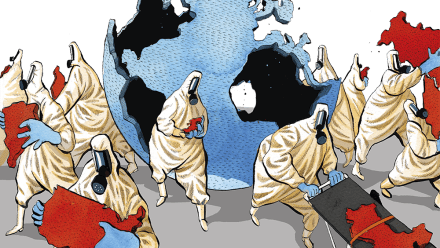
 Shanghai ‘Do you want me to scan your temperature?’ asks the receptionist, brandishing an infrared thermometer. Arriving at my hotel in Shanghai, I have a hacking, chesty cough. I picked the wrong week to contract this year’s bout of normal, perfectly healthy winter flu. In China, there is now only one illness. Like Christmas in the West, the Spring Festival (or Chinese New Year) is always the time when big cities shut down. But thanks to the coronavirus, China has entered a period of quarantine. Early in January, there was still a large crowd of skaters on Houhai Lake in Beijing, revelling in the fun of the frozen landscape. But things have moved very fast. Concert halls, museums and cinemas have shut down.

It’s time for the word ‘Continental’ to make a comeback

Feasting on the remnants of my edible Christmas presents during the otherwise frugal month of January, I experienced a frisson when I opened the box of Thorntons ‘Continental’ chocolates. For anyone who grew up in the 1950s, 1960s and 1970s, the word ‘Continental’ carries with it a waft of balmy air from the Mediterranean, a sense of longed-for glamour, pleasure and breakfast on a balcony, unavailable on this rainy, cut-off island. I’m wondering whether, as we leave the EU and return to being a small country across the water from a many-countried, warmer landmass, the word ‘Continental’, and the concept, will come back into use. Do other small countries across bodies of water from large continents have this concept?

The agony of Brexit – for us Germans

In the early hours of 13 December, I called my newspaper in Berlin and suggested we run a piece about what might happen on Brexit day, 31 January 2020. For a second the line went strangely quiet. ‘Hello? Last night’s result means Brexit,’ I said to my colleague. ‘It’s really happening.’ I imagined the news slowly penetrating her mind. It took a while to sink in and no wonder. Throughout the years of obstruction and stagnation in Britain, many of us in Germany allowed ourselves to think Brexit wouldn’t ever happen. More than any other European nation, we Germans have been in denial about Brexit. There’s a widespread idea here that Brits and Germans belong together.

The latest fad: eating your way to better mental health

Which fad diet have you chosen to follow this year? One that helps you lose weight, or one that cures your mental health problems? Chances are that if you’re really following food trends, you’ll be discarding the piles of ‘clean eating’ recipe books in your kitchen in favour of a whole new swath of literature on dieting for mental health. There’s the ‘Mad Diet’, which promises ‘easy steps to lose weight and cure depression’, the ‘Anti-Anxiety Diet’, which is a ‘Whole-Body Programme to Stop Racing Thoughts, Banish Worry and Live Panic-Free’, or ‘Food and Mood: Eating Your Way Out of Depression’. Just like the clean eating trend that came before, each mental health diet has its own mantras.

Ten years on, the Arab Spring has only benefited the Islamists

A decade after the Arab Spring, good news anywhere is hard to find. In contrast to Asia, Latin America and sub-Saharan Africa, extreme poverty has increased in the Arab region. Both internal economic growth and direct foreign investment have declined. Unemployment, especially among the young, has grown. Education standards are falling. There is less press freedom, less freedom of association. A BBC survey last year found that more than half of Arabs want to emigrate. In the countries where autocratic leaders were overthrown — Tunisia, Libya, Egypt and Yemen — there is nostalgia for the pre-revolutionary era.

Inhuman resources: when did job-hunting become such an ordeal?

A two-line email popped into my inbox: ‘I regret to inform you that your application for the post of communications officer has not been successful on this occasion.’ Two decades as a national journalist, plus experience as a ministerial and corporate press adviser, and yet again, I’d failed even to secure an interview — this time to be a part-time communications officer in a college. If you have not applied for work in the past few years, ‘human resources’ — or HR as it is known — may be unfamiliar. But it has stealthily turned job-hunting into an ordeal, and my experience is far from un-usual. Forget simply sending off your CV to secure a vacant position. Forget your track record speaking for itself. Forget the bleeding obvious.

Le bromance: Macron has fallen under Boris’s spell

Montpellier When Emmanuel Macron was elected just over two and a half years ago, his ambitions stretched a long way. He described the presidential role as being like Jupiter, and believed that the momentum that took him to the Elysée would excite forces far beyond France’s borders. He hoped to deliver a ‘European renaissance’ that would overhaul the continent’s political structures. Only last year, he addressed a letter to the ‘citizens of Europe’ describing his vision of renewal. But he might have noticed by now that even in France his hold seems rather tenuous. And at present, the country is not a great advert for Macronism.

I spent Christmas Day helping the homeless – and I was bored out of my mind

When I told friends that I would be spending Christmas Day helping the homeless at a Crisis at Christmas centre in north London, they all congratulated me for doing something good for someone else. And then they congratulated themselves for having already done Crisis at Christmas years ago. Volunteering at a Crisis at Christmas centre is, I discovered, the Glastonbury of good causes. Crisis veterans all told me about what a ‘rewarding experience’ it had been for them; some claimed it had been their ‘best Christmas ever’. Some take their teenage children along and they, I’m assured, love it too. And now when they ask me, ‘How was it?’ and I say, ‘It was OK’, they’re disappointed in me.

Can Leo Varadkar defy the odds to win another term as Taoiseach?

Back in October, Boris Johnson and the Taoiseach Leo Varadkar met for ‘last-ditch’ Brexit talks at a hotel on the Wirral. After nine years in power and having lost control of parliament, the Tories were in disarray. Few thought Johnson could win concessions on the Irish backstop — that perennial stumbling block, the key to securing a new withdrawal agreement with Brussels. ‘It will be very difficult,’ said Varadkar, as the Merseyside ‘wedding venue’ summit began. Yet Johnson wooed the Irish delegation, got his concessions, struck a fresh EU exit deal — and went on to clinch a dramatic general election victory. Three months on, the tables have turned.

The people’s decade: how will history come to define the 2010s?

The 1960s were swinging. The 1970s were stagflationary. In the 1980s we made loadsamoney and greed was good. The 1990s were dot.commy. And the 2000s were the boom and bust decade. Characterising ten-year periods in this casual way is something journalists love to do. It’s deplorably unscientific and yet pleasingly decentralised. A consensus simply emerged that the 1960s were swinging, even if the overwhelming majority of human beings did not turn on, tune in and drop out. The overall quantities of love and war were roughly the same as in the 1950s. Historians shouldn’t object. Such epithets give us something to argue against. (‘Far from being “swinging”, for most people the 1960s were indistinguishable from the previous decade…’ and so on.

Warring Windsors: the real royal conflict is between Charles and his sons

Three years ago, Sir Christopher Geidt departed as the Queen’s private secretary. For years, he had done much to hold The Firm together, but his influence was resented by Prince Charles. The festering acrimony between Buckingham Palace and Clarence House came to a head in 2017 when Geidt, a Cambridge-educated former Scots Guard, convened a meeting of staff to announce Prince Philip’s retirement without first consulting Charles’s aides. Geidt ended up being forced out after a decade of unwavering service. Many in the family — including the Princess Royal and Prince Edward — now blame straight-talking Lord Geidt’s absence for the bedlam that has since ensued.

Is slimming down the monarchy the only way to save it?

The crisis that has engulfed the royal family, sparked by the Duke and Duchess of Sussex’s bombshell announcement that they are jumping ship, is about far more than just their personal future. If that wasn’t the case, it wouldn’t be so important. Families fall out, scandals come and go and the monarchy marches on. But this announcement and the extraordinary Sandringham summit convened by the Queen was about something much more fundamental. The subject of discussion was what the monarchy does, who it is for and how much longer it will continue in its current form after the Queen’s reign. And, indeed, whether it should survive at all. Everyone’s sympathy this week has been for the Queen, now 93, and the upset Harry and Meghan’s decision has caused her.

In defence of pocket money

Our grandchildren are penniless. They have pretty much everything their hearts desire and they have parents with wallets full of plastic, but they lack the satisfying chink of coins in a jam jar. I was alerted to this state of affairs when one of our tribe turned nine and I asked his mother how much pocket money he was getting. The answer was: nothing. The very words ‘pocket money’ seemed to strike her as quaint. I said: ‘But what if he wants to walk down to the shops to buy a comic?’ The answer was that such a thing was very unlikely to occur to him but, if it did, she would drive him to the shop and pay for the comic. There, in a nutshell, were two worrying trends.

Revealed: Boris’s blueprint for Brexit

For the first time since the referendum, the United Kingdom has a strong government that knows what it wants from Brexit. This will make the second round of the negotiations with the EU very different from the first. Theresa May famously declared, and repeated, that ‘Brexit means Brexit’. This was a soundbite designed to conceal fundamental differences within her cabinet about what it did actually mean. They were never resolved. Many in her cabinet, and especially the Brexiteers, thought that Brexit must mean fully leaving the customs union and the single market. But Philip Hammond, her Chancellor, and Greg Clark, the Business Secretary, thought that it was essential to avoid ‘friction’ at the border and so rallied other Remain colleagues against this approach.