Lionel Barber

Lionel Barber was Editor of the Financial Times from 2005-2020.

Starmergeddon? How the locals will change Labour

From our UK edition

35 min listen

This week: Lara Pendergast is joined by Tim Shipman, Lionel Barber and Alice Loxton, author of Eleanor: A 200-Mile Walk in Search of England’s Lost Queen.  They unpack Michael Gove’s cover piece which asks whether the local elections will push Labour further to the left. As the Greens threaten Labour in its metropolitan heartlands and Reform eats into its working-class vote, is Keir Starmer facing a battle for the soul of his party? They also consider the collapse of the political centre, the weakness of Britain’s current leadership class, and why being ‘not Keir Starmer’ may not be enough. Also this week: King Charles’s diplomatic triumph in Washington.

Starmergeddon? How the locals will change Labour

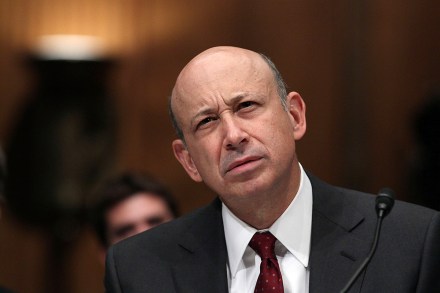
Lloyd Blankfein – guiding light of Goldman Sachs

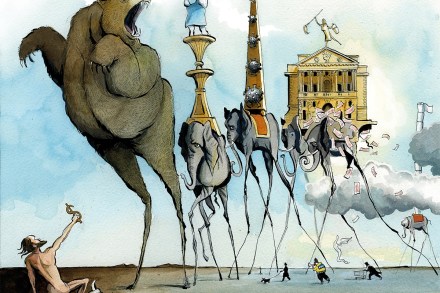
Goldman Sachs inspires awe and envy in equal measure. Those who survive the Wall Street investment bank’s annual cull earn fortunes. Leavers join an alumni network that makes the Freemasons look like plodders. The ‘Government Sachs’ roll call includes prime ministers (Mark Carney, Mario Draghi, Rishi Sunak and Australia’s Malcolm Turnbull); US Treasury secretaries (Bob Rubin and Hank Paulson); and central bank governors galore, not to mention two recent BBC chairmen (Gavyn Davies and Richard Sharp).  After the global financial crisis, which Goldman navigated more adroitly than rivals, Rolling Stone compared the bank to ‘a vampire squid wrapped around the face of humanity’. New York magazine ran a cover story which asked: ‘IS GOLDMAN SACHS EVIL?

The rotten core of Credit Suisse

From our UK edition

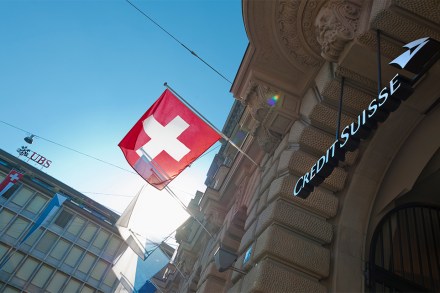
The tale of Credit Suisse ought to be Buddenbrooks on steroids. A staid Swiss lender enters marriage with a racy Wall Street investment bank and gives birth to a monster. Scandal follows scandal. CEOs come and go. In March 2023, the bank ends up being flogged to its arch rival UBS for a miserly $3 billion. Inside Credit Suisse, the backstabbing and treachery were more suited to a medieval court Duncan Mavin is well placed to tell this corporate horror story, having written a book about one of Credit Suisse’s most notorious clients, Lex Greensill, an Australian melon farmer turned fintech champion. Greensill Capital, which employed David Cameron as a Whitehall lobbyist and international frontman, turned out to be a house of cards.

Ukraine is in dire need – and the West must respond quickly

From our UK edition

As the second anniversary of Russia’s full-scale invasion of Ukraine approaches, the fall of the key eastern city of Avdiivka is one more sign that Vladimir Putin holds the initiative. Ukrainian troops resisted the Russian forces for months, but the threat of encirclement forced Ukraine’s new army chief, Oleksandr Syrskyi, to retreat. The Russians were firing 10,000 artillery shells a day; the Ukrainians had been able to reply with about 1,500. Such an imbalance made defeat inevitable. There are risks in reading too much into a single military setback, especially in light of Russia’s extraordinary losses (more than 300,000 dead and wounded, elite special forces decimated, more than 2,000 tanks destroyed and 24 Russian warships sunk).

Jeremy Hunt is the ‘unity’ leader the Tories need

From our UK edition

Liz Truss is now prime minister in name only: Jeremy Hunt, her chancellor of the exchequer, now holds power. He has repudiated her tax-cutting mini-Budget in a round of media appearances – his performances being far more convincing than Truss’s graceless eight-minute press conference on Friday. His admission that spending cuts will be needed and that ‘some taxes are going to go up’ to balance the books has injected a much-needed dose of realism. The question on everyone’s lips is: what will Hunt do now? Is he a stalking horse for a new PM (Rishi Sunak being the obvious candidate) or is the former head boy at Charterhouse himself a prime minister-in-waiting? Let’s look at the options.

What if Putin hasn’t miscalculated – but the West has?

From our UK edition

Conventional wisdom dictates that Vladimir Putin has ‘miscalculated’ in his invasion of Ukraine. His blitzkrieg has been poorly executed. He has reinvigorated the Nato alliance and the EU and triggered heavy sanctions. And he has lost the ‘information war’ to Volodymyr Zelensky, the TV comedian turned global hero. But what if the West has ‘miscalculated’ in reading Putin’s intentions? What if the West’s sanctions, along with intensified military aid to Ukraine and a courageous local resistance, encourage Putin to double down? What if he decides to use a weapon of last resort, a nuclear, chemical or biological weapon, even at the risk of World War 3?

The Covid revolts: Europe’s new wave of unrest

From our UK edition

33 min listen

In this week’s episode: Just who is protesting new Covid rules in Europe? In The Spectator this week we have three articles that cover the riots and protests all over Europe about new covid policies. Two of them report the scene on the ground in different countries. Lionel Barber and Nick Farrell write respectively about the situations in Holland and Italy and talk on the podcast about why this is happening now and how much more it could escalate. (00:45)Also this week: Is China having its own hand and the #MeToo moment?A spotlight has been shined on China in recent days, due to the troubling series of events surrounding the Chinese tennis player Peng Shuai.

Europe’s unvaccinated don’t take kindly to being turned into second-class citizens

From our UK edition

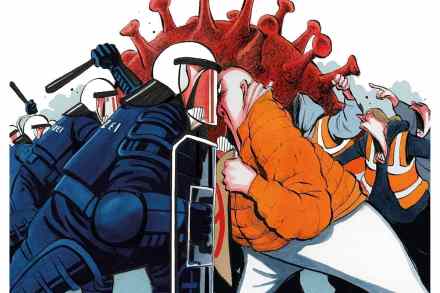
Amsterdam   These are dangerous times in the Netherlands. Anti-lockdown mobs have torched cars, thrown rocks and attacked the police. In Rotterdam, police used live fire, in scenes more reminiscent of New York or LA than the birthplace of Erasmus. The protests are ostensibly in response to government plans to restrict the use of indoor spaces only to people with a Covid pass, showing they have been vaccinated or they have recovered from the virus. The (unvaccinated) Dutch — very much a minority — don’t take kindly to being turned into second-class citizens. Frank Paauw, Amsterdam’s tall, silver-haired police chief, suspects darker forces are at work. I met him during a TV interview, his gun conspicuous by its presence.

Is Germany really such a role model?

From our UK edition

The British romance with Germany has always been an on-off affair. At the turn of the century, Kaiser Bill enjoyed brief popularity, based on dynastic ties, until his bombastic militarism set Germany on a path to war. Thirty years on, as Tim Bouverie reminds us in his book Appeasing Hitler, many in the English ruling class favoured Nazi Germany over revanchist France. After the war, Rhenish capitalism, Germany’s social contract between management and labour, appeared to offer a soothing alternative to strike-torn Britain. Then Mrs Thatcher arrived with stiffer medicine. John Kampfner’s Why the Germans Do It Better is a beguiling title because the British have undoubtedly hit a bad patch.

How will the world be changed by the war against coronavirus?

From our UK edition

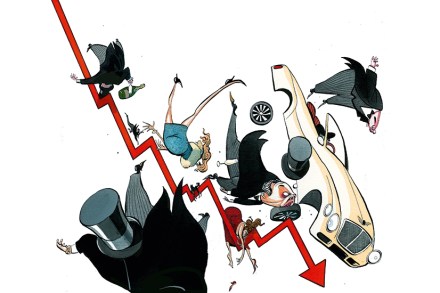
The world as we have known it for the past 40 years has come to a stop. We have a supply chain crisis, a demand crisis, a labour market crisis and an oil price crisis. The second crash that people were long predicting has arrived — but against the backdrop of the Covid-19 threat, it seems like a second-order story. The pound has already hit its lowest rate for decades, and more shocks may occur in the bond and currency markets. How long the disaster will last — or how much worse it will get — is anyone’s guess. Thanks to the virus, events which earlier this year would have been scarcely conceivable have come to pass.

Coronomics: how surreal is this economic crash?

From our UK edition

40 min listen

On the podcast this week, we take a look at the exceptional nature of 'coronomics' and what comes after (00:55), how the Swedish are dealing with coronavirus differently (18:50), and lessons in solitude from a polar explorer (31:15).