Diary

Diary – 30 April 2015

I have escaped this rather depressing election campaign by retreating to my home in la France profonde — to be precise, in Armagnac, in the heart of Gascony. My only outing, from which I have just returned, was a brief visit to New York, travelling there and back in the giant Airbus 380. The purpose of the trip was to drum up US support for the thinktank I founded in 2009, the Global Warming Policy Foundation, and its campaigning arm, the Global Warming Policy Forum, in the company of our outstanding director, Benny Peiser. Thanks to the wonders of the internet, the GWPF has a global reach, and its international influence is growing.

Diary – 23 April 2015

Lunch with the man who hanged Saddam. My irrepressible old Baghdad friend Mowaffak al-Rubaie, Ealing neurologist turned Iraqi national security adviser, is on top form. This may not be unrelated to the news that the noose with which he hanged Saddam is up for auction. Interested buyers are said to include Kuwaiti businessmen, an Israeli family, a bank and an Iranian religious organisation. Mischievous tales are circulating about an offer of $7 million being rejected. Hearing Rubaie relive Saddam’s execution reminded me of the late Sir Wilfred Thesiger recalling how he shot up a tent full of sleeping Germans during the Allied campaigns in North Africa. ‘It felt like murder,’ he said, and you knew he rather liked it. Never mind the general election.

Diary – 16 April 2015

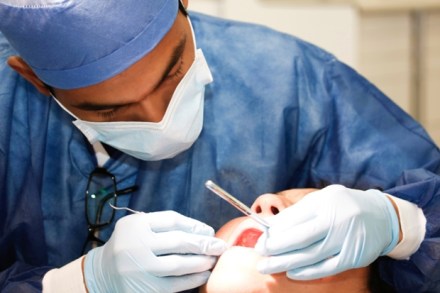
To the dentist. And for an extraction. I hadn’t had a tooth out in decades. But the twinges when I bit on a nut warned me that my problem molar — much abused by a badly fitted bridge in the 1970s — had finally given way. My usual dentist confirmed as much with a poke and an X-ray. Then came the surprise. ‘I’m going to hand you over now,’ he said. Having a tooth out has ceased to be a hazard of life to be borne and grinned at. Instead it’s become dental surgery. And it requires a specialist. Mine was a man with a mission. ‘My job is to make sure you feel no pain,’ he said. And he proceeded, with skill, charm and patience, to do just that.

Diary – 9 April 2015

So far, what an infuriating election campaign. We have the most extraordinary array of digital, paper and broadcasting media at our fingertips — excellent political columnists, shrewd and experienced number-crunchers, vivid bloggers and dedicated fact-checkers. There has never been a general election in which the interested voter has had access to so much carefully assembled and up-to-the-minute data. And it’s unpredictable, and it matters: the recovery on a knife edge, the future of the UK, our future in Europe — all that. It ought to be thrilling. So why is the campaign proving so tooth-grindingly awful? Simply because the parties have chosen to refuse to tell us what we need to know. There’s this thing called the deficit (you may have heard about it).

Max Hastings’s diary: The joys of middle age, and Prince Charles’s strange letters

I am living in rustic seclusion while writing a book. Our only cultural outing of the week was to Newbury cinema to see, transmitted from the National Theatre, Arthur Miller’s A View From the Bridge, object of rave reviews. We respected the piece but did not enjoy it. Granted, appreciation of all major works of art requires an effort by the viewer, listener, reader. But a pleasure of getting older is to be unafraid of waving the white flag. We resist modern-dress Shakespeare or worse, opera. We will cross continents to avoid the music of Harrison Birtwistle or the art of Damien Hirst. We are ardent Trollopeians, incorrigibly middlebrow.

Harry Mount’s diary: Class war with classicists and wisdom from Brian Sewell

I never knew classicists could be so scary! Last week I wrote a Telegraph article saying classics exams had been dumbed down. It followed the news that Camden School for Girls — the last comprehensive in the country to teach Greek A-level — is planning to drop the subject in September. Soon after, the classics trolls came a-calling, on Facebook’s Classics International forum. The insults were impressively high-minded. A classics student at King’s College London called me an ‘antediluvian ape’. A classics teacher at Durham Sixth Form Centre predicted my next book would be ‘bowel-achingly derivative’.

Danny Alexander’s diary: Trying to put an undercover reporter at ease, and the unicorn poop question

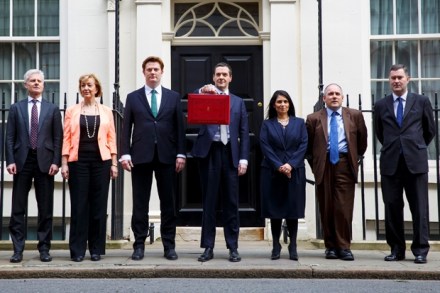
It’s dangerous, in my line of work, to promise you’ll be anywhere by 8 p.m. I made this mistake recently, saying I’d turn up to a dinner after a Budget discussion — a ‘quad’ meeting, where I sit with the Prime Minister, George Osborne and Nick Clegg. We’ve been doing this for five years, so have come to know each other pretty well. Not that we all agree; on the night in question, Nick was angry about something (I won’t say what) and our meeting ran on. I headed back with him to Dover House, a magnificent building where I was based during my tenure as Scottish Secretary. A great job: I enjoyed each of the 17 days I spent in it. The dinner, organised by the Lib Dems, was fun.

Jeffrey Archer’s diary: a pirate at the traffic lights, and other Indian wonders

This last week, in India, I visited six cities in seven days: Mumbai, Pune, Bangalore, Hyderabad, Calcutta and New Delhi. This is my 11th trip to India and from the very beginning the signs were good. For a start, the temperature on arrival in Mumbai was a cool 22 degrees and I was told it had rained for the past two days, though I’ve actually never seen rain in Mumbai before. Because of a new eight-lane highway, we got from the airport to the Taj Hotel in the city centre in just 40 minutes, despite a minor hold-up. As the car was idling in a traffic jam, a young boy who couldn’t have been more than six or seven tapped on my car window. He was holding a pile of books. I wound the window down, and he asked: ‘Would you like the latest Jeffrey Archer?

Miriam Gross’s diary: Why use Freud and Kurt Weill to promote Wagner?

Last week I went to the exhilarating English National Opera production of Wagner’s The Mastersingers — five hours of wonderful music and singing whizzed by without a moment’s boredom. But there was one odd and perturbing factor, I thought. In place of a curtain, there was a huge ‘frontcloth’. It was covered with a collage of 103 faces of well-known artists. These same faces appeared again, during the finale, this time in the form of portraits held aloft by members of the cast. They included Joseph Roth, Stefan Zweig, Sigmund Freud, Kurt Weill, Billy Wilder, Richard Tauber, Oskar Kokoschka, Hannah Arendt, Simone Weil, Lotte Lenya, Max Ernst, Marlene Dietrich.

Paul Mason’s diary: My Greek TV drama

It’ll be a Skype interview, says the producer from Greek television, and not live. In TV-speak that usually means not urgent and not important, but I’ve become vaguely interesting to Greeks because of the ‘Moscovici draft’ — a doomed attempt to resolve the crisis, leaked to me amid denials of its existence. The interview goes on a bit and the tone is deferential. At the appointed time, I fire up Greek television to see how many clips they’ve used. Instead of me, a panel of five bearded men in an expansive studio are conducting an earnest preview of my interview.

Virginia Ironside’s diary: Fifty Shades is a story of redemption (but I still won’t watch it)

All this fuss about Fifty Shades of Grey! I wonder how many people have actually read all three books? Sado-masochism is only half the story. When you’ve waded through the entire oeuvre, if such appalling writing can be dignified with that term, you discover that the whole story is one of redemption. The ostensibly wicked, but aptly named, Christian is actually a tormented man who was cruelly abused by his mother and re-enacts this cruelty towards his lovers. But with a good woman (and a baby), pervy dungeons vanish and love conquers all. Pure Mills & Boon. These days I don’t go to films. I watch the trailers instead and I’ve saved myself hours of misery.

Sebastian Faulks’s diary: My task for 2015 – get a job

Just back from Sri Lanka, a place I first went to in 1981. It was then a dreamy island. I remember giving the room boy who had brought my case to the bandicoot-infested bedroom in Colombo a few rupees, but he wasn’t interested. He just wanted to sit on the bed and talk — about London, England, cricket, life. Three decades and a civil war later, people are aware of money, there is bottled water, and a pot of tea doesn’t take half an hour to arrive. One thing that seems unchanged is the optimism of the people. The new president, Mr Sirisena, has promised an end to the corruption of the Rajapaksa regime.

Alexander Chancellor’s diary: Picking golden oldies, Ken Dodd, and the sadness of Jack Nicholson

An excellent test of character is a person’s response to being offered an Oldie of the Year Award. There have always been those to whom the word ‘oldie’ is in itself an embarrassment. When Richard Ingrams founded the Oldie magazine in 1992, he was warned by many that it would fail because of its name. Nobody wanted to be thought old, he was told, and therefore nobody wanted a magazine that would portray oldness as something to be proud of. Ingrams overcame most of these qualms with the humour and irony he brought to the magazine. Nevertheless, I was nervous when I had to telephone Lord Falconer, whom I had never met, to tell him he had been chosen for an Oldie award. Lord Falconer is a political heavyweight who served as Lord Chancellor in Blair’s government.

Nigel Farage’s diary: How I survived Dry January

Dry January is tougher than it sounds. Well, for me anyway. It’s now been some 28 days since I’ve had a drink, and you should see what that means for my campaigning strategy. ‘Ginger beer? Lemonade?’ Pub-goers around the country can’t believe it when I walk in and whisper my order over the bar. The fact is they don’t believe I’m really doing it. ‘I’m not all spin and bluster like those other lads,’ I usually reply. ‘If I promise I’m going to do something, I’ll bloody well do it.’ Still, I can’t say it’s never going to tempt me again. Especially not given the week I’ve had. It all started in Milan.

Tom Holland’s diary: Fighting jihadism with Mohammed, and bowling the Crown Prince of Udaipur

As weather bombs brew in the north Atlantic, I’m roughing it by heading off to Rajasthan, and the literary festival where you are most likely to be greeted by an elephant. The life of a writer is rarely glamorous, but for one week in January — should an invitation to Jaipur be forthcoming — it decidedly is. The festival is to India what a Richard Curtis film is to London: a fusion of all the fondest stereotypes that foreigners have of a place. The talks, which run the gamut from the Mahabharata to the future of the novel, are pure literary masala. The parties are visions of perfumed candles, shimmering saris and maharajas’ palaces. The last time I was in Jaipur, there was even a cricket match.

Panic, profiteering and a mysterious girl in a Mini: notes from Moscow

 Moscow Here we go again. The rouble slides, then tumbles, and slides again. For those of us who remember the crash of August 1998, the drill is familiar. For Muscovites, the old instincts have surfaced from the 1990s like a sausagey burp. Shoppers besieged Ikea, Auchan and other mega-markets, desperate to spend rapidly devaluing roubles. Cynical expatriates such as myself did much the same with our newly inflated hard currency. I cleared my local posh wine shop of a thousand bucks’ worth of Burgundy, now half-price in dollar terms. A correspondent colleague raided the Moscow Apple store to the tune of two iPhones and a pair of laptops before they shut down to recalculate prices.

Nicky Haslam’s diary: Marie-Anna Berta Felicie Johanna Ghislaine Theodora Huberta Georgina Helene Genoveva and other big names

I was once bundled into a police car in Palm Springs to explain why I didn’t have snow-tyres on my pick-up in the red-hot California desert. I don’t remember the outcome of the ‘arraignment’, but will never forget the lady cop’s name, L. Nevada Yonkers. Other weird names have stuck with me. Reading The Most of Nora Ephron, whom I met once and immediately fell in love with, I realised that when I was working on Vogue in New York in the 1960s, she had been on the staff of Newsweek. I used to be obsessed by the weird names of the girls on Newsweek’s masthead. I would reel them off like a litany.

Bruce Anderson’s diary: If you want to understand the SNP, it helps to be an ex-Trot

An embarrassing confession: in the late 1960s, I was a Trotskyite. But that period of political adolescence has its uses. It made me aware of the methods employed by extremist parties such as the Scots Nats. Trots wanted to encourage ‘the workers’ to make impossible demands, including ludicrously high wage rates, in order to bring down capitalism. But the workers were too wise to fall for that, until Arthur Scargill came along. Now, the Nats are playing a similar game, discussing the terms on which they might support Ed Miliband — as if they would like a stable government in London. That is nonsense. They want confusion and chaos in London, which would inflame the English against the Scots and convince even more Scots that the Union is collapsing.

Joan Collins’s diary: The joy of fake Christmas trees

Every year Christmas comes earlier and earlier in America. Cards, baubles and imitation trees were being sold in the big department stores in August, and the street decorations have been up in Beverly Hills since well before Halloween. From late October onwards, it’s the season of dressing up and showing off in downtown LA. Street parades are all the rage and hundreds of thousands of people saunter around in costumes, some gorgeous, most grotesque. Infants and children are usually done up as baby chicks or bunnies, which is inoffensive — but some adults go beyond the boundary of what is acceptable.

Stig Abell’s diary: My days in court with the Sun

Soon after I joined the Sun as managing editor (among other things, I used to review novels for The Spectator), I read an interview with Keir Starmer, the outgoing head of the Crown Prosecution Service. What an unhealthy thing it would be, he said, if journalists had to consult with lawyers every time they pursued a story or asked a question. He was right — yet this is precisely what it is now like for most people in the business of trying to break stories in Britain. More journalists are on trial or facing prosecution here than in many banana republics around the world — as my newspaper knows to its cost. Last week, Clodagh Hartley, the Sun’s Whitehall editor, was finally cleared of paying a source within HMRC.