Nigel Lawson

Nigel Lawson: 1932-2023

From our UK edition

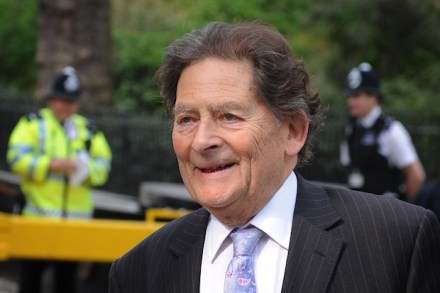
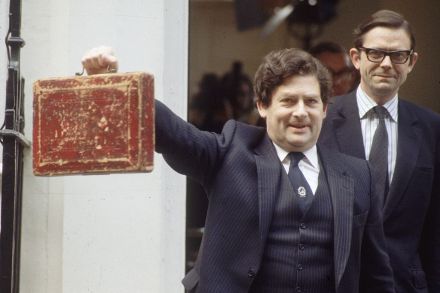
Nigel Lawson has died at the age of 91. He was the editor of The Spectator from 1966 to 1970 and then a Conservative politician who served as Chancellor of the Exchequer from 1983 until 1989. Below is an article written by Lawson in 1967 on the need for 'An Alternative Economic Policy', written some 16 years before he entered No. 11 under Margaret Thatcher and was able to realise that vision. So far as the short term is concerned, it is generally agreed, right across the political board, that the state should intervene at any rate to maintain full employment, to prevent undue inflation and generally to iron out so far as is possible the fluctuations in the trade cycle. Nor is there a fundamental difference between Conservatives and Socialists about how this ought to be done.

Net zero is a disastrous solution to a nonexistent problem

From our UK edition

Human folly is all too common. But in a long life I have never come across anything remotely as bad as the current climate scare. The government’s COP26 targets are ambitious (and eye-wateringly expensive). Amid the debate, one important question seems to be missing. Are we really facing an existential threat? Or might the climate change ‘crisis’ in fact be quasi-religious hysteria, based on ignorance? It is true that, since the industrial revolution, when we began to use fossil fuels — first coal, then oil and gas — as our source of energy, this has led to a steady, albeit gradual, increase in the amount of carbon dioxide in the atmosphere. The know-nothings (notably but by no means exclusively the BBC) customarily refer to this as pollution.

Has there ever been an acronym less apt than Sage?

From our UK edition

Our lives remain dominated by the plague, aka Covid-19. The government’s handling of it — admittedly a difficult task — has not been brilliant, but no worse than the performance of its scientific and medical advisory group (no acronym has ever been less apt than Sage).  There is one obvious lesson to be learned: the lesson from Sweden. The Swedes, alone in Europe, declined to have a lockdown. The outcome, in terms of deaths and health in general, seems to have been pretty average for Europe — worse than some, better than others (including, in particular, the UK). But comparisons are difficult, given all the factors involved. However, one fact is plain. The damage to Sweden’s economy has been far less than to every other European economy.

What we can learn from Sweden

From our UK edition

It is a particular pleasure to be returning to the columns of The Spectator, more than half a century after I became editor. The paper has been part of my life for a very long time. When I was at school, more than 70 years ago, we were all told to read Harold Nicolson’s column every week, to learn the art of essay-writing. I like to think that it was still a good paper in my time, but it is a much better one now. Fraser Nelson and his team are doing an excellent job. Our lives remain dominated by the plague, aka Covid-19. The government’s handling of it — admittedly a difficult task — has not been brilliant, but no worse than the performance of its scientific and medical advisory group (no acronym has ever been less apt than Sage).

The purpose of Article 50 was to make it as hard as possible to leave

From our UK edition

I read Paul Collier’s article in your 23 February issue, which has just reached me in la France profonde, with interest. The principal author of Article 50 was John Kerr, aka Lord Kerr of Kinlochard. I have known John for quite a long time, and enjoyed his company: when I became chancellor in 1983 he was my principal private secretary. He explained to me some time ago, before the referendum, that the purpose of Article 50 was to make it as difficult as possible for a country to leave the European Union. A clever man, he did a good job. Nigel Lawson House of Lords, London SW1 This letter appeared in this week's magazine.

Diary – 30 April 2015

From our UK edition

I have escaped this rather depressing election campaign by retreating to my home in la France profonde — to be precise, in Armagnac, in the heart of Gascony. My only outing, from which I have just returned, was a brief visit to New York, travelling there and back in the giant Airbus 380. The purpose of the trip was to drum up US support for the thinktank I founded in 2009, the Global Warming Policy Foundation, and its campaigning arm, the Global Warming Policy Forum, in the company of our outstanding director, Benny Peiser. Thanks to the wonders of the internet, the GWPF has a global reach, and its international influence is growing.

Nigel Lawson: David Cameron’s aid policy is doing more harm than good

From our UK edition

Earlier this week, George Osborne named Lord Lawson as one of the economic thinkers who had influenced him. But the Chancellor's mentor isn't quite so impressed with some of his policies. Here's his letter from this week's Spectator on the 'anomalous aid policy' that the government is pursuing: Sir: I was glad to see the excellent Acemoglu and Robinson article (‘Why aid fails’, 25 January) and your endnote recording that David Cameron has just declared their book, Why Nations Fail, to be one of his favourites. It is indeed an important book, which is why I quoted from it extensively in a House of Lords debate on overseas development aid in 2012.

Nigel Lawson’s diary: My secret showdown with the Royal Society over global warming

From our UK edition

The long-discussed meeting between a group of climate scientists and Fellows of the Royal Society on the one side, and me and some colleagues from my think-tank, the Global Warming Policy Foundation on the other, has now at last taken place. It was held behind closed doors in a committee room at the House of Lords, the secrecy — no press present — at the insistence of the Royal Society Fellows, an insistence I find puzzling given the clear public interest in the issue of climate change in general and climate change policy in particular. The origins go back almost a year, to a lecture by the president of the Royal Society, the biologist Sir Paul Nurse. In it he chose to launch a gratuitous personal attack on me, making a number of palpably false allegations.

Nigel Lawson: did I kill Hugh Gaitskell?

From our UK edition

I recently did a lunchtime meeting for the Institute of Economic Affairs. They had invited me to make the case for ‘Brexit’ — the departure of Britain from the European Union — which I now believe to be highly desirable. The room was packed and the discussion was refreshingly free of the fanatics, on both sides, who normally make debates on Europe so dreary. My mind went back to an occasion exactly 50 years ago, when I was at a small private dinner in Chelsea at which the guest of honour was the then leader of the Labour party and leader of the opposition, Hugh Gaitskell. During the course of the dinner, I found myself in an increasingly heated argument with Gaitskell over whether the UK should join what was then the European Economic Community.

Sport: Nigel Lawson on the Ashes

From our UK edition

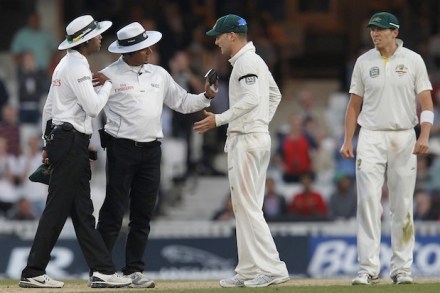
Those of us who watched the last day of the final Ashes Test of the present series enjoyed a rare and unexpected treat — and I write as one who has been a devoted cricket follower for more than 70 years: the first first-class match I ever saw was the Royal Navy playing the Army at Lords in 1942. There has, however, been much controversy over the anti-climactic ending, when the umpires decided to call it a day, on grounds of bad light, with England on the brink of victory. Much has been said about how this sort of disappointment must be avoided in future. In fact, the remedy is obvious. It is twofold. First, Test matches should start much earlier in the day than they do at present.

Surviving the euro

From our UK edition

We need an orderly end to the EU’s disastrous economic experiment The eurozone crisis threatens the world’s economic stability, but not for the reasons people think. The crisis was predictable and predicted, but schadenfreude is neither appropriate nor affordable. The task now is to extricate ourselves from this mess, and to learn its lessons. This means identifying the factors behind the debt crisis, and deciding how best to bring the calamitous eurozone experiment to an end. The economic threat comes from a further weakening of an already enfeebled western banking system, as a result of unwise lending and borrowing on a massive scale. Why did the West borrow so much? It has become fashionable to blame China’s huge surplus.

Sorry, minister: The Spectator is right about the EU Treaty

From our UK edition

There are two reasons why Jim Murphy, the Europe minister, is wrong and The Spectator right about the question of a referendum on the European Union Reform Treaty (‘The Spectator is wrong to call for an EU referendum’, 22 September). The first is that the government gave the people a solemn pledge that it would hold one before there was any question of ratifying the European Union Constitutional Treaty, and anyone who takes the trouble (and it does involve a wearisome amount of trouble) to study both documents will find that, to all intents and purposes, the content is the same. While different politicians from different countries state, for their own doubtless high-minded reasons, different views about the matter, I know of no dispassionate analyst who denies this.

DEEP THOUGHT: Climate of superstition

From our UK edition

There is no opinion, however absurd, which men will not readily embrace as soon as they can be brought to the conviction that it is generally adopted.Schopenhauer Next week marks the deadline that has been set for reactions to the less than satisfactory discussion paper that has emerged from the government’s belated review of the important issue of the economics of climate change. It is important for David Cameron, too. For, while rightly giving the environment a high priority, he is in danger, over this issue, of making commitments which, in government, he would find it extremely damaging to honour. Crucial though the economics of climate change is, the starting point clearly has to be the science.