Diary

Jeffrey Archer’s diary: a pirate at the traffic lights, and other Indian wonders

This last week, in India, I visited six cities in seven days: Mumbai, Pune, Bangalore, Hyderabad, Calcutta and New Delhi. This is my 11th trip to India and from the very beginning the signs were good. For a start, the temperature on arrival in Mumbai was a cool 22 degrees and I was told it had rained for the past two days, though I’ve actually never seen rain in Mumbai before. Because of a new eight-lane highway, we got from the airport to the Taj Hotel in the city centre in just 40 minutes, despite a minor hold-up. As the car was idling in a traffic jam, a young boy who couldn’t have been more than six or seven tapped on my car window. He was holding a pile of books. I wound the window down, and he asked: ‘Would you like the latest Jeffrey Archer?

Miriam Gross’s diary: Why use Freud and Kurt Weill to promote Wagner?

Last week I went to the exhilarating English National Opera production of Wagner’s The Mastersingers — five hours of wonderful music and singing whizzed by without a moment’s boredom. But there was one odd and perturbing factor, I thought. In place of a curtain, there was a huge ‘frontcloth’. It was covered with a collage of 103 faces of well-known artists. These same faces appeared again, during the finale, this time in the form of portraits held aloft by members of the cast. They included Joseph Roth, Stefan Zweig, Sigmund Freud, Kurt Weill, Billy Wilder, Richard Tauber, Oskar Kokoschka, Hannah Arendt, Simone Weil, Lotte Lenya, Max Ernst, Marlene Dietrich.

Paul Mason’s diary: My Greek TV drama

It’ll be a Skype interview, says the producer from Greek television, and not live. In TV-speak that usually means not urgent and not important, but I’ve become vaguely interesting to Greeks because of the ‘Moscovici draft’ — a doomed attempt to resolve the crisis, leaked to me amid denials of its existence. The interview goes on a bit and the tone is deferential. At the appointed time, I fire up Greek television to see how many clips they’ve used. Instead of me, a panel of five bearded men in an expansive studio are conducting an earnest preview of my interview.

Virginia Ironside’s diary: Fifty Shades is a story of redemption (but I still won’t watch it)

All this fuss about Fifty Shades of Grey! I wonder how many people have actually read all three books? Sado-masochism is only half the story. When you’ve waded through the entire oeuvre, if such appalling writing can be dignified with that term, you discover that the whole story is one of redemption. The ostensibly wicked, but aptly named, Christian is actually a tormented man who was cruelly abused by his mother and re-enacts this cruelty towards his lovers. But with a good woman (and a baby), pervy dungeons vanish and love conquers all. Pure Mills & Boon. These days I don’t go to films. I watch the trailers instead and I’ve saved myself hours of misery.

Sebastian Faulks’s diary: My task for 2015 – get a job

Just back from Sri Lanka, a place I first went to in 1981. It was then a dreamy island. I remember giving the room boy who had brought my case to the bandicoot-infested bedroom in Colombo a few rupees, but he wasn’t interested. He just wanted to sit on the bed and talk — about London, England, cricket, life. Three decades and a civil war later, people are aware of money, there is bottled water, and a pot of tea doesn’t take half an hour to arrive. One thing that seems unchanged is the optimism of the people. The new president, Mr Sirisena, has promised an end to the corruption of the Rajapaksa regime.

Alexander Chancellor’s diary: Picking golden oldies, Ken Dodd, and the sadness of Jack Nicholson

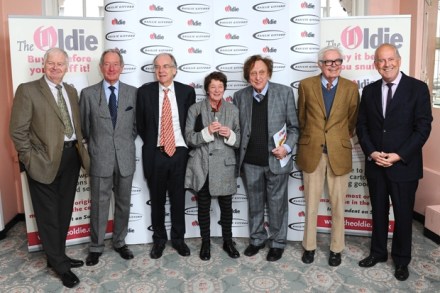
An excellent test of character is a person’s response to being offered an Oldie of the Year Award. There have always been those to whom the word ‘oldie’ is in itself an embarrassment. When Richard Ingrams founded the Oldie magazine in 1992, he was warned by many that it would fail because of its name. Nobody wanted to be thought old, he was told, and therefore nobody wanted a magazine that would portray oldness as something to be proud of. Ingrams overcame most of these qualms with the humour and irony he brought to the magazine. Nevertheless, I was nervous when I had to telephone Lord Falconer, whom I had never met, to tell him he had been chosen for an Oldie award. Lord Falconer is a political heavyweight who served as Lord Chancellor in Blair’s government.

Nigel Farage’s diary: How I survived Dry January

Dry January is tougher than it sounds. Well, for me anyway. It’s now been some 28 days since I’ve had a drink, and you should see what that means for my campaigning strategy. ‘Ginger beer? Lemonade?’ Pub-goers around the country can’t believe it when I walk in and whisper my order over the bar. The fact is they don’t believe I’m really doing it. ‘I’m not all spin and bluster like those other lads,’ I usually reply. ‘If I promise I’m going to do something, I’ll bloody well do it.’ Still, I can’t say it’s never going to tempt me again. Especially not given the week I’ve had. It all started in Milan.

Tom Holland’s diary: Fighting jihadism with Mohammed, and bowling the Crown Prince of Udaipur

As weather bombs brew in the north Atlantic, I’m roughing it by heading off to Rajasthan, and the literary festival where you are most likely to be greeted by an elephant. The life of a writer is rarely glamorous, but for one week in January — should an invitation to Jaipur be forthcoming — it decidedly is. The festival is to India what a Richard Curtis film is to London: a fusion of all the fondest stereotypes that foreigners have of a place. The talks, which run the gamut from the Mahabharata to the future of the novel, are pure literary masala. The parties are visions of perfumed candles, shimmering saris and maharajas’ palaces. The last time I was in Jaipur, there was even a cricket match.

Panic, profiteering and a mysterious girl in a Mini: notes from Moscow

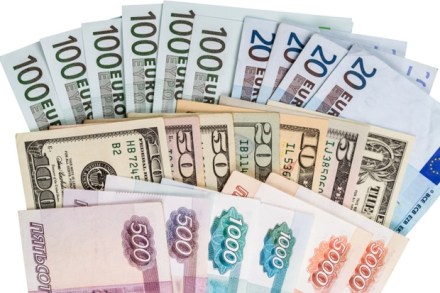
 Moscow Here we go again. The rouble slides, then tumbles, and slides again. For those of us who remember the crash of August 1998, the drill is familiar. For Muscovites, the old instincts have surfaced from the 1990s like a sausagey burp. Shoppers besieged Ikea, Auchan and other mega-markets, desperate to spend rapidly devaluing roubles. Cynical expatriates such as myself did much the same with our newly inflated hard currency. I cleared my local posh wine shop of a thousand bucks’ worth of Burgundy, now half-price in dollar terms. A correspondent colleague raided the Moscow Apple store to the tune of two iPhones and a pair of laptops before they shut down to recalculate prices.

Nicky Haslam’s diary: Marie-Anna Berta Felicie Johanna Ghislaine Theodora Huberta Georgina Helene Genoveva and other big names

I was once bundled into a police car in Palm Springs to explain why I didn’t have snow-tyres on my pick-up in the red-hot California desert. I don’t remember the outcome of the ‘arraignment’, but will never forget the lady cop’s name, L. Nevada Yonkers. Other weird names have stuck with me. Reading The Most of Nora Ephron, whom I met once and immediately fell in love with, I realised that when I was working on Vogue in New York in the 1960s, she had been on the staff of Newsweek. I used to be obsessed by the weird names of the girls on Newsweek’s masthead. I would reel them off like a litany.

Bruce Anderson’s diary: If you want to understand the SNP, it helps to be an ex-Trot

An embarrassing confession: in the late 1960s, I was a Trotskyite. But that period of political adolescence has its uses. It made me aware of the methods employed by extremist parties such as the Scots Nats. Trots wanted to encourage ‘the workers’ to make impossible demands, including ludicrously high wage rates, in order to bring down capitalism. But the workers were too wise to fall for that, until Arthur Scargill came along. Now, the Nats are playing a similar game, discussing the terms on which they might support Ed Miliband — as if they would like a stable government in London. That is nonsense. They want confusion and chaos in London, which would inflame the English against the Scots and convince even more Scots that the Union is collapsing.

Joan Collins’s diary: The joy of fake Christmas trees

Every year Christmas comes earlier and earlier in America. Cards, baubles and imitation trees were being sold in the big department stores in August, and the street decorations have been up in Beverly Hills since well before Halloween. From late October onwards, it’s the season of dressing up and showing off in downtown LA. Street parades are all the rage and hundreds of thousands of people saunter around in costumes, some gorgeous, most grotesque. Infants and children are usually done up as baby chicks or bunnies, which is inoffensive — but some adults go beyond the boundary of what is acceptable.

Stig Abell’s diary: My days in court with the Sun

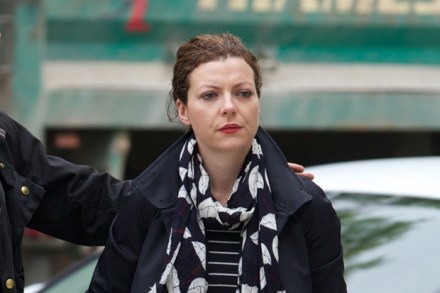
Soon after I joined the Sun as managing editor (among other things, I used to review novels for The Spectator), I read an interview with Keir Starmer, the outgoing head of the Crown Prosecution Service. What an unhealthy thing it would be, he said, if journalists had to consult with lawyers every time they pursued a story or asked a question. He was right — yet this is precisely what it is now like for most people in the business of trying to break stories in Britain. More journalists are on trial or facing prosecution here than in many banana republics around the world — as my newspaper knows to its cost. Last week, Clodagh Hartley, the Sun’s Whitehall editor, was finally cleared of paying a source within HMRC.

Jeremy Paxman’s diary: Why must Songs of Praise chase advertiser-friendly viewers?

The most unfashionable show on television, Songs of Praise, has had a makeover. The BBC had apparently discovered that the average viewer of the show was in their mid-seventies. Quelle surprise: in the trade it is known as ‘The Resurrection Show’, because so many participants shuffle off their mortal coil before transmission. The new version was introduced by a bubbly presenter with hair dyed a fetching shade of cerise, slightly talking down to us. It ended with a cheery roomful of Salvationists and a brass band. I rather liked it, even if I had switched on wondering why publicly funded religious broadcasters were chasing the advertisers’ target demographic. Actually, I think it’s rather bold of the producers to tell us the average age of their viewers.

Richard Madeley’s diary: Forgetting Tom Conti’s name, and other harrowing experiences

Oh God, it’s happened again. Another evening where I’m surrounded by people I know personally or have interviewed, and I can’t remember a single name. Multiple blanks. It’s a sort of self-fulfilling nervous tic — a phobia, almost. We were at a fundraiser at our kids’ former school in north London. For some reason, lots of celebs send their children there, including Jonathan Ross. He once joked that it’s the only school in London with a permanent posse of paparazzi hanging around outside the gates. Anyway, a veteran actor with grandchildren there strolled over for a chat. After he’d wandered off, I looked at my wife in mute appeal. ‘Tom Conti, for fuck’s sake,’ she sighed. ‘You’re bloody hopeless.

Alexander Masters’s diary: The idea that could unlock dozens of new cancer drugs

Two million pounds can buy you consideration for a place on a medical trial! Every year untold numbers of potential cancer therapies are abandoned. There is simply not enough money to test all the promising drugs and interventions. To my astonishment, I’ve had an idea about how to curb this appalling waste. I am not a medic, I am a biographer and illustrator, and until two years ago I had no idea what a medical trial was; but my proposal (published in the Wellcome Trust’s new e-magazine Mosaic) has been backed by leading ethicists, doctors, researchers and medical lawyers.

Barry Humphries’s diary: The bookshop ruined by Harry Potter

Do fish have loins? Last Tuesday, in a pretentious restaurant, I ordered a ‘loin of sea trout’. It looked just like an ordinary piece of fish — a bit small, as is usual in pretentious restaurants — on a plate sprinkled and drizzled as though the chef had perhaps coughed over it rather violently or vigorously scratched his head before giving it to the waiter. In Australia, I was once offered a shoulder of some other fish, so I suppose one might even be able to enjoy a rump of whitebait or even a saddle of flounder. But generally speaking I don’t mind loin when applied to the loinless, and somehow a loin of fruitcake sounds appetising, or even a loin of sourdough bread.

Andrew Roberts’s diary: Just who’s the despot here – Napoleon or Paxman?

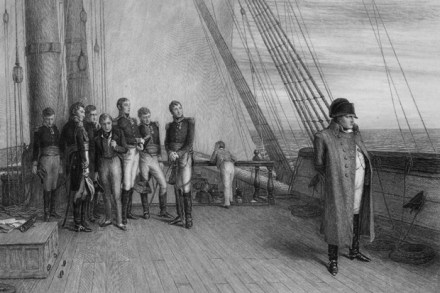
To the British embassy in Paris for a colloquium on ‘Napoleon and Wellington in War and Peace’ organised by our ambassador, Sir Peter Ricketts, to mark the bicentenary of the purchase of the embassy from Pauline Borghese, Napoleon’s sister. (According to the historian of the house, Tim Knox, Pauline would warm her feet on the naked backs of her ladies-in-waiting, and be carried to her bath by a huge Egyptian slave.) William Hague opened our proceedings, boldly pointing out the other anniversarial elephant in the room: it was Trafalgar Day.

Griff Rhys Jones’s diary: I am now less of a celebrity than my daughter’s dog

In order to promote the Dylan Thomas in Fitzrovia festival, I am trying to persuade Jason Morell, the director, that he must help me come up with stunts. ‘It’s stunts that will get us into the meeja,’ I tell him. So we launch the ‘Dylan Thomas Fitzrovia Breakfast Challenge’. Gary Kemp, Tom Hollander, Owen Teale and myself swallow a glass of beer with a raw egg in it — the great Celtic bard’s preferred nutritional morning kick-off. We are supposed to film it and challenge three others to do the same in aid of inner-city charities, and thus news of our festival will spread like a west African disease. Nobody else wants to do it. My other ideas have been a parade (‘Bermondsey Poets Say Do Not Go Gentle into the Good Night’ etc.

Prue Leith’s diary: I want to be green, but I’ve got some flights to take first…

‘Please God, make me good, but not yet.’ I know the feeling. As I get older and more deeply retired, I globe-trot more and my carbon footprint is horrendous. And guilt does not result in abstinence. The brain is persuaded but the flesh is weak. Years ago I chaired Jonathon Porritt’s sustainability organisation, Forum for the Future, and I remember holding a fund-raising dinner for rich Cotswolders and hoping no one would notice my gas-guzzling old car, toasty warm house, and melon with more air-miles than flavour. I’ve tried harder since then, but it’s not easy. A couple of years ago I converted my ancient barn into an eco-friendly house with heat-exchange pump, grey water collection, massive insulation, the lot.