Diary

Anthony Horowitz’s diary: Keeping James Bond’s secrets for the Smersh of publishing

It was quite fun being named as the new writer of 007 — although actually I’d make a lousy spy. As my family knows, I’m hopeless at keeping secrets and I’ve found it almost impossible hanging on to this one for the past few months. Even now I’m forbidden to reveal the title, the story, the date it takes place or any of the characters… and I’ll probably get into trouble even for writing this. Believe me, Orion Books and their legal department are more sinister than Smersh. In fact I did quite well and only dropped one clue to someone who follows me on Twitter. He asked me what my big secret was and I told him the answer was oobvious. As I hoped, he thought it was a typing error.

Jeremy Vine’s diary: Zipcars, hipster milk and the word that means I’m losing an argument

Last Tuesday I tried to sign up to a new life. My wife and I argued, slightly. ‘I don’t think this will work!’ she laughs, and I reply feebly: ‘But babe, it’s the future.’ (My use of the word ‘babe’ is like a label on the conversation — WARNING: HAVING ARGUMENT WHICH I AM ABOUT TO LOSE). She protests that she needs a car for ferrying kids and clearing the allotment and occasional 5.30 a.m. starts at work, and I produce a small piece of plastic and wave it, like Neville Chamberlain. This is my trump card. I have signed up to Zipcar. With this rectangle I can unlock a hire car from a nearby street and just drive. ‘It will be the end of petrol, insurance, repairs, mud and road tax!’ I say.

Tom Bower’s Diary: Resuming hostilities with Richard Branson

This week marks another milestone in my 15-year battle with Richard Branson. Ever since he unsuccessfully sued me in 1999 to prevent the publication of my first damning biography, we have exchanged shots. His anointment on Sunday as Britain’s most admired businessman coincides with my appearances to promote Branson: Behind the Mask, my second book. Inevitably, the book sparked his fury, summarised in a 29-page letter of complaint. Our war is now focused on whether Virgin Galactic, his Heath Robinson rocket, will ever carry him 62 miles into the border of space. For ten years his regular predictions of imminent take-off have proven wrong. Last Christmas he announced he would fly this month with his son and daughter. I derided his forecast. Now he says take-off will be next March.

Mark Amory’s diary: Confessions of a literary editor

Until recently I used to claim that I had been literary editor of The Spectator for over 25 years; now I say almost 30. The trouble is I am not quite sure and it is curiously difficult to find out. Dot Wordsworth arrived on the same day as me but she cannot remember either. Each of us assumed that the other was an established figure and so our superior. A similar imprecision may undermine other memories. In the early Eighties then, when Alexander Chancellor had reinvented the magazine after a bad patch, and it seemed daring, anarchic and slightly amateurish, I wrote theatre reviews and one late afternoon went round to Doughty Street, where The Spectator then was. I could find no one sober in the building. How did it manage to come out so promptly each week?

Tom Holland’s diary: Alex Salmond is the Scottish referendum’s answer to Shane Warne

[audioplayer src="http://traffic.libsyn.com/spectator/TheViewFrom22_11_Sept_2014_v4.mp3" title="Fraser Nelson, Tom Holland and Leah McLaren discuss how we can still save the Union" startat=50] Listen [/audioplayer]I feel a bit about the Scottish referendum as I did about the 2005 Ashes series. In both cases, those of us in the know were gripped with a nervous tension right from the very beginning. Shane Warne, Alex Salmond: the same smirk, the girth, the same potentially lethal form. That whole summer of 2005 I was on the rack, following every convulsive twist and turn, hoping against hope that England would manage to cling on to a precarious lead until stumps were drawn on the final day of the series. Tracking the Scottish referendum has been a similarly nerve-jangling experience.

Paul Wood’s diary: From James Foley’s memorial to gunfire in the streets

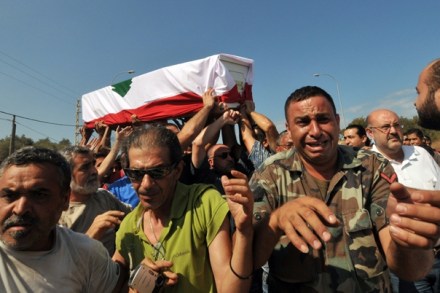
 Lebanon The Beirut press corps gather to remember the murdered journalist Jim Foley. People stand for a minute’s silence, drink in hand. Below the balcony, the nightly Beirut traffic jam sends the sound of car horns floating upward. Before killing him, the so-called Islamic State emailed his family: ‘The scum of your society… are held prisoner by us, THEY DARED TO ENTER THE LION’S DEN AND WHERE [sic] EATEN!’ I always thought of the hardy band of foreign freelancers, of which Jim was a part, as the best of us. They venture into Syria without the cushion of a big news organisation behind them, often not knowing if they’ll even be able to sell anything. They do it purely for the love of being on the story.

Andrew Marr’s diary: Seeing shadows of Syria in Limousin’s ghost village

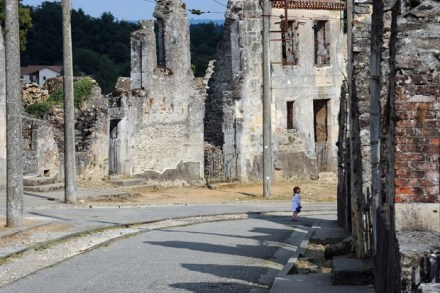
No, no, no, you don’t want a house abroad — the paperwork, the taxes, the piping, the cost of the pool. What you want are good, kind, generous friends with houses abroad. That’s what we’ve enjoyed this summer, meeting scores of interesting new people and being looked after by our best friends. We pay them back with wine, little presents and London hospitality. The only downside to ‘les vacances ligging’ is having to book extra seats home on Ryanair for our vastly swollen and moaning livers. The most striking thing we did in France was to visit Oradour-sur-Glane, the Limousin village where on 10 June 1944 a Panzer division of the SS massacred 642 men, women and children as a reprisal operation against the Resistance.

A.N. Wilson’s diary: The book that made me a writer – and the pushchair that made me an old git

Like many inward-looking children, I always doodled stories and poems. Knowing one wanted to be a writer is a different matter altogether. That moment came when I read Lytton Strachey’s Queen Victoria. I was sitting in the Temple Reading Room at Rugby. The final paragraph, in which Strachey imagined the dying Victoria at Osborne House, sinking out of consciousness as the scenes of her past life flitted through her brain, struck me as one of the best pieces of writing I had ever encountered. Fifty years on, an unworthy successor, I am about to publish my own life of Victoria. Mine is not hagiography but, like Strachey, and like almost everyone since who has ever written about this utterly distinctive woman, I fell under her spell. Cold turkey has set in.

Radek Sikorski’s diary: Show Putin what you think of him – eat a Polish apple

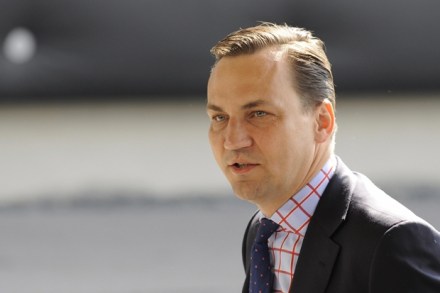
I made a welcome escape from sweltering Warsaw to the cloudy cool of Bodø, halfway up the coast of Norway, north of Iceland. Bodø’s harbour stays ice-free all year round only thanks to the Gulf Stream. The fjords bubble with whirlpools and offer some of the best cold-water scuba diving in the world. When the mist clears, the air in this visibly prosperous place has an Alpine, colour-enhancing quality. It’s my first time beyond the Arctic circle and the dusk through the night makes it hard to sleep. ‘Now imagine,’ says the wife over the phone from Washington, ‘what it was like to try to go to sleep in a Soviet-era hotel in Vorkuta, in late June, without curtains.

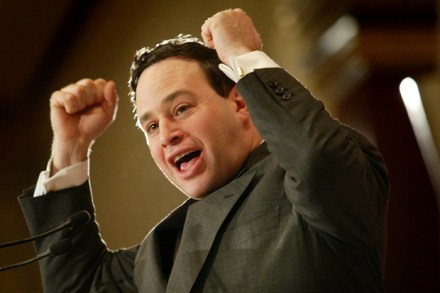
David Frum’s diary: When Hamas shoots at Israel, they’re shooting at my kid

 Wellington, Ontario A British visitor to this village might be disoriented by the flags. They look almost exactly like the Union Jack, but not quite. These banners omit the Cross of St Patrick, which was bundled into the flag of the United Kingdom only in 1801: this is the earlier version, carried north to Canada by the losers of the American revolution. My wife and I and our three children have been spending summers in Wellington since the late 1980s, when her parents bought a disused tomato farm with a vast view of Lake Ontario. Back then, this part of Ontario was bypassed by modern development.

Miriam Gross’s diary: As a qualified teacher, I say let in the ‘untrained’

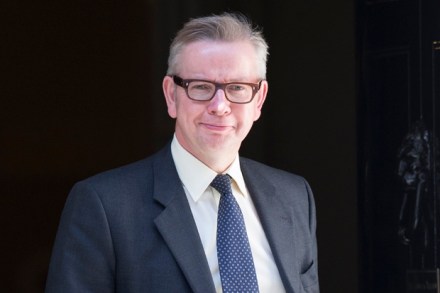
I knew that the historian Sir Richard Evans was a rather abrasive and quarrelsome man, but I was staggered by his vicious attack on Michael Gove in the Guardian last week. Here’s Evans’s first sentence: ‘Gove presided over the disintegration of our school system; he opened up teaching to untrained people in state schools, because he had contempt for professional educationalists. The restoration of professional teaching in our schools must now be an urgent priority.’ What? Those who follow these things will know that the two men have a history of exchanging insults, but how bizarre of Evans to vent his spleen on untrained teachers. Many great teachers are untrained enthusiasts for their subject, or people with a natural talent for working with children.

Simon Barnes’s diary: A sportswriter is never without a big subject (unless it’s golf)

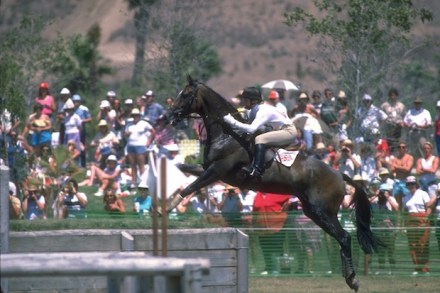
Sport is like love: it can only really hurt you if you care. Or for that matter, bring joy. You can’t explain sport, any more than you can explain the Goldberg Variations: you either get it or you don’t. So it can be hard to justify a life spent among bats and balls and leaping horses. I spent 32 years writing about sport for the Times, the last 12 as chief sportswriter, all of which comes to an close at the end of this month when I become News International’s latest economy, doomed to wander Fleet Street (is it still there?) wearing a luggage label that reads ‘Please look after this bear’. What shall I write about in my last week?

Anthony Horowitz’s Diary: Dinner with Saddam, anyone?

I have written a play, but a month after it was sent to half a dozen theatres, I have heard nothing. Either they’re being slow or they’re so shocked that they cannot bring themselves to respond. The play is called Dinner With Saddam and takes place in Baghdad on the evening of the Allied bombardment. It’s a comedy. Is it even possible, I wonder, for an English writer to portray an Arab family in a humorous way without laying himself open to charges of racism? And when all things are considered, was it good or bad timing to send the play out just one day before the Isis forces launched their first bloody attack? But I cannot see any way to write about the horror of Iraq except through comedy.

Joan Collins’s diary: Why I gave up on Ascot – and where I go instead

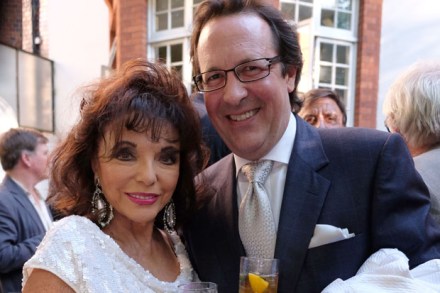
Can there be anything more perfect than early July in London, when the sun is shining, the sky a cloudless azure and the temperature hovers in the mid-seventies? Sorry, I still do Fahrenheit. It’s party time everywhere, with all the annual events happening, but I don’t do Ascot any more, too waggish, or Henley, too wet, or Wimbledon, too warm. The former has changed radically over the last 20 years, when I was fiercely censured for borrowing another woman’s Royal Enclosure badge, on a dare that no one would recognise me. Now these high jinks would be deemed innocent in comparison to the behaviour that goes on: people snogging, passing out and throwing up in public hardly raise an eyebrow. Everyone was super-elegant then, most women wearing gorgeous hats and outfits.

From jailbird to social butterfly – the return of Conrad Black

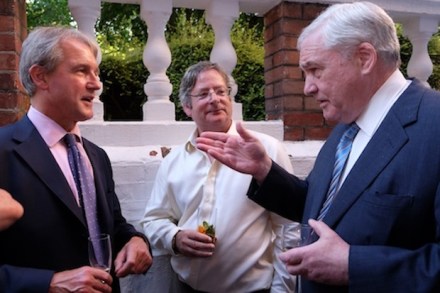
The former proprietor of this magazine, Conrad Black, is in London at the moment with his gorgeous wife Barbara, and I’ve got very bad news for those of his enemies who predicted that he’d be a social pariah when he got out of jail. At lunches, parties and dinners I’ve attended this week in his honour, he and Barbara have been feted by the leader of one of Britain’s largest political parties, a household-name supermodel, a former foreign policy adviser to a revered prime minister, members of the royal family, a senior industrialist, a former Commonwealth prime minister, a former British foreign secretary, several House of Lords colleagues of his and Britain’s most respected publisher, and that’s even before he arrives at the Speccie party this week.

John O’Sullivan’s diary: A grand reunion for the revolutionary class of ’89

I’m an old conference hand going back to the Tories’ annual get-together of 1958. My headmaster, an Irish Christian Brother of firm nationalist sympathies, almost certainly felt that attendance was an occasion of sin. But he relented to the extent of allowing me to skip Saturday morning sports for the prime ministerial rally. Harold Macmillan got as far as ‘My Lords, ladies, and gentlemen…’ when a trumpet blast sounded and the first of several hecklers shouted ‘The League of Empire Loyalists sound retreat.’ Mayhem ensued for about 15 minutes, after which Macmillan resumed imperturbably: ‘Blackpool is so bracing.’ Since then I have had high standards for both oratory and spontaneity on such occasions.

Dan Snow’s diary: Making World Cup history

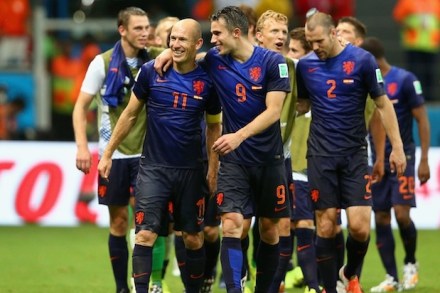
Could there be a more timely advert for the Better Together campaign than on the field of sport? What the England football team manifestly need is the man who is now the best British player, an offensive winger with the speed of a cheetah and the tactical brain of Rommel — proud Welshman, proud Brit, Gareth Bale. My obsession during international sports tournaments is to find appropriate historic parallels for every game. Holland made it easy for me with a destruction of Spain reminiscent of the 1639 annihilation of the Spanish fleet at the Battle of the Downs off the east coast of Kent: a decisive clash that ended conclusively the age of Spanish naval hegemony. I was looking for an England performance against Italy akin to Boudicca’s rout of the IX Legion.

Robert Harris’s diary: My accidental war with Tony Blair

To Paris, for the launch of the French edition of my novel about the Dreyfus affair. As we land, I isolate three anxieties out of my general sense of unease. First is the natural nervousness of any Englishman contemplating telling the French anything about their own country. Second is the French law which allows the descendants of actual historical figures — of whom there are dozens in my novel — to sue for defamation: the heirs of the Marquis de Sade even objected to an unflattering portrayal of the inventor of sadism. Third, I am required to make a speech in French, and while my grasp of that language is not as bad as my sister-in-law’s — who once genuinely inquired, at a restaurant in the Var: ‘What is the French for ratatouille?

Irvine Welsh’s diary: ‘Remember to get the Jesus aliens in, Irv!’

I’ve been heading east in a circle around the world from Chicago, taking in New York, London, Edinburgh, Liverpool, Bristol, Brighton, Paris, Geneva, Barcelona, Auckland, Sydney, Melbourne and LA. Now I’m killing time in Barcelona. I’d forgotten what a wonderful town it is, and also reminded of how Mediterranean culture really is right at the apex of civilised society. By comparison, US mall life seems consumer capitalism’s ultimate declaration of vacuous failure. I’m sitting drinking wine in a café with three wonderful women (Italian, Spanish and English) from my publishers, and the next thing I know it’s 3 a.m. A long layover at Heathrow to get the connecting flight to New Zealand.

Peter Mandelson’s diary: The accomplishments of George Osborne – and Vladimir Putin

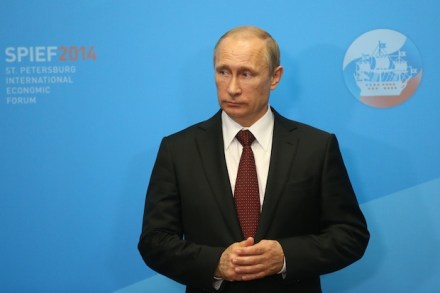
My trips to meet Russians in Russia these days are a little less controversial than my encounter with them in Corfu. The Corfu trip, though, did have the bonus of throwing me together with George Osborne, whom I had not known previously. Returning from St Petersburg I awoke on Saturday to his interview on the Today programme. If the Tories win the next election (unlikely in light of last week’s performance) it will be down to his political skill and determination. And his being joined at the hip to Cameron. If Blair and Brown had managed the same double act, Labour would still be in power today. The St Petersburg international economic forum was somewhat less international this year.