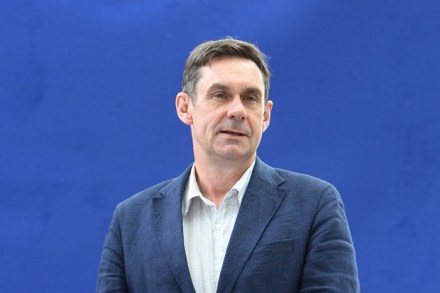
Paul Mason

Paul Mason is a journalist and author.

Labour budget: are we heading for austerity?

From our UK edition

23 min listen

Labour’s first Budget in 14 years will be delivered at the end of the month. The Prime Minister and Chancellor have already been warning that the public isn’t going to like what’s in it. But how will the Budget affect people? Will Labour break its manifesto commitment not to tax working people? And is it really true that things have to get worse before they get better? Kate Andrews is joined by Paul Mason, journalist at The New European. Join Freddy Gray a special live recording of Americano on Thursday 24 October. You can buy tickets at spectator.com/electionspecial.

Israel has a chance to de-escalate after Iran’s failed attack

From our UK edition

Iran’s strike on Israel yesterday is, simultaneously, a moment for alarm and calm. Alarm because, by unleashing more than 300 drones, cruise and ballistic missiles in response to Israel’s attack on its Damascus consulate at the start of the month, Iran is basically saying: we can do this every time Israel or its allies cross a line. Calm because not only did Israel repel the attack, it did so thanks to collaboration from its Western allies and friendly Arab states, with both Saudi Arabia and Jordan opening their skies to US combat aircraft. Israel has the right to defend itself, and will doubtless respond militarily. But its allies have a right also to urge restraint and de-escalation. This is because what Iran wants is for Israel to 'die of your rage'.

What is Labour’s economic plan?

From our UK edition

30 min listen

In her Mais lecture in the City of London this week, Rachel Reeves set out her plan for Britain’s economy: securonomics. What does securonomics mean? Can it deliver wealth? Will it work in a high-immigration economy? Freddy Gray speaks to Kate Andrews and the author and journalist Paul Mason.

Five takeaways from Rachel Reeves’s Mais speech

From our UK edition

We live in an age of stunts and soundbites so it was refreshing to hear a politician stand up and, for the best part of an hour, explain their political philosophy to an audience savvy enough to shred it. That’s what Labour’s Rachel Reeves did at last night’s Mais lecture.  She summoned the ghosts of heterodox leftists Karl Polanyi, Joan Robinson and Marie Curie to explain that Britain stands on the brink of a global economic regime change just as big as the one begun in 1979, that the Tories have left us bystanders, and that Labour is the only party that can make it happen.  Though she didn’t mention Margaret Thatcher by name (and never planned to, I understand) the speech, and the fiscal rules it outlined, has generated ‘Iron Lady’ headlines.

Rachel Reeves

Svitlana Morenets, Paul Mason, Robbie Mallett and Lloyd Evans

From our UK edition

26 min listen

This week: Svitlana Morenets takes us inside Ukraine's new plan for mass conscription (01:01); Paul Mason says that Labour is right to ditch its £28 billion green pledge (10:49); Robbie Mallett tells us about life as a scientist working in Antarctica (15:48); and Lloyd Evans reads his Life column (21:24).  Produced and presented by Oscar Edmondson.

Labour is right to ditch its £28 billion green pledge

From our UK edition

My family despises war movies, so it’s way after Christmas that I get to see Ridley Scott’s dire Napoleon film. The most embarrassing scene is where Josephine lifts up her dress and tells Bonaparte: ‘If you look down you will see a surprise, and once you see it you will always want it.’ It strikes me that something similar is going on between Reform UK and the Conservative party, with the result being long-term electoral irrelevance for the latter. When I think of conservative values, the words chivalry, monarchy and the church come to mind. In Penny Mordaunt, the Tories have a politician who has wielded an actual sword, in an actual church, in the presence of the actual King.

This is what a ‘multipolar’ world looks like. It’s chaos

From our UK edition

The Hamas terror attack has triggered war in Gaza, a geopolitical crisis and now – from Sydney to New York City – outbursts of street-level anti-Semitism in the West. Unless it de-escalates quickly, it looks like a strategic turning point both for Palestinian nationalism and Israel. I covered the 2014 war both from inside Gaza and on the streets with the Israeli peace movement. I’ve interviewed Hamas and seen how they operate up close. So, though I am no expert on the region, I can throw some concreteness into the current battle of abstractions. Let’s start with the obvious: Israel has a right to defend itself, rescue the hostages, arrest and prosecute Hamas and engage in lawful armed combat with its enemy.

Bankrolled: Labour’s new paymasters

From our UK edition

36 min listen

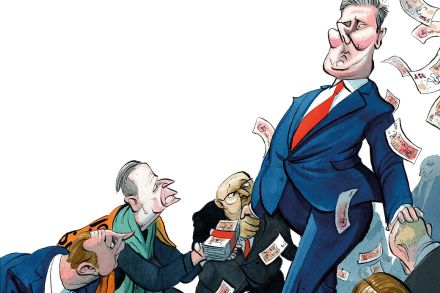
In this week’s cover story, The Spectator’s political editor Katy Balls writes about Labour’s new paymasters – Keir Starmer’s party now receives more money from private donors than it does from trade unions. What do the new donors want, and what does Starmer want from them? Katy joins Will and Lara alongside the writer and Labour supporter Paul Mason. (01:00) Next up, Webb Keane, from the University of Michigan, and Scott Shapiro, from Yale, write in the magazine this week about the dawn of the godbots – you can now chat online to an artificial intelligence that pretends it’s god. Might people soon start outsourcing their ethics to a chatbot? We're joined by Webb and The Spectator’s commissioning editor Mary Wakefield.

Who’s afraid of Keir Starmer?

From our UK edition

41 min listen

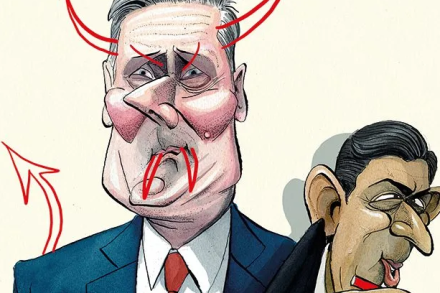
This week: Who's afraid of Keir Starmer? In his cover piece for the magazine, The Spectator's Editor Fraser Nelson says that without a Labour demon to point at the Tories stand little chance in the next election. He joins the podcast alongside journalist Paul Mason, to discuss why Keir Starmer is so hard to vilify (01:10).  Also this week: In the magazine, The Spectator's newsletter editor Hannah Tomes exposes the social media campaign targeting young women, such as herself, to freeze and donate their eggs. She joins the podcast alongside Sophia Money-Coutts, host of the Freezing Time podcast, to consider whether it is right to market this as an altruistic undertaking (16:58).

Can Keir escape?

From our UK edition

43 min listen

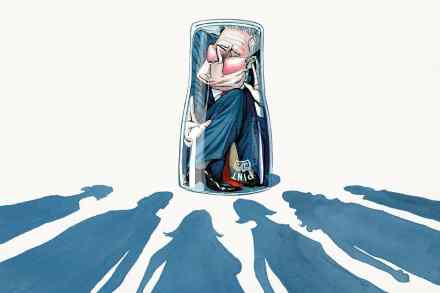
This week Lara Prendergast and William Moore talk to Katy Balls and the journalist Paul Mason about the future of Labour (00:40). Followed by historian David Abulafia and the Sunday Times education editor Sian Griffiths on the announcement of Cambridge University's plans to limit the number of their private school students (15:20). Finally, a debate between author Michele Kirsch and Laura Biggs from the Menopause Mandate on the question 'Are we talking about menopause too much?' (31:50).Hosted by Lara Prendergast & William MooreProduced by Sam HolmesSubscribe to The Spectator today and get a £20 Amazon gift voucher:spectator.

Why Gavin Williamson’s ‘attack everywhere’ strategy failed

From our UK edition

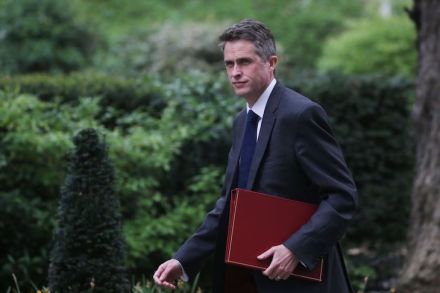
Sun Tzu said that if you defend everywhere you defend nowhere. Gavin Williamson’s strategy was to attack everywhere: to send the army in against knife crime, to turn every encounter with a Russian frigate into The Hunt for Red October, to threaten to send an aircraft carrier to the China sea and — according to one civil servant — to prepare the British army to ‘invade Africa’. Naturally, therefore, attack-minded Gavin emerged red-faced from a meeting of the National Security Council, at which May overruled a demand to ban Huawei from the UK’s comms infrastructure, and went on the attack. An attack, unfortunately, that had the same impact as the Dothraki cavalry in Game of Thrones.

What does victory for Ukraine look like?

From our UK edition

24 min listen

This week it looks like the war in Ukraine is turning. The Ukrainian resistance has moved from the defensive to the offensive against their invaders and American intelligence has reported that the Russian forces are struggling by almost every metric. Though for the Western world this is a very encouraging sign what does a true victory look like and what should our attitude to Russia be if this conflict ends in a fully free Ukraine?Cindy Yu is joined by Fraser Nelson, James Forsyth and Paul Mason to discuss.

Can Labour win the Blue Fen?

From our UK edition

The Labour Together election review makes grim reading. Unless Labour can take back a large part of Scotland, it needs a swing in England so large that it takes Jacob Rees-Mogg’s seat in Somerset. We’ll have to take back not only the Red Wall but the Blue Fen.  Realistically, the report says, there are three routes back to power: drop social liberalism and bring out the anti-immigration mugs; tack to the centre on economic policy while talking loudly about patriotism; or try to unite a culturally divided working-class base around a radical economic offer that is ‘credible and morally essential’.  That third option is effectively the strategy Starmer stood on, but the report also reveals levels of incompetence in the party that will take months to fix.

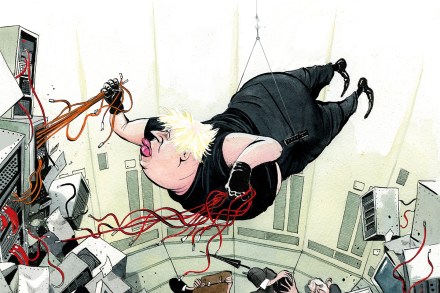
Mission Impossible: can Boris Johnson rewire the British government?

From our UK edition

39 min listen

The Prime Minister is trying to reform the civil service. He's not the first to try - so will he succeed? (00:50) The stakes for success are high, as his opponent is no longer Jeremy Corbyn, but the more impressive Keir Starmer. How have Starmer's first almost 100 days gone? (15:45) And last, how widespread is loneliness? (29:45)With the Spectator's political editor James Forsyth; Jill Rutter from UK In a Changing Europe; our deputy political editor Katy Balls; former C4 Economics Editor Paul Mason; author Leaf Arbuthnot; and Andy Nazer from the Campaign to End Loneliness.Presented by Cindy Yu.

Why Rebecca Long-Bailey had to go

From our UK edition

Do you remember where you were when the BBC showed a rerun of Bowie’s Glastonbury set? When we ask each other that in future, the answer is always going to be: ‘At home, recovering from a day of Zoom calls.’ It’s 100 days since lockdown and as we slowly emerge it’s hard to keep a sense of proportion about the events in between. I remember pricking my finger for a trial antibody test; I remember my delight at discovering that an old-time cockney butcher still exists on a nearby council estate; I remember the absolute stillness of the air as a sparrowhawk circled over south London. Best to fix these memories in writing now, because the cryogenic social frost is well and truly melting. I’m on a public webinar with Katja Kipping and Jagmeet Singh.

Diary – 9 May 2019

From our UK edition

Multiple copies of a Labour leaflet for the European elections are being shared on messaging apps by horrified activists. Not only does the draft leaflet omit mention of a second referendum, it seems to suggest Labour’s MEP candidates will ‘do a Brexit deal with Europe’ while actually being members of the European Parliament. The leaflet causes a furore among the candidates, is disavowed by Labour HQ as a ‘draft’, and the whole caravan of Brexit chaos lurches forward to its next absurdity. Game of Thrones means Monday mornings are the new Sunday nights in our household. The battle of Winterfell is as thrilling as it is absurd. If you have seen ballistae on the battlefield, and know they can hit dragons, why deploy trebuchets?

Diary – 17 January 2019

From our UK edition

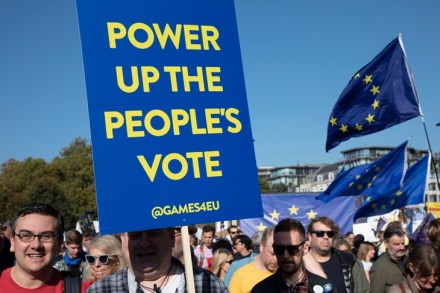
A few of us on the Labour left decide to see if it is possible to conjure, from nowhere, a #FinalSay campaign for a second referendum. The Labour front bench does not sound ecstatic about a second referendum, and Chuka Umunna’s lot are bound to screw it up if they’re in charge. So we schedule a meeting in the Commons, commission a meme and spread the word. Not long after this goes public, numerous Twitter users with random numbers in their handles begin accusing me of being a ‘pro-Nato White Helmet shill’, a ‘coup-monger’ and a ‘neoliberal’. The reaction at my Labour branch is more positive. We pass a motion calling for an emergency party conference to decide the line in any second referendum. Our MP, pro-Brexiteer Kate Hoey, does not attend.

Why won’t Remainers get behind Corbyn’s Brexit plan?

From our UK edition

At the BBC early doors for the Today programme, to preview Corbyn’s speech advocating membership of a customs union. I suggest that ‘this is something Remainers can get behind’, but come off air to a torrent of denialism and abuse on Twitter. In a parallel universe, the people who feel existentially destroyed by being halfway out of the EU would have made this case passionately before the vote, instead of trying to rely on fear and platitudes now. In quick succession, the European Commission drops its bombshell, obliging Britain to impose customs controls across the Irish sea; then Theresa May delivers her speech applying for a kind of off-peak gym membership of the EU. It’s well delivered, diplomatically calibrated, and doomed to be rejected.

Diary – 8 March 2018

From our UK edition

At the BBC early doors for the Today programme, to preview Corbyn’s speech advocating membership of a customs union. I suggest that ‘this is something Remainers can get behind’, but come off air to a torrent of denialism and abuse on Twitter. In a parallel universe, the people who feel existentially destroyed by being halfway out of the EU would have made this case passionately before the vote, instead of trying to rely on fear and platitudes now. In quick succession, the European Commission drops its bombshell, obliging Britain to impose customs controls across the Irish sea; then Theresa May delivers her speech applying for a kind of off-peak gym membership of the EU. It’s well delivered, diplomatically calibrated, and doomed to be rejected.

Paul Mason’s diary: My Greek TV drama

From our UK edition

It’ll be a Skype interview, says the producer from Greek television, and not live. In TV-speak that usually means not urgent and not important, but I’ve become vaguely interesting to Greeks because of the ‘Moscovici draft’ — a doomed attempt to resolve the crisis, leaked to me amid denials of its existence. The interview goes on a bit and the tone is deferential. At the appointed time, I fire up Greek television to see how many clips they’ve used. Instead of me, a panel of five bearded men in an expansive studio are conducting an earnest preview of my interview.