Diary

Diary – 18 February 2016

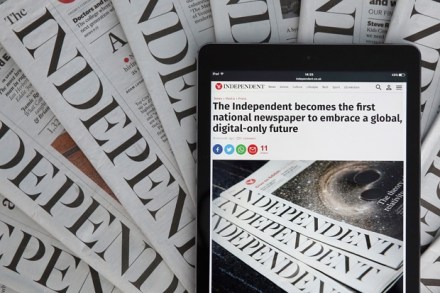
I knew, the minute my job was first mooted, on the steps of San Francesco church in the sun-drenched, mafia-infested Sicilian town of Noto, that I would be the last editor of the (printed) Independent. This fact was reinforced at 17.21 on my first day, when the daily email from our circulation department put the figure for our paid-for circulation at 42,000. The closure of the Independent’s print edition was a long time coming but that doesn’t stop it being a painful shock. Introspection is inevitable. Was it my fault? How did I do? There are three parts to the job these days — editorial, commercial, digital — and one golden rule: in poor newspapers, the commercial guys call the shots; in rich ones, the editorial guys do.

Diary – 11 February 2016

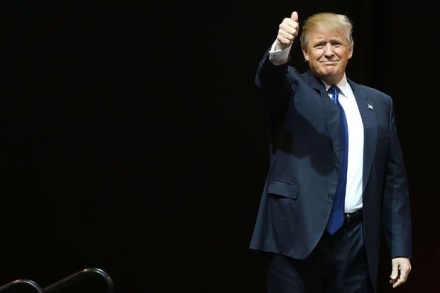
While browsing in Barter Books, the wonderful secondhand bookshop in Alnwick that is fast becoming a national institution, I came across a volume of Piers Morgan’s diaries, covering his two years in the United States, judging America’s Got Talent and taking part in Celebrity Apprentice (the Alan Sugar role being played by one Donald Trump). I cannot claim to have been all that keen on Morgan ever since I discovered that in the mid-1990s, when he was an agent of Murdoch, he penned a note to Tony Blair demanding that he silence ‘idiots like Mullin shouting their mouths off about “loathsome tabloids” and my owner’.

Diary – 4 February 2016

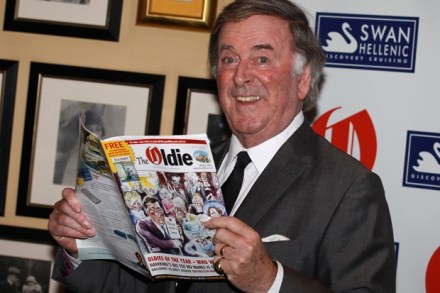
There was a cloud over the ‘Oldie of the Year’ awards luncheon this week, which was the death only a few days earlier of Sir Terry Wogan. Readers of the Oldie must rank high among Wogan’s TOGs (‘Terry’s Old Geezers and Gals’), as he called his fans, not only because old geezers and gals are exactly what most of us are, but above all because he was for many years the chairman of the judges of these awards and the person who presided at their annual presentation ceremony at Simpson’s-in-the-Strand. Wogan’s words on these occasions — whimsical, sardonic, affectionate — captured perfectly the nature of old age: its mix of dignity, poignancy and absurdity.

Diary – 28 January 2016

For years, I’ve wondered why so many clever people go to Davos to discuss topics as meaningless as ‘the new global context’ or ‘shared norms for the new reality’. It has always struck me like a massive game of Just A Minute, in which contestants compete on how long they can talk about a theme that makes no sense at all. But as I found out when I visited last week, the real game is far more sophisticated. No one at Davos cares too much about the gabfest. The debates are, in effect, a front for the biggest networking event in the capitalist world. For one week, this ski resort becomes a fortress guarded by the Swiss army. Venture capitalists chase chief executives, who chase the politicians while the journalists chase everyone.

Diary – 21 January 2016

Quarrelling about the date of Easter has been a Christian pastime for centuries. The chief bone of contention is whether Easter should be held on 14th Nisan in the Jewish calendar — that is, at a fixed point of the lunar month — or whether it should be held on the nearest Sunday to this date. The Celtic church(es) evidently had their own ideas on the question. In the year 651, Queen Eanfleda of Northumbria was fasting on what she regarded as Palm Sunday on the very day that her husband, Oswy, King of Northumbria, was celebrating Easter. Behind the seemingly batty arguments lay the world-changing conviction that Christ’s death and resurrection had been a new Passover.

Diary – 14 January 2016

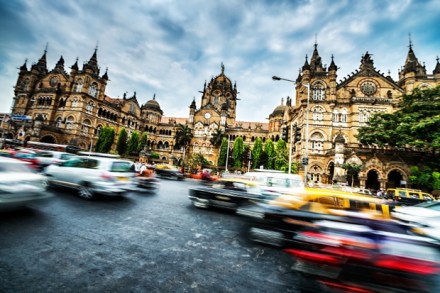
Whatever you do, don’t allow your six-year-old to be caught short at Crewkerne station. With the rain pouring and the wind howling, my daughter needed the loo. But it was locked. And no staff anywhere to be seen. So I pressed the ‘Help’ button on one of those machines that have replaced stationmasters. ‘How can I assist you?’ responded a warm South Asian voice. ‘Er, we need someone to open the loo at Crewkerne.’ ‘Where exactly are you?’ she came back, sounding lost. ‘You know, in Dorset, after Yeovil. On the Exeter line. How far away is the help centre?’ I was thinking Bristol, maybe Swindon. ‘Oh, we are in Mumbai,’ she declared.

Diary – 7 January 2016

So far my responsibilities as the 2016 chair of the Man Booker prize have been rather light. We’ve had our first meeting, received our first batch of books, and I’ve bought a smart notebook for record-keeping. I shall take a step back from journalism this year, including my Sunday Times column, but that doesn’t mean I shall be less active in the fight for freedom of expression. Some things are non-negotiable. I’ve just read Open Letter by the late Charlie Hebdo editor Charb. He finished it two days before his death in the massacre on 7 January 2015. The book is aimed at both religious extremists and their apologists. ‘No form of discrimination,’ proclaimed Charb, ‘is better or worse than any other.

Diary – 31 December 2015

Disappointingly, the recent film about Steve Jobs, co-founder of Apple, does not include the thing about him which most struck me in Walter Isaacson’s biography: Jobs habitually parked in disabled parking bays. Naturally, this is something that I (in company with many drivers, I suspect) long to do whenever disabled spaces are the only available parking, especially when two or three of them are standing empty. But I don’t — even for a five-minute dash to Tesco. The fear of exposure stops me, as well perhaps as a smidgen of unselfishness.

Diary – 10 December 2015

Flying home to New York, I noticed a disturbing innovation in pre-flight cabin announcements. After the welcomes, exhortations, and promotions the purser itemised the number of passengers (205) and crew (12) on board. Presumably, this is for the ‘black box’ recorder — so the correct complement of dental charts can be assembled should gravity win. But the broadcast concluded in a startlingly metaphysical manner. ‘So,’ she said cheerfully, ‘that’s 217 souls on board.’ Taxiing for takeoff is a disconcerting moment to contemplate the existence of souls, let alone enumerate them. (Do they count pets in the hold? Children in utero? Makers of Faustian pacts?

Diary – 3 December 2015

First, an apology. Thanks to me, all journalists at BBC Radio’s ethics and religion division are being sent for indoctrination in climate change. Sorry. In July I made a short Radio 4 programme with them called What’s the Point of the Met Office?, which accidentally sent orthodox warmists into a boiling tizzy. Amid jolly stuff about the history of weather predictions and the drippiness of today’s forecasters, we touched on parliamentary lobbying done by the state-funded Met Office. All hell broke out. Cataracts and hurricanoes! The Met Office itself was unfazed but the eco-lobby, stirred by BBC environment analyst Roger Harrabin, went nuts. I was accused of not giving a proper airing to ‘prevailing scientific opinion’. Apostasy had occurred.

Diary – 26 November 2015

Scientists are experimenting with growing replacement vocal cords in the lab, as well as transplanting them from dogs. That was the Sun’s imaginative angle on my somewhat croaky debut as a Today programme presenter (only one of mine is working properly). It led me to ponder which species of donor would be fitting for my new role. Rottweiler? Too aggressive. Terrier, perhaps? Annoying after a while. Maybe a shepherd or a pointer would fit better with the mission to explain? All suggestions gratefully received. Bar one, that is. Husky is out. If my first programme had not been dominated by events in Paris, I had planned to talk about the world’s greatest city. I speak of Manchester, of course.

Ian Rankin’s diary: Paris, ignoring Twitter and understanding evil

After ten days away, I spent last Friday at home alone, catching up on washing, shopping for cat food, answering emails. Quotidian stuff. An early dinner with one of my sons, and I was in bed at a decent hour. Checking Twitter, I began to realise that a grim spectacle was unfolding in Paris. Soon enough, on-the-ground reportage was joined by rumour, inaccuracy and blatant misinformation. That’s the problem with ‘rolling news’ — and Twitter has become part of that industry. On the TV, the reports were more measured but far less immediate, with repetitious footage of police cars and emergency workers. Twitter was the more immersive and pulsating place to be, but I soon grew fatigued by this very fact, and by the deluge of opinions.

Diary – 12 November 2015

One of my constituents has been in an Indonesian prison since May. Journalist Rebecca Prosser was arrested with her colleague Neil Bonner while working on a documentary for National Geographic about piracy in the Malaccan Strait. Their visas hadn’t come through when filming started and they were arrested by the Indonesian navy and locked up in a prison with 1,400 men and 30 women. The family had been warned that publicity would only make things worse so I have been working behind the scenes to try to get her home. I’ve been ambushing Philip Hammond and Hugo Swire as they come out of the division lobby after 10 p.m. votes, urging them to get our embassy in Jakarta to visit the prison, and leaping on Richard Graham MP,chair of the all-party parliamentary group on Indonesia.

Diary – 5 November 2015

I had only experienced great loss when my mother died. It was desperately harrowing, but not as harrowing as the news that my sister Jackie had passed away. My mother had suffered a long lingering illness but Jackie only told me about her cancer two weeks before she died. It was a shattering, heart-breaking blow that I still haven’t assimilated and I don’t know if I ever will really get over it. I expect one learns to live with loss but she remains as vivid in my heart and my mind as if she were still alive. Jackie was a special woman, not because she was my sister but because of her indomitable spirit, amazing energy, generosity, kindness and warmth.

Diary – 29 October 2015

I’m counting ‘Wows!’ Suddenly everyone is using this irritating expletive expressing incredulity, amazement and nothing at all. I’ve heard it from the lips of daughters in law, professors of literature, rabbis and housewives. No doubt at least one priest has said it after a particularly lurid confession. It is spreading like leprosy over ordinary discourse and will, in time, die out like ‘Zounds’ or ‘Gee whizz’. I wonder if it will turn up as an anachronism in Downton Abbey? I saw on television the other night a superb production of Priestley’s An Inspector Calls with great performances from David Thewlis, Ken Stott and Miranda Richardson. The adaptation was impeccable and no one said ‘Wow!

Boris Johnson’s diary: Amid the China hype, remember Japan

Frankly I don’t know why the British media made such a big fat fuss last week when I accidentally flattened a ten-year-old Japanese rugby player called Toki. He got to his feet. He smiled. Everyone applauded. That’s rugby, isn’t it? You get knocked down, you get up again. And yet I have to admit that I offered a silent prayer of thanks that I didn’t actually hurt the little guy. They aren’t making many kids like Toki these days; in fact they aren’t making enough kids at all. If you want proof of the rule that nobody knows anything, look up a 1988 bestseller called Yen! Japan’s New Financial Empire and its Threat to America.

N.M. Gwynne’s diary: Old names worth dropping

As I get older (and my 74th birthday is now close), I get deeper and deeper into nostalgia. I do not fight this, because nostalgia seems to me to be rational as well as agreeable. Things really aren’t what they once were. ‘But people have always said that,’ is often the response. Yes, and for the most part, I maintain, people have always been right. So it is that, whenever I leave my present home in Ireland for a visit to England, what I most enjoy there is seeing the most elderly of my friends. Having been around for so long, they have so much to talk interestingly about. Indeed, I rather wonder whether anyone anywhere could be more interesting — or, as it happens, more name-droppable — than those whom I called on during my recent visit.

Edmund de Waal’s diary: Selling nothing, and why writers need ping-pong

On the top landing of the Royal Academy is the Sackler Sculpture Corridor, a long stony shelf of torsos of gods, martial bodies, heads, a vast foot. At one end Michelangelo’s Taddei Tondo is hidden behind slightly green glass. It is worth any pilgrimage. At the other end is a modest door into the print room and library. You walk into darkness and drama, steps running down past vast print chests and into a double-height library, lit from oculi above. This is where the marbles and plaster casts used to be housed. It was transformed into a library 25 years ago by H.T. Cadbury-Brown, the architect of the Royal College of Art, and shares with it a decisive sense of structure. For a few months, until the new year, you can buy a ticket for a fiver and spend some silent time in these rooms.

Diary – 1 October 2015

Party conference season is the most pointless waste of money, time and liver quality ever devised. I attended these sweaty, drunken gatherings for ten years during my newspaper-editor days and achieved nothing constructive other than clarity over which is the best way to treat a monstrous hangover. (Answer: my late grandmother’s recipe of vine tomatoes on toast, laden with thick Marmite and gargantuan grinds from a pepper mill.) But they were fun, so long as I adhered to the golden rule: always leave the bar before 2 a.m., thus avoiding the moment when enough alcohol emboldens other delegates, and indeed one’s own staff, to tell you what they really think of you.

Diary – 24 September 2015

Jeremy Corbyn has been compared to plenty of people over the past few months — a geography teacher, Michael Foot, Brian from the Monty Python film — but my favourite comparison was to a horse. Steve Fielding, professor of politics at Nottingham, declared Corbyn’s election ‘an act of political stupidity unparalleled since Caligula appointed his horse to the Roman senate’. As someone with a book just published on Rome’s first imperial dynasty, I was doubly thrilled. First, Professor Fielding had confirmed the conviction in which I had written my history of the first Caesars: that two millennia on, the West’s primal examples of political excess continue to instruct and appal.