Diary

Diary – 31 December 2015

Disappointingly, the recent film about Steve Jobs, co-founder of Apple, does not include the thing about him which most struck me in Walter Isaacson’s biography: Jobs habitually parked in disabled parking bays. Naturally, this is something that I (in company with many drivers, I suspect) long to do whenever disabled spaces are the only available parking, especially when two or three of them are standing empty. But I don’t — even for a five-minute dash to Tesco. The fear of exposure stops me, as well perhaps as a smidgen of unselfishness.

Diary – 10 December 2015

Flying home to New York, I noticed a disturbing innovation in pre-flight cabin announcements. After the welcomes, exhortations, and promotions the purser itemised the number of passengers (205) and crew (12) on board. Presumably, this is for the ‘black box’ recorder — so the correct complement of dental charts can be assembled should gravity win. But the broadcast concluded in a startlingly metaphysical manner. ‘So,’ she said cheerfully, ‘that’s 217 souls on board.’ Taxiing for takeoff is a disconcerting moment to contemplate the existence of souls, let alone enumerate them. (Do they count pets in the hold? Children in utero? Makers of Faustian pacts?

Diary – 3 December 2015

First, an apology. Thanks to me, all journalists at BBC Radio’s ethics and religion division are being sent for indoctrination in climate change. Sorry. In July I made a short Radio 4 programme with them called What’s the Point of the Met Office?, which accidentally sent orthodox warmists into a boiling tizzy. Amid jolly stuff about the history of weather predictions and the drippiness of today’s forecasters, we touched on parliamentary lobbying done by the state-funded Met Office. All hell broke out. Cataracts and hurricanoes! The Met Office itself was unfazed but the eco-lobby, stirred by BBC environment analyst Roger Harrabin, went nuts. I was accused of not giving a proper airing to ‘prevailing scientific opinion’. Apostasy had occurred.

Diary – 26 November 2015

Scientists are experimenting with growing replacement vocal cords in the lab, as well as transplanting them from dogs. That was the Sun’s imaginative angle on my somewhat croaky debut as a Today programme presenter (only one of mine is working properly). It led me to ponder which species of donor would be fitting for my new role. Rottweiler? Too aggressive. Terrier, perhaps? Annoying after a while. Maybe a shepherd or a pointer would fit better with the mission to explain? All suggestions gratefully received. Bar one, that is. Husky is out. If my first programme had not been dominated by events in Paris, I had planned to talk about the world’s greatest city. I speak of Manchester, of course.

Ian Rankin’s diary: Paris, ignoring Twitter and understanding evil

After ten days away, I spent last Friday at home alone, catching up on washing, shopping for cat food, answering emails. Quotidian stuff. An early dinner with one of my sons, and I was in bed at a decent hour. Checking Twitter, I began to realise that a grim spectacle was unfolding in Paris. Soon enough, on-the-ground reportage was joined by rumour, inaccuracy and blatant misinformation. That’s the problem with ‘rolling news’ — and Twitter has become part of that industry. On the TV, the reports were more measured but far less immediate, with repetitious footage of police cars and emergency workers. Twitter was the more immersive and pulsating place to be, but I soon grew fatigued by this very fact, and by the deluge of opinions.

Diary – 12 November 2015

One of my constituents has been in an Indonesian prison since May. Journalist Rebecca Prosser was arrested with her colleague Neil Bonner while working on a documentary for National Geographic about piracy in the Malaccan Strait. Their visas hadn’t come through when filming started and they were arrested by the Indonesian navy and locked up in a prison with 1,400 men and 30 women. The family had been warned that publicity would only make things worse so I have been working behind the scenes to try to get her home. I’ve been ambushing Philip Hammond and Hugo Swire as they come out of the division lobby after 10 p.m. votes, urging them to get our embassy in Jakarta to visit the prison, and leaping on Richard Graham MP,chair of the all-party parliamentary group on Indonesia.

Diary – 5 November 2015

I had only experienced great loss when my mother died. It was desperately harrowing, but not as harrowing as the news that my sister Jackie had passed away. My mother had suffered a long lingering illness but Jackie only told me about her cancer two weeks before she died. It was a shattering, heart-breaking blow that I still haven’t assimilated and I don’t know if I ever will really get over it. I expect one learns to live with loss but she remains as vivid in my heart and my mind as if she were still alive. Jackie was a special woman, not because she was my sister but because of her indomitable spirit, amazing energy, generosity, kindness and warmth.

Diary – 29 October 2015

I’m counting ‘Wows!’ Suddenly everyone is using this irritating expletive expressing incredulity, amazement and nothing at all. I’ve heard it from the lips of daughters in law, professors of literature, rabbis and housewives. No doubt at least one priest has said it after a particularly lurid confession. It is spreading like leprosy over ordinary discourse and will, in time, die out like ‘Zounds’ or ‘Gee whizz’. I wonder if it will turn up as an anachronism in Downton Abbey? I saw on television the other night a superb production of Priestley’s An Inspector Calls with great performances from David Thewlis, Ken Stott and Miranda Richardson. The adaptation was impeccable and no one said ‘Wow!

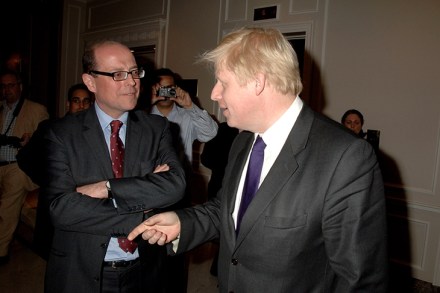
Boris Johnson’s diary: Amid the China hype, remember Japan

Frankly I don’t know why the British media made such a big fat fuss last week when I accidentally flattened a ten-year-old Japanese rugby player called Toki. He got to his feet. He smiled. Everyone applauded. That’s rugby, isn’t it? You get knocked down, you get up again. And yet I have to admit that I offered a silent prayer of thanks that I didn’t actually hurt the little guy. They aren’t making many kids like Toki these days; in fact they aren’t making enough kids at all. If you want proof of the rule that nobody knows anything, look up a 1988 bestseller called Yen! Japan’s New Financial Empire and its Threat to America.

N.M. Gwynne’s diary: Old names worth dropping

As I get older (and my 74th birthday is now close), I get deeper and deeper into nostalgia. I do not fight this, because nostalgia seems to me to be rational as well as agreeable. Things really aren’t what they once were. ‘But people have always said that,’ is often the response. Yes, and for the most part, I maintain, people have always been right. So it is that, whenever I leave my present home in Ireland for a visit to England, what I most enjoy there is seeing the most elderly of my friends. Having been around for so long, they have so much to talk interestingly about. Indeed, I rather wonder whether anyone anywhere could be more interesting — or, as it happens, more name-droppable — than those whom I called on during my recent visit.

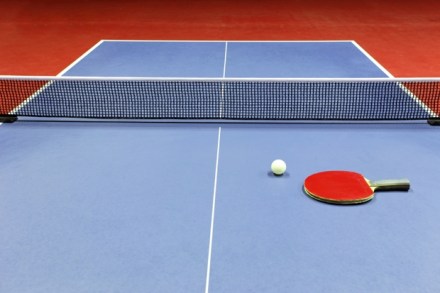
Edmund de Waal’s diary: Selling nothing, and why writers need ping-pong

On the top landing of the Royal Academy is the Sackler Sculpture Corridor, a long stony shelf of torsos of gods, martial bodies, heads, a vast foot. At one end Michelangelo’s Taddei Tondo is hidden behind slightly green glass. It is worth any pilgrimage. At the other end is a modest door into the print room and library. You walk into darkness and drama, steps running down past vast print chests and into a double-height library, lit from oculi above. This is where the marbles and plaster casts used to be housed. It was transformed into a library 25 years ago by H.T. Cadbury-Brown, the architect of the Royal College of Art, and shares with it a decisive sense of structure. For a few months, until the new year, you can buy a ticket for a fiver and spend some silent time in these rooms.

Diary – 1 October 2015

Party conference season is the most pointless waste of money, time and liver quality ever devised. I attended these sweaty, drunken gatherings for ten years during my newspaper-editor days and achieved nothing constructive other than clarity over which is the best way to treat a monstrous hangover. (Answer: my late grandmother’s recipe of vine tomatoes on toast, laden with thick Marmite and gargantuan grinds from a pepper mill.) But they were fun, so long as I adhered to the golden rule: always leave the bar before 2 a.m., thus avoiding the moment when enough alcohol emboldens other delegates, and indeed one’s own staff, to tell you what they really think of you.

Diary – 24 September 2015

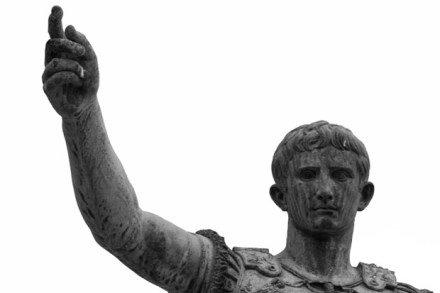
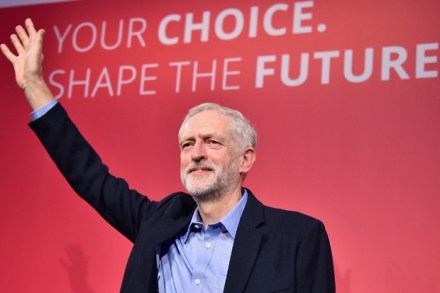
Jeremy Corbyn has been compared to plenty of people over the past few months — a geography teacher, Michael Foot, Brian from the Monty Python film — but my favourite comparison was to a horse. Steve Fielding, professor of politics at Nottingham, declared Corbyn’s election ‘an act of political stupidity unparalleled since Caligula appointed his horse to the Roman senate’. As someone with a book just published on Rome’s first imperial dynasty, I was doubly thrilled. First, Professor Fielding had confirmed the conviction in which I had written my history of the first Caesars: that two millennia on, the West’s primal examples of political excess continue to instruct and appal.

Diary – 17 September 2015

With four days to go until the result of Labour’s leadership election, a call from the Sunday Times. Would I like to write a piece, along the lines of the opening chapter of my 1980s novel A Very British Coup, about the first 100 days of a Corbyn government? Anything up to 3,000 words, he says. I am sceptical that the sense of humour of the censors at Murdoch HQ will stretch to the prospect of a Corbyn government, however fanciful. Especially since any such government is likely to be interested in breaking up the concentration of media ownership. What they are really looking for, I suspect, is tale of chaos, mayhem and a breakdown of the social order. Nevertheless he is bursting with enthusiasm. After nailing down terms I decide to give it a go.

Diary – 10 September 2015

During our annual odyssey around the Scottish Highlands, I read Tears of the Rajas, Ferdinand Mount’s eloquent indictment of imperial expansionism in India. One of Ferdy’s themes is that the British lived in the country without ever attempting to make themselves of it. How far is that true of sporting visitors to Scotland? The SNP’s persecution of landowners gains traction from the fact that guests in shooting and fishing lodges encounter only keepers, gillies, stalkers. We disport ourselves within a social archipelago utterly remote from the mainland of the society in which it lies. In our defence, however, that is what tourists do everywhere in the world, much to the advantage of host nations.

Diary – 3 September 2015

‘Devon, Devon, Devon/ Where it rains six days out of seven.’ Nothing beats a British seaside holiday. And north Devon is especially blessed when it comes to vibrant weather patterns. We have watched in awe this summer as high-pressure systems from the Continent have collapsed in the face of sturdy Atlantic lows and extreme weather warnings punctuated the news. Our companion in all this has been the Met Office, whose forecasts are dashingly presented by the hunky Tomasz Schafernaker. So it was a shock to see the third-rate bureaucrats running the BBC replace it with some cheap and rather remote New Zealand outfit.

Diary – 27 August 2015

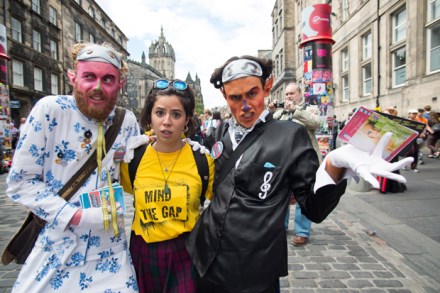
There are many good reasons for being in Edinburgh in August, when the population doubles and nobody looks twice if you walk down the street in a sequinned basque with a man dressed as a leopard on a leash. One of those reasons is a certain kind of lunch — an assortment of natives augmented by visiting actors, writers, journalists and any other good talkers who happen to be passing. And so to the elegant New Town flat of journalist Katherine O’Donnell with campaigner and memoirist Paris Lees, actor Rebecca Root, novelist and journalist Ben McPherson and human geographer Jo Sharp. The first question is, of course, ‘What have you seen that’s good?’ Because that is the only question on everyone’s lips during the festival.

Diary – 20 August 2015

This is the Corbyn summer. From the perspective of a short holiday, my overwhelming feeling is one of despair at my own semi-trade — the political commentariat, the natterati, the salaried yacketting classes. Who among us, really, predicted that Jeremy Corbyn would be romping ahead like this? Where were the post-election columns pointing out that David Cameron’s victory would lead to a resurgent quasi-Marxist left? And that’s just the beginning: how many of the well-connected, sophisticated, numerate political writers expected Labour to be slaughtered in the general election? Not me, that’s for sure. Going further back, how many people in 1992 told us John Major was an election winner? That Parris, I vaguely recall, but anyone else?

Diary – 13 August 2015

Should we have celebrated VJ Day? Hearing the hieratic tones of the Emperor Hirohito on Radio 4 the other day, announcing the unthinkable — the surrender of the great imperial power to the secular, gas-guzzling, unheeding West — seemed like a profanity. So much came to an end with that surrender that it is not possible to celebrate it, particularly since the method chosen to defeat Japan was nuclear-fuelled genocide, not once — which would have been unforgiveable enough — but twice.

Diary – 6 August 2015

My Cambodian daughter and her husband have just got married again. Wedding One was a Buddhist affair in our drawing room, complete with monks, temple dancer, gold umbrellas, brass gongs, three changes of costume and a lot of delicious Cambodian food. That was family only, so this time she had the works: the full meringue, 200 guests, village church (she sees no conflict between Buddhism and Christianity), marquee, fireworks. Time was when wedding guests were the parents’ chums and the bride and groom went off as soon as the cake was cut and the bouquet thrown. Now the parents’ friends don’t get a look in. Not on day two either, when the couple’s friends return for the hangover party. So on day three we had local oldies’ day.