Arts feature

God’s architect

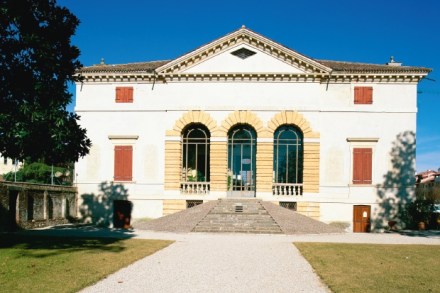
Somewhat magnificently, I made the notes for this article sitting in the back of a Rolls-Royce travelling between London and Goodwood. It’s a journey that provides ample evidence of how the classical language of architecture, at least in Palladio’s version, has infiltrated our imaginations and informed our concept of grandeur. I find Palladio’s spirit in the stately shell of the Rolls-Royce’s radiator, which apes a classical portico, in the famous Sussex country house itself, and in a bottle of Château Margaux: this finest of wines is made in a property of Palladian design. You can see it on the label. Palladio was the finest classical architect of them all, but he was much more than a slavish classicist.

The master returns

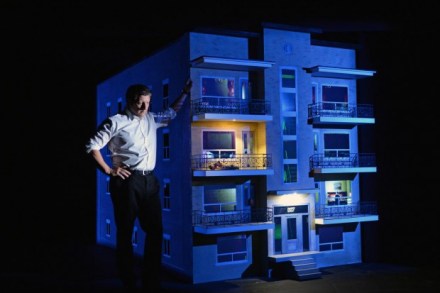
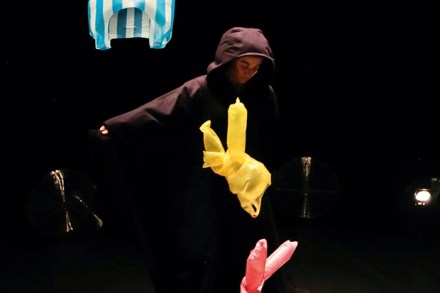
There’s a scene in 887, Robert Lepage’s latest show, which opened at the Edinburgh International Festival last week, in which the French-Canadian director stands alone in his kitchen, lit up by the glare of his laptop, watching his own obituary. Three beers sit on the work surface and he has a fourth in his hand. As it plays, he tuts, peeved that three decades of visionary theatre merit merely two minutes of screen time — inaccurate, at that. Even if his reputation has waned in recent years, Lepage is still considered one of the world’s great theatremakers.

I reshot Andy Warhol

It’s one thing to make the most boring film in cinema history — at least you can kid yourself at the outset that it might turn out differently. It’s quite another to lovingly recreate the same film half a century later, shot by eye-bleeding shot, but that’s exactly what I’ve been doing, I’m proud to say. I say shot by shot, but since Andy Warhol’s Empire consists of a single locked-off shot of the Empire State Building running to 8 hours 5 minutes in black-and-white yawn-o-vision, that’s not much to write home about. Nor is the rest of the movie, from almost any popcorn-munching perspective you can think of.

The Long view

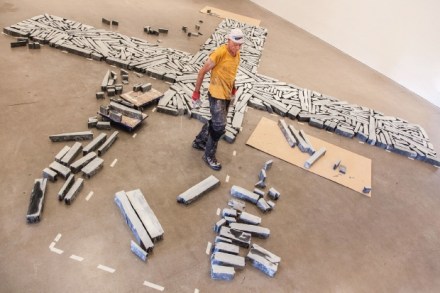
On the green edge of Clifton Downs, high above the city, there is a sculpture that encapsulates the strange magic of Richard Long. ‘Boyhood Line’ is a long line of rough white stones, placed along the route of a faint, narrow footpath. When Long was a boy, this was where he used to play. There are children playing here today. They pay no attention to Long’s new artwork. Already ‘Boyhood Line’ has melted into the scenery. Half a century since he rolled a snowball across these Downs, and photographed the wobbly line it left behind, it feels as though Long has come home. Richard Long was born here, in Bristol, 70 years ago.

Look at my Fringe

Like everyone performing at the Edinburgh Fringe I’m about to make a lot of mistakes. I’m about to lose a lot of money too. But after ten years covering the festival as a reviewer I’m at least able to predict which errors I can’t avoid blundering into. First, the campaign to attract a crowd will be pointless. This stands to reason. Five or six thousand hopefuls swarm up to Edinburgh each year and they all use the same marketing strategy. Attention-seeking stunts on the Royal Mile. Tiresome afternoons forcing leaflets on unimpressed Americans. Fly-posting after dark, on tiptoe, by torchlight. Desperate texts to friends of friends promising five-for-one discounts.

Wild things

Mud, timber, junk, fires, splinters, rust, daubed paint… Suddenly people are talking about adventure playgrounds again. With the Turner Prize-nominated collective Assemble constructing a new adventure playground in Glasgow, and their exhibition The Brutalist Playground at Riba, we’re being asked to think again about these ugly but lovable spaces. It was the landscape architect Lady Allen of Hurtwood who saw that in these gloriously chaotic environments — with their dens, walkways, animals, zip wires and cargo nets — children could find a freedom, self-expression and self-determination that is denied to them elsewhere. In 1946, on the way to Norway for a lecture tour, Lady Allen’s plane stopped to refuel in Copenhagen.

The London ear

The opening bars of Ralph Vaughan Williams’s A London Symphony (1914) are scooped out from the gloopy bedrock of the city. Vaughan Williams was dredging through the same mud, silt, slime and ooze as those scene-setting paragraphs of Our Mutual Friend (1865), where Charles Dickens shows that the real glue binding his book together will be the River Thames. Dickens’s famed ‘boat of dirty and disreputable appearance’ berths Our Mutual Friend in the earth and experience of London. Similarly, Vaughan Williams’s cellos and double basses, which launch his symphony, plod out from the sludge of the river. But, by the time his bucolic Scherzo waddles into view, you could be forgiven for assuming that RVW has taken a genteel amble around the countryside.

‘Shocking is too easy’

Brace yourself, reader. This is an account of a conversation with the director of the yucky trailer-trash comedy Pink Flamingos. Perhaps you won’t recall the final scene in which the overweight transvestite Divine munches on an actual dog turd. No, it wasn’t faked — this was in 1972 and there was no budget for trickery. ‘Because we were on pot all the time it didn’t seem that strange,’ John Waters recalls. ‘It’s lost today, but it was a political commentary. At the time Deep Throat had just come out; pornography had become legal. What’s left? What can’t you do?’ Waters is celebrated for his pencil moustache and transgressive movies, which shake a (knowingly limp-wristed) fist at the tyranny of good taste.

Starr quality

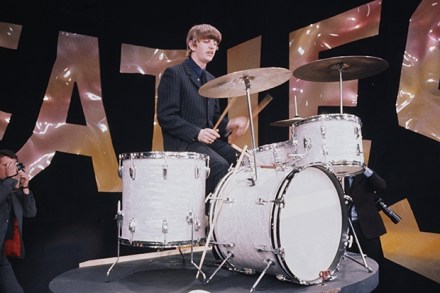
‘He was the most influential Beatle,’ Yoko Ono recently claimed. When Paul and John first spotted him out in Hamburg, in his suit and beard, sitting ‘drinking bourbon and seven’, they were amazed. ‘This was, like, a grown-up musician,’ thought Paul. One night Ringo sat in for their drummer Pete Best. ‘I remember the moment,’ said Paul, ‘standing there and looking at John and then looking at George, and the look on our faces was like ...what is this? And that was the moment, that was the beginning, really, of the Beatles.’ I think Ringo Starr was a genius. The world seems to be coming around to the idea. Two months ago, he was finally accepted into the Rock and Roll Hall of Fame — the last Beatle to be inducted.

City life

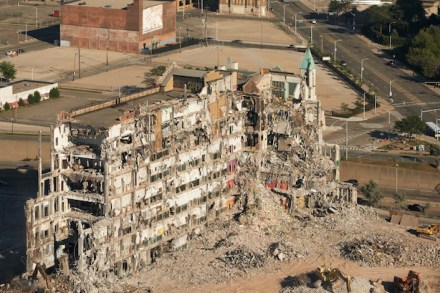
In its pomp, they used to say that what was good for General Motors, Detroit’s Medici, was good for America. Detroit was imperial. Like Rome, it stood for the whole. Michigan Avenue was like something from a Roman urbs: a decumanus maximus of this planned city that created and was enriched by the automobile. Then, like all empires, it began to collapse. By the time of my first visit 30 years ago, there were already clusters of youths on street corners picking their teeth with switchblades. All the signs of decay were present: boarded-up shops and discount stores. The Renaissance Center, a mirror-glass tubular tower whose form suggested a car’s cylinder, had just been built as a rearguard gesture. Its name mocked the encroaching reality.

Elysian fields

There is a phrase that has been fashionable for years in wonkland — places like the upper echelons of the civil service and high-end think tanks. The phrase is ‘evidence-based policy-making’. There, I bet that’s got you going. When I was a citizen of wonkland and heard those words from the Sir Humphreys and Lady Susans I would typically roll my eyes or head for the door, because you can generally gather whatever evidence you want to justify whatever policy you want. In the end, you have to believe in something. Have the courage of your convictions and be judged by the results.

Seeing the light | 11 June 2015

James Turrell gave me extremely precise instructions. After dinner, I was to walk out through the grounds at Houghton Hall to the skyspace he has built. Here I should observe the gradual darkening above as brightness fell from the Norfolk air. At 9.40 p.m., I was to join him and the Marquess of Cholmondeley to witness the illumination Turrell has devised for the west front of the house. So we stood in the chill air of an English summer evening and watched as a slowly changing sequence of pinks, mauves, blues and reds lit up the colonnades and Palladian windows designed in the 1720s by Colen Campbell and the domes added by James Gibbs.

His dark materials | 4 June 2015

Have you heard the one about girlfriend-killer Oscar Pistorius not having a leg to stand on? Or what about the Germanwings knock-knock joke? If you find gags like these funny, you could come and stand with me on the terraces at Brentford FC. When we played Leeds United earlier in the season, we chanted at them, ‘He’s one of your own, he’s one of your own, Jimmy Savile, he’s one of your own.’ The general public has never wasted much time making up jokes about tragic public events. Making light of high-profile tragedies is a perfectly understandable human reaction, even if it might be frowned upon by some. And what about those who seek to turn topical events into serious art? Is that any more noble than making a cheap joke?

Museum relic

On 1 July, at a swanky party at Tate Modern, one of Britain’s museums will bank a cheque for £100,000, as the Art Fund announces this year’s Museum of the Year. Sure, the money will come in handy. Sure, the publicity will be useful. But this posh bunfight can’t disguise a growing sense that museums face an existential crisis. Cuts are one problem — some say the present round will take museums ‘back to the 1960s’. But they also face a more profound dilemma. In the age of Wikipedia and Google Images, what are modern museums actually for? When I was a child museums were my adventure playgrounds, but was my enthusiasm merely relative? After all, in the 1970s there really was very little else to do. Shops were shut on Sundays.

Restoration drama

Yes   William Cook Rejoice! Rejoice! Fifty-four years after its destruction, Euston Arch has returned to Euston. Well, after a fashion. Four blocks from this lost portico, salvaged from a murky river bed in east London, have been deposited outside the station by Euston Arch Trust, a heroic pressure group that is campaigning to rebuild this much-lamented landmark. It’s only a tiny fragment of the original, but I can’t begin to tell you how much this small pile of rubble cheered me up. Wouldn’t it be terrific fun to reconstruct this splendid monument? Wouldn’t it be wonderful to bring old buildings such as Euston Arch back to life? Even by the philistine standards of the Sixties, the demolition of Euston Arch was a particularly crass and shameful episode.

Eastern reflections

In his introductory remarks to the Afro–Eurasian Eclipse, one of his later suites for jazz orchestra, Duke Ellington remarked — this was in 1971 — that east and west were blending into one another, and everyone was in danger of losing his or her identity. Nowhere is it easier to observe that phenomenon than on the little island of Naoshima, in the Seto Inland Sea of Japan, which I visited last month. Naoshima possesses sandy beaches and tranquil blue waters dotted with further islets stretching towards the horizon. But this is an especially heavenly spot for a relatively small and specialised, even eccentric, group of travellers.

More Marx than Dante

At the start of Canto XXI of the ‘Inferno’, Dante and Virgil look down on the pit of Malebolge, the Eighth Circle of Hell, in which sinners guilty of simony, hypocrisy and graft are punished. The last of those spend eternity immersed in a river of bubbling pitch. This sinister black liquid, the poet noted, looks much like the tar that Venetians boil up in their arsenal to smear over the hulls of their ships. Those lines came to mind more than once as I walked around the 56th edition of the Venice Biennale, not least because a large section is installed in the ancient buildings of that very Arsenale. The Biennale is always the same — the crowds! the people! — yet always different.

Funny business

A lot of people ask what it takes to be a stand-up comic — I’ll be honest, I have absolutely no idea. What I do know is that whatever it is, a lot of people love to think they’ve either got it or they can get it. I was honoured to be in six Royal Command Performances and so of course I met Her Majesty the Queen a few times. After about the third time, she started to talk like me, tell a few jokes. Now, I’m not saying she owes her popularity to me — God forbid — but let’s be honest, when you add together the number of people who come to see her when she’s touring the world and the crowds that come to watch my show ...that’s a lot of people.

Messy genius

Orson Welles would have been 100 this month. When he died in 1985, aged 70, the wonder was that he had lasted so long. His bulk was so immense, his productivity so prodigious in so many areas, his temperament so exorbitant, that he seemed to have been part of the landscape for ever. Never was ruined greatness so visible. The other great auteurs maudits of this century, Abel Gance and D.W. Griffith, disappeared into silence and oblivion. Eisenstein simply died young. Not Welles. Every time he trundled insincerely through some commercial for cheap liquor (he, the great bon viveur; he, for whom the very word commercial was an insult when applied to film), he sent a pang through the world’s heart.

State of play

Writers and producers have shown little appetite for putting the coalition on stage. Several reasons suggest themselves. In 2010 wise pundits assured us all that the Rose Garden duo would squabble and part long before the five-year term expired, and theatre folk were persuaded not to gamble on a ship that might sail at any moment. And the conduct of parliamentarians has been pretty unhelpful to dramatists. Chastened by the expenses scandal, MPs have reinvented themselves as models of probity and self-restraint. The Commons has been all but free of sin. Eric Joyce cracked a few skulls. Nadine Dorries bunked off for a fortnight in the jungle. The occasional ex-minister has been caught hustling undercover hacks for a day or two’s work. Even the cabinet have behaved like nuns.