Arts feature

Pornographer-in-Chief

Like Black Rod and the Poet Laureate, screenwriter Andrew Davies occupies one of the most colourful and arcane offices in public life. He is Pornographer-in-Chief, a title that was first bestowed by the journalist Paul Johnson on the boss of Channel 4, Sir Michael Grade. Davies has assumed the mantle by virtue (or vice) of sexing up cherished texts from the literary canon for the gratification of television producers. His adaptation of War and Peace has taken critical grapeshot for including incestuous romps that do not strictly feature in the novel. Simon Schama, who bashfully admits he has made his way to the end of the book only eight times, claims to have detected no evidence of a sexual relationship between siblings Anatole and Helene.

Away with the angels?

I remember the shock, like a jolt of static electricity. One day, between taking my degree and beginning my first job, while looking through a 16th-century book about numerology that had once belonged to John Dee in the British Library, I came upon an annotation in his own neat italic hand casting up the numerical values of the letters of his name. The total he wrote down came to 666. John Dee (1527–1609) was a magus, but we must not think that this made him a loony witch. An early Fellow of Trinity College, Cambridge, teaching Greek, he acquired a reputation for learning in mathematics, navigation and astronomy. But his long pursuit was of something he knew was dangerous and which I am not convinced he always thought licit: angelic conversations.

Moving statues

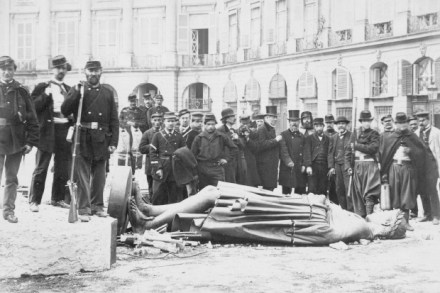
One of the stranger disputes of the past few weeks has concerned a Victorian figure that has occupied a niche in the centre of Oxford for more than a century without, for the most part, attracting any attention at all. Now, of course, the Rhodes Must Fall campaign is demanding that the sculpture — its subject having been posthumously found guilty of racism and imperialism — should be taken down from the façade of Oriel College. The controversy is a reminder of the fact, sometimes forgotten by the British, that public statues are intensely political. This was clear — until quite recently, at least — when one drove into the Syrian city of Hama. There, dominating a roundabout, was a large bronze representation of the late President Hafez al-Assad.

Best in show | 31 December 2015

Until a decade and a half ago, we had no national museum of modern art at all. Indeed, the stuff was not regarded as being of much interest to the British; now Tate Modern is about to expand vastly and bills itself as the most popular such institution in the world. The opening of the new, enlarged version on 17 June — with apparently 60 per cent more room for display — will be one of the art world events of the year. But, like all jumbo galleries, it will face the question: what on earth to put in all that space? Essentially, there are two answers to that conundrum. Give the public what they want, or — alternatively — what you think they ought to see.

Why would a dissolute rebel like Paul Gauguin paint a nativity?

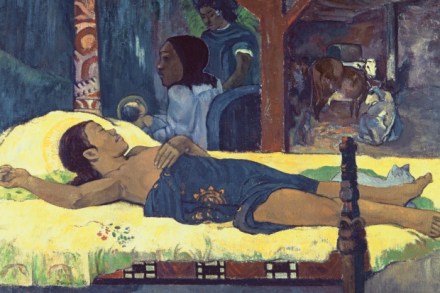
A young Polynesian woman lies outstretched on sheets of a soft lemon yellow. She is wrapped in deep blue cloth, decorated with a golden star. Beside her bed sits a hooded figure, apparently an older woman, holding a baby. In the background is a huddle of resting cows, suggesting that the setting is a barn or stable. There is something familiar about the set-up — baby, young mother, farm animals — but it may take a while to notice certain details. The head of the woman on the bed is encircled by an area of darker yellow, which forms a sort of halo, and the baby’s head is similarly ringed with green. A subsidiary figure standing in the shadows has an odd protuberance, which looks a little like a wing.

The art of Beatrix Potter

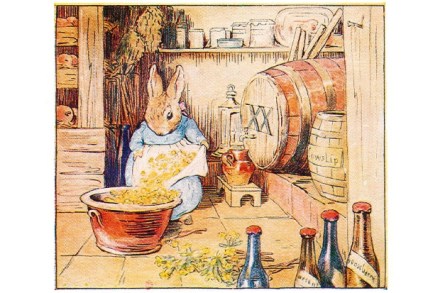
‘I will do something sooner or later,’ wrote Beatrix Potter in the secret diary she kept in a private code. It was March 1883 and 16-year-old Potter, still mostly confined to the nursery of her parents’ house in South Kensington, had made a second visit to the Winter Exhibition of old masters at the Royal Academy. She did not identify the ‘something’ she had in mind, but it almost certainly referred to art. Although a painting by Angelica Kauffman stiffened her resolve and bolstered her confidence, the statement was one of intent above conviction. ‘It shows what a woman has done,’ she reassured herself.

New word order | 3 December 2015

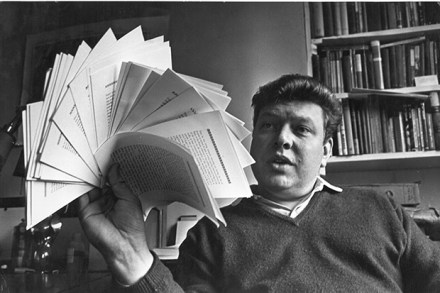
In the basement of a busy café in Hockley, Nottingham, which may not have known exactly what it was letting itself in for, a young woman is loudly dissecting an unsatisfactory lunch: ‘Deep in my heart I know I love chips.’ In another basement a few hundred yards away, lit by a single floor lamp, another woman is detailing the process of a man’s decline with tear-jerking, understated tenderness. For today only, both women are going by the name Bryan. They are among 60 volunteer performers in But I Know This City!, a unique adaptation of B.S. Johnson’s strange and sometimes wonderful 1969 novel The Unfortunates.

The bicycle may have triumphed but it’s far from perfect

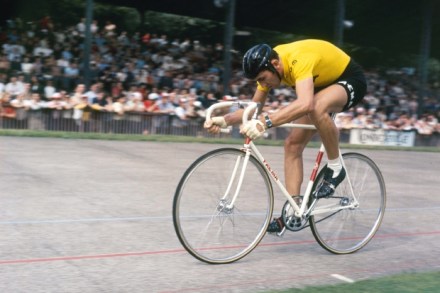
It’s extraordinary that it took civilisation so very long to discover the benefits of putting little wheels on suitcases. We knew how to fly before we realised it was no longer necessary to huff-and-puff baggage by hand. Even odder, steam and electricity were well understood before anyone got around to developing the ingeniously simple pedal-and-crank mechanism, an invention of decisive importance, which turned the ludicrous, wobbly old hobbyhorse into today’s smooth and sensible bicycle. Its eventual triumph over all our sensibilities can be seen today when, at some practical cost to the general mobility of the capital, London is being effortfully retrofitted with cycle lanes while oil-fired traffic is perpetually stalled in a noxious smog of its own making.

Artificial life | 19 November 2015

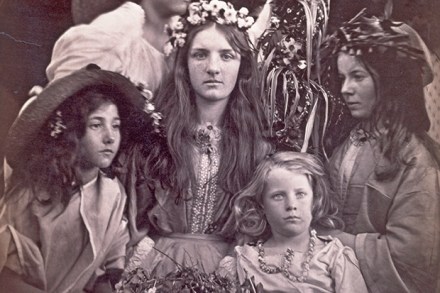
One day Julia Margaret Cameron was showing John Ruskin a portfolio of her photographic portraits. The critic grew more and more impatient until he came to a study of the scientist Sir John Herschel in which the subject’s hair stood up ‘like a halo of fireworks’. At this point, Ruskin slammed the portfolio shut and Cameron thumped him violently on the back, exclaiming, ‘John Ruskin, you are not worthy of photographs!’ He was indeed smackingly wrong to dismiss her work, as visitors to an exhibition at the V&A celebrating the 200th anniversary of her birth will be able to see for themselves. There are multiple ironies underlying this spat (they happily made up by lunchtime). Ruskin disapproved — officially speaking, at least — of photography.

How Technicolor came to dominate cinema

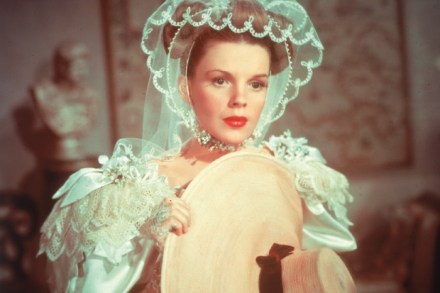
They’ve already found a cure for the common cold. It’s called Technicolor. My first dose of it came during the Christmas holidays when I was about 12. There I was, ailing and miserable, when The Adventures of Robin Hood (1938) came on the television at the end of my bed. Nothing had prepared me for this. A Sherwood Forest that was aflame with green. Clothes that shimmered purple and blue. Olivia de Havilland’s oh-so-cherry lips. Under two hours later I cast off the duvet and leapt from the fug. The sickness had gone. I now know that this medicine, Three-strip Technicolor, was a revolutionary process, the first to properly mix the three primary colours of light — red, green and blue — so that film could capture all of the colours in nature.

Theatre and transgression in Europe’s last dictatorship

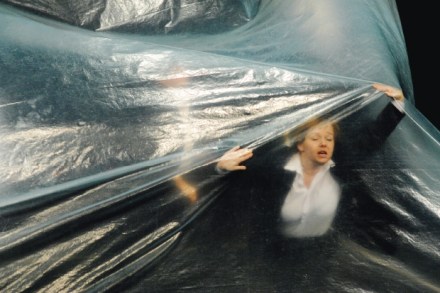
In a drab residential street in foggy, damp Minsk, four students are at work in a squat white building that was once a garage. They vocalise sequences of letters, clap their hands, throw their arms in the air, discuss their actions. Each — three girls, one boy — is elegant, light of limb, fiercely concentrated. The room they are in is about 20 feet by 20, with two blacked-out windows and four square lights on the ceiling. It’s not certain that all the bulbs are functioning. Down a tiny corridor is a bedraggled kitchen full of empty bottles that are, in fact, props. Upstairs there is a tiny rehearsal space, with a ballet-style mirror. The modest complex feels like a cross between an abandoned cricket pavilion and a bicycle shed.

Of gods and men

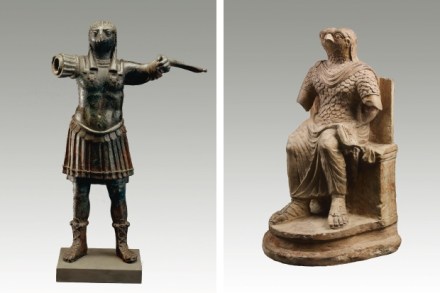
Over the stupefyingly long course of Egyptian history, gods have been born and they have died. Some 4,000 years ago, amid the chaos that marked the fragmentation of the original pharaonic state, an incantation was inscribed on the side of a coffin. It imagined a time when there had been nothing in existence save a single divine Creator. ‘I was alone in the emptiness,’ the god proclaimed, ‘and could find no place to stand.’ Nevertheless, beside him, he could feel the gods that were yet to exist. ‘They were with me, these deities waiting to be born. I came into being and Becoming became.’ The gods emerged, to reign first on earth and then in the heavens, and history began.

Colm Tóibín on priests, loss and the half-said thing

‘No matter what I’m writing,’ says Colm Tóibín, ‘someone ends up getting abandoned. Or someone goes. No matter what I’m trying to do it comes in.’ It’s a reflection, he says, of his own consciousness. It makes ‘its way into everything’. If Tóibín is on close terms with the ache of loss, few writers have put it to such elegant use. He is in the midst of a period of roaring success: we are sitting in a hotel in Soho, talking about the new film of his 2009 novel Brooklyn, which has the lure and pain of leaving Ireland and family at its heart. Its heroine is Eilis Lacey, a young woman in the 1950s who is helped by an emigrant priest, Father Flood, to leave her home in Enniscorthy, Co.

What is it about Bill Viola’s films that reduce grown-ups to tears?

Even the most down-to-earth people get emotional about Bill Viola’s videos. Clare Lilley of Yorkshire Sculpture Park (YSP) seems close to tears as she takes me round his new show. Lilley is the show’s curator. She’s usually so matter-of-fact, but when she talks about Viola her eyes light up. When she took her two teenage daughters to his studio in Los Angeles, she tells me, they both cried when they saw his films. I like to think I’m made of sterner stuff, but when she leaves me in the Sculpture Park’s Underground Gallery, where Viola is on show, after a few minutes in there on my own I’m blubbing like a baby. What is it about Bill Viola that makes grown men (and women) weep?

Why I’m stepping down after 28 years as The Spectator pop critic

This is my 345th and last monthly column about pop music for The Spectator. I believe I might be the third-longest continuously serving columnist here, after Taki and Peter Phillips. Others have been writing for the magazine for longer, but have occasionally been given time off for good behaviour. You may be astounded to learn that I have not been fired. I, certainly, am astounded. I have been waiting for the tap on the shoulder, or maybe the firm but regretful email, since my first column in May 1987. Eventually I came to realise that the less the editor of the time was interested in my subject, the safer I was.

Hitler’s émigrés

Next week Frank Auerbach will be honoured by the British art establishment with a one-man show at Tate Britain. It’s a fitting tribute for an artist who’s widely (and quite rightly) regarded as Britain’s greatest living painter. Yet although Auerbach has spent almost all his life in Britain, what’s striking about his paintings is how Germanic they seem. Born in Berlin in 1931, Auerbach was only seven when he came to England (his parents subsequently perished in the Holocaust). By rights, he should stand alongside British artists such as Peter Blake and David Hockney, yet his work feels far closer to German painters like Georg Baselitz or Anselm Kiefer. Auerbach is a one-off, a unique painter with a unique vision.

Coming up for air

The thing that the photojournalist Don McCullin likes best of all now, he tells me, is to stand on Hadrian’s Wall in Northumberland in a blizzard. He made his name in conflicts in Vietnam, Cambodia, Biafra, Uganda — hot places full of fury, panic and death — but these days he finds his greatest solace in the English landscape. I can see why he is drawn to that wild part of Britain: its isolated beauty, the feeling of being roughed up by the elements but not destroyed by them. Clean air, too: you must get a cool, fresh lungful up there. He’s 80 years old in October: talking to him at home in Somerset, I get the sense he’s been coming up for air all his life.

There will be blood | 17 September 2015

If you don’t want to spend hundreds of euros on a good seat, the best place to watch the Palio di Siena is by the start. For my first time — decades ago — I arrived early in the apron-shaped Piazza del Campo and sweated out the long afternoon as a tide of tension rose. By early evening, when the horses and jockeys finally entered from the courtyard of the towering Palazzo Pubblico, 50,000 spectators ached for release. I clambered on to a temporary fence for a better view. A Sienese woman who was maybe 19 hauled herself up and, for balance, grabbed me from behind. As the jockeys embarked on the long, casuistical process of lining up at the start rope, she began to moan, then weep.

See no evil

When I was at university, Reggie Kray was my penpal. I wrote to him in 1991, asking for an interview for The Word, an Oxford student newspaper. Kray was unavoidably detained at Her Majesty’s pleasure. But he sent me a prompt, polite letter back. ‘Thanks for your letter,’ he wrote. ‘I will see you as soon as possible. We only get three visitors a month. Could you send me a copy of The Word?’ I sent him a copy — but I never did get to be among his three monthly visitors before his death in 2000, at the age of 66. Still, I’m ashamed to say, I was thrilled enough just to get a letter from him; and to drink in his wild, scrawling handwriting — three huge, near-illegible words to a line; nine skew-whiff lines to a page of prison-issue foolscap.

All white on the night

Shakespeare’s ‘Wars of the Roses’ will have no ethnic minority actors in the cast when the shows (two Henry VI plays and Richard III) open at the Rose Theatre, Kingston upon Thames, later this month. A sprinkling of so-called BME (black and minority ethnic) actors in Shakespeare has been the norm for ages now. So the decision by the director to go with an all-white cast has caused much hurt and concern from the actor’s union Equity, the Guardian, and from various groups promoting racial diversity in the arts. From all the fuss, you’d think the plays are being directed by a hooded white supremacist.