Arts feature

Spellbound | 2 June 2016

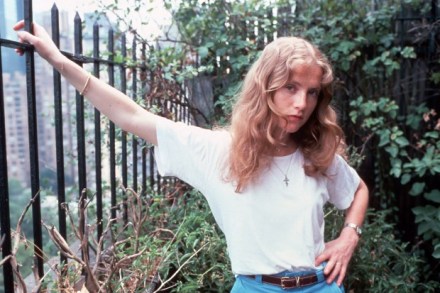
Isabelle Huppert does nothing by halves. And she doesn’t, I think, care greatly for journalists. She expects them to ask stupid questions. Sitting before me in an airless room in the eaves of Paris’s Odéon-Théâtre de l’Europe, she is tiny, dressed entirely in black and more or less unsmiling. Lily-skinned, red-haired, and with a fabulous curl in her upper lip, she’s appeared in more than 100 film and TV productions. Ninety minutes after our meeting, she will be on stage. I sense she wants this interview over fast. But at the start she makes me, I must report, comatose with wonder. I have adored Mme Huppert on screen for three decades, in which she seems to have had barely a month off work. I am, pathetically, spellbound.

The great pretenders

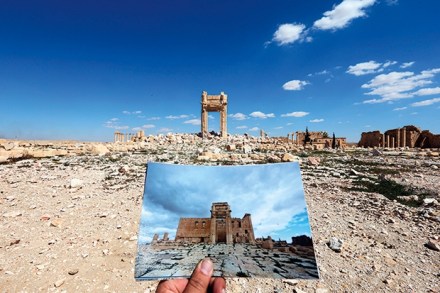
There is fakery in the air. And maybe the French are done with deconstruction. A drone operated by a French archaeology consultant called Iconem has been languidly circling Palmyra, feeding back data about the rubble with a view to reconstructing the ruins and giving the finger to Daesh. Cocteau said he lies to tell the truth. Iconem flies to tell the truth. In April, an exhibition called The Missing: Rebuilding the Past opened in New York which examined ‘creative means to protest preventable loss’. It was timed to coincide with the temporary erection of a frankly underwhelming two thirds-scale replica of the Palmyra Arch in Trafalgar Square, London. It goes to Times Square, New York, in September.

Gaudy! Bright! Loud! Fun!

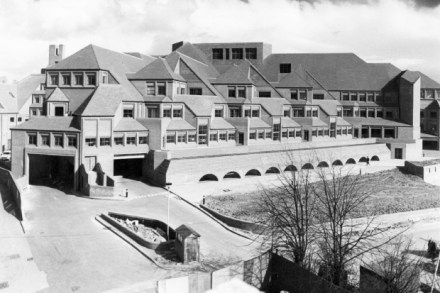
In any epoch most of what is built is mediocre, though we may not realise it at the time because our neophilia persuades us of merit where there is none. Equally, we may fail to distinguish the few exceptions — those instances where architects and builders have ascended to a higher standard of mediocrity or have even escaped its dulling clasp. It takes time for public taste to catch up with architects’ taste. Today, 40 years after brutalism dissipated in an assault of bien-pensant hostility and oil crises, few weeks pass without a new book or blog hymning its sublimity, energy and gravity. It is, of course, all a bit late. Much of the finest work has already been destroyed.

Death metal

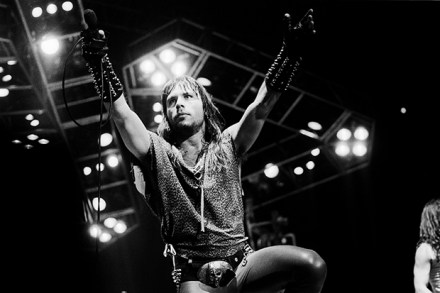
With its loud guitar riffs and even louder fashion, heavy metal has always been ripe for ridicule. In its mid-1980s heyday, it was epitomised by the fictional rock group Spinal Tap prancing on stage next to an 18-inch polystyrene model of Stonehenge while clad in ball-crushingly tight trousers and floor-length capes. In some parts of the world, however, metal is no laughing matter. In the Middle East, for instance, the potential punishment for wearing all black while wielding an electric guitar is death. These days, against a backdrop of authoritarian suppression in countries such as Iran and China, heavy metal’s trademark theatrics and widdly guitar solos have become less an opportunity for gentle mockery than a rallying cry for artistic freedom.

Deluded divas

When the Fat Lady Sings, everyone is primed to chortle, even if she is Montserrat Caballé and doing it wonderfully well. Hergé’s cartoon creation of Bianca Castafiore embodies the type: with her flaxen plaits and heaving embonpoint, she is a ridiculously bad fit for the simpering virginal heroine of Gounod’s Faust, particularly when carolling her Jewel Song at such a pitch that an agonised Tintin and Captain Haddock are forced to cover their ears. But at least Madame Castafiore has a brilliant international career: what about the Fat Lady who Can’t Sing — the diva deluded into thinking she is a nightingale when in fact she is nothing but a crow? Two recent films explore this tragicomic syndrome.

Filming the Final Solution

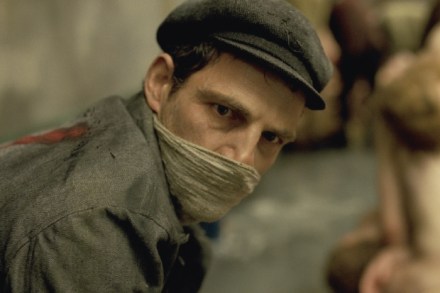
In July 1986, nine months before he died, I met the Italian author and Auschwitz survivor Primo Levi at his home in Turin. He was in shirtsleeves for the interview and the concentration camp tattoo 174517 was visible on his left forearm. (‘A typical German talent for classification,’ he tartly observed.) If This is a Man, Levi’s chronicle of survival, offers a warning to those who deliver facile judgments of condemnation: only those who have survived the Nazi camps have the right to forgive or condemn. Attempts to recreate the Final Solution on screen were mostly a ‘macabre indecency’, said Levi.

All the world’s a stage | 21 April 2016

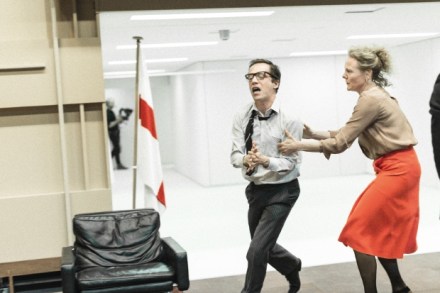
In this much-heralded Shakespeare anniversary year, one might expect a certain respect for the works to prevail. In Holland it’s different. Under the tutelage of a Belgian, Ivo van Hove, a huge slice of Shakespeare’s history theatre has been filleted for the stage into something that might sit nicely on HBO alongside Game of Thrones. It opens at the Barbican on 22 April, a day before the official Shakespeare-death day four centuries ago. And it’s all in contemporary Dutch verse — four hours of it... Kings of War starts with a photo, on a video-screen, of little Prince George. His infant form is followed in rapid succession by that of every English monarch back to Henry V. There, the display halts.

‘Do black movies really not sell?’

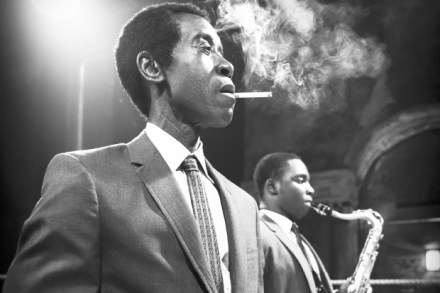
The musical biopic is a staple of the Hollywood economy. Like an Airfix model kit it comes with the necessary parts presupplied: sex, drugs and a soundtrack. All the director need do is glue them together. Actors are keen too, as portraying musicians is like prospecting for Oscars: in recent years the lives of Edith Piaf, Ray Charles and Johnny Cash’s wife June Carter have all won statuettes for their stars. The life of Miles Davis, with its giant musical peaks and deep personal troughs, is tailor-made for the big screen. But for years he couldn’t be captured in a bottle. It hasn’t been for want of trying on the part of Don Cheadle, who stars in, directed, produced and took a co-writing credit on Miles Ahead.

The rise and fall of Sicily

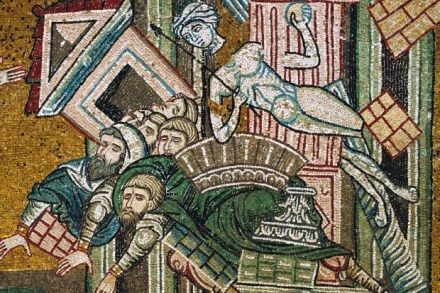
A few weeks ago, I looked out on the Cathedral of Monreale from the platform on which once stood the throne of William II, King of Sicily. From there nearly two acres of richly coloured mosaics were visible, glittering with gold. In the apse behind was the majestic figure of Christ Pantocrator — that is, almighty. The walls of the aisles and nave were lined with scenes from the Bible. In another panel, just above, Christ himself crowned King William. It was a prospect of the greatest opulence and sophistication stretching in every direction from this regal vantage point. The mosaics are in the manner of Byzantium, and probably executed by Greek artists, but the architectural plan and inlaid floors are derived from medieval Italy.

The future is here

Oculus Rift. It sounds like something from a science fiction novel, and in many ways it is. Its release this week is the first stirring of a future stuffed with virtual reality headsets. The hope of its Californian engineers and their bitcoin backers is that we, the consumers, will soon use them to spend a whole lot of time outside of our lives. Strap the goggles to your face, position the headphones over your ears, press the on button, and — bzzzztp — you’re in a different world. The question is, who will create these worlds? The first prototype of the Oculus Rift was built five years ago by an 18-year-old called Palmer Luckey, and he had an 18-year-old’s use for it: video games.

Sins of the fathers | 23 March 2016

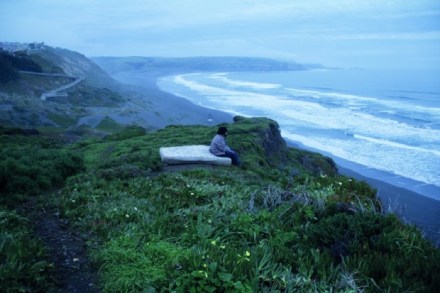
A feature film about priests who abuse children is being released on 25 March. Which happens to be Good Friday. Geddit? The sacrifice of the innocents. A conspiracy of religious hierarchs. Hand-washing by the secular authorities. I’m sure I can think of some more analogies if you give me time, but that’s enough to be going on with. Enough, certainly, for the distributors to boast that the movie is ‘controversially slated to be released on Easter [sic] Good Friday’. As publicity stunts go, this isn’t subtle. But the film is. The Club, directed by the Chilean Pablo Larraín, sets out to perplex us from the first frame until the last.

Rebel angels

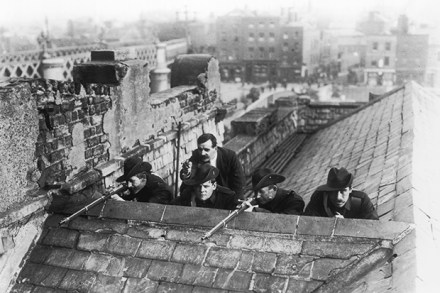
This is the first exhibition I’ve been to where the Prime Minister joined the hacks at the press view. A week after the Irish general election, the Taoiseach, Enda Kenny, came to the biggest show in Ireland devoted to the centenary of the Easter Rising. Kenny’s presence at the press launch just goes to show how the Irish rebellion against British rule at Easter 1916 is still the defining story of modern Ireland. In fact, the Easter Rising was a pretty good failure, although I didn’t suggest that to the Prime Minister at the press view. The rebellion lasted only six days before it was put down by the British army. Other attacks on British barracks in Meath, Galway and Wexford didn’t get very far either. Planned attacks in Cork, Tyrone and Donegal never happened.

God’s messenger

When the Japanese conductor Masaaki Suzuki leads his forces in a performance of a Bach cantata, does he worry that the non-Christians in his audience will face the fires of Hell? That seems a bizarre question to ask any conductor of Bach’s music, especially one from Japan, where only one per cent of the population is Christian. But when I met Suzuki in Copenhagen last Friday I asked it, because the 61-year-old founder of the Bach Collegium Japan (BCJ) is part of that one per cent. He’s an Evangelical Protestant, like Johann Sebastian Bach himself. Indeed, he adheres to an even fiercer interpretation of the Bible than the cantor of St Thomas’s.

The rite stuff

Religion remains a surprisingly popular subject for plays. It’s partly because there’s already a core of theatricality there, in the rituals, the dressing-up and the little shibboleths of piety. In one way or another, religion involves performing. And religion plays the role of Hogwarts in Harry Potter — an enclosed world, a game with rules. We know how a priest is meant to behave, so we can more quickly engage with a story about his or her struggles. Also, of course, big issues of moral principle and human frailty are close to the surface. But does theatre treat this subject with respect? Or does it tend to sneer at religion, to reinforce a largely secular audience’s prejudices?

You’ve been framed

‘I like ordinary people,’ says the extraordinary photographer Martin Parr, pushing a few high-concept smoked sprats around his plate at St John, the Smithfield restaurant. Parr is Britain’s best-known photographer, but he is no acolyte of celebrity. Like the Italian anti-designers, his Seventies contemporaries who wanted to dull the sheen of modernism by elevating the mundane (or valorising crap, as I would put it), he is a devotee of the ordinary. But is he celebrating the everyday or mocking it? He never quite answers, although he does say, ‘I enjoy the banal.’ Ask me and I’d say the banal is what we want to avoid. Since 2014, Martin Parr has been president of Magnum, the celebrated international photographers’ collective.

Brothers grim

One of the more obscure winners in recent years of the Berlin film festival’s Golden Bear was a version of Shakespeare’s Julius Caesar by the esteemed Taviani brothers, Paolo and Vittorio. The film, called Caesar Must Die, consisted of prisoners staging the Roman drama in their own high-security jail in Italy. The most dedicated Shakespearean or, indeed, lover of Italian cinema will have found it quite hard to enjoy. It was a tough, depressing watch. But that’s the Berlinale all over. It favours a certain toughness and prides itself on films that engage politically, that are nakedly ‘art’ rather than obviously mainstream. Often it goes out of its way to be controversial. Berlin itself has long been controversial.

Whodunnit?

On 7 February 1506, Albrecht Dürer wrote home to his good friend Willibald Pirckheimer in Nuremberg. The great artist was having a mixed time in Venice: on the one hand, as Dürer explained, he was making lots of delightful new acquaintances, among them ‘good lute-players’ and also ‘connoisseurs in painting, men of much noble sentiment and honest virtue’. However, there was also a very different type lurking in the early 16th-century Serenissima: ‘the most faithless, lying, thievish rascals such as I scarcely believed could exist on earth’. Dürer hints that among these latter were painters, perhaps including some whose works will be seen in a forthcoming exhibition at the Royal Academy, In the Age of Giorgione.

Public offence

[audioplayer src="http://rss.acast.com/viewfrom22/fightingovercrumbs-euroscepticsandtheeudeal/media.mp3" title="Stephen Bayley and Posy Metz from Historic England discuss public artwork" startat=1206] Listen [/audioplayer]There are, as adman David Ogilvy remarked, no monuments to committees. (That’s not quite true; Auguste Rodin’s ‘Burghers of Calais’ — you can find a version in Victoria Tower Gardens — is somewhat collectivist in subject matter.) But there are certainly abundant monuments to the committee mentality, the bureaucratic spirit and art-world groupthink. That is what most contemporary ‘public art’ amounts to.

Magnetic north

‘Edvard Munch, I cannot abide,’ wrote Nikolai Astrup in a letter to his friend Arne Giverholt. ‘Everything that he does is supposed to be so brilliant that it doesn’t have to be more than merely sketched.’ Near contemporaries, Munch and Astrup were both innovative and admired painters but while Munch is today one of the few household-name artists, thanks to one misunderstood and overrated painting, Astrup has been neglected by everyone outside Norway. Happily, this is a travesty soon to be rectified by Dulwich Picture Gallery, which next month stages the first major exhibition of Astrup’s work to be held in Britain. Unlike many other Norwegian painters, Munch included, Astrup did not abandon his native land to make a career further south.

Wild at heart | 21 January 2016

At the Louvre the other day there was a small crowd permanently gathered in front of Delacroix’s ‘Liberty Leading the People’. They constantly took photographs of the picture itself, and sometimes of themselves standing in front of it. No such attention was given to the other masterpieces of French painting hanging nearby, including many by Delacroix. This painting from 1830 — with its glamorous, bare-breasted personification of liberté, Tricolore in hand, followed by heroic representatives of the working and middle classes — has become an international shorthand for France itself.