Spectator Life

Spectator Life

An intelligent mix of culture, style, travel, food and property, as well as where to go and what to see.

Cheese and onion pasties: how to make a Greggs classic at home

‘That’s not a pasty!’ my husband declares loftily, eyeing up what most definitely is a veritable clutch of cheese and onion pasties emerging from my oven. Handsome, puffed up, golden brown (the pasties, not the husband), filled with a cheese, potato and onion filling, contents threatening to splurge. The steam rises from them like in a cartoon, almost beckoning us towards them. ‘Oh, OK,’ I reply, sweetly. ‘I shan’t trouble you with them.’ He backtracks. No, no, perhaps he was hasty. What did he know about pasties? Shouldn’t he just try them anyway?

The strange economics of Japan’s all-you-can-drink pubs

Imagine going into an English pub and slapping a tenner down on the bar. ‘All I can drink, please,’ you say. ‘Certainly sir,’ says the barman. ‘You’ve got two hours.’ ‘Right then,’ you say. ‘I’ll start with a pint.’ Ten minutes later: ‘Whisky, please, no ice.’ Shortly afterwards: ‘I think I’ll have a Bloody Mary.’ Then: ‘Pint of that there. The green one. Please.’ Shortly afterwards. ‘Large white wine.’ And so the night wears on. You can have absolutely anything you like: cocktails, double G&Ts, rum and coke, Jack Daniels and Jack Daniels. Two hours is enough to render you senseless. You have drunk the equivalent of £100 of booze for £10, and you need a taxi, a chicken fajita and an urgent visit to the toilet.

How to drink (and not drive) in Arizona

I was in Scottsdale, Arizona and, to put it mildly, a little squiffy. Most folk go there to play golf (yawn) but I’d gone there to drink and, after a lengthy tequila masterclass in La Hacienda and several cocktails at Platform 18 (‘best US cocktail bar’ in the 2023 Spirited Awards, incidentally) in nearby Phoenix, I was also more than a little disorientated. No, don’t laugh. Firstly, La Hacienda – a fancy bar in the Fairmont Scottsdale Princess resort – has more than 240 different tequilas and mezcals on its list and, thanks to the resort’s resident Tequila Goddess (its term, not mine), they just kept on coming.

How dirty is your Michelin-starred restaurant?

Michelin stars were pitted against hygiene scores when Gareth Ward, chef-patron of the two-Michelin starred restaurant Ynyshir, was recently given a hygiene rating of… one.  Ynyshir, which sits on the edge of Eryri national park near Machynlleth in Ceredigion, has held its second Michelin star since 2022, making it the first restaurant in Wales to receive two of the accolades. The restaurant offers a single 30-course tasting menu, to which changes cannot be made for allergies or preferences, at a cost of £468 per person. Its most recent food hygiene inspection found that its management of food safety required ‘major improvement’.

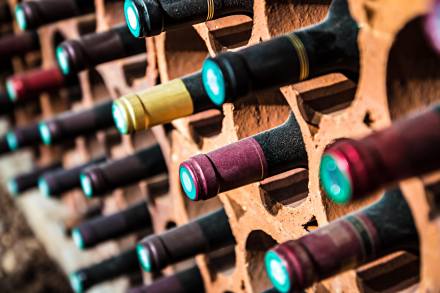
Why I took my eight-year-old son wine-tasting

My eight-year-old son’s eyes widened when I unwrapped a Christmas present I got from my parents: a bottle of cherry brandy from the Lyme Bay winery in Axminster. ‘Can I have some?’ Humphrey asked, for he had been hitting the cherry brandy hard over the summer. Not the alcoholic kind, of course, but the cherry brandy-flavoured lollies sold by the ice-cream van that parks outside his school on a hot afternoon. How could I refuse? Ashley Dalton would be scandalised. The junior health minister said this month that the government is looking into banning the sale of non-alcoholic versions of booze to teenagers in case it ‘normalises drinking’ and becomes a ‘gateway’ to the real thing. Children will be allowed to vote at 16 under this government, but not drink a Lucky Saint.

How to drink like you’re at the Savoy – from your sofa

There are two great American bars in London. One is perfect to escape the winter chill, the other to embrace summer sun. In winter, the American Bar at the Savoy – London’s oldest surviving cocktail bar – is ideal. There is a reason why this warm and welcoming spot has courted popularity for so long and is considered the spiritual home of modern mixology, at least in this country. In the summer months, head for the American Bar at the Stafford. There you can enjoy the large terrace just a stone’s throw from St James’s Street, where similarly skilled bar staff are able to mix up pretty much anything one desires. You know you’re in a great American bar when the bartenders are able to sling together on-menu or off-menu mixes while maintaining good conversation.

British pubs are booming… just not in Britain

British pubs are having a moment. Not in Britain: you can blame Keir Starmer’s rise in business rates for that. Instead, they are branching out overseas. Take Wetherspoons, the granddaddy of British boozers, set to open next month in Alicante airport, or BrewDog, which has opened its doors in Dubai and many other international outposts besides.  Perhaps British pub chains will prove to be our next big export market. No doubt there will be the obvious jokes about arch-Brexiteer Tim Martin opening pubs in Europe. But would you really bet against him? Whatever you think of Wetherspoons, I can assure you that you’ll never find an empty one. Just imagine the kind of trade they could do in Barcelona or Rome. Which brings me to Dubai. Did you know there was a BrewDog in Dubai?

Japan, the land of the rising wine industry

Travel to Hokkaido, Japan’s northernmost island, and I imagine one of the last things you’d expect to find is a Frenchman making wine. But tucked away in Hakodate, Etienne de Montille, a ninth-generation winemaker from the 300-year-old Domaine de Montille in Burgundy’s Côte de Beaune, is challenging preconceptions about Japanese wine. The de Montille family has been synonymous with Burgundy for centuries, but Etienne decided in 2016 to try something different, setting up vineyards in both Hokkaido and Santa Barbara, California.  ‘I was touched by what I saw,’ Etienne told the Japan Times last year.

A restaurant so perfect I hesitated to review it

Sometimes you find it, H.G. Wells’s door in the wall, but to tapas: a restaurant so perfect you hesitate to review it. Each critic kills the thing she loves, because to love it is to change it. But I can’t just review palaces for psychotics containing lamps that should not exist, comforting though the idiocies of the very rich are. So here is a review of 28 Church Row, Hampstead. I will try not to make it read like a Hampstead novel about the unreliability of memory, but I might forget to do this. Church Row is the prettiest street in Hampstead: a ragtag of Georgian houses beloved by television stars who wake up one day, understand they are vulgar and buy a house that isn’t. I can’t afford one, but I saved a man from death in Church Row once, which is unusual for this column.

Let’s bring back elevenses

Join me, if you will, for a short stroll down the Charing Cross Road, back in the days when it was festooned with bookshops and Morris Oxfords. At Cambridge Circus, there was a large catering equipment shop owned by my great-uncle, Bill Farnsworth. He made it big when he sold water coolers to the American military. Above the enormous ground-floor showroom was his counting house, where men in tailored suits laboured over ledgers on high sloping desks, dipping their nibs into ink pots. This would have been about 1960. Were you to have a meeting with Bill in his office, say in the late morning, he would invariably turn to his walnut drinks cabinet and offer you a glass of something reviving and strong; a sherry, port or brandy, perhaps. Armagnac? It’s very good.

The quest for the perfect January red wine

There are different ways to approach the tyranny of Dry January. One is to drink in secret. Another is to indulge only on feast days. Personally I have always refused to make January a miserable and puritan month, which means finding excellent red wine to transition from Christmas exuberance to the long, drawn-out evenings of the new year. And so the quest to find the perfect January red begins. It should not be too expensive, but nor should it be a false economy. After the excesses of December, value is key. Readers are forgiven for pursuing a bargain in the January sales – we have all done it. But the truth is many discounted offerings represent exactly the kind of wines one should not be drinking. They are the rejects, the failures, the lesser vintages.

Is this the end of the French croissant?

Occasionally, a French person reveals – without any malice or superciliousness – that they run on an alternative operating system from us Brits. Over the years, a surprising theme has emerged in my conversations with Frenchmen: butter. Take my first visit to Paris, more than 30 years ago. I innocently asked for butter with my croissant. Simple answer: ‘Non.’ Naturally, I remonstrated. The waiter retorted: ‘A croissant eeez butter!’ He had a point. Upon biting into said viennoiserie, I had to concede: it was nothing like the dry grocery store versions I was used to. Moments later, a small pot of raspberry confiture was graciously placed on my table. (To this day, it remains the best service I’ve ever received in Paris.

Cutting the drink drive limit won’t save lives

‘Evidence-based policy-making’ is very much in vogue – until, that is, the evidence doesn’t quite support what the government wants to do. Then governments tend to plough on ahead anyway, evidence or not. Just why is the government proposing to lower the drink-driving limit in England from 80mg/100ml to 50mg/100ml? To many people, government ministers included, it just feels the right thing to do. England does, after all, look a bit of an outlier in Europe, where most countries have a 50mg limit. And then there was a 2010 study by Sir Peter North which concluded that lowering the blood-alcohol limit from 80mg to 50mg would save between 43 and 168 lives in the first year alone, and prevent between 280 and 16,000 injuries. Who, then, could possibly oppose the reduction?

When life gives you lemons

As always, I begin my year with lemons. Regular readers must forgive me for my citrus evangelism. But, as the spice and richness of Christmas fare gives way to the drudge of the diet industry and the reality of the back-to-work routine, all framed by short, dark days and cold, icy pavements, the cobalt yellow orb is a literal light in the darkness. What began as a way of bringing brightness and culinary optimism to the new year now feels like a battle cry. Lemons are magical: they come into season during the winter months, their vibrancy at odds with the drab mornings, a flash of lightning in your fruit bowl. Their zipply zest and bracing sourness remind you that you are alive. I, for one, need that reminder.

Why are roast potatoes so hard to get right?

Roast potatoes shouldn’t be complicated. We’re talking two ingredients, plus some salt and maybe herbs if you’re feeling fancy. It’s just shoving some parboiled potatoes in a hot oven, right? Yet I can count on one hand the number of times that I’ve had a decent roast potato in a pub or restaurant. Bad ones are to be found all over the place. I don’t just mean school dinners, mass-catering, hospital-canteen potatoes here. The most carefully prepared Sunday roasts at charming establishments feature beautiful melting meat and thoughtfully cooked veg, all sitting alongside miserable roasties. Clammy. Dark brown. Soft (but not in a good way). A waste of a good potato. No one doesn’t like a roast potato; they’re practically our national dish.

Make mine a Moka pot

It’s strange the things that can trigger amity or affection. At the beginning of the capsule/pod coffee-maker craze, when George Clooney, with his come-to-bed eyes, was seducing the world with Nespresso machines, I bonded with my eldest daughter’s Italian boyfriend over the Bialetti Moka pot. Notwithstanding the expense and waste of the capsule coffee-makers, I need at least three pods to get the lights on in my head in the morning. I’ve never had a good coffee from any of them. Contrast that with the cute, economical, environmentally friendly little Moka, the smallest of which – one cup – costs about £20 and, depending on the quality and freshness of the coffee used, makes a better cup than any café or restaurant.

Italian food is revolting

About a week into an open-ended early pandemic stay in Ortigia, the antique, tourist-beloved spit off Siracusa on Sicily’s eastern coast, I had an epiphany. I hated the food. I’d just had a few bites of a clammy aubergine parmigiana, and a plate of oily tuna steak dressed with a bit of lemon was on its way to me. I felt sick and couldn't face another bite – and yet, supposedly, I was right in the heartlands of the finest continental gastronomy. This, at least, is the orthodoxy of the world, of tourists low- and high-end and home cooks everywhere – and especially in Italy itself.

January is the time to drink

Of all the months to choose for abstinence, January seems the strangest. May is intoxicating by itself; winter, when life feels threatened by the silent ministry of frost, needs cheer. Christmas and New Year are past, the birds are already singing loudly in the early mornings, snowdrops push up their green fuses, hellebores grow fresh leaves, and the magnolia buds swell. They will bloom on sunny but cold days and look perfect for a moment, before frost burns their scarlet and white edges to brown. Spring is coming, but winter retains its hold. January is the time to drink port. Dickens understood this. He mentioned drinks of all kinds a great deal, and port more than any other wine.

Adventures in Australia’s winelands

On the Bussel Highway, an immaculate ribbon of tarmac that takes you south of Perth, the vegetation changes dramatically in a matter of miles. Suddenly, around the town of Busselton, which is 130 miles from Perth, instead of the rough, hardscrabble soils that form the bedrock of Australia’s desert environment, you find yourself in a more Mediterranean ecosystem. A further 40 miles south and you’re in Margaret River, an eco-warrior’s dream location with carbon-neutral residents – artists, chefs, surfers, organic farmers, winemakers – all over the place, neat, well-tended countryside, and the crispest, cleanest air you can breathe on this planet. Sea breezes from the Indian Ocean and the Southern Ocean wash over this forested landscape like an air-conditioning system.

There’s nothing to fear from Madeira

Perhaps because of the Flanders and Swann song in which a louche older gentleman tries to lure a younger lady to bed with Madeira wine, the drink has unfairly acquired a fusty image. While port and sherry have experienced a resurgence, Madeira remains underappreciated despite the fact it stands as a proud monument to the grand old Anglo-Portuguese alliance. One man, Jamie Allsopp, is intent on fighting a noble battle to promote the virtues of Madeira. And so to the Blue Stoops, Allsopp Brewery’s newish pub on Kensington Church Street, for their second annual Game and Madeira Dinner, named after the site in Burton-on-Trent where Jamie’s ancestors first brewed Allsopp’s Ale in 1730.

Make mine a BuzzBallz

There are always new ways for drinks companies to make alcohol seem even more exciting. Smirnoff has added gold leaf to some of its vodkas (apparently it’s both real and edible); cans of Dragon Soop and Four Loko deliver heart attack-inducing combinations of sugar, caffeine and alcohol; and the appropriately named Aftershock is rumoured to crystallise in your stomach for a few hours before reverting back to liquid form to release a second wave of alcohol into your bloodstream. (This is almost certainly an urban myth, but Aftershock drinkers remain convinced.) The latest fad was created during one woman’s postgraduate degree – and has since transformed the experience of partygoers across the world. Behold BuzzBallz.

Children need nursery food

In news that will surprise no one, it emerges that vegan children are thinner, shorter and – dare we say it – sicklier than their counterparts. A recent study by the University of Florence details how children who follow a vegan or vegetarian diet are deficient in vitamins and minerals and consistently exhibit a lower BMI than their omnivorous peers. Although children who follow a vegetarian diet consume more fibre, iron, folate, vitamin C and magnesium than omnivores, the only way for plant-based children to grow healthily is with a carefully planned regimen of supplementation – think pills with your brekker every day until you leave home.

Tea with a twist: the army’s curious Christmas drink

On Christmas morning, as you make your first tea or begin mixing your eggnog, spare a thought for our armed forces. Since the 1890s, they have been starting Christmas Day with a drink that sounds more like a bizarre hangover cure than a festive pick-me-up.  Known as ‘Gunfire’, the drink is made of one part rum to three parts black tea. By tradition, the beverage is taken hot and is served by senior officers to junior soldiers, making it one of the few occasions in which the ordinarily inflexible roles of the military are reversed.  Although no one is quite sure how Gunfire got its name, the most compelling theory, according to the Royal Norfolk Regimental Museum, comes from an encyclopaedia compiled by Major R.D. Ambrose.

With Michael Gove

30 min listen

Surely needing no introduction to Spectator listeners, Michael Gove has been a staple of British politics for almost two decades. As a Christmas treat, he joins Lara Prendergast to talk about his memories of food including: the 'brain food' he grew up on in Aberdeen, his favourite Oxford pubs and the dining culture of 1980s Fleet Street. He also shares his memorable moments from his time in politics from dining with Elizabeth Hurley and Donald Trump's first state visit to his reflections on food policy as a former Education and also Environment Secretary. Plus – what has he made of the Spectator's parties since joining as editor? Produced by Patrick Gibbons.

King’s Lynn is a town fit for a former prince

There’s a trading estate, which might possibly need an envoy. There’s a Pizza Express, whose user ratings online are the equal to the Woking branch. And there’s also a branch of Boots which has a solid range of deodorants. Should Andrew Mountbatten-Windsor ever acknowledge any perspiration issues, desire a pepperoni or feel like taking on a part-time job, he’s moving to a most suitable neighbourhood. At only around seven miles from Sandringham, King’s Lynn will be Andrew’s nearest town when he takes up residence in his new home.

Dessert wine isn’t just for pudding

At the end of the 1970s, when I had my first taste of wine, the choice was limited. It was either cloyingly sweet German Liebfraumilch, or something from the Don Cortez or Hirondelle types, both of which were sour and brash. That, younger readers, was how bad things were, and why many of us during that time stuck to lager and lime. When Le Piat D’Or came on the market, it was, frankly, a relief. But things have changed, including my palate. Sweet or semi-sweet wines can be delicious, and bear no resemblance to the cheap German variety of my youth. Many moons ago, invited to my first posh dinner party, I was bowled over when served a lightly sweet Riesling with a fruit crumble. Riesling is a key component in Liebfraumilch, but not all Liebfraumilch is Riesling.

How to cater for the dreaded Ozempic Christmas guest

A close relation of mine is taking Ozempic. I shan’t name them or give anything else away other than to say this: they are set to ruin our Christmas lunch. They know it, and we know it. Welcome to British Yuletide 2025 – a country where more than 1.5 million people are estimated to be using GLP-1 agonists such as Ozempic, Mounjaro and Wegovy, with the vast majority (90 per cent) obtaining the drugs privately. NHS analysis of Ozempic hotspots reveals Leicester, Thurrock in Essex and the Wirral to be where users congregate. Clearly, they haven’t done an analysis of private users in Oxfordshire where I live.  This being so, we are locked in a curiously modern etiquette conundrum.

Table manners are toast

Food courts appear to be everywhere in London at the moment and, for reasons too boring to go into here, I found myself at three of them across the capital in the space of four days last week. (Yes, before you ask, I am beginning to question my life choices as a result.) Not that there is anything innately wrong with food courts as a concept, of course. If you’ve been to one, you’ll know the drill, which is essentially that they are semi-industrial spaces lined with vendors plying all manner of street food from locations that aren’t too challenging to the average British diner.

How London became the best place in the world to eat out

London has become the best place in the world to eat out. Of course, there are a thousand other cities with marvellous food, but for organic vitality, ethnic variety and nose-to-tail creativity, London is unmatched. New York and Paris are parochial by comparison. Two new books locate the source of this revolution of taste and aspiration in the 1980s and 1990s. But, like the Zen paradox, this is both true and untrue. Waves of immigrants immediately raised postwar expectations. It is estimated that 80 per cent of the ‘Indian’ restaurants which dominate high streets are in fact Bangladeshi and that most of the owners arrived from Sylhet immediately after Partition. The Empire struck back.