Spectator Life

Spectator Life

An intelligent mix of culture, style, travel, food and property, as well as where to go and what to see.

‘It’s all small plates because the girls are the main course’: Rhino at The Windmill reviewed

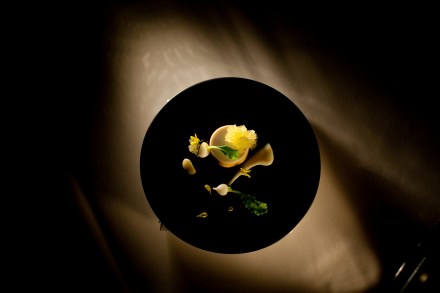
You don’t go to a strip club expecting to put something in your mouth unless you’re an incorrigible roué. So it came as something of a surprise to find myself doing just that in the new Spearmint Rhino club. The club recently launched in Soho’s old Windmill Theatre, famous for staying open throughout the Blitz, when girls appeared naked in static tableaux to get around the era’s indecency laws. Now the venue offers both flesh and – more shockingly – food. A restaurant in a strip club has both bacchanalian promise and the risk of comic disaster. Degustation sounds so like a combination of delicious and disgusting, it suggests there is a fine line between food and sex.

The joy of iced buns

‘It’s just a hot dog bun with icing!’ the iced-bun detractors will shriek. I’m a lady with a lot of opinions about fairly esoteric foodstuffs, many of them declamatory, immovable, or strident, but I do not understand taking against the iced bun. I’m not sure what awful bakery-based trauma must have happened to you during childhood to make iced buns the target of your ire, but they are undeserving. For anyone not a self-proclaimed detractor, iced buns (also called Swiss buns or iced fingers) prompt reveries: forgotten childhood memories of plump buns in trollies and sticky fingers holding grown-up hands.

Monte Carlo isn’t glamorous

What does Monte Carlo conjure up? A glamorous casino where fortunes can be won and lost, but mostly lost? Men in evening dress at baccarat tables with beautiful women standing by? A tax haven for the glitzy rich on the Cote d’Azur? Fabulous Belle Epoque buildings? A refuge for Edwardian English invalids to escape the cold? Grace Kelly? The Grand Prix?  It was here that Max de Winter met the girl who became the second Mrs de Winter at the beginning of Daphne du Maurier’s Rebecca. ‘What do you think of Monte Carlo, or don't  you think of it at all?’ he asked her.

Greece is the word this dinner party season

If I were offered the option of eating just one country’s cuisine forevermore, it would have to be Greek. Even on a rainy day in north London, just one bite of souvlaki is enough to conjure sun-drenched landscapes, fresh olive oil and vibrant Mediterranean flavours.  Clearly plenty of others agree. Greek restaurants seem to be popping up all over London – with at least five opening in the past two months. There’s more to come with the much-anticipated opening of Zylia in Covent Garden next month, from Greek chef Nick Molyviatis (formerly of Borough Market hotspots Oma and Agora) and Cypriot restaurateur Barry Karacostas. No wonder lifestyle platform SheerLuxe was cooing about ‘London’s love affair with Greek food’ earlier this month.

Dietary requirements are killing the dinner party

For centuries, as a dinner party guest you ate what you were served. Nobody dreamed of calling up their host in advance demanding what they would like on the menu. This is one reason why the dinner party somehow made it through the 1980s era of Tom Wolfe’s ‘Social X Rays’ – Mid-Atlantic society-types who ate nothing and resembled skeletons. Previous threats to the dinner party included the first drink driving laws, which Bron Waugh claimed ruined country social life. Then came the cocaine diet guest (no food touched), who has been spiritually succeeded by the equally annoying Ozempic-jabber, bragging to their hostess about how ‘unhungry’ they feel.

Resist the cult of ‘picky bits’

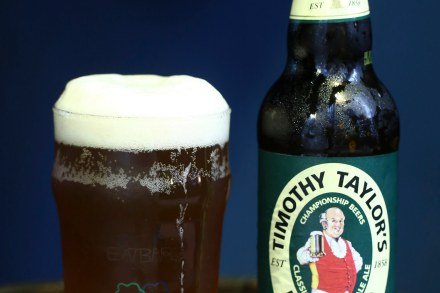
We are, according to Marks & Spencer, in ‘picky bits’ season. I cannot bear the tweeness of it all. M&S is surely mere days away from launching a ‘Paddington Bear picky bits picnic range’. In search for an antidote to such horrors, I go on my annual pilgrimage to Bouchon Racine, which starts on Westbourne Park Road at midday, sipping Beamish Irish stout in The Cow. It is reputed to be David Beckham’s favourite London pub and is one of an increasing number of English pubs piggybacking on the phenomenal appetite for Guinness by serving alternatives to the Black Stuff. Beamish and Murphy’s are popping up on taps across the capital and we are the better for it.

Even vegans can’t stomach vegan cheese

I’m one of those gobby vegans who will happily tell anyone why they should stop consuming animal products. But I can still admit what’s obviously true: most vegan cheese isn’t particularly good. I was once ardently devoted to cheese. In my vegetarian years, paneer, mozzarella and halloumi were less foods than companions. I loved how paneer would soak up the spice of a curry like a sponge. Mozzarella was like a spectacle of tensile, elastic theatre and halloumi provided evocative, salty squeaks. I also took delight in the standard toasted cheddar sandwich. Yes, I did get quite fat. But when I learned about what goes on at dairy farms, everything changed.

The martini is making a comeback

In P.G. Wodehouse’s Cocktail Time (1958) the characters are frequently ‘lapping up martinis like a vacuum cleaner’. Wodehouse was living in the US at this point, and this was the era of the three-martini lunch. In the ensuing decades, the classic cocktail took a bit of a back seat. But the martini has made a mighty comeback.   Not put off by Sir Raymond ‘Beefy’ Bastable denunciation of the modern youth endlessly sitting around drinking cocktails, I went therefore to find London’s best.  They are not always where you imagine. Archive & Myth is, ominously, underneath Leicester Square’s Hippodrome Casino.

The extraordinary simplicity of oeuf mayonnaise

‘Sometimes, in the search for originality, the most obvious dishes are forgotten,’ says Elizabeth David, the doyenne of cookery, in her book French Provincial Cooking. I often think of this phrase when I’m writing about vintage cookery. So much of food (and food writing, and writing, and media, and life) is trend-driven. It’s all about novelty. I look at the handwritten list of my planned vintage recipes – ‘chocolate mousse, custard slice, beef olives???’ – and have to acknowledge that my particular wheelhouse is anything but original. I try, though, to hold David’s words close: those ‘obvious’ dishes are known for a reason. And their familiarity is part of their appeal. David was writing, specifically, about oeuf mayonnaise.

In defence of celebrity rosé

Alan Watkins, the late parliamentary sketch writer, told a story about his time on the Sunday Express in the 1960s. He was called into the office of his editor, Sir John Junor, thinking he was going to be told off for spending too much on expenses. Instead, Junor brought out a receipt from El Vino and said: ‘Only poofs drink rosé.’ How far we have come from those Neanderthal days. It’s not just Britain’s gay community knocking back the pink. Everyone’s at it. Jeremy Clarkson’s drink of choice isn’t beer, it’s rosé. As a nation we get through more than 100 million bottles each year. In fact, the British have enjoyed rosé for centuries. In the past, many wines would have been pink by default as all the grapes would be thrown in together.

Happy 40th birthday to M&S’s ‘gin in a tin’

Cast your minds back, if you can, to 1986. A different era. The nation rejoiced as a jolly redhead married the Queen’s favourite son. Britain had a cast-iron prime minister who looked set to go on and on, with nary a dent to her patent leather handbag. A first-class stamp cost 17 pence; the average family home only a little more. There was a Big Bang in the City and a larger one at Chernobyl. And, in the nascent ready-made drinks market, something similarly seismic happened: Marks & Spencer launched the bevvy that spawned a thousand imitators, the ‘gin in a tin’. This epoch-defining moment passed me by at the time (I still had a few years left at primary school). When I was a 90s teen, it was alcopops that commanded the headlines and moral panic.

How Airbnb killed off the B&B

Sooner or later, Airbnb is going to change its name to Airb, partly because it takes less time to type, and partly because it is becoming a misnomer. Increasingly rarely is there a breakfast to go with your bed. I am walking from John o' Groats to Land's End at the moment, so I have been staying in a different town every night, save for when I have been on the hills in a tent, and not once so far has anyone offered me a fry-up. Only once have I been offered any breakfast at all. Neither, by the way, have I even seen anyone in most of the places I have been staying. All but one have been entirely remote-control operations with key codes and key safes. I am, therefore, getting quite nostalgic for the traditional B&B.

Waitrose must leave bad taste in the Eighties

Should you visit your local Waitrose store this week – and hope you don’t witness an altercation between a shoplifter and a member of staff about to be fired for doing his job – you might be surprised by a new range of products. In what the company is calling ‘a vibrant, decadent celebration of pure noshtalgia’, Waitrose has launched a series of 80s-themed foods. These include everything from Scotch egg sandwiches and steak Diane-flavoured crisps to rhubarb and custard ice cream and – horror of horrors – ‘peach melba spritz’, which its blurb describes as ‘a delicious blend of juicy peach and ripe raspberry, lifted with sparkling crisp bubbles for a beautifully balanced summer spritz’.

I hate gastropubs

The Eagle in Farringdon used to be next door to the old Guardian offices. I remember eating there back in the early 1990s, when it was offering something of a new approach to dining. A Portuguese-influenced menu was scrawled on a blackboard, and it was exciting and fresh. Placing your order was always a bit of a pain – you had to jostle your way to the front of the always crowded bar, then struggle to make your order heard over the noise endemic to pubs with no soft furnishings – and the many people intent on prioritising drinking over eating. But The Eagle became an institution and (although I'm not sure this is the case) it is reputed to have been the UK’s very first gastropub.

Is this the end of house wine?

We have all become only too used to the surging cost of heating our homes, filling up our cars or doing the weekly shop. But there’s one price increase that hurts me more than all of these combined: the cost of a bottle of wine in a restaurant. Just five years ago, it was rare to find a wine list without at least one bottle under £25; now it’s increasingly common to find one little under £40. We have reached a point where £35 house wine is now normal. Take Maggie Jones in Kensington. I used to eat there regularly in the late 90s and early 00s and recall it being fabulously cheap – a point emphasised by the magnums of house wine on which they’d mark with a pencil how much you had drunk. Often it was quite a lot.

The joy of liquorice

‘I’ll swap you two of my rolls for three of your spogs.’ That was the sort of thing you’d hear round the tuckshop in morning break when we schoolboys swapped and bartered our Liquorice Allsorts. We all had our favourites, spogs being the round pink or blue jelly buttons that had a coating of tiny sugar grains, while the pink or yellow coconut rolls featured a plug of liquorice surrounded with coconut ice. Another schoolboy favourite was Pontefract Cakes, allegedly one of, if not the,oldest commercial sweets in the world. In the 11th century, Benedictine monks introduced liquorice to Pontefract, Yorkshire. At that time, the plant’s roots were commonly chewed to soothe sore throats, ease coughs and help digestion.

My fellow drinkers feel pity for Peter Mandelson

We had gathered to discuss wine, but lesser topics intervened. During the Suez crisis, Clarissa Eden complained that it seemed as if the Suez Canal was running through her drawing room. Today, it is more a matter of the Strait of Hormuz, but that is an undeniably important matter. No one could accuse Mandy of being a stainless character. But what you see is what you get Other subjects which are receiving huge coverage have lesser claims on our attention. An American who had just flown in raised one of them. ‘What has this guy Mandelson actually done?’ Rem acu tetigisti. There is a short answer. He has embarrassed the Prime Minister. But whose fault was that?

Marmalade doesn’t belong to the EU

‘Citrus marmalade?’ Well, that’s a tautology, if ever I’ve heard one. I’ve been making marmalade for a long time and written about it extensively. I wouldn’t quite paint myself as a marmalade obsessive (I’ve met them, and I know that I cannot literally or figuratively compete), but I’m certainly a marmalade fangirl. They line my cupboards and are a breakfast non-negotiable. I seek out unusual citrus fruit, and pore over old preserve cookery books. January is officially marmalade-making season in our house and, for the full month, every window is steamed up, every surface is slightly tacky from over-zealous jarring.

High street cafés have gone to pot

It is 2089. My grandson tugs at the hem of my musty corduroy trousers. ‘Pop-pop,’ he says. ‘Were you alive during the Great Pret Pickle Shortage of 2026?’ There is an almighty crash of thunder. A gust of wind throws open a window. A scream can be heard from outside. I look down at my hands, which are visibly shaking, and compose myself. ‘I was there,’ I whisper. ‘I was there when Pret lost the jambon beurre. Man and sandwich were never the same again.’ I’m being facetious, of course. I couldn’t care less about Pret A Manger’s ham, pickle and butter roll going MIA. The coffee giant claims the sandwich has gone missing due to a temporary cornichon (pickle) shortage – much to the dismay, we’re told, of its loyal, city banker target market.

What has become of our table manners?

When I was a child, I always wanted to watch television during supper, but my dad wasn’t keen. He preferred family conversation and as we chatted over a meal he would try to gently steer us towards more pleasant subjects rather than the vulgar or provocative topics I tended to propose. ‘A meal is a sacred thing,’ he’d tell me.  I spent my secondary education at a bizarre school run by a quasi-Vedic cult, where table manners were also important. Before lunch, we chanted a Sanskrit mantra. The organic vegetarian food was to be offered, not grabbed. We sat upright, our backs as straight as any Himalayan yogi. We were told not to eat more than we needed. Naturally, I sneered at much of this as angrily as any teenage Clash fan would.

My shameful confession: I’m not a good baker

Contrary to popular conception, I’m not a great baker. I was hired by Bake Off for my judging experience, not my baking skill. I’m a good cook and I know what’s right and wrong about a cake, but I suspect my own baking efforts would not often get Paul Hollywood’s nod of approval. On the day before Good Friday I decided to make hot cross buns. They were a total disaster. Analysing them, I could hear myself say: ‘No flavour. How old were the spices you used? And when did you buy that yeast? You do know you should chuck out spices every year and that instant yeast does not last for ever?’ So, we went to Tesco and bought new spices and yeast. The second attempt was much better, but still not wonderful. We went late-night shopping and happily the Co-op still had hot cross buns.

How do you make a tart that doesn’t really exist?

There are few things more delicious than falling down a rabbit hole. No, don’t worry, I’m not serving up a second recipe for rabbit in a row. I mean discovering a recipe or dish which, not only have I not cooked or tried before, but haven’t even heard of. A little while ago, a reader asked me about Hawkshead cake, which Beatrix Potter used to make with her husband at Christmas. Hawkshead is the village Potter grew up in, in the Lake District, and the cake is actually more of a tart, made with puff pastry and filled with currants and syrup. This is where the proverbial rabbit hole came in, because I couldn’t quite stop there.

The soft power of Ukrainian food

New wars bring new fundraising efforts. Since Russia’s invasion of Ukraine, Ukrainians who already lived in London or moved here as a result of the war have conducted a subtle but concerted gastronomic campaign on behalf of their country. Somehow, this avoids all shrillness – unlike the dreadful and relentless Cook for ‘Palestine’ movement.  The Ukrainian food scene doesn’t crow about good and evil but it takes a position on those questions anyway – of course. A wartime enterprise can't do anything else. But with front people like the beautiful, tireless Olia Hercules, who has raised millions for her homeland through culinary ‘cultural diplomacy’ missions, it’s an altogether more skilful piece of food politics than other wartime campaigns.

School dinners are glorious

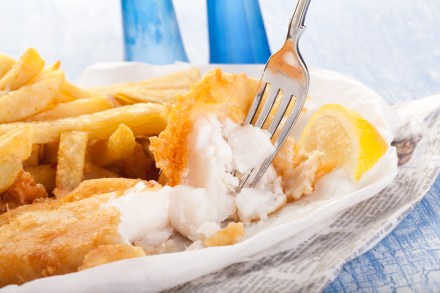
I don’t much miss being a teacher. A pathological dislike of teenage boys, a congenital inability to remember historical facts and an unwillingness to spend my spare moments lesson-planning rather than go to the pub meant that a brief career diversion to pay off my overdraft did not become a lifelong vocation. But there is one thing I do hanker for, that makes me briefly wish I was back in the classroom: the daily delight of school dinners. After four hours of trying to wrangle the Year 10s into memorising the membership of the League of Nations, sitting down for a steaming hot plate of fish, chips and jam roly-poly was a godsend. It was a little patch of civilisation between shepherding the droogs and staring at PowerPoints.

Will genteel customers desert Waitrose?

One of the disadvantages of having a daughter who is both given to wayward behaviour in public and named Rose is that my increasingly frantic cries of ‘Wait, Rose! Wait, Rose!’ make me sound like an especially unhinged proselytizer for the middle classes’ favourite supermarket. When we do eventually make it inside the hallowed doors of Waitrose, however, I can feel my pulse rate returning to normal. Like Truman Capote’s Holly Golightly so famously said of Tiffany’s, it is a place where I feel that nothing bad can happen.   The supermarket has, however, suffered quite a public relations blow recently with its actions involving its former employee, Walker Smith.

Gentleman’s Relish is no more

It is the early hours of the morning and an email drops into my inbox. Lacking any kind of willpower, I open it. Now I’m wide awake. Because this isn’t the usual PR slop that starts my days. It’s a tip-off. A big one. A reader has discovered something about a company and they are urging me – me! – to investigate. Adrenaline surges. This must be what it felt like to be Woodward and Bernstein. Only my informant is pointing me in a slightly different direction. Their intel is on Gentleman’s Relish: the incredibly niche spread is disappearing from our shelves. It has been available in the House of Lords dining rooms but for how much longer? Online supermarkets and delis are showing it as out of stock. What is going on?

White port is the new G&T

Spring is here and, as the garden blooms, readers might find themselves reaching for the Pink Diesel to enjoy in the sunshine. But I have another idea: white port and tonic will make you thank God for inventing Portugal and being so good as to align it with England. The great promulgators of white port in Portugal nowadays can be found in the Symington Family Estates. In 1882, 19-year-old Andrew James Symington boarded a boat from Glasgow and headed for opportunities beyond the Clyde. On arrival in Portugal, he worked for Graham’s Port, before breaking out to do his own thing. Symington soon became one of the defining names in Portuguese wine production. A.J., as he’s known in the family, had such success that his descendants were able to acquire Graham’s in 1970.

Why is it impossible to make good coffee at home?

It was when I was staying recently with the Frums in D.C. that, for a dizzying moment, I thought my life-long quest had ended. Nasa can fly us a quarter of a million miles to circumnavigate the moon but nobody has yet, to my knowledge, fixed the perennial problem of making an even half-decent cup of coffee at home. Back to the Frum residence in Georgetown, known inside the beltway as ‘the best hotel in Washington’. It is 8.30 a.m. There is no sign of Danielle, my hostess, but David is at large on the landing, perhaps as he had heard his house guest stir.  ‘Coffee?’ he asked. To my amazement, he flung open some doors outside his master bedroom suite to reveal an entire separate walk-in closet complete with serried rows of glass mugs and a space-age espresso machine.

Bovril’s infallible power

Nations are built from eating habits as well as masterpieces. In Britain, there’s one that is both: Bovril. This thick, salty meat extract paste may not be as wise as George Eliot’s Middlemarch, as beguiling as Rossetti’s ‘Proserpine’, or as symbolic of greatness as the Palace of Westminster – and yet it has a clear place among our nation’s intangible cultural assets. As both a spread and a drink, Bovril may be just a wartime ration, a tonic for invalids or a companion on football terraces but it still marks a serious, if ordinary, contribution to our common life.  That contribution, however, may now be under threat.