Spectator Life

Spectator Life

An intelligent mix of culture, style, travel, food and property, as well as where to go and what to see.

Survival here is about logistics: Disneyland Paris reviewed

Alcoholics know that hell is denial, and there is plenty at Disneyland Paris in winter. This is a pleasure land risen from a field and everyone has after-party eyes, including the babies. The Disney hotels operate a predictable hierarchy: princesses at the top, Mexicans at the bottom. We, the Squeezed Middle, are at the Sequoia Lodge with Bambi, where I learn that I like canned birdsong, and that is fair. You don’t consume dream worlds, because that is not their nature. They consume you. We stand in the Magic Kingdom and stare at Mickey Mouse-shaped food and a fake Bavarian castle – it’s Ludwig’s, not Sleeping Beauty’s – painted pink. Disney culture is impregnable: hence the fortress. It only needs – it only feeds on – itself.

One of the joys of wine is the people who make it

Towards the end of the war, a young Guards officer met some Italian aristocrats. They had much in common. Robert Cecil was the heir to a marquessate. The Principe di Venosa’s daughter was married to an Italian marchese. Lifelong friendships have ensued down the recent generations. Nevertheless, the English family would be the first to concede that when it comes to generations, the Italians are a couple of centuries ahead. In 1385, Giovanni di Piero joined the Florentine winemakers’ guild. The easy movement between the Florentine bourgeoisie and the aristocracy helps to explain that great city’s long success: the Medici are the obvious example, as are the Antinori, who have been making wine for 26 generations, and are still gaining momentum.

Santa Pants: a cocktail recipe by Matthew and Camila McConaughey

Our Santa Pants cocktail is one of our go-to holiday pours when hosting at this time of year. Made with our organic tequila and ginger beer, cranberry juice and fresh lime, it brings all the sparkle and cheer of the season. It is like Christmas in a glass. And while the world doesn’t need another celebrity tequila, it could use a shot of fun. So this Christmas, enjoy yourself and keep the holiday spirit flowing. Here’s how to make it. Ingredients for one serving – 60ml Pantalones Organic Tequila – 60ml cranberry juice – 15ml lime juice – Top with ginger beer – Garnish: sugar rim, cranberries, rosemary Rim the edge of a rocks glass with a lime wedge, dip the rim in sugar to coat, and set aside.

Supermarkets have finally discovered chilli

When Columbus brought chilli back from the New World, the British were indifferent. Strange, really, when our taste for horseradish and mustard was keen, and when we later found a love for Marmite, stilton and Pickled Onion Monster Munch. A culture shaped by drizzle should have been an early adopter. Instead, that part of our culinary soul which prizes macaroni cheese for its inoffensiveness prevailed. Kedgeree had been here for a century, spiced with nothing hotter than pepper, when we started developing more fiery tastes. Students showing off to each other would compete to eat a vindaloo or a phall. There are attitudes that youth and inexperience make forgivable.

With Tom Gilbey

31 min listen

Tom Gilbey, the internet’s most charismatic wine expert, sits down with Olivia Potts for Table Talk. Tom is a winemaker, merchant, educator – and also an author. His new book, Thirsty, is part-memoir, part guide to his life through wine in 100 bottles, and is available now.  On the podcast, Tom discusses his family’s love for winemaking that stretches back to the nineteenth century, and how he became captivated by the trade thanks to Beaujolais and a pike’s head. He explains how a glass of pinot gris in an ice bath propelled him to social media fame – where he’s known for taking a fun approach to wine tasting. Tom also reveals the best way to pair drinks with dishes and the unconventional way he’ll be cooking his turkey this Christmas.

In celebration of solo drinking

‘Be not solitary; be not idle,’ wrote Robert Burton in The Anatomy of Melancholy. Now, 400 years later, one bar is taking his instruction to heart and banning solo drinkers. An Altrincham venue which goes by the gloriously 1990s nightclub name of Alibi will only allow groups in after 9 p.m. Owner Carl Peters said he introduced the policy after certain individuals had been ‘mithering other groups’ – ‘mithering’ being a northern word meaning to pester or make a fuss. Alibi also has a strict dress code: ‘No sportswear/trackies, no Stone Island, no ripped/frayed jeans, no baseball caps, no roadman vibes.’ I should point out to Spectator readers that a roadman isn't someone employed by the council to fix potholes, it's a young man with gangster pretensions.

A right royal travesty: Lilibet’s reviewed

Elizabeth II was a god and a commodity: now she is gone it is time for posthumous exploitation. Lilibet’s is a restaurant named for her childhood nickname at 17 Bruton Street, Mayfair, on the site of the house where she was born. It was inevitable that Elizabeth II would eventually get a personal restaurant. Princess Diana ate in the Café Diana – English breakfasts and kebabs – on the Bayswater Road and George VI is the inspiration for the superb Guinea Grill – mostly sausages, or rather it is the sausages I remember – near Lilibet’s. Because that is what the British do to our monarchs and their intimates. We eat them and call it love.

Why are hotel breakfasts so bad?

Where else would you see anyone wandering around with a plate heaped with such incongruous ingredients as bacon, olives, blueberry waffles and a side order of yoghurt and prunes? Nowhere but at a hotel breakfast, of course. More often than not, the food is inedible, and nothing works properly. The coffee machines always seem to be faulty, although even this is preferable to being served from a silver coffee jug filled with tepid, muddy brown, tasteless water that leaves you hankering after service-station machine coffee. Then there is the room: inevitably, it is dark and windowless, usually in a basement that smells vaguely of damp underneath the stench of cheap cooking oil. Beware the hotel that serves dinner and then drags out the leftovers for breakfast.

Disraeli to Reeves: how each Chancellor drank their way through the Budget

34 min listen

Throughout the years, the only person permitted to drink inside the House of Commons is the Chancellor, so what has been the tipple of choice for each resident of Number 11 dating back to Benjamin Disraeli? Following Rachel Reeves Budget this week, Michael Simmons and James Heale drink their way through the ages, discuss the historical context of each Budget, and question whether Rachel Reeves has the toughest job of them all. This episode was originally recorded for Michael Simmons's new podcast Reality Check. Search Reality Check wherever you subscribe to your podcasts.

I’m a Christmas pudding convert

I used to be a Christmas pudding denier. I couldn’t see the attraction of a dense pudding made mostly of currants; frankly, I’d rather have a trifle. Of course, I was wrong: I was judging Christmas pudding by poor examples, those that sat on the edge of a Christmas lunch tray at school or were half-heartedly doled out by other pudding sceptics (I’m looking at you, Mother). My conversion came about thanks to a party – a Christmas pudding party. Not a party for eating Christmas puddings but rather one where the guests made Christmas puddings. It was hosted by my friend Kate and I went along out of love for her, rather than love for the pud. Under Kate’s keen eye, and following her great-granny’s recipe, we creamed kilos of butter and sugar in a big plastic tub.

The glory of gravy

In Robert Louis Stevenson’s Treasure Island, when Ben Gunn is found by Jim Hawkins, sunburnt and wide-eyed after three years of being marooned on the island, the first thing he asks Hawkins for is cheese: ‘Many’s the long night I’ve dreamed of cheese – toasted mostly.’ As a greedy person prone to daydreaming, I’ve often wondered what my ‘cheese – toasted mostly’ would be. A dozen oysters? A cold negroni in a fluted tumbler? A perfect quivering soufflé? I think it’s gravy. That’s my desert island dream, the idea I can’t shake, the touchstone I’d return to. I’d take gravy in any form: thick and rich, made from meat scraps, a thin, boozy jus whisked up from pan scrapings, even the ‘from granules’ stuff, stirred in a plastic jug moments before serving.

A Frenchman who does not drink wine is a disgrace

The world is in an even greater mess than was apparent. I am not referring to Ukraine, Gaza, Sudan or other swamps of mayhem and misery, although they are bad enough. No: the new crisis is in France, and it has two malign and reinforcing aspects. First, large numbers of the younger French have given up drinking wine. It is not clear what they are substituting: Coca-Cola, perhaps. If so, God help us (and them). A Frenchman who does not drink wine is a disgrace to his history and heritage. After the liberation in 1944, and in order to punish collaborators, the new French government created a crime: indignité nationale. As it is presumably still on the statute book, it could surely be used to bring condemnation on those who collaborate with teetotalism, or Coke.

With Tanya Gold

21 min listen

A woman that needs no introduction for regular Spectator readers, Tanya Gold has been the Spectator’s restaurant critic since 2011. On the podcast she tells Lara why – while it might be annoying – fellow critic Jay Rayner is never wrong, why the pandemic was ‘disgustingly great’ for food critics and how she has become ‘enslaved' to her aga. Plus, she discusses her favourite restaurants from Hampstead to Cornwall – though it sounds like she would trade them all in for the mini egg, which she calls 'the highest form of food’. Produced by Patrick Gibbons.

Do supermarkets really make us sick?

I contemplated this piece over a bowl of porridge; not a ready-mix concoction but the raw stuff: porridge oats mixed with milk and water and eaten without any adornment whatsoever. That will win me brownie points among many nutritionists and policymakers because I was not eating an ‘ultra-processed food’ (UPF). I have a gut feeling that raw porridge is more nutritious and less full of nasty stuff. It is also much cheaper. A few years ago, while I was on a walking holiday with my son, I pointed out to him – not least because he was about to go off to university and could do with a bit of guidance on living frugally – that while my porridge for the week had cost about £1.50, his prepared breakfast cereals had cost him – or rather me – upwards of a tenner.

When did bakeries develop literary pretensions?

I became sick of bakeries when I lived in Berlin. I alternated between a few of them, doing most of my work in a café-bakery in the then-trendy Neukölln district amid other somewhat directionless snackers and typers. After a while, I felt that commercial premises hawking cakes, pastries and cookies were no place for the would-be scholar, as I then was. I began to feel grossed out by other people’s crumbs under my laptop, depressed by the pressure, partly caused by my own boredom, to keep ordering and paying for cake and coffees. Eating cake began to seem antithetical to serious work, not its handmaiden. Eventually I discovered the charms of the Berlin State Library, where my then-boyfriend always stationed himself, and never looked back.

The rise of the performative chef

Let me introduce you to the performative chef. The performative chef is a man. He is between 23 and 29 years of age. Both of his arms are covered in fine-line tattoos. His favourite tattoo is a quote from Philip Larkin that reads: ‘They fuck you up, your mum and dad. They may not mean to, but they do.’ His parents are in fact lovely people, but he’ll never tell you that. He sports a mullet (or buzzcut depending on the season). He rides a fixed-gear bike to work. He exclusively wears oversized clothes. He talks to every stranger that will listen about getting an eyebrow piercing. He studied classics at a Russell Group university, not that it matters; he did the degree just because it was something to do.

Domino’s has fallen

There are few culinary experiences like the first bite of a Domino’s pizza. The finest N25 caviar or a perfectly seared lobe of foie gras surely can’t compare to the ecstasy that comes from that mouth-cutting cornmeal that they sprinkle all over the base, or that sweet, cloying ‘cheese’, or those tart, dancing cups of pepperoni. In these moments, resistance is futile. It’s not a question of whether this is the best takeaway pizza there is, or even the best food there is. It’s a question of whether this is the best thing there is. Of course, we know how it ends. Fifteen minutes later, caked in sweat, parched, filling yourself up like a swimming pool. And then, if you’re unlucky, an awakening in the middle of the night. You wheeze against the table.

How to make the perfect pecan pie

A pecan pie has been on my kitchen table for the past few days, due to circumstances rendering every other surface or shelf unusable, thanks to badly timed building work and an absent fridge. A mixing bowl sits over it, protecting it from dust and sticky fingers. I’ll tell you what I’ve learned: everybody loves pecan pie. Everyone who has walked past it has stopped dead, done a double take, and then rhapsodised unprompted about the pie’s virtues. At one point, excitement was generated simply by the pie being in the background of a video call. Pecan pie, one of America’s traditional celebration (especially Thanksgiving) puddings, is adored by children, but it has a dark, complex sweetness that wins over grown-ups too, and the toasty nuts bring texture as well as richness.

Wine to toast the fallen

Solemn, moving, serious: British. As silence fell and the wreaths were lain, even teenagers joined in the mood of reverence. Suddenly it did not matter what the gossip columns were saying about Andrew Mountbatten Windsor, or what latest mischief might arise from the Duchess of Sussex. The great ship of state and of history sailed on serenely. The sacrifices of a previous generation were saluted. They had paid the price for their Britishness. We, their successors, unworthy as we might feel, could at least salute them, especially as good bottles were about to be opened, to toast the fallen. Yet there was a problem far more important than princely indiscretions. We British won the war. Since then, we have defended the peace. Hard fighting is a tough business.

How Browns lost the battle of the brasseries

Last month, the founder of the Browns restaurant chain was charged with killing his mother. Shocking news, but it feels somehow appropriate. Browns is the traditional lunch spot for families looking to feed their student child, the place where 2.2s are revealed and doomed university girlfriends introduced. Many parents have found themselves spending hundreds on lunch only to be told their far greater investment has been wasted on dreams of becoming a club promoter. Steak frites, please, with a side order of murderous intent. Browns began in Brighton, but only really got going when it spread to Oxford and Cambridge in the 1980s. Bristol got one in the early 1990s, decking out a neo-Byzantine library next to the Wills Memorial Building.

How to make five dinners for £5

No matter how much the cost of convenience food rises, the idea that it’s still cheaper than cooking fresh food at home somehow refuses to go away. People can fool themselves as much as they like. But it’s (overpriced) pie in the sky.  To be economical, choose chicken thighs over breast; lamb shoulder over leg. Veg offcuts such as broccoli stalk (for soups) and ginger peel (to flavour Asian stock). Leftovers for egg fried rice. Stale bread for croutons. The freezer is your friend: not just for peas and berries, but spinach and an ice cube tray of leftover wine for cooking too. Oxo over refrigerated supermarket stock; Bird’s over fresh custard; lard over butter. It's handy to also use ingredients that don’t differ wildly between basic and premium versions.

How we saved our local pub from closure

You won’t find it in any of the ‘best pub’ guides that seem to appear every other week, but our local is the best pub simply because it’s, well, our local. And that is why our village has come together to save it from permanent closure. The White Horse Inn in Westleton – one of around a dozen pubs in Suffolk with that name – was put up for sale last year by the county’s foremost brewery, Adnams, as they looked to slim down their estate. It was hoped that, as with other pubs in the area, some enterprising new owners would come and take it over, tart it up and give it a new lease of life. But the longer it failed to sell, the more it seemed that it would end up, like so many others in Britain, falling into the hands of developers.

Mamdani will hand New York’s restaurants to the rich

There’s no shortage of catastrophic predictions for New York under Zohran Mamdani’s leadership. While the city probably won’t see breadlines, the wildly expensive, exhaustingly derivative restaurants that dominate its food scene are likely to become more dominant. Mamdani’s big pledge on food is to ‘make halal eight bucks again’. But it’s a ‘false promise’ of street-food affordability according to Heritage Foundation economist Nicole Huyer. She says Mamdani’s economic programme, which includes higher taxes, steeper leasing regulations and a pledge to raise the minimum wage to $30 an hour by 2030, will effectively make restaurants even more expensive.

Save England’s apples!

On a grey autumn morning, the apples in the National Fruit Collection look vivid. They pile up in pyramids of carmine, salmon and golden-orange around dwarf trees, which have been bred to human proportions. Their branches are well within reach but picking fruit is forbidden. These trees are part of the world’s largest fruit gene bank. Neil Franklin, an agronomist and a trustee of the National Fruit Collection in Kent, describes it as ‘the Victoria and Albert Museum of the fruit industry’. The collection holds several types of fruit, but the apple is queen of them all: of the 4,000 or so fruit varieties here, more than 2,200 are apples. They’re used mainly for research into breeding and resistance to pests and diseases.

How not to train a truffle dog

For the first time in decades, King Charles has a new pet dog, a lagotto Romagnolo called Snuff. Queen Camilla is said to have given him the puppy, perhaps more for her benefit than his. She is thought to be mad about foraging for fungi, especially in the area surrounding her home in Wiltshire, where the chalky terroir is famous for an abundance of Burgundy truffles. Snuff is the perfect breed to find them. The lagotto hails from my home region of Emilia Romagna, and in recent years the dogs have surpassed pigs as the go-to tool for truffling. I can only surmise too many fingers were lost retrieving a precious truffle from a 200lb swine.

Bagels that even New York can’t beat: Panzer’s Delicatessen reviewed

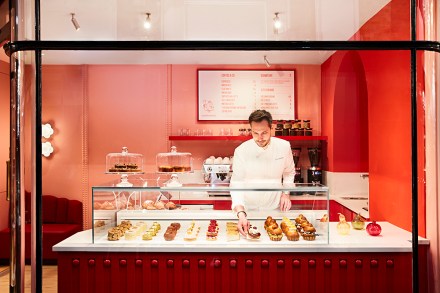
That Panzer’s Delicatessen in St John’s Wood is called Panzer’s – for the instrument of Blitzkrieg – is mad, until you remember that Jews love to eat near catastrophe, and then it is merely funny. I love Panzer’s so much I am reluctant to share it, but we need all the friends we can get. I keep telling non-Jewish friends: when we burn, you will burn with us. Though I mean it as consolation, they tend to run. St John’s Wood has always existed on the edge of hysteria. Edwardian psychopaths put their mistresses here, and I once went to a children’s birthday party where Peppa Pig couldn’t park, and there was a fight with recriminations. The high street sells corsetry and facial reconstruction.

Give Baltimore a chance

You saw Homicide: Life on the Street, right? You know, that gritty TV police drama set in Baltimore. What? Ah, no, you’re thinking of The Wire, that other gritty TV police drama set in Baltimore, the one with Idris Elba and Dominic West. Homicide predates The Wire and was filmed largely around Fells Point and along Baltimore’s historic waterfront. The former City Recreation Pier, which stood in for the police department, is now a swanky hotel, the Sagamore Pendry Baltimore, in whose comfortable embrace I have just wallowed. Baltimore doesn’t have a great reputation. Whenever I tell American friends I’ve been there they affect horror and ask what on earth I was thinking. Couldn’t I have gone to Boston, New Orleans, New York, Washington D.C.

The salad dressing wars

I was recently in a café that promoted its salads as being served with ‘low-fat dressing’. I couldn’t possibly imagine what that might be: no olive oil? That stuff you spray on the pan when on some god-awful calorie-controlled diet? It turned out to be bottled – bought in from a supermarket – and contained lots of yoghurt, vegetable oil and dried herbs. I ordered a ham sandwich. The very basis of any salad dressing is a good-quality, fruity, preferably first-press or at least virgin olive oil. All the other ingredients are up for grabs, and can even be the subject of fairly robust arguments – at least in my house. My partner Harriet was first taught how to dress a salad by her father, during a holiday in Italy.

How to drink sake

There is a fellow called Anthony Newman who is fascinated by drink, as a consumer, a producer and an intellectual. That said, he spent some years supplying Australians with craft beer, which does not sound very intellectual. But he insists he paid for his own passage and was able to return without a ticket of leave. While living in Oz he visited Japan, and found himself captivated by many aspects – not least sake, the rice wine which is its national drink. Nearly 90 per cent of sake is consumed locally. Anthony decided the potential export market was enormous. I have heard it persuasively argued that Japan is the most complex of all the world’s great countries.