Spectator Life

Spectator Life

An intelligent mix of culture, style, travel, food and property, as well as where to go and what to see.

My fight to get screens out of schools

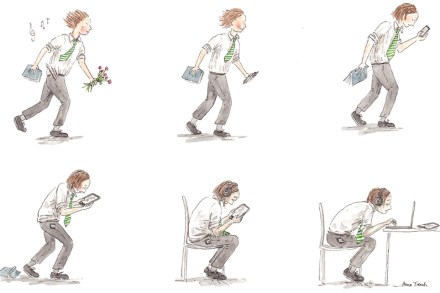
It was gratifying to see the recent Unesco report recommending moderation on the topic of tech in the classroom. I do hope the Department for Education, Ofsted and every school head in the country has read it. Britain seems to have submitted to the tidal wave of digital learning without so much as a minnow of doubt. The switch to online lessons during the lockdowns should have been temporary, an emergency measure – not something we then accepted wholesale. Personally, I find the sight of 26 bright faces glued to 26 bright screens for lesson after lesson indefensible. The argument that these platforms are ‘adaptive’ is unpersuasive – a good teacher is adaptive.
Can private schools survive Labour’s tax grab?

The latest headmaster of Eton has been recruited from a major private equity firm to help drive the brand’s growth in China. The consortium of hedge funds that own Winchester has been involved in a bitter takeover battle with Rugby, centred mainly on the redevelopment value of its playing fields. Westminster has been acquired by Meta, the owner of Facebook and WhatsApp, to develop campuses in the Metaverse, Netflix has acquired Marlborough to use as a set for romcoms, while Elon Musk has taken control of Ampleforth, sacked most of the teachers and rebranded it as ‘W’ for reasons that no one can quite fathom.

The Oxbridge Files: which schools get the most pupils in?

Oxford and Cambridge have released figures showing how many offers they gave to pupils from schools in the 2022 Ucas application cycle. We have combined the figures in this table. It shows how well state grammars and sixth-form colleges compete with independent schools. Over the years, both universities have increased the proportion of acceptances from state schools: 69 per cent, up from 52 per cent in 2000. Of the 80 schools, 33 are independent, 26 grammar or partially-selective, 18 sixth-form colleges and three are comprehensives or academies. (Schools are ranked by offers received, then by offer-to-application ratio. If schools received fewer than three offers from one university, this number has been discounted due to Ucas’s disclosure control.

The hidden private school fees

Are you totting up the cost of school fees? Are you turning your piggy bank upside down, white-faced? Yes, the cost of private education is the ultimate first-world problem. But even among the ‘haves’, some are luckier than others. The global super-rich pay school fees from lavish earnings or trust funds. The rest of us, having failed to take the elementary precaution of being (or marrying) a hedge-fund manager, must save up. The financial pressures on middle-class families can be gruelling.  ‘Overseas trips are crippling. Why can’t they tour to Ipswich?’ fumes a father As a rough starting figure, a recent newspaper investment advice column told a young couple to budget for private school fees at around £30,000 a year.

What’s in a school nickname?

‘Have you met Sperm?’ a friend from Westminster School asked me at a teenage party once. Sperm was a charming, pretty, confident girl but, still, I didn’t feel quite ready to use her startling nickname on our first meeting.   My own nickname – Mons, Latin for Mountain or Mount – seemed unadventurously fogeyish by comparison. I didn’t pass it on to Sperm.   Old school nicknames can be fantastically rude – but the ruder they are, the more affectionate Old school nicknames can be fantastically rude – but the ruder they are, the more affectionate. Sperm happily responded to the nickname – and her friends used it in an utterly friendly way. They had long detached the word’s meaning from its use as a name.

Why are cathedrals cutting ties with choral schools?

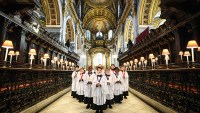
There’s worrying news for all who care about the incomparable cultural phenomenon that is the singing of choral evensong in British cathedrals every day of the week. Canterbury cathedral announced in March that it’s cutting ties with its local independent choir school, St Edmund’s, ending a happy relationship that has lasted for 50 years. St Edmund’s was only informed about the end of the contract a few days before the public announcement.  If these small powerhouses of excellence are lost, the nation will be culturally the poorer for it From now on, Canterbury’s choristers will be drawn from any and all local schools, and they will sing just three services each per week.

The crisis in language teaching

The British are, on the whole, rather rubbish at languages. We all know people who live up to P.G. Wodehouse’s description of the ‘shifty hangdog look which announces that an Englishman is about to talk French’. As more of the world speaks English, our monolingualism is getting worse. According to the British Council, only one in three of us speaks a second language. But it’s not entirely our fault – we’ve been set up to fail by our education system. The national struggle with languages starts young. The first time most of us will encounter a modern language – usually French – is at primary school, where its teaching is patchy to say the least.

Teaching children mindfulness is a waste of time

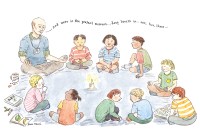
A friend from Lewisham, south London, reports occasionally on her children’s state school, which has a reputation for being strife- and strike-prone. However, the children themselves – nursery and reception – are engaged in more calming activities. They are doing mindfulness. ‘My son loves it,’ she says. They sit down cross-legged at least once a week to take in the sounds around them (‘listen to the birds!’), concentrate on their breathing and focus on the present moment. My friend did ask the teachers whether it was possible to get five-year-olds to sit still for that long. ‘Yes,’ she was told. ‘In fact, some fall asleep.

Is Labour right about the power of oracy?

It is no surprise that a speechwriter and a barrister-turned-politician would think the art of speech-making should be taught in schools. It’s like pig farmers at a barbecue eulogising the nutritional value and superior flavour of pork.  The speechwriter in question is Peter Hyman and the former barrister is Sir Keir Starmer, Britain’s presumptive next PM. In serious fields of scholarly inquiry, the goal is to make the complex appear simple. Unfortunately, the field of education sits under the social sciences, which try to make the commonplace sound complicated. This is why making speeches and discussing ideas are dubbed ‘oracy’ and are the Labour party’s new big education idea.

School portraits: snapshots of four notable schools

Hurstpierpoint College, West Sussex Hurstpierpoint College – or ‘Hurst’ – aims to provide an ‘excellent all-round education’ that enables every child to ‘achieve their own personal bests’. The school is located in the West Sussex countryside, is co-educational and for pupils aged four to 18 years. Its 140-acre campus is impressive and, having abandoned full boarding in 2019, it offers flexible and weekly boarding from Year 9, along with a chaperoned weekly train service from Clapham Junction. The college was established in 1849, and claims to have the oldest Shakespeare society in existence and the oldest school magazine in the country.

You won’t know it, but a school trip will be the best day of your life

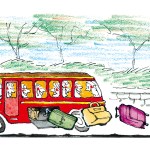
‘We need 800 words on a memorial school trip by next Friday. And Taki’s already written one.’ As soon as I agreed to this commission, I started to worry. What if Taki’s childhood involved countless trips to Penscynor Wildlife Park, St Fagans Museum of Welsh Things or Wookey Hole? There would be a risk of repetition. After some reflection, I decided this was unlikely. I had even gingerly lowered the rear step of the minibus to maximise the resulting damage Unlike Longstanton Spice Museum, which is an Alan Partridge invention, Penscynor Wildlife Park, though now defunct, actually existed. It is surprising that it failed financially, since it must have made several million pounds a year from the sale of car stickers alone.

Could you find love with a business degree?

‘D’you know what the acronym MBA stands for?’ The 27 -year-old who asked me this had a deep tan and fluorescent teeth. He may have winked, but the eye twitch was more likely a nervous tic from looking at himself in the mirror so much. I responded with a look of indifference tinged with fear. ‘Married’ – he paused for dramatic effect and demonstratively looked at my wedding ring – ‘but available.’ I felt nauseated.

Are boys’ schools a thing of the past?

First Charterhouse, then Winchester – now Westminster. In the past two years alone, three of Britain’s most famous schools have recently turned, or are planning to turn, fully co-educational. How many more boys’ schools will follow?  One popular argument for the change is, as ever, that girls will be a ‘civilising influence’ upon teenage boys – especially in the light of the sexism exposed by the ‘Everyone’s Invited’ scandals. The more that teenage boys learn to study with girls and respect them, the less likely it is such scandals will be repeated. I taught at two traditional schools which turned co-educational in the 1990s, Uppingham and Cranleigh. Then, it was usually a shortage of numbers which triggered the move to take girls.

How to succeed in exams

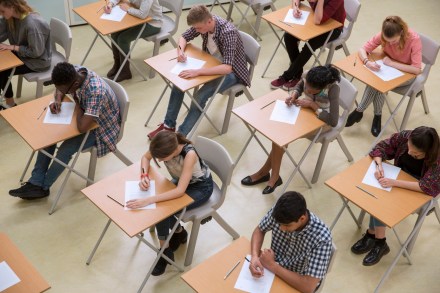
Exams start on Monday. Thousands of A-level and GCSE pupils will be swotting hard for them right now. Some will do well; others won’t. Knowledge and ability are the two obvious keys to success. But there’s another factor that’s often overlooked: exam technique. Having taught thousands of students of all abilities at several leading schools, I know this is a vital reason why some teenagers are more successful than others: they use the right exam techniques under pressure. So what are these techniques?  First and foremost, arrive early. Exams need a clear head and turning up at the last minute is certain to be stressful.

The timeless rules of youth

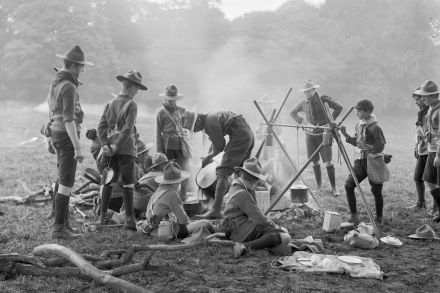
Every so often, one stumbles across some long-forgotten text that could have been written yesterday. It’s a reminder that often the answers to today’s problems lie in the past. I had one of those moments when I read Lord Baden-Powell’s Rovering to Success. Recently I had another such moment reading about Kurt Hahn’s Six Declines of Modern Youth. He wrote of a widespread decline of self-discipline, a dislocation from the world and a weakened tradition of craftsmanship. All this, and more, rings true. And, God knows, we need to find solutions. Kurt Hahn is not exactly unknown: the German-born educator who later settled in Scotland was the late Duke of Edinburgh’s headmaster at Gordonstoun which Hahn founded together with Lawrence Holt.

Independent thinking: private schools need reinvention, not abolition

It is one of those ancient mysteries: why has no Labour government been able to abolish private schools? Harold Wilson didn’t spare grammar schools (and nor did Edward Heath’s government, which followed). New Labour, too, for all its reforming zeal, never dared disembowel the independent sector. When the party did promise to do so – in 1983 and 2019 – it lost heavily. But are private schools about to run out of luck? For once we have a Labour opposition which is threatening to end their charitable status – and which also looks as if it will cruise to victory at the next general election. Labour’s pre-manifesto has promised to end tax breaks in order to ‘fund our vision for the education system’. It has suggested that it hopes to raise £1.

Private education’s dirty little secret

Someone once said that the two greatest moments you enjoy when owning a yacht are the day you buy it and the day you sell it. You could make a similar case for school fees: nothing feels quite as good as the day you finally stop paying them. Much as we are impressed by the hockey pitch, what we’re really choosing for our kids is a peer group All the same, I feel a bit of an ingrate grumbling about private schools, since both my daughters did very well from them. Both ended up with a superb network of seemingly lifelong friends, had a mostly very happy time at school and attended the universities they wanted to attend, studying the subjects they wanted to study.

How to get in to an American university

Angela McAuslan-Kelly is a normal sixth-former at Robert Gordon’s College in Aberdeen. Her dad is a bus driver and her mum works in a coffee shop. ‘They are not very wealthy,’ explains Holly Cram, a former captain of the Scottish national women’s hockey team. Angela, though, is off to Princeton in September. ‘I completely get why students want to do it. They are sold on the dream of getting a scholarship’ The reason is American universities’ extraordinarily generous scholarships, especially for sports. ‘She is very bright and she is very good at chucking a heavy thing on a wire,’ laughs Cram. Angela’s love of hammer throwing means she will soon find herself rubbing shoulders with the scions of American business.

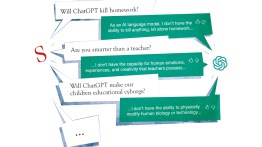
Will AI kill homework?

If the success of a new technology can be measured by the speed of uptake, there is no denying the epochal impact of ChatGPT. Within five days of its launch in late November, the artificial intelligence chatbot, which can provide clear, detailed answers to human questions, was being used by a million people. Now it’s used by 100 million, with a growing waiting list of those looking for a chance to try it. Even the mighty Google has allegedly issued a ‘Code Red’, realising that a machine which can answer any question without having to send you off to some unreliable websites might pose a threat to its search-engine business model. Bill Gates has said that ChatGPT is equivalent to the first PC. Others have claimed it’s akin to the dawning of the internet.

How to tempt parents away from private schools

Destroying private schools isn’t just a preoccupation of left-wing activists. The former education secretary Michael Gove said in 2019 that he wanted state schools to be so good that paying fees would be seen as an ‘eccentric choice’. Labour has explained that if it wins power, the party will scrap charitable status for private schools and charge VAT on fees. Even among Tory voters, as many people agree with this policy as oppose it. Is it surprising that support for private schools, including among the middle classes, is on the decline? The cost of private education has more than doubled in 30 years, even accounting for inflation. The average cost of sending a teenager to a private day school is now £16,500 a year and nudging £20,000 in London and the South East.

Why maths to 18 is a bad idea (by a maths teacher)

Whenever I tell people I used to be a maths teacher the most common response is: ‘I absolutely hated maths at school.’ It is an age-old tale, to loathe maths lessons (or indeed your maths teacher). So, what better way to make children loathe maths even more than to make it compulsory until the age of 18? Rishi Sunak’s plan, announced at the start of the year, aims to address innumeracy and better prepare pupils for the workplace. There are many reasons why, on the surface, it seems a sensible approach – not least because the UK is one of the few countries in the world that does not require children to study maths in some form up to the age of 18.

How to raise a genius

If you want to master something, you should study the highest achievements in the field. To learn how to paint beautifully, visit the National Gallery. If you want to be a great scientist, spend some time in cutting-edge laboratories. If you want to write, read great literature. But this is not what parents usually think about when considering how to educate their children. Most simply outsource the work to existing bureaucracies. Is there, however, something that they could learn from the great figures of the past?

Why become a teacher?

There was an article in this magazine’s last Schools supplement in September that, just for a moment, made me panic. ‘Why I’ve quit teaching’ was the headline. Not great timing. I’d just resigned from my secure civil service job in the Department for Transport to start a Postgraduate Certificate in Education in secondary level history. My thoughts raced. Had I made a serious blunder? What if I wasn’t cut out for this teaching gig after all? Would I end up an emotional wreck and go crawling back to Whitehall? When you’re teaching you’re always thinking about and sharing a subject you find profoundly interesting At my work leaving party I had well-meaning but ominous conversations along the lines of: ‘We admire your decision but think you’re absolutely mad.

School portraits: snapshots of four notable schools

Roundhay School, Leeds ‘While we were taught about racism and sexism, there was too little time spent making sure everyone could read and write,’ said Liz Truss of her alma mater three years ago when she was minister for women and equalities. Roundhay School’s record begs to differ – it has been ranked ‘outstanding’ by Ofsted for more than a decade now. In 2020, the same year as Truss’s speech, the school received a World Class Schools Quality Mark. Roundhay is based in Leeds, and educates 2,600 pupils across a gorgeous 22-acre site on the outskirts of the city.

Why I betrayed my friend over a bottle of rum

There are moments in a boy’s adolescence when he catches a glimpse of the man he will become. Faced with adversity, is he the brave sort – or the sort who runs away and lets others suffer? Aged 13, on a school trip to Portsmouth, I discovered I was the latter. Tom insisted he’d found the bottles on a street, which made him sound considerably weirder than he was It was my first year at Bradfield College, a boarding school in Berkshire. About a hundred of us new boys packed on a coach. I vaguely recall the hooligan energy of too many young males in a small space: over-excited heads popping up to shout swear words in the direction of the staff at the front, then ducking down to avoid censure.

The true cost of Labour’s war on private schools

In a newspaper article five years ago, Michael Gove singled out the tax exemptions enjoyed by private schools thanks to their charitable status as one of the ‘burning injustices’ of our time. He took it for granted that scrapping these benefits would raise money and proposed spending it on children in care instead. ‘How can this be justified?’ he said of the exemptions. ‘I ask the question in genuine, honest inquiry.’ Answer came there none, and Keir Starmer has now said that private schools will be treated like any other commercial business if Labour wins the next election. Since that looks quite likely, I thought I’d take up Michael’s challenge and say why I think that’s a bad idea.