Frank Young

Frank Young is editorial director at the Civitas think tank.

Westminster School and the sad decline of boys’ schools

From our UK edition

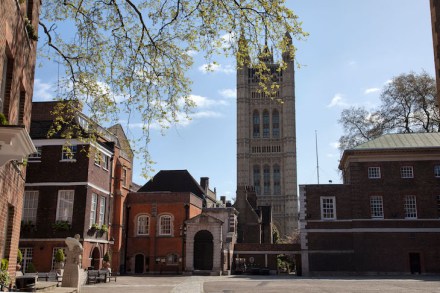
Westminster School, one of Britain’s oldest public schools, has announced it will go fully ‘co-ed’ from 2030. Having first admitted girls to the sixth form in the 1970s, the school will now admit girls from the age of 13. This decision means that soon there will only be four remaining boys’ boarding schools left in the UK: Radley, Eton, Harrow and Tonbridge. Westminster says the decision is ‘based on a desire fully to reflect the community we serve, and to shape that community by educating brilliant young men and women with a commitment to making a difference.’ But the decline and fall of boys’ schools is not something to celebrate.  There are roughly 800 single sex schools left in England, but most of these are for girls.
How to tempt parents away from private schools

From our UK edition

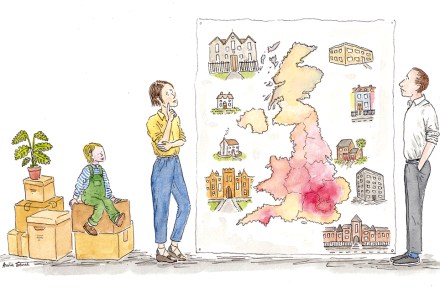
Destroying private schools isn’t just a preoccupation of left-wing activists. The former education secretary Michael Gove said in 2019 that he wanted state schools to be so good that paying fees would be seen as an ‘eccentric choice’. Labour has explained that if it wins power, the party will scrap charitable status for private schools and charge VAT on fees. Even among Tory voters, as many people agree with this policy as oppose it. Is it surprising that support for private schools, including among the middle classes, is on the decline? The cost of private education has more than doubled in 30 years, even accounting for inflation. The average cost of sending a teenager to a private day school is now £16,500 a year and nudging £20,000 in London and the South East.

Britain must address its anti-family tax system

From our UK edition

Parenting – and indeed any talk of family life – has long been taboo in government. Nothing highlighted this more starkly than the civil service’s practice of referring to parents and children as ‘service users’. This has recently been the subject of a report by the Children’s Commissioner for England, who has urged Whitehall to get to grips with parenting and scrap the phrase, along with any other ‘technocratic’ jargon. This is all well and good, but Dame Rachel de Souza should start by pushing the Chancellor to do something about the grossly anti-family tax system. The UK tax system unfairly judges parents – mostly mothers – who want to stay at home and look after children rather than spend their life as a workhorse in an office.

Parents need to do more to stop their kids watching porn

From our UK edition

Nothing scares politicians more than telling parents how to do their job, which is a shame because a bit more finger wagging might be just what we need. The Online Safety Bill returns to parliament this week to be debated by MPs once again – with the legislation aiming to stop kids looking at porn online.  Getting tough on Big Tech is easier than asking more of parents MPs have already spent around 40 hours debating this Bill, in previous forms. In this time only eight MPs have suggested that parents might just have some responsibility in stopping their children accessing porn online. Fifty MPs have so far opined on the merits of switching off the internet for teens but barely one in six mentioned in parliament that parents might have a role to play.

Are millennials saving marriage?

From our UK edition

Some rare cheer: millennials are divorcing less than their parents. This might be cause for celebration if the long-term prognosis for marriage wasn’t so poor. Last year, divorces spiked by ten per cent: 113,505 couples broke up in 2021, compared to 103,592 divorces in 2020, according to figures from the Office for National Statistics. Divorce laws allowing couples to avoid pinning the blame on each other and backlogs caused by the pandemic are likely to be to blame for the rise in breakups.  Tucked away inside these numbers, however, is a graph that contains a glimmer of good news: millennials are divorcing a lot less after ten years of marriage than their parents and their grandparents.

We need more royals

From our UK edition

King Charles has been respectfully silent on any plans he might have to shake up the monarchy. Courtiers have spent years reminding anyone who asks that the topic is painful to him, signalling the passing of his ‘beloved’ mother. The only concrete proposed ‘reform’ that has leaked out over the years is the suggestion that as King, Charles intends to slim down the Royal Family. These plans badly misunderstand the public appetite for royalty: our new King should instead seek to increase the number of working royals. Don’t listen to sneering liberals, the Great British Public love a royal turning up to town. The Great British Public love a royal turning up to town The royals have huge pulling power.

As children go back to school it’s parents who need lessons

From our UK edition

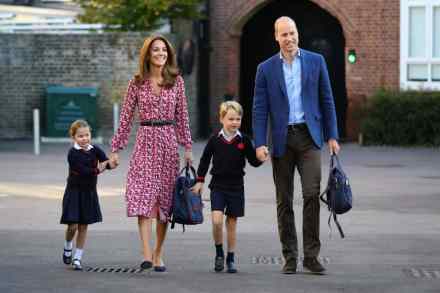
Britain’s children go back to school this week. But after months of chatter about grade inflation and the harmful effects of lockdown on learning, is it parenting, rather than schooling, that actually needs attention? New polling reveals that one in ten younger parents think it’s down to someone else to teach their pre-school children to speak. Dig a little deeper and this number doubles to almost a fifth for the very poorest parents. Getting the basics right is seen as someone else’s job. Too many children fall behind before they have even started school. Many never catch up. By the time they leave school, children from the poorest backgrounds are on average almost three years behind those from the most affluent homes in reading and writing.

The Treasury’s childcare trap

From our UK edition

Announcements from Tory leadership pretenders have been noticeably light on big ideas. But one interesting policy suggestion was floated today by the Mordaunt camp who have said that frazzled parents of toddlers should be given ‘childcare budgets’. This is likely to horrify Treasury mandarins who prefer schemes to get parents (in reality, mums) back into work and paying taxes as quickly as possible. Free nursery care for all is the fashionable go-to answer for every right-on lobby group hoping to reverse tanking birth rates. If we could only open up more super cheap nursery places, women would push out children to fill the places. The trouble is new mums don’t want this.

Parenting matters. It’s about time we were brave enough to say so

From our UK edition

The Duchess of Cambridge has been out and about hosting roundtables with very important people, discussing what can be done to support the nation’s pre-school children. Royal aides tell us she consulted ‘the sector’ to find out what should be done about the children who turn up for the first day of school barely able to speak or hold a pencil. What ‘the sector’ inevitably wants is more funding.  Kate Middleton has become the first royal to set up a think-tank, the Royal Foundation Centre for Early Childhood. This week she summoned ministers, civil servants and academics to discuss the findings of a poll: it seems most Britons want a bigger focus on early childhood.

What does the Tory party have against families?

From our UK edition

Conservatism used to look to the individual, and just as importantly, to the family to cure society’s ills. That no longer seems to be the case. This week Rishi Sunak’s energy package for struggling households saw wealthy pensioners benefit the most, while those with large families and children lost out. At present the whole tax system is rigged against traditional two parent families, particularly those who get married. Recent analysis conducted by economists at the campaigning outfit, Tax and the Family, found that a couple with two children need to earn more than twice as much as a single childless person to achieve even a basic standard of living.

Anxiety is killing parenthood

From our UK edition

Britain is on a slow descent to oblivion. Scotland is even closer to the abyss, with a birth rate of just 1.29, well below the UK’s sub-replacement level of 1.65. It turns out the answer to the West Lothian question is that West Lothian will disappear. Doomsday demography should matter, but Whitehall is in no way prepared to deal with it. New research published this week found that mental illness in early adulthood could account for up to 60 per cent of future childlessness. A generation too worried to have children spells disaster for countries that need to support ageing societies. Researchers looking at the populations of Sweden and Finland have drawn a link between dozens of mental health disorders and later childlessness.

Tory Bosses should realise the public back the family. Why won’t they?

From our UK edition

We are likely to hear a lot about ‘social reform’ at Conservative Party Conference. This Frankenstein’s brother of social justice will be bandied around as party bosses try to define the government by something other than Brexit. Whilst we can expect the Prime Minister to super charge her socially reforming credentials one issue we’re unlikely to hear much about is the role of families play in these plans. What was once ‘the party of the family’ now struggles to even mention the word. On Tuesday Spectator Editor Fraser Nelson will chair a conference bun fight on this issue and ask a panel including Iain Duncan Smith and Cristina Odone why this issue matters and what can be done about it.

The Conservative Party needs to be the party of family once again

From our UK edition

Earlier this week, academics at Oxford and Cambridge were likely to be cock-a-hoop that their universities top international leagues tables taking both gold and silver spots. Britain leads the world when it comes to getting top places in international league tables of higher education. As a country, we sell TV shows across the globe and are cultural leaders pushing our soft cultural power; the Premier League is the most watched football league in the world; the City of London is the money capital of the world. Unfortunately, there are things we are less good at. In another league table published recently, Britain sits pretty much rock bottom when it comes to families breaking up. The UK leads the world in the number of families we have falling apart.