Spectator Life

Spectator Life

An intelligent mix of culture, style, travel, food and property, as well as where to go and what to see.

How to educate your child privately – without paying VAT

For some parents, VAT on school fees is the straw that’s broken the camel’s back. The Institute for Fiscal Studies estimates that between 20,000 and 40,000 pupils will be withdrawn from the independent sector. An answer to a parliamentary question revealed that 46 private schools closed between January and October last year. It is safe to assume more will follow. But if you really want to, there are still a couple of ways that you can educate your children privately without having to pay VAT. What about sending them to school abroad?
What’s the most insulting thing a teacher said to you? A Spectator poll

Matthew Parris  From the late Alan Lomberg, my English teacher at my school in Swaziland, in my school report: ‘I’m sure I have only slightly less high an opinion of Matthew’s literary abilities than he has himself.’ Sebastian Shakespeare The late Alan Clark once described me in his diaries as a ‘tricky little prick’, but he was beaten to the punch decades before by a teacher who dubbed me a ‘giant prick’. To this day I’m not sure which is the greater compliment or insult. Quentin Letts    The word that appeared in my school reports time and again was ‘facetious’. Facetious is a fine word, not least because it presents all five vowels in alphabetical order, but would a teacher nowadays dare use it of a pupil? I was an annoying child.

When did RE teaching become so muddled?

I recently offered my services as a part-time RE teacher to my local comp, an inner-city affair with a Muslim majority. Yes please, said the nice headmistress: the Covid-blunted Year 11s needed all the help they could get with GCSE revision. The syllabus consisted of Christianity and Islam. What could go wrong? The first thing that went wrong was that I talked about the Jewish roots of Christianity and Islam: Judaism was the original monotheism. ‘I don’t know if that’s right,’ said one girl, frowning. Well, you do now, I wanted to say. But of course what she meant was: I don’t know if you are to be trusted on this. I consulted the textbook, for objective evidence.

School portraits: snapshots of four notable schools

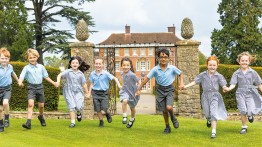
Ludgrove, Berkshire Ludgrove, which was founded in 1892 by the footballer Arthur Dunn, is a boarding prep school in Berkshire and has 130 acres for its pupils to learn, run around and play in. The school is one of the last preps to provide full boarding (which is fortnightly). At weekends, boys can use 11 football pitches, four tennis courts, two squash courts and a nine-hole golf course. It’s not just Prince William’s alma mater: other old boys include Alec Douglas--Home, Simon Sebag Montefiore and Bear Grylls (who opened the new Exploration Centre in June 2021). Most of the boys go on to Eton, Harrow, Radley or Winchester.

Why I’ve never forgotten Sister Cecilia

It is never people, always buildings. Faces change, time blurs them, but – unless they undergo a complete makeover – buildings remain pretty much the same, bar a few coats of paint. Along the second-floor corridor lined with arched windows that overlook the street. Buses grind by below. Up the last short steep staircase and along the very top corridor, which is narrower and lined with books. They call it the library and I am often here, tucked into the window seat reading, but otherwise heading for the arched door – everything is arched here – at the far end. It opens on to a low-ceilinged room with roof lights through which the sun seems always to be shining.

Pity the perpetual student

I can’t remember the exact date of my departure from university. It was sometime in the summer of 2021. My flatmates and I packed up our things, had a sombre pint at the pub, hugged, and then went our separate ways. I boarded the train at Bristol Temple Meads with a degree in English and Philosophy and no feasible job prospects. I was also broke. Three years had come to a precipitous end, and it was time to move back home. I was worried about my future. The thought of becoming a bum terrified me: the sort of graduate who day drinks, listens to Limp Bizkit, starts a true crime podcast from his bedroom, and screams at his mother for not washing his pants. But I returned home in spite of my fears, largely for one reason: I couldn’t bear the thought of becoming a university hanger-on.

Private schools were ruined long ago

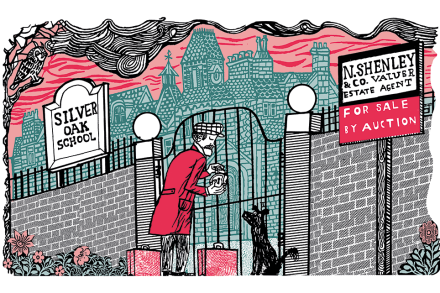
There is a story in private education circles of an apoplectic father who raged to the bursar that he was unable to find a prep school for his son ‘without central-heating’. It is probably apocryphal, but it reminds us of the mad heights to which some private schools have stretched: rowing lakes, glitzy IT centres, West End-style theatres and Olympic-sized swimming pools, no doubt necessary for storing the ever-growing associated fees.  My small Dorset school, where it was not uncommon in winter for the inkwells to freeze over, produced two Dames of the British Empire It wasn’t always this way.

The sad demise of the scathing school report

As the first term of the school year draws to a close, pupils’ reports will soon be landing, encrypted and password-protected, on parents’ smartphones. But once they’ve finally managed to open them to find how little Amelia or Noah has been performing, there will be another code for them to crack: what on earth the teachers are actually trying to say about their child. These days, reports tend to be written with the help of AI software or templates, which makes it impossible to work out how your child is really doing. In our super-sensitive age, many schools now play it safe by couching all comments as positives, and only using approved adjectives from word banks and drop-down menus.

Does Starmer hate music?

Sometimes, on slow days, I picture Sir Keir Starmer and our Education Secretary, Bridget Phillipson, doing the can-can while sticking their fingers in their ears and singing ‘la la la I can’t hear you’, to a backdrop of mounting concerns about VAT on school fees. It recently emerged that Tony Blair (for it is he) was firmly against it back in the 1990s, on the sound basis that taxing parents for sending their children to school is a bit stupid. But Starmer is no Blair, more’s the pity. It is abundantly clear, now, that this is an education tax, pure and simple, and that it has some decidedly problematic consequences, foreseen or not.

Inside the secretive world of tutoring

‘There is absolutely no need for any child applying to our school to be tutored,’ said the headmistress of a prestigious London day school during the Q&A session. Relieved, I left the hall to wander around the booths in a nearby room. I was struck by the many tutoring agencies, offering advice, courses and books on how to boost your child’s chances of securing a place at an elite school. In light of the headmistress’s earlier comment, I couldn’t help but recall the famous words attributed to P.T. Barnum. ‘A sucker is born every minute.’ The majority of applicants are tutored to the hilt Not long after, I found myself on a tour of a reputable school for possible 7+ entry for my son.

Why shouldn’t English teachers use video games?

English is in crisis. And no, not the sort of crisis caused by signs in supermarkets saying ‘ten items or less’. It’s caused by students hating their GCSE English Language lessons and refusing to continue the subject at A-level. A-level take-up has dropped by 40 per cent since 2012. You might giggle that this just throttles the supply of mournful Yeats-quoting burger-flippers but I think it’s a concern. There are all sorts of reasons that it’s worth studying English and only some of them are being able to quote Yeats. A very large number of young gamers engage voluntarily with text related to the games they love In response to this crisis, there seems to be consensus among teachers that GCSEs need to change.

Private schools brought this tax hike on themselves

It’s the season to do the rounds of senior schools and my 10-year-old son and I have been jostling through the crowds to glimpse science labs and drama workshops for the past month. Open days for the top state schools have been heaving. At a state boarding school rated ‘outstanding’ by Ofsted (boarding fees aren’t subject to VAT), the head apologised for lengthy queues to register, get coffee, join a tour. Another 200 people had turned up in addition to the 600 booked in. Among them, I spotted several families whose children are currently at local prep schools. Labour starts charging VAT on school fees from January. But an estimated 10,000 children have already been taken out of independent schools, mine among them.

Maths is stressful. That’s why it’s necessary

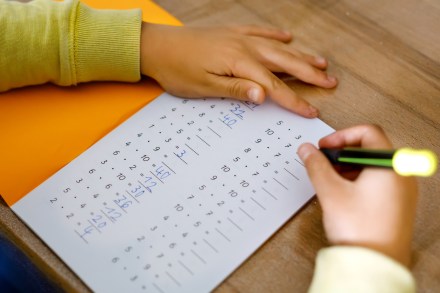
In the weeks since the Labour government came to power, we’ve gone from debating compulsory teaching of maths until age 18 to entertaining the idea that the times tables may be too stressful for children to memorise. My resilience, my determination and my empathy are largely products of being bad at maths When I was at school in Poland in the 2000s and 2010s, the response to such a suggestion would have been an eye-roll, or the blowing of a loud raspberry. The comment that ‘if you can’t have what you like, then you must learn to like what you have’ was commonplace, and maths was taken by everyone until age 18. I was at the top of my class until, at age 15, I began to fall behind in maths.

My final school run

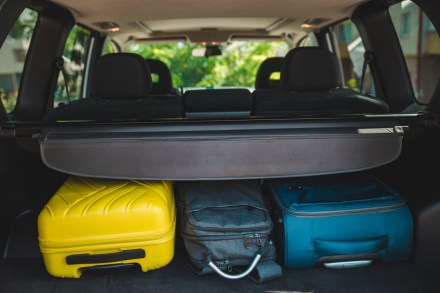
Up and down they go, criss-crossing the country, cars packed full of stuff. Duvets, pillows, vapes, cuddly toys, packs of cheap pasta and rice, Aldi-brand vodka, clothes horses and apprehension. There are around 1.7 million undergraduates and a third of them, the freshers, are most probably leaving home for the first time.  Some are already at university, including my youngest, who I dropped off at the University of York last week after playing ‘spot the student car’ on the A1. She’ll be studying to become an educational psychologist over the next three years, getting an education herself and a high degree of debt – plus expertise in Pot Noodles.

Losing faith: will Labour’s VAT policy hit religious schools hardest?

25 min listen

In this week’s copy of The Spectator, Dan Hitchens argues that a lesser reported aspect of Labour’s decision to impose VAT on private schools is who it could hit hardest: faith schools. Hundreds of independent religious schools charge modest, means-tested fees. Could a hike in costs make these schools unviable? And, with uncertainty about how ideological a decision this is, does the government even care? Dan joins Damian on the podcast to discuss.  Raisel Freedman from the Partnerships for Jewish Schools also joins later, to discuss how the measure could threaten Jewish independent schools, when they provide a haven for students from a climate of rising antisemitism. Produced by Patrick Gibbons.

Labour should work with schools, not tax them out of existence

Keir Starmer insists his plan to place VAT on independent school fees is not ideological. It’s a ‘difficult decision’, he says, but necessary to raise revenue which will be used to hire 6,500 teachers for state schools. He wants the independent sector to ‘thrive’. Few would deny that state schools need better funding, but it is important to question whether the policy will be successful at raising money and also to examine what a thriving independent sector looks like, how it can contribute to education more broadly – and how the VAT plan threatens all that. Labour has claimed for some time that the policy would raise £1.7 billion. This initial figure was based on a 2011 Fabian Review article that simply calculated 20 per cent of the sector’s fee income.

The real threat to schools? Falling birth rates

Labour’s proposal to impose VAT on private school fees will, we are often warned, lead to state schools becoming overloaded as parents withdraw their children from the independent sector and try to find alternative arrangements. That may turn out to be true in some areas in the short term, but in the longer term there is a different problem facing the state and independent sectors alike: a falling population of school-age children. It isn’t excessive class sizes which threaten to be an issue so much as shrinking classes, leading to school closures and amalgamations with other institutions. London classrooms appear to be emptying – in 2022, 15.5 per cent of primary school places were unfilled For nursery and primary schools in England, pupil numbers peaked in 2019.

Why state schools need old boys’ clubs too

Ask a certain type of class warrior about the old boys’ network and they’ll tell you of ruddy-faced men in club ties, offering each other’s offspring summer internships. Or perhaps they’ll talk of thrusting bankers, who as children shared showers and a chilly dormitory, plotting to hire old school friends over more deserving candidates. Wink wink, nudge nudge, chortle chortle. What websites like ToucanTech and Gravyty have developed is essentially social media in a school tie There is probably still a little bit of truth in that. But in the past few years, it’s become much easier for any school to run an alumni network. Many independent schools, and an increasing number of state schools, have built dedicated websites where former students can find one another.

Religious schools will be hit hardest by Labour’s VAT tax raid

Imagine the government pledged to introduce a 20 per cent tax rise on ‘bankers’. Then imagine that, when the details were announced, the new tax made no distinction between HSBC executives and lowly bank tellers on £19,000 a year. Furthermore, imagine that the public debate failed to mention the people who were going to suffer most from the policy; that commentators argued over whether the tax rise was technically workable, while ministers self-righteously declared that they were sure the richest people in the country could cope with paying a little more. Far-fetched? Yes, but not a million miles from Labour’s proposed imposition of VAT and business rates on independent schools.

The toddlers being prepared for the seven-plus exam

The feverishness of the private prep-school market in London has reached such a pitch that children in the nursery class at Eaton House Belgravia are being prepared for the seven-plus from the age of two. ‘Some of them are still in nappies, and some of them still need a nap,’ the headmaster Ross Montague tells me. ‘We have folding camp beds, and our lovely nursery team of six teachers deal with that.

Keir Starmer is blind to the brilliance of private schools

Despite protestations from every quarter, Sir Keir Starmer will press on with his malicious plan to slap VAT on private school fees. I can only assume he’s doing this because he believes an excellent education, stemming from hundreds of years of tradition, is entirely undesirable. Look, there’s no question about it. Our private schools are the cat’s pyjamas. They attract discerning parents from all over the planet, even from New York, that bastion of elitism, where bankers and lawyers duke it out to hire Juilliard grads to teach their four- year-olds the violin. Recently, I met a financier from that city. So enamoured was he of London schools that he upped sticks and transferred his entire family. The spectre of an extra tax is as nothing to him.

Can school rugby survive safety concerns?

The look on the face of A&E staff was one of horror and disbelief. ‘He’s playing contact rugby – at eight?’ I nodded, my son Gus’s left arm hanging uselessly by his side, his face white and pinched with pain. Later, after we emerged from the X-ray and plaster rooms with a diagnosis of a micro-fracture to the elbow, one of the nurses from reception caught up with us. She was so concerned that she’d gone on to the RFU website, which confirmed that contact is indeed legal from Year 4. (Although the spear tackle that Gus’s friend had executed definitely isn’t.) ‘Striking a child outside of sport is abuse, but striking a child in sport is socially acceptable’ Our sons’ prep school, like many others, switches from tag to contact rugby at the start of Year 4.

The pitfalls of the Accelerated Reader programme

To my enormous pride, my six-year-old daughter is an excellent reader. In Reception, she raced through the colour-coded chart of Biff & Chip books with ease and wound up bored. So bored that she took to jumping off trees with increasing exuberance each playtime. She needed to be stretched, the school decided, with only a hint of exasperation. Stretch her we did. That summer, we read T.S. Eliot’s Old Possum’s Book of Practical Cats aloud, laughing at the names Bombalurina and Macavity. We read Eleanor Farjeon’s Kings and Queens and wondered at how we were all Elizabethans. We read The Diary of Anne Frank and thought about annexes. We read Judith Kerr’s magisterial When Hitler Stole Pink Rabbit and she packed her own evacuee suitcase.

What the Cass Review means for schools

When the Cass Review was published in April, many of us working in schools heaved a sigh of relief. For many teachers the muddle surrounding the position of transgender children and those working with them caused serious concern. A maths teacher in Swindon was sacked for addressing a student as ‘she’ and writing her ‘dead name’ on the board, even though she/he was asking to be entered into a girls’ maths challenge. Most teachers are in the job to impart knowledge, to encourage thinking and to play a part in guiding a child towards adulthood. We are not there to judge, mock or belittle. But we found ourselves increasingly confused. How much should – or could – we tell the parents?

What to do with school photos

They lurk at the back of cupboards. Some are hidden under beds; others are tucked between books. I have been collecting them from a young age, but I still don’t know what I’m meant to do with them. What do you do with school photos? I suppose I could take pictures of my own school photos and bin the originals. But I just can’t do it Whenever I come across one, I enjoy the moment of reminiscence. I cast my mind back to my time in the netball team and choir. Then there are the series of house photos. My friends and I have braces in the early years and orange perma-tans by the end. I’m fond of the May Ball ‘survivors’ photos’ taken as the sun rose. Everyone looks half-cut and happy. I’m less attached to the ironic ones from university days.

School portraits: snapshots of four notable schools

Elstree, Berkshire Elstree – which educates boys and girls from three to 13 – is nestled in 150 acres of stunning countryside near Newbury in Berkshire. The school, which celebrated its 175th anniversary last year, says that its aim is two-fold: ‘to find out how a child is intelligent rather than how intelligent a child is’ and to teach pupils that ‘effort is king’. From Year 4 onwards, children can choose to flexi or weekly board and from Year 5 pupils are taught by individual specialists in all subjects from Year 5, compared with the usual Year 7. Although Elstree is non-selective, school-leavers have received scholarships to – among others – Eton, Harrow, Radley, Marlborough and Winchester.

Tried and tested by the Common Entrance Exam

This is about something that did not happen to me at school, an exam I dreaded, but never had to take. It was the only examination that ever really worried me, and it was called Common Entrance. Do not confuse it with modern imitations bearing the same name. In those days, preparing for it involved (for me, anyway) translating English into Latin and French (a proper knowledge of irregular verbs and a wide vocabulary in both those languages was required). It also demanded thorny and tricky types of mathematics, an astounding grasp of largely Imperial geography – and a full knowledge of English history since the Conquest. I actually understood the jokes in 1066 and All That, for which modern children would need a decoder.