Spectator Life

Spectator Life

An intelligent mix of culture, style, travel, food and property, as well as where to go and what to see.

Which schools get the most pupils into Oxbridge?

Oxford and Cambridge have released figures showing how many offers they gave to pupils from schools in the 2023 Ucas application cycle. We have combined the figures in this table. It shows how well state grammars and sixth-form colleges compete with independent schools. Over the years, both universities have increased the proportion of acceptances from state schools: 72 per cent, up from 52 per cent in 2000. Of the 80 schools, 29 are independent, 29 grammar or partially selective, 17 sixth-form colleges and five are comprehensives or academies. (Schools are ranked by offers received, then by offer-to-application ratio. If schools received fewer than three offers from one university, this number has been discounted due to Ucas’s disclosure control.

How to survive the start of the school year

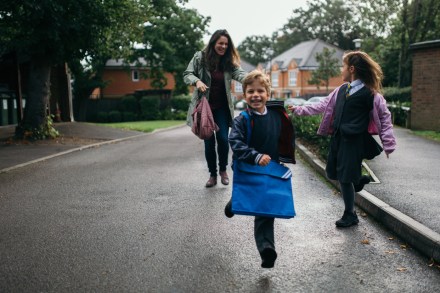
At long last, the day has come. After nearly two months of summer holidays, institutions beckon their children back for another school year. The television will resume its status as a post-school treat rather than an indispensable tool to fill the dead hours between events. The kitchen will no longer resemble an all-day canteen, and the house will take on the solemn quiet of the middle of the day. But this kind of peace is only won after a great deal of preparation. First up, school shoes. Unfortunately, children grow at a disproportionate rate to your bank balance. This means that the start of the new school year heralds the annual cash haemorrhage in Charles Clinkard shoe shop or similar.

Why an unhappy childhood is good for you

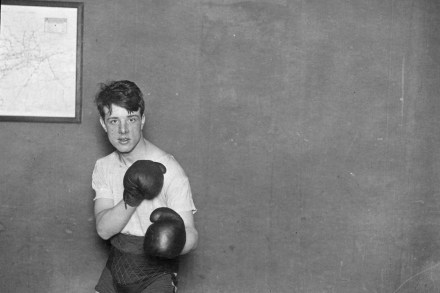
Many years ago I wrote a book called Dreams and Doorways, a collection of interviews with well-known people – writers, actors, politicians, sports personalities – about their childhood. I wanted to find out how their early experiences helped to turn them into the high-achieving adults they later became. And in almost every case, some kind of deprivation or anguish or obstacle was a key factor; they’d been motivated by a determination to overcome adversity. My days were a little less happy. My mother didn’t believe in the permissive child-rearing policy of liberal American moms For boxing champ Henry Cooper, it was extreme, ‘bread-and-dripping’ poverty in South London.

My friend the would-be killer

This is a complex tale involving an American murder, the popular British TV series Flipper, and the philosopher Friedrich Nietzsche – but bear with me. Next month sees the centenary of the conviction of two spoiled Chicago boys – Nathan Leopold, 19, and Richard Loeb, 18 – who admitted carrying out what the press at the time dubbed the ‘crime of the century’.  I had always sensed that my friend had a dark side and that he kept parts of his life secret from me The two student friends were sentenced to life imprisonment for murder, plus 99 years in jail for abduction, after admitting kidnapping and killing a 14-year-old boy, Bobby Franks, before mutilating his body with acid to disguise his identity.

A-level day is not Judgement Day

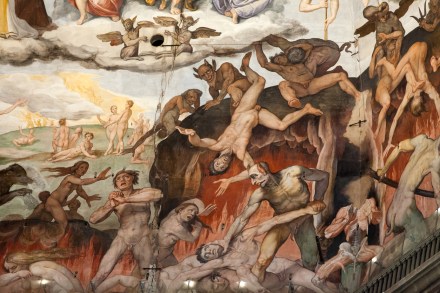
The Guild Chapel in Stratford-upon-Avon presents its congregation with a vision of terror: a medieval Doom painting depicting the Day of Judgment. On the left are those who have behaved themselves – the Saved – who joyously bound towards the gates of Paradise. On the right, sinners pay the price for falling short of the moral mark: they are tortured by demons and fed into the Mouth of Hell, to be swallowed by a fanged serpent. This summer, another Day of Judgment looms. Yesterday, thousands of UK 18-year-olds will receive their A-Level exam results. In one nervous scroll, years of schoolwork was validated, university places confirmed or denied, and future careers seemingly mapped out.

In defence of strict teachers

Labour have become alarmed by the strict, ‘cruel’ approach to discipline in schools and the rise in the number of pupils being excluded. Teachers will need to be more relaxed about ‘bad behaviour’. But though moving the goalposts of acceptable behaviour may reduce the exclusion figures, it is bound to increase the burden of disruptive behaviour on teachers and other pupils. My own experience of teaching tells me that the new guidelines will increase bullying and reduce special needs inclusion, undermine the most disadvantaged families and ultimately increase educational inequality. So why are they doing it?

Why children have stopped reading

It’s only when you read the old stories again, to a child maybe, that you become aware of the extent to which the characters still live inside your mind, bobbing about just below the level of consciousness. I still find myself puzzling over the stories collected by the Brothers Grimm, decades after I first read them. How could Little Red Riding Hood have avoided being eaten? (We read the original, merciless version.) What should Hansel and Gretel have done? Any good book leaves its mark, but the characters from the books you loved as a child embed themselves. They inform the way you think as an adult, which is why it’s so sad and so significant that children all over the West have stopped reading.

The cult of Bedales

Another of my ageing Bedales school cohort has died and so there’s an ad hoc reunion in his honour at the pub in Steep, the bucolic village near Petersfield, scene of our youth, where we used to sneak out to smoke and drink when the teachers weren’t looking. Which they often weren’t. Bedales implanted itself here in deepest Hampshire in 1900, a pioneering co-educational boarding school, quickly patronised by British and European progressivist-bourgeois-bohemian-leftist artists, writers and intellectuals. It has been chi-chi ever since. Since the place was co-educational, plenty of sex education went on behind the bike sheds From its rustic origins, the school has grown and grown and now dominates the no longer quite so sleepy village.

In defence of the personal statement

Ucas, the organisation in charge of university admissions, has announced that it’s bidding bye-bye to a crucial teen rite of passage. It is killing the personal statement. No longer will admissions tutors beetle their brows over flowing paragraphs about when you built an orphanage in Malawi using only a spoon, or how really, really passionate you are about late medieval poetry. Instead, it has decreed that wannabe grads must now answer three dour questions. This move is designed to help those from disadvantaged backgrounds, who do not, in the eyes of a Ucas spokesperson, have access to teachers and family members able to help: and who could argue with that? Well, I think it’s not only a shame, but another sign of the creeping hand of cold and normalising bureaucracy.

How students cheat

Over the last decade, I have offered legal advice to thousands of students accused of cheating in their assessments. In university jargon, the term for cheating is ‘academic misconduct’. Although many assessments remain online after Covid, some have returned to the exam hall. There are still instances, therefore, of cheating à l’ancienne, with students writing notes on various limbs or smuggling in scraps of paper with minute writing.  I have had clients whose former partners have tipped off their ex’s university about historical episodes of cheating At times, the cheat is caught by an invigilator spotting a nervous glance towards an annotated palm. In other cases, the crib sheet falls out of a pocket or protrudes from its hiding place.

Have you had the school gate VAT chat?

Another day closer to the general election and I’m at my daughter’s prep school in Oxfordshire. As has come to be the norm, I’m having a ‘VAT chat’ with a fellow mother. Of course, we’ve known about Labour’s plan for months. It will lead to a likely 20 per cent rise in private-school fees. Recently, however, these VAT chats have intensified and become louder. ‘To think that other parents would vote Labour given what’s coming enrages me,’ a friend says I begin with my usual opening gambit. ‘Isn’t it awful?’ I say, trying to convey my real sense of desperation that I will have to take my daughter out of the school that she loves, that our way of life is for the chopping block.

Guns, drugs and beatings – I loved boarding school

My son and various well-meaning friends have been advising me to abandon writing history books and cash in on the trend for boarding school misery memoirs. On the face of it, as someone who was sent away aged seven and remained in these institutions until I was 18, I am well qualified to add my contribution to what has now become a recognised sub-genre of English literature. My problem, though, is that I quite enjoyed my time at boarding schools and I cannot claim – as so many do – that it adversely affected my life; rather the reverse. In his extended essay ‘Such, such were the joys’, George Orwell recorded his awful schooldays at St Cyprians, a snobbish boys preparatory school in Eastbourne.

Can private schools survive Labour’s VAT raid? 

As Labour edges closer to power, any hindrance to that goal is being ruthlessly removed. The £28 billion pledge in green spending has been dropped; plans to elect the House of Lords delayed. Bankers’ bonuses will remain uncapped. City financiers are subjected to prawn cocktail offensives at £1,000-a-head soirées to hear Rachel Reeves preach fiscal probity. ‘My instinct is to have lower taxes,’ the shadow chancellor insists. Yet it’s an instinct that seems absent when it comes to easy targets such as the 2,500 independent schools in England and Wales on which Reeves wants to levy VAT and business rates. Both publicly and privately, Labour insists this pledge will remain. Insiders view it as that rarest of policies: a popular revenue-raiser.

Parents won’t take Labour’s attack on private schools lying down

As citizens of an orderly state, we allow ourselves to be taxed. We fork out for council tax so that local services function. When it comes to income tax, some may grit their teeth, but we hope it gets funnelled towards the greater good. We accept, though perhaps dislike, ‘sin taxes’ on cigarettes and booze. We don’t pay VAT on virtuous things, such as books, private healthcare and opera tickets, because these should be available to the widest possible audience. This Very Annoying Tax will put a child’s French lessons on the same level as a packet of Benson & Hedges  Which brings me to school fees: what could be more virtuous than educating your child in the best manner possible? Well, that’s not the thinking of the Labour party.

How to survive the 11-plus interview: a parent’s guide

Newcomers to England who start a family are often slow to realise that one of the biggest factors in the Game of Life here starts with the 11-plus exam. If your children are at a school where anyone is sitting such exams, you may find – as I did – that your children want to have a go. You then realise, as Alan Bennett put it in The History Boys, that ‘the boys and girls against whom your child is to compete have been groomed like thoroughbreds for this one particular race’. And after the exam comes the interview. Another race. As a parent, this process is hateful. The idea of someone passing judgment on so young a child is awful Scots have nothing like it and I’m not sure many other countries do. The 11-plus is perhaps the world’s toughest test for children of that age.

The remarkable example of the JCB Academy

If you’re into diggers, the JCB world headquarters must look a bit like paradise. The factory sits in the rolling green hills of the Staffordshire countryside, bordered by three lakes and its own golf course. As you drive there you pass a giant spider-like sculpture made entirely out of digger claws, and inside the building, stuffed with bright-yellow tractors, there is a JCB museum featuring the first cab to have an in-built kettle. At the end of the tour you can buy JCB scented candles, JCB cut-glass crystal and JCB jumpers from the JCB gift shop. The most interesting thing JCB stamps its name on, though, is actually round the corner in the tiny village of Rocester.

The elite coach taking school football to a new level

On a wet and windy afternoon at Repton School, technical director of football Luke Webb is putting his first team through their paces. At first glance this training session looks much the same as any other, but I soon start to spot some subtle yet significant differences in his approach. Webb keeps his distance, there’s no shouting from the touchline, yet all his players seem to know exactly what to do. They start off with close passing drills, then move into small-sided games, and finish with an exercise designed to hone the low driven cross – a delivery all defenders dread. Webb teaches players to play with freedom, to be less risk-averse Afterwards, there’s no big team talk. Instead, as the boys pack up the balls and cones, he chats to them one-on-one, quietly.

The day my self-defence classes paid off

Marlborough College has developed something of a reputation for churning out wives for the great and the good. It is wrong, though, to assume the place operates like a ‘girls in pearls’ finishing school, where everyone practises their deportment or learns how to arrange flowers, while waiting for their prince to arrive. Instead, Marlborough girls leave school knowing how to build a fire, camp on a hillside and fire a gun. CCF is popular. I have happy memories of mock exercises on Salisbury Plain. Equally happy are memories of our self-defence lesson, which was given to girls in Upper Sixth.

What is the secret of Millfield’s sporting excellence?

There’s one safe bet at any Olympic Games: there will always be a generous handful of Millfield alumni on Team GB. At Tokyo there were 13 Old Millfieldians (OMs); in the previous Games in Rio there were eight; four years before that, on home turf, there were nine (two of whom won gold). In 2016 the tally of OMs at the Games was higher than Pakistan’s entire delegation. In 2012 they won the same number of gold medals as Canada. What is Millfield’s secret? How did this independent boarding and day school, tucked away in an unfashionable corner of Somerset, far from the Notting Hill brigade, become a sporting powerhouse? ‘The philosophy is not about creating Olympians. It’s about creating a lifelong relationship with sport’ The obvious answer is its sprawling facilities.

Why are all female teachers called Miss?

You could be forgiven for thinking you’d inadvertently turned back the clock. Cross the threshold into the majority of British schools and what appears to confront you is a workforce of unmarried women. Surely it’s 1904 not 2024, and teaching is still a spinster’s business? For, in the average 21st-century school, each and every woman teacher – married, unmarried, divorced, celibate, cat-loving, asexual or simply overworked – is addressed by her pupils as ‘Miss’. The problem comes when ‘Miss’ is more than linguistic laziness. Could it in fact imply contempt? I’m not talking about ‘Miss’ as a regrettable replacement for a name, as in ‘I asked Miss for some lined paper’, though that’s bad enough.

How to make the new natural history GCSE worthwhile

Teaching for a new GCSE in natural history looks likely to begin next year. It’s part of the Department for Education’s ‘flagship sustainability and climate change strategy’. Apparently this subject is intended to teach pupils ‘how to keep the world safe’. Baroness Floella Benjamin, for instance, suggests it will show them how they can ‘save the world from catastrophe’. Paying attention to non-human life might cure some teenagers of their unhealthy obsession with selfies However well-meant such declarations may be, natural history is in fact about identifying and studying plants and animals, not fretting about ‘the plight of our planet’ and ‘how to rescue it’. Worried about what teenagers would in fact be studying, I wrote to the OCR examination board.

Let children learn our best verse

My daughter is in Year 1 at our local C of E school and my son will start Reception this autumn. I grew up in America, so my children’s introduction to the British primary education system is mine too. I was pleased to learn that my daughter spent her first term studying the Battle of Hastings, which was taught with fitting seriousness and detail. It is local history to us – Battle is just 15 minutes down the road – and the children were encouraged to imagine our local scenery and surrounding villages as they would have been a thousand years ago. I am baffled that the same rigour does not hold for the study of British poetry. There is a surprising lack of classic verse in the primary years.

School portraits: snapshots of four notable schools

Queen Ethelburga’s, York Set in 220 acres of beautiful countryside between Harrogate and York, Queen Ethelburga’s College is an award-winning day and boarding school that welcomes girls and boys aged from three months to 19 years and boarders from Year 3. It is known for its high-ranking academic performance. College, one of its two senior schools, placed second nationally last year for A-levels and 18th for all-round academic performance. The other senior school, Faculty, which offers more ‘creative and vocational subjects’, climbed several places to third in the north for A-levels and seventh for overall performance. The college places emphasis on growing pupils into resilient, caring and confident adults.

Russia lives on in my mind

My kids, at our local comprehensive, go on school trips to Leigh-on-Sea. I went to a much fancier school, so I went on school trips to Leningrad and Moscow. The first time must have been in 1990. We were all going through dramatic changes; and so was Russia – not that as cossetted, self-absorbed 16-year-olds we were able to take much serious notice. We joked, nervously, gauchely, ahead of our departure about the likelihood that an Aeroflot flight could be relied upon to get us there in one piece. We practised our rudimentary GCSE Russian: ‘Chto eto? Eto GUM!’ (What’s that? That’s [the department store] – GUM.’) ‘Gdye Dom Knigi?’ (Where’s the bookshop?) ‘Chepukha! Vzdor!’ (Rubbish! Nonsense!

Private school isn’t worth it

In the end, it was the sports kit that persuaded us to pull the plug: two technical training tops at a cost of £90. A directive had come down from the senior school that all pupils must be in new gear from Kukri (official supplier to county cricket clubs and Commonwealth Games England) by the start of the Michaelmas term. I replaced what our sons had outgrown in the school’s uniform shop (five items: £200), but baulked at spending another £100 when their old training tops still fitted. School fees are already unaffordable – and that’s before you factor in VAT at 20 per cent Our sons had been in prep school since we bolted from London after the lockdowns to a part of the country we barely knew.

My favourite, ferocious teacher

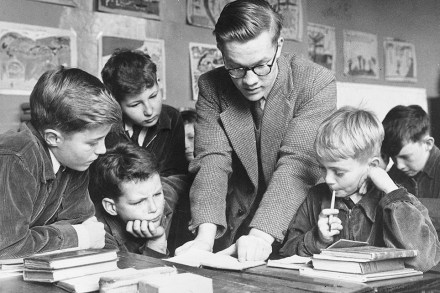
In 1979, I was 11 years old, and I had a quite remarkable teacher. Don’t worry, though – this isn’t going to be one of those anodyne paeans to an inspirational educator that the Department for Education use in their ads to lure people into teaching. In fact, if the lady I’ll refer to here as Mrs G were somehow to be reincarnated and placed in front of a Year 6 classroom of today, Ofsted would have her frogmarched out after about 20 minutes.  She once sent me to the local parade of shops to buy a box of Tampax  Mrs G was a fearsome sight – in her late 40s, as broad as she was tall, squeezed into shirt and slacks, with closely shorn curls. I have no photographic evidence, so I’m relying on memory here. She seemed enormous, but then so does everything to a child.

Parent trap: the relentless rise of children’s speaker Yoto

If you want a handy metaphor for contemporary childrearing, it’s a colourful plastic box with big red buttons on it. Yoto is the name, and before long, you’ll be seeing it where you already see children using screens – so pretty much everywhere. One in 50 British homes with a child under 12 is said to have one. It’s like a CD player-cum-iPad with ambitions to run your child’s life. The essential bits of it are plastic cards that you or the child – the idea is that the child has agency here – slot into the player to listen to a story, but there’s a whole range of other options – radio, podcasts, night lights, sound effects.