Spectator Life

Spectator Life

An intelligent mix of culture, style, travel, food and property, as well as where to go and what to see.

School portraits: snapshots of four notable schools

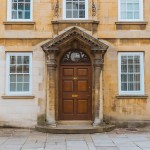
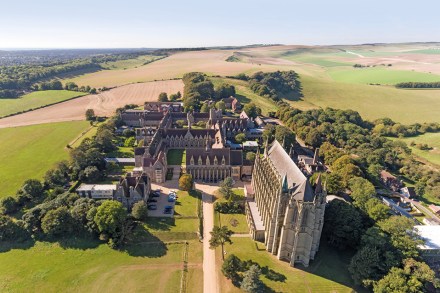
Lancing College, West Sussex Lancing is a public boarding school for children aged 13 to 18 in West Sussex. Set within the South Downs National Park, it offers an open-air theatre, a state-of-the-art music school, an equestrian centre and even the tallest school chapel in the world. As impressive as its facilities, though, are its alumni: Evelyn Waugh, Sir David Hare and Lord (Stephen) Green to name but a few. Nowadays, many students at the college – where fees start from £12,602 – come from its sister preparatory schools in Hove and Worthing. Also arriving this month is a new headteacher, Dr Scott Crawford, who will replace Dominic Oliver after 11 years.
The school tie renaissance

In the street across the road from my third-year Christ Church room, sat a pub called The Bear. It marketed itself as Oxford’s oldest inn – as so many of the city’s hostelries do – but it is most famous for its tie collection. More than 4,500 are on display, enclosed in cases around the walls. The collection began in 1952, when the landlord offered half a pint to anyone who would let him snip off a tie end. To qualify, the ties had to indicate membership of some institution: a club, college, regiment, sports team or school. Over the decades, a cornucopia of colours, stripes and logos has been collected. Inspector Morse once enlisted the landlord’s help in identifying one. The collection is now listed and cannot be altered or added to. I’m rather glad.

Why do people feel sorry for me for going to boarding school aged nine?

Sometimes, when I’m chatting about childhood, at some point it will become clear I went to a boarding school from the age of nine. Reactions can be comical. ‘You poor thing!’ an interlocutor might gasp, gripping my forearm, no doubt picturing cold showers and cruelty. I’ve always responded with bemusement, since my experience largely featured comfort and crumpets. I loved my prep school – Dorset House in West Sussex. It was a world in itself, enclosed and beguiling. In some ways it was unchanging, such as the graffitied Latin primers which were the same our grandparents had used. Yet it could be surprisingly forward-looking, as when it made a satellite link-up to a school in America, many years before the internet.

How nannies priced out the middle class

‘Always keep a-hold of nurse/ For fear of finding something worse,’ warned Hilaire Belloc in his poem ‘Jim’, about a little boy who ran away and got eaten by a lion. These days, Jim would be lucky to have a nanny at all given their exorbitant cost. Recent figures released by the nanny payroll provider Nannytax show that the average salary in London has risen to more than £50,000 as pushy parents demand ‘additional services’ such as training in autism, attention deficit hyperactivity disorder (ADHD) and special educational needs (SEN). A far cry from Sebastian Flyte’s Nanny Hawkins in Brideshead Revisited, the new breed of ‘hybrid nannies’ can command up to a 20 per cent salary premium by catering to the growing number of families who now require SEN expertise.

The double agony of GCSE results day – with twins

Back in July 2009, at my baby shower, someone kindly gave me a little book on the benefits of having twins. Apart from the swollen ankles and the enormous bump I was carrying, I already felt pretty blessed that, at 35, I was only going to have to do the whole pregnancy thing once. I like efficiency and this route to procreation was right up my street – not to mention the fact that I only had to give up cigarettes, Brie de Meaux, gin and chardonnay for a single period of nine months. But I hoped there would be some other benefits as I was starting to realise that, with two newborns to prepare for and no hand-me-downs coming our way, twins came with challenges of their own. I quickly scanned through the book; it was very short. Three things stood out.

The competitive cult of the summer camp

‘Before you ask, Mummy, the answer is no.’ While this could be any number of conversations that I have with my seven-year-old daughter, this one has a particular tang. It is the thrice-annual bargaining round that I do in the run-up to any school holiday in which I try to get her to go to a kids’ camp. An executive at Goldman Sachs in equity sales does not work as hard as I do to seal the deal – but I fail every time.  For a brief, prelapsarian period when she was five and more biddable, I had some success. I managed to get her into all manner of summer holiday camps in Oxfordshire: activity camp, Shakespeare camp, tennis camp, even God camp. You name it, I signed her up. Sure, we had some argy-bargy at the moment of drop-off, but in she went.

Let’s slash the school summer holiday

There are three little words that strike horror into the heart of every parent of school-age children. They are the words that cause you to break out in a cold sweat or let out a moan in your sleep in the dead of night – even in the middle of winter. They are ‘school summer holidays’. Hear those three words and you may very well envisage jubilant children spewing from the school gates and then remember the dim, distant sun-kissed summers of your own youth. But mention them within earshot of a parent of appropriately aged offspring and you’ll see the light go out in their eyes. Oh yes, the kids are happy – just like the waving teachers who weep with joy to see their charges depart. But now it’s time for the parents to weep.

Don’t call me ‘Mr’

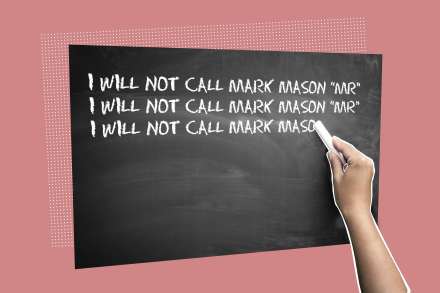
‘Please call me Mark,’ I’ve always said to the teachers at my son’s school. ‘If you call me “Mr Mason” it makes me feel 85 – and if I call you “Mrs Smith” it makes me feel seven.’ I know their first names, and always use them, in emails, phone calls and in person. A few return the compliment, but most keep it formal. It feels wrong, putting distance between us when we’re having a conversation, often an in-depth and important one, about my only child. The best teachers and staff have taught me fascinating things about how to deal with Barney. I’ve only been a parent once; they’ve encountered thousands of kids. It was the same at his primary school, starting with Sonja, when I was a volunteer helping with the class’s reading.

Being a prep school mum? I won’t miss it

My younger daughter finished prep school last week. These years are often billed as the best of one’s life. Indeed, I know the most charming 18-year-old whose pleasingly unfashionable dream is to teach at his old prep school – such were the halcyon times he enjoyed there. At my daughter’s leavers’ assembly, I shed a few tears – as did she, since she’s been exceptionally happy there since she was two years old. There hasn’t been a single day when she hasn’t wanted to go in. She’s had some inspirational teachers, and the occasionally eccentric nature of the educational offering has really suited her. (Another reason I cried was because I’m a sucker for anything remotely mawkish, so a group of kids warbling the chorus of ‘Time to Say Goodbye’ is catnip.

The lesson that changed my life

Ávila, Spain At school I wasn’t much good at anything – until, that is, I had the good fortune to land in Mr Hodges’s French set. It wasn’t just the ten words of vocabulary and the irregular verb we learnt every day, it was the whole structured Hodges approach which gave me confidence, showing how the apparently unmanageable job of learning a language could be broken down into small, achievable tasks. Since Mr H also taught Spanish O-level, when the time came I opted for that rather than German. The scenes of Spanish life in the textbook fascinated me; they were only black and white line drawings but they promised something romantic that I knew I’d never find in cold, wet 1970s Birmingham. I pored over those pictures.

Are you tough enough for the school run?

Nothing in life prepares you for the school run. In theory, on paper, it ought to be idyllic. What could be better than feeding a nutritious breakfast to your nine- and five-year-old, before scrubbing their cherubic upturned faces and combing down their buoyant hair, and then helping them get dressed and out to the car for the short drive to school, whereupon they can skip through the gates happily to education-land? Instead, it’s a Thursday morning – by which point the week has taken its toll – and you find yourself shouting ‘GET YOUR SHOES ON’ for the 30th time at the sort of level that would be a serious breach of health and safety regulations were the noise emanating from a hairdryer or lawnmower.  But your children aren’t wearing ear protection.

Inside the Trump Ivy League college

Many years ago, long before Covid and when Donald Trump was still a property magnate-cum-reality TV star, I crossed the pond to study for my PhD at Penn. Not Penn State, which everyone seems to have heard of because of some obscure sex scandal; not Princeton, basking in its Michelle Obama afterglow; but Penn. It’s in the Ivy League, before you crinkle your nose: it has Gothic Revival buildings, frat houses, jocks, and Americans talk endlessly about how old it is. Some call it the Jewish Ivy, thanks to its high proportion of JAPs – Jewish American Princesses – who went there after a Gossip Girl existence at private school in New York. I wasn’t sure what to call it, but I was young, impressionable and ready to wear the Penn merch and Nikes at the drop of a baseball cap.

University should be absurd

My daughter has asked for my advice about what to study at university. Yeah right. She’d rather eat her own hoodie. But I’m going to give it anyway. She is wavering between history and English. Do both, I say. But not many universities offer a joint honours degree, and her (otherwise excellent) teachers seem to think that it is better to focus on one subject, to demonstrate laser-like commitment to your chosen path. I see specialisation as the enemy of the humanities. Everyone should study at least two of these ‘disciplines’ – which of course overlap with each other. In a way, Classics gets it right, for it mixes literary criticism with history and philosophy, and other things too – politics, history of art. I studied English. I loved it, at first.

Are schools taking in too many international pupils?

Browse the website of the Independent Schools Council (ISC), which represents some 1,400 schools teaching around 500,000 children, and it will tell you there are 26,195 overseas pupils at its UK member schools. They make up 4.7 per cent of the total student population. The cosy percentages belie the truth. For rather like the growing importance of foreign students in keeping our universities financially afloat, so there are swathes of overseas pupils enrolled at public schools providing a similar financial cushion. And that was true even before the Labour government slapped 20 per cent VAT on the entire sector.

The Boxing Academy changing young lives

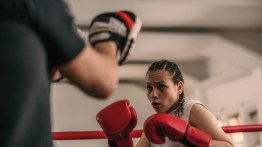
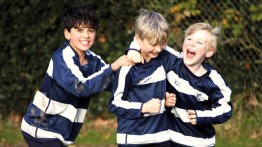
It’s a typical morning at the Boxing Academy in east London. In the reception, men with handheld metal detectors pat down students, confiscating their belongings and mobile phones for the day. A child has emptied out his pockets and is holding a mucky plastic dental retainer. ‘Can he have this?’ one man with a metal detector asks another. With suspicion, it is permitted. The Boxing Academy is an alternative provision secondary school in Hackney, founded in 2007 on the experimental idea that you could better teach difficult children by making boxing a central part of their education. Students take daily boxing classes, wear navy tracksuits and are as disciplined as boxers would be.

In defence of single-sex schools

When I first became a teacher, I bought into the notion that single-sex schools were an anachronism – a result of historical happenstance that no longer had a place in the 21st century. I imagined all-boys schools as a macho world of Spartan dormitories and testosterone-charged classrooms. I assumed the boys graduated with repressed memories of traumatic hazing rituals and an unhealthy amount of anxiety around girls. Then, after two exhausting years teaching English at a mixed comprehensive, I moved to an all-boys independent school to see what it was like. I enjoyed it so much that when I moved from London to Oxford, I decided to teach at another (although my current one is co-ed at sixth form).

The artist reviving portrait painting at Marlborough College

The art school at Marlborough looks different. When I was a pupil here in the mid-2000s, conceptual art was cool. Back then, art meant spray-painting a canvas with neon graffiti or making a sculpture out of rubbish. The art school would have been covered in all sorts of zany efforts at abstraction. What there would not have been, however, was much portraiture. And certainly not the abundance of remarkable portraits that now fill the walls. Something has changed. This newfound enthusiasm for portraiture among Marlborough’s pupils is, in large part, thanks to a 25-year-old portrait artist, Grace Payne-Kumar, the college’s artist in residence since September 2023.

Which school gate drop-off tribe are you in?

It wasn’t until I locked eyes with a Premiership rugby player as I got out of my car at 8 a.m. that I realised I might need to up my game for drop-offs at the children’s new school. I would need to start wearing eye make-up, for starters. I should also give a little more thought to an outfit than picking up yesterday’s T-shirt and cut-off jeans from the bedroom floor – although ‘outfit’ is one of those words that makes me wince, like ‘gift’ or a ‘pop’ of colour. Still, ‘outfits’ are what a certain type of woman around here goes in for. Among a sort of country-prep-miles-from-anywhere subset, you will find mothers trying their best to fit into what the Times has identified as the ‘Ganni Mum’ tribe.

The lessons I learned as education secretary

Education secretary really is the best job in government, though sometimes it doesn’t feel that way. Lives can be transformed – hopefully for the better – as a direct consequence of the decisions you make. But you are also firmly in the firing line. There’s no other area of public policy in which everyone is an expert. Only a minority of us have fought in battle, studied the impact of nitrates on chalk streams or contemplated what the correct approach to sanitary and phyto-sanitary standards should be in a trade agreement. But we’ve all been to school. And we all have views – sometimes deeply entrenched and emotional – about what constitutes a good education and therefore sensible education policy.

How to educate your child privately – without paying VAT

For some parents, VAT on school fees is the straw that’s broken the camel’s back. The Institute for Fiscal Studies estimates that between 20,000 and 40,000 pupils will be withdrawn from the independent sector. An answer to a parliamentary question revealed that 46 private schools closed between January and October last year. It is safe to assume more will follow. But if you really want to, there are still a couple of ways that you can educate your children privately without having to pay VAT. What about sending them to school abroad?

The enduring power of school dinners

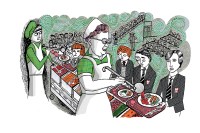
Cornflake tart. Spam fritters. Green custard. Turkey twizzlers. Chocolate concrete. These are some of the dishes that instantly transport you to the school lunch hall – and inspire either pure nostalgia or horror. Over the past five years co-hosting Table Talk, The Spectator’s food and drink podcast, I have spoken to people from all walks of life – politicians, chefs, writers, campaigners, entrepreneurs and artists – and they all have unique relationships with food. But school food defies all reason. It presents a binary, true love or hate. Some look back with delight, seeking out spotted dicks and instant mash for ever more, though none tastes as good as the dishes they had at school in Kettering in 1989. Others can barely look at a rice pudding without gagging.

What’s the most insulting thing a teacher said to you? A Spectator poll

Matthew Parris  From the late Alan Lomberg, my English teacher at my school in Swaziland, in my school report: ‘I’m sure I have only slightly less high an opinion of Matthew’s literary abilities than he has himself.’ Sebastian Shakespeare The late Alan Clark once described me in his diaries as a ‘tricky little prick’, but he was beaten to the punch decades before by a teacher who dubbed me a ‘giant prick’. To this day I’m not sure which is the greater compliment or insult. Quentin Letts    The word that appeared in my school reports time and again was ‘facetious’. Facetious is a fine word, not least because it presents all five vowels in alphabetical order, but would a teacher nowadays dare use it of a pupil? I was an annoying child.

When did RE teaching become so muddled?

I recently offered my services as a part-time RE teacher to my local comp, an inner-city affair with a Muslim majority. Yes please, said the nice headmistress: the Covid-blunted Year 11s needed all the help they could get with GCSE revision. The syllabus consisted of Christianity and Islam. What could go wrong? The first thing that went wrong was that I talked about the Jewish roots of Christianity and Islam: Judaism was the original monotheism. ‘I don’t know if that’s right,’ said one girl, frowning. Well, you do now, I wanted to say. But of course what she meant was: I don’t know if you are to be trusted on this. I consulted the textbook, for objective evidence.

School portraits: snapshots of four notable schools

Ludgrove, Berkshire Ludgrove, which was founded in 1892 by the footballer Arthur Dunn, is a boarding prep school in Berkshire and has 130 acres for its pupils to learn, run around and play in. The school is one of the last preps to provide full boarding (which is fortnightly). At weekends, boys can use 11 football pitches, four tennis courts, two squash courts and a nine-hole golf course. It’s not just Prince William’s alma mater: other old boys include Alec Douglas--Home, Simon Sebag Montefiore and Bear Grylls (who opened the new Exploration Centre in June 2021). Most of the boys go on to Eton, Harrow, Radley or Winchester.

Why I’ve never forgotten Sister Cecilia

It is never people, always buildings. Faces change, time blurs them, but – unless they undergo a complete makeover – buildings remain pretty much the same, bar a few coats of paint. Along the second-floor corridor lined with arched windows that overlook the street. Buses grind by below. Up the last short steep staircase and along the very top corridor, which is narrower and lined with books. They call it the library and I am often here, tucked into the window seat reading, but otherwise heading for the arched door – everything is arched here – at the far end. It opens on to a low-ceilinged room with roof lights through which the sun seems always to be shining.

Pity the perpetual student

I can’t remember the exact date of my departure from university. It was sometime in the summer of 2021. My flatmates and I packed up our things, had a sombre pint at the pub, hugged, and then went our separate ways. I boarded the train at Bristol Temple Meads with a degree in English and Philosophy and no feasible job prospects. I was also broke. Three years had come to a precipitous end, and it was time to move back home. I was worried about my future. The thought of becoming a bum terrified me: the sort of graduate who day drinks, listens to Limp Bizkit, starts a true crime podcast from his bedroom, and screams at his mother for not washing his pants. But I returned home in spite of my fears, largely for one reason: I couldn’t bear the thought of becoming a university hanger-on.

Private schools were ruined long ago

There is a story in private education circles of an apoplectic father who raged to the bursar that he was unable to find a prep school for his son ‘without central-heating’. It is probably apocryphal, but it reminds us of the mad heights to which some private schools have stretched: rowing lakes, glitzy IT centres, West End-style theatres and Olympic-sized swimming pools, no doubt necessary for storing the ever-growing associated fees.  My small Dorset school, where it was not uncommon in winter for the inkwells to freeze over, produced two Dames of the British Empire It wasn’t always this way.

The sad demise of the scathing school report

As the first term of the school year draws to a close, pupils’ reports will soon be landing, encrypted and password-protected, on parents’ smartphones. But once they’ve finally managed to open them to find how little Amelia or Noah has been performing, there will be another code for them to crack: what on earth the teachers are actually trying to say about their child. These days, reports tend to be written with the help of AI software or templates, which makes it impossible to work out how your child is really doing. In our super-sensitive age, many schools now play it safe by couching all comments as positives, and only using approved adjectives from word banks and drop-down menus.