Spectator Life

Spectator Life

An intelligent mix of culture, style, travel, food and property, as well as where to go and what to see.

The rise of the Oxbridge AI admissions cheat

‘This is the future, my wife says./ We are already there, and it’s the same/ as the present.’ So begins Ciaran O’Driscoll’s poem ‘Please Hold’, about a husband talking to a telephone robot and becoming ever more frustrated at the mind-numbing automation of modern-day life. There’s a lot of ‘Your call is important to us’ and Eine Kleine Nachtmusik and ‘We appreciate your patience’, until eventually the speaker resigns himself to the fate of growing old while on hold. This same reluctant acquiescence can be seen with AI: this is the future, and we are already there. Except instead of asking us to hold, it’s always asking us how it can help, how it can further infiltrate our lives. AI has already transformed how students learn and schools evaluate.
The cut-throat world of school magazines

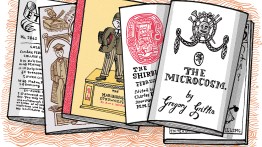
In my mind, there was always a sense of hubris in the air of our tucked-away offices at the Chronicle, Eton’s main student magazine. As in many other domains of our school’s life, we idly assumed ours was the first, as well as the only really consequential, example of a public-school magazine. The early 2000s, when I was a boy there, were a particularly suitable time in which to indulge in such a view; we were all acutely aware of the rise of Boris Johnson. If you were devoid of athletic, dramatic or musical talent, editing the Chronicle was the obvious crown The record for first school magazine does belong to Eton, but it is in fact for a much earlier and odder production, puckishly called the Microcosm, which ran for 40 issues in 1786-7, published as a book the next year.

How to beat Oxbridge’s positive discrimination

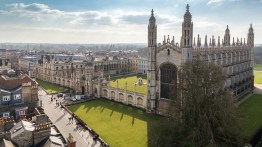
As university admissions have become increasingly obsessed with equal outcomes, many parents fear a kind of reverse discrimination. They worry that a Ucas form bearing the name of an independent school may be bad news for an Oxbridge application. There’s evidence to suggest they’re right. Private-school pupils who transfer to state education after their GCSEs are up to a third more likely to be admitted to Cambridge. Children who remained at private school for A-levels had an acceptance rate of 19 per cent, compared with 25 per cent for those who moved to a grammar school or state sixth form college. Given the assumed prejudice against private school applicants, a recent move by one Cambridge college has surprised many.

I’m a Screen Grinch – and proud

He’s 12 next month, my eldest son, but he’s rejected the ‘movie night’ party I’ve suggested, and he doesn’t want any of his new friends from senior school to come for a sleepover. And I know why. Our television is a modest one, not the size of one of the screens flanking the main stage at Glastonbury. I recently went to pick up my son, who was at a new friend’s house. They were playing Mario Kart on a screen that took up about half a wall of the living room. Neither looked up when his mum let me in, so I stood in front of them. ‘Hello? Hel-LO?’ ‘It’s so hard when they’re on screens, isn’t it?’ exclaimed the other mum, as her son manoeuvred Luigi around Brain Rot circuit on Bilge Island with slack-jawed expertise.

School choir music is in peril

You’d be hard pressed to find a more continuous strand in British culture than the chorister. They’ve been warbling in Westminster Abbey since the 1380s. Every national occasion is marked by choirs, the choristers dazzling in their splendidly anachronistic ruffs and robes, present at moments of collective joy or sadness. Funerals, memorial services, royal weddings, carols from King’s College, Cambridge. They are ornaments to our culture. Oodles of composers, musicians and singers, professional or not, have, over hundreds of years, stood in the choir stalls at dawn, at midnight, and lifted their voices to the vaulting roofs. Some of the most beautiful music in the canon was written for choirs: Gregorian chants, Thomas Tallis.

School portraits: Snapshots of four notable schools

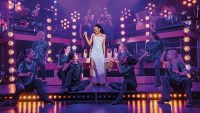
Hurtwood House, Surrey Set in the Surrey Hills, Hurtwood House is England’s only independent boarding school exclusively for sixth-formers. Renowned for its performing arts, the school’s annual Christmas musical is no ordinary affair. The ten-night production is staged with a full West End orchestra and professional directors, choreographers and lighting designers. It is no surprise that alumni include Emily Blunt and Hans Zimmer. Hurtwood can also boast a high level of academic achievement: last year 54 per cent of A-level results were graded A*-A.

My burning ambition for my old school

Every boy longs to see his school burn down and for me the dream came true twice. In February 1977, I was walking to Sunday Mass when I spotted a cluster of teachers at the school gates. The old Victorian hall had caught fire overnight and collapsed. I couldn’t believe it. This was my personal Towering Inferno and I’d missed the whole thing. In my mind’s eye I could see it all: the leaping flames, the burning joists, the black columns of ash rising over south London, and the thunderous roar as the roof crashed to the ground. Nothing was left but a few pathetic wisps of smoke rising from a pile of charred beams. The teachers were standing around looking shocked and miserable – as if mourning the death of a pet rabbit. Why so glum?

A literary guide to how to pay your school fees

Another day, another report on how many children have had to leave their private schools, thanks to Labour’s VAT raid on fees. This particular survey, by wealth management firm, Saltus, found that almost one in ten parents have had to take their children out of the independent sector altogether while 65 per cent of those questioned admitted to making ‘significant changes’ to their circumstances to keep their children in private education.    When belts can only be tightened so far, parents need to get creative.

The teenage Farage story misses the point

In Terence Rattigan’s 1948 play The Browning Version (filmed in 1951 starring Michael Redgrave), a public-school classics teacher called Arthur Crocker-Harris is appalled to discover that he is known to his pupils as ‘the Himmler of the Fifth’. According to the Guardian and the BBC, the Reform UK leader Nigel Farage was a fan of Himmler’s boss, Adolf Hitler, when he was a student at Dulwich public school half a century ago. I suspect that those who are enthusiastically mining this story for its anti-Farage political potential did not attend single-sex male boarding schools in the 1970s. Given the war had ended just a few decades before, it was scarcely surprising that it was the common currency of schoolboy playground conversation.

So what if Nigel Farage was the school bully?

There may well be, somewhere in this nation of ours, a long-established succession of sensitive, emotionally aware 14-year-olds who can appreciate and denounce the impact of bullying. But, honestly, none of them went to my school.  It doesn’t sound like there were many of this cadre at Dulwich College half a century ago either. At least, not if we believe the recent Guardian ‘scoop’ which claims, thanks to the testimony of Nigel Farage’s fellow pupils (much of which was made public years ago), that the Reform leader was a racist, hate-fuelled youth who taunted anyone of a different faith or ethnicity.

How to get Britain eating healthily again

Another week, another government offensive against childhood obesity. This time it’s a fresh round of pleas for new levies on junk food. And right on cue, out come the sympathetic pundits with a familiar lament: the poor simply can’t afford to eat well. Carrots are unaffordable and broccoli is a luxury that only the middle class can stretch to. It’s a predictable narrative. It’s also wrong, or at least, far from the whole truth. I say this having lived the messy reality of fostering, where I’ve had the privilege, and sometimes pain, of stepping into lives different from my own. For more than 20 years, I’ve cared for children pulled from homes where parenting skills are scarce and where ‘dinner’ might consist of a handful of sweets and a packet of crisps.

The rise of ridiculous doctorates

To a certain extent, all doctoral theses are a bit ridiculous – and therein lies their genius. I am allowed to say this because I spent four years of my life researching French Catholicism’s engagement with the first world war for my doctoral thesis, which I nattily entitled Calvary or Catastrophe? Back then, I was a baby academic hoping for critical acclaim and my own office. I’ve long since been disabused of this dream and have left academia’s dreaming spires behind to become a journalist – a profession that offers me neither my own office nor critical acclaim, but a great deal of online abuse. And while I don’t expect anyone ever to read my PhD (although you can DM me any time for a copy), I believe that it had some slim critical justification.

Down with freshers

Now that the autumn term is well underway at universities and freshers’ week has removed its leering, spotty face from the calendar for another year, may I talk about how ghastly it is? Impressionable young people who believe they are completely mature adults but still have another decade or so of brain remodelling to go arrive at an unfamiliar place for the first time. Once any relatives who lugged their bulging suitcases packed with stuff to make them seem grown-up have disgorged the final single sock from the family car and driven off, hiding their tears, the young person is on their own. I remember being 19 and arriving at Edinburgh University. I took the train up from London and hauled my suitcase to the taxi line at Waverley.

Bring back elitism

Elitism has had a bad press in recent years. The concept has, alas, been tainted by its association with the numerous elites who have corrupted it by allowing self-interest and prejudice to become self-perpetuating. It’s been sullied by its association with old school ties and masonic-style handshakes – by closed networks which work to exclude those who happen to fall outside the pre-determined in-group. So no wonder we don’t like it any more. Who would? But its gravest sin of all has been its role in pulling up the drawbridge to protect privilege in general, through a kind of unspoken fish-knife test. If you don’t know what it’s for, you don’t get in. One way people used to storm the castle of privilege was through grammar schools, of course.

Shouldn’t Greenwich’s Royal Naval College be used for something better?

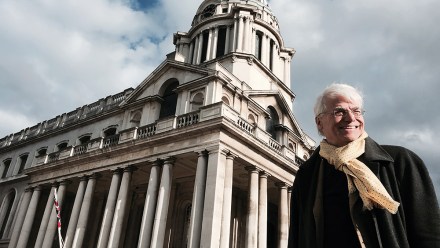
Britain is to get a new ‘super university’, an enormous centre of higher learning that will, from the next academic year, under a single vice-chancellor, educate some 50,000 students. Under the cumbersome name the ‘London and South East Universities Group’, the new university is a merger of the existing University of Greenwich and the cash-strapped University of Kent with its campus at Canterbury. A vital part of the new university’s campus will be the Old Royal Naval College at Greenwich, one of Sir Christopher Wren’s architectural masterpieces, and a World Heritage Site described as being ‘the finest and most dramatically sited landscape ensemble in the country’.

Back-to-school photos have become a vulgar wealth flex

How was National Standing on Doorsteps Week for you? For most, it’s a case of grabbing a picture two or even three days after la rentrée, when you remember that you’ve missed the annual obligation to record the progress of what Mumsnetters call the ‘DCs’ (darling children). Assemble them by the front door, roar at the one who’s kicking off to SMILE and look at ME, lament that you failed to get your sons’ hair cut before they went back as overnight they’ve come to resemble Hamburg-era Beatles, press the button and then bundle them into the car.

It’s easier than ever to get into university

In the next couple of weeks, hundreds of thousands of young people will be heading off to university. They’ll be bracing themselves for the wholesale regret that freshers’ week will undoubtedly precipitate, and possibly contemplating attending a lecture or two. But among their number there will be some who got nothing like the requisite grades advertised on university websites, because clearing has radically changed the application landscape. Clearing shares certain features with the Grand National: tensions run high and chaos reigns as the starting gun sounds, and competitors jostle for position; a frenzied race ensues, and invariably there are a few casualties along the way.

Star pupils: aiming high with Marlborough’s astronomy students

As I trudge up to Marlborough’s observatory, near the top of the playing fields, I’m transported back to my time as a pupil here. I studied astronomy for GCSE, which meant spending many evenings at the observatory, gazing at the night sky. The Blackett Observatory, which houses a superb Cooke 10in refractor telescope, celebrates its 90th anniversary this month. I’ve been invited back by my tutor Jonathan Genton, former head of science and teacher of the GCSE astronomy course, and Gavin James, director of the observatory, who oversees the astronomy programme. ‘Everybody should study astronomy,’ says James. ‘It’s the original science.

The Oxbridge files 2025: which schools get the most pupils in?

Oxford and Cambridge have released figures showing how many offers they gave to pupils in the 2024 Ucas application cycle. We have combined the figures in this table. It shows how well state schools – grammars, sixth-form colleges and others – compete with independent schools. Of the 80 schools, 30 are independent (one more than last year), 25 are grammars or partially selective (four fewer), 21 are sixth forms or further education colleges (four more) and four are comprehensives or academies (one fewer). Schools are ranked by the number of offers received, then by their offer-to-application ratio.

The false economy of cutting the Combined Cadet Force

What could be more fun for a 14-year-old boy than messing about in the woods with a gun? My school’s Combined Cadet Force offered precisely that, marching us through the Brecon Beacons and organising mock skirmishes with SA80 rifles (albeit using blanks). When we weren’t trying to shoot each other, we were fighting over OS maps and compasses, trying to find which bit of woodland we were supposed to be sleeping in. One group found a dead body on the side of a Welsh mountain. Another spent an evening drinking vodka and smoking cigarettes with a strange man in a caravan. At some point in the small hours, he got a little too handsy and they all ran back to their bivvies. I was hugely envious when they told us this as we ate powdered eggs, cooked in a mess tin over burning hexamine tablets.

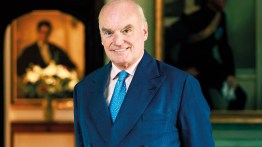
Sir Nicholas Coleridge: ‘Girls at Eton? Never say never’

T he historic graffiti at Eton College, chiselled into its stone walls, wooden panelling and ancient oak desks, serves as a reminder to any Etonian that he’s merely the latest in a long line of boys stretching back to 1440 who have passed through the school and occasionally bent the rules. Two names chiselled together into a wall of the Cloisters are ‘H. COLERIDGE’ and ‘E. COLERIDGE’. ‘Not me!’ says Sir Nicholas Coleridge, Eton’s 43rd Provost, when I visit him on the last day of the summer term, ‘or any of my sons. They’re dated 1817, luckily, so we can’t be blamed.’ ‘The imposition of VAT has been a very damaging thing for education.

Should boarding schools be phone-free?

No development has shaken up the cloistered and carefully controlled world of English boarding school life quite as much as the invention of the smartphone. Traditionally, schoolboys might write home once a week. Perhaps they might be able to smuggle in a dirty magazine or other contraband, but for the most part boarders on school grounds were safely tucked away. Today, thanks to smartphones, children are sent to school with access to pornography, internet chatrooms and easy contact with their parents. What horrors might a group of 13-year-olds get up to in a dorm if left unattended with internet access? Should boarding school children be permitted to phone home each night? What horrors might a group of 13-year-olds get up to in a dorm if left unattended with internet access?

The independent schools crisis is only just beginning

Ever since the sudden and cruel imposition of VAT on independent school fees at the start of the year, much of the media focus has been on the number of school closures. The first to go have been prep schools and schools in rural areas far from London and the south-east. Trust me, this is really only the beginning. Savvy parents have always known a reduction in those shiny buildings won’t matter that much in the end Only a very small number of independent schools will be completely immune from the current financial pressures and – in the next couple of years – that will start to become increasingly obvious. While many might not close, there will be more mergers and acquisitions, and a scramble for schools to enjoy the benefits and protections of being part of a larger group.

The joy of school cricket

Few presidents can claim such an immediate success. At the end of June, I became president of my school’s alumni association and then, just five days later, the First XI won their first match at the annual Royal Grammar Schools’ Cricket Festival since 2017. A coincidence? Well, obviously. But I’d like to think that Colchester’s youth drew confidence from me having a net at the school field on Old Colcestrians’ Day and getting hit on the bonce by the first ball I faced from the sixty something head of Year 12. If this is how poorly the alumni play, they will have thought, we can’t be all that bad. I was never any good at cricket, much as I loved it. One presidential duty was to unveil a plaque on a new scoreboard.

Vivat the Latin motto

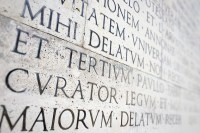
In the strange, arcane world of school mottoes, it’s fitting that the most famous one of all belongs to a fictional school. Draco dormiens nunquam titillandus – ‘Never tickle a sleeping dragon’ – is the motto of the Hogwarts School of Witchcraft and Wizardry. J.K. Rowling brilliantly realised that children aren’t put off by boarding schools and the ancient rituals that go with them. They’re gripped by these peculiar places, their roots twisting back through the mists of time. And no school custom is as ancient or beguiling as the Latin motto. My motto, at Westminster School, was Dat deus incrementum – ‘God gives the increase’.

How boarding schools reinvented themselves

Early in his time at Eton College, 13-year-old William Waldegrave, the school’s future provost, was struggling to sleep. He told his dame, and she in turn told the housemaster, John ‘A.J.’ Marsden. The former commando in charge of the boys told Waldegrave that if it happened again, he should knock on his door. A few nights later, the boy did as he was told. Marsden had a solution – they would go for a run, to Bray, seven miles from Eton. Waldegrave slept better that night. Tales of public schools past are legion – some better than fiction, and plenty that have inspired it. Others are less appealing, more appalling. In recent years, memoirs depicting the misery of former boarders’ experiences at school have told tales of neglect and criminality.

Long live eccentric school traditions

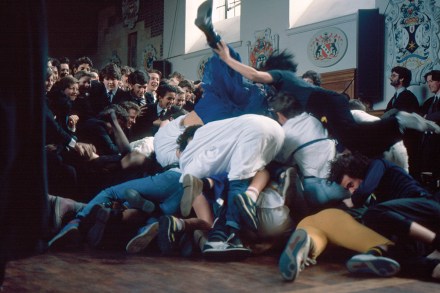
On every Shrove Tuesday since at least 1753, boys at Westminster School have gathered in the hall for a mad scramble over a pancake. The Pancake Greaze (pictured) is a cherished tradition that sees one pupil crowned the winner for grabbing the biggest portion, which the cook tosses into the centre of the hall from a height of 15ft, as the rest of the school cheers on. The champion is awarded a golden coin by the Dean of Westminster, accompanied by the headmaster and sometimes royal visitors. The more unsavoury part of the tradition – nominally beating the cook with Latin primers if he fails to get the pancake over the iron bar three times – has been abandoned. There have been other modern updates.