Spectator Life

Spectator Life

An intelligent mix of culture, style, travel, food and property, as well as where to go and what to see.

Does Starmer hate music?

Sometimes, on slow days, I picture Sir Keir Starmer and our Education Secretary, Bridget Phillipson, doing the can-can while sticking their fingers in their ears and singing ‘la la la I can’t hear you’, to a backdrop of mounting concerns about VAT on school fees. It recently emerged that Tony Blair (for it is he) was firmly against it back in the 1990s, on the sound basis that taxing parents for sending their children to school is a bit stupid. But Starmer is no Blair, more’s the pity. It is abundantly clear, now, that this is an education tax, pure and simple, and that it has some decidedly problematic consequences, foreseen or not.
Inside the secretive world of tutoring

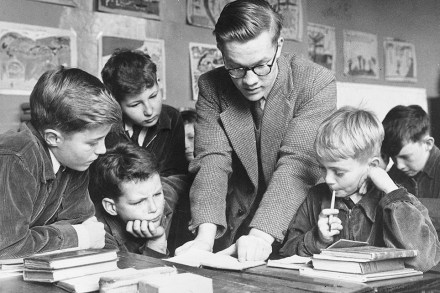
‘There is absolutely no need for any child applying to our school to be tutored,’ said the headmistress of a prestigious London day school during the Q&A session. Relieved, I left the hall to wander around the booths in a nearby room. I was struck by the many tutoring agencies, offering advice, courses and books on how to boost your child’s chances of securing a place at an elite school. In light of the headmistress’s earlier comment, I couldn’t help but recall the famous words attributed to P.T. Barnum. ‘A sucker is born every minute.’ The majority of applicants are tutored to the hilt Not long after, I found myself on a tour of a reputable school for possible 7+ entry for my son.

Why shouldn’t English teachers use video games?

English is in crisis. And no, not the sort of crisis caused by signs in supermarkets saying ‘ten items or less’. It’s caused by students hating their GCSE English Language lessons and refusing to continue the subject at A-level. A-level take-up has dropped by 40 per cent since 2012. You might giggle that this just throttles the supply of mournful Yeats-quoting burger-flippers but I think it’s a concern. There are all sorts of reasons that it’s worth studying English and only some of them are being able to quote Yeats. A very large number of young gamers engage voluntarily with text related to the games they love In response to this crisis, there seems to be consensus among teachers that GCSEs need to change.

Private schools brought this tax hike on themselves

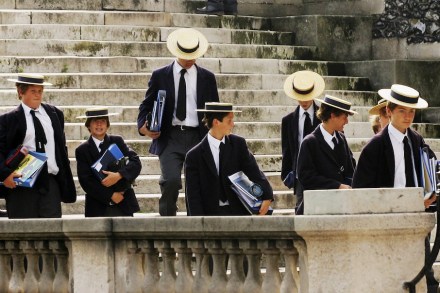
It’s the season to do the rounds of senior schools and my 10-year-old son and I have been jostling through the crowds to glimpse science labs and drama workshops for the past month. Open days for the top state schools have been heaving. At a state boarding school rated ‘outstanding’ by Ofsted (boarding fees aren’t subject to VAT), the head apologised for lengthy queues to register, get coffee, join a tour. Another 200 people had turned up in addition to the 600 booked in. Among them, I spotted several families whose children are currently at local prep schools. Labour starts charging VAT on school fees from January. But an estimated 10,000 children have already been taken out of independent schools, mine among them.

Maths is stressful. That’s why it’s necessary

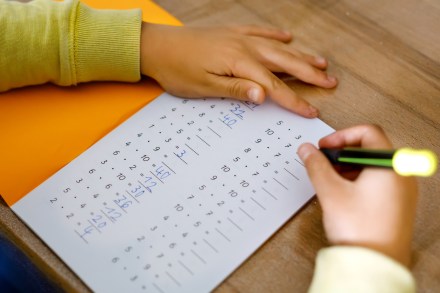
In the weeks since the Labour government came to power, we’ve gone from debating compulsory teaching of maths until age 18 to entertaining the idea that the times tables may be too stressful for children to memorise. My resilience, my determination and my empathy are largely products of being bad at maths When I was at school in Poland in the 2000s and 2010s, the response to such a suggestion would have been an eye-roll, or the blowing of a loud raspberry. The comment that ‘if you can’t have what you like, then you must learn to like what you have’ was commonplace, and maths was taken by everyone until age 18. I was at the top of my class until, at age 15, I began to fall behind in maths.

My final school run

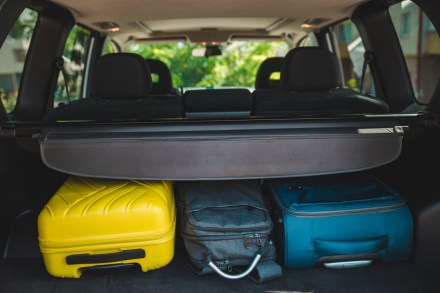
Up and down they go, criss-crossing the country, cars packed full of stuff. Duvets, pillows, vapes, cuddly toys, packs of cheap pasta and rice, Aldi-brand vodka, clothes horses and apprehension. There are around 1.7 million undergraduates and a third of them, the freshers, are most probably leaving home for the first time.  Some are already at university, including my youngest, who I dropped off at the University of York last week after playing ‘spot the student car’ on the A1. She’ll be studying to become an educational psychologist over the next three years, getting an education herself and a high degree of debt – plus expertise in Pot Noodles.

Losing faith: will Labour’s VAT policy hit religious schools hardest?

25 min listen

In this week’s copy of The Spectator, Dan Hitchens argues that a lesser reported aspect of Labour’s decision to impose VAT on private schools is who it could hit hardest: faith schools. Hundreds of independent religious schools charge modest, means-tested fees. Could a hike in costs make these schools unviable? And, with uncertainty about how ideological a decision this is, does the government even care? Dan joins Damian on the podcast to discuss.  Raisel Freedman from the Partnerships for Jewish Schools also joins later, to discuss how the measure could threaten Jewish independent schools, when they provide a haven for students from a climate of rising antisemitism. Produced by Patrick Gibbons.

Labour should work with schools, not tax them out of existence

Keir Starmer insists his plan to place VAT on independent school fees is not ideological. It’s a ‘difficult decision’, he says, but necessary to raise revenue which will be used to hire 6,500 teachers for state schools. He wants the independent sector to ‘thrive’. Few would deny that state schools need better funding, but it is important to question whether the policy will be successful at raising money and also to examine what a thriving independent sector looks like, how it can contribute to education more broadly – and how the VAT plan threatens all that. Labour has claimed for some time that the policy would raise £1.7 billion. This initial figure was based on a 2011 Fabian Review article that simply calculated 20 per cent of the sector’s fee income.

The real threat to schools? Falling birth rates

Labour’s proposal to impose VAT on private school fees will, we are often warned, lead to state schools becoming overloaded as parents withdraw their children from the independent sector and try to find alternative arrangements. That may turn out to be true in some areas in the short term, but in the longer term there is a different problem facing the state and independent sectors alike: a falling population of school-age children. It isn’t excessive class sizes which threaten to be an issue so much as shrinking classes, leading to school closures and amalgamations with other institutions. London classrooms appear to be emptying – in 2022, 15.5 per cent of primary school places were unfilled For nursery and primary schools in England, pupil numbers peaked in 2019.

Why state schools need old boys’ clubs too

Ask a certain type of class warrior about the old boys’ network and they’ll tell you of ruddy-faced men in club ties, offering each other’s offspring summer internships. Or perhaps they’ll talk of thrusting bankers, who as children shared showers and a chilly dormitory, plotting to hire old school friends over more deserving candidates. Wink wink, nudge nudge, chortle chortle. What websites like ToucanTech and Gravyty have developed is essentially social media in a school tie There is probably still a little bit of truth in that. But in the past few years, it’s become much easier for any school to run an alumni network. Many independent schools, and an increasing number of state schools, have built dedicated websites where former students can find one another.

Religious schools will be hit hardest by Labour’s VAT tax raid

Imagine the government pledged to introduce a 20 per cent tax rise on ‘bankers’. Then imagine that, when the details were announced, the new tax made no distinction between HSBC executives and lowly bank tellers on £19,000 a year. Furthermore, imagine that the public debate failed to mention the people who were going to suffer most from the policy; that commentators argued over whether the tax rise was technically workable, while ministers self-righteously declared that they were sure the richest people in the country could cope with paying a little more. Far-fetched? Yes, but not a million miles from Labour’s proposed imposition of VAT and business rates on independent schools.

The toddlers being prepared for the seven-plus exam

The feverishness of the private prep-school market in London has reached such a pitch that children in the nursery class at Eaton House Belgravia are being prepared for the seven-plus from the age of two. ‘Some of them are still in nappies, and some of them still need a nap,’ the headmaster Ross Montague tells me. ‘We have folding camp beds, and our lovely nursery team of six teachers deal with that.

Keir Starmer is blind to the brilliance of private schools

Despite protestations from every quarter, Sir Keir Starmer will press on with his malicious plan to slap VAT on private school fees. I can only assume he’s doing this because he believes an excellent education, stemming from hundreds of years of tradition, is entirely undesirable. Look, there’s no question about it. Our private schools are the cat’s pyjamas. They attract discerning parents from all over the planet, even from New York, that bastion of elitism, where bankers and lawyers duke it out to hire Juilliard grads to teach their four- year-olds the violin. Recently, I met a financier from that city. So enamoured was he of London schools that he upped sticks and transferred his entire family. The spectre of an extra tax is as nothing to him.

Can school rugby survive safety concerns?

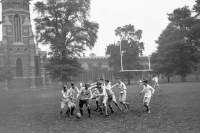
The look on the face of A&E staff was one of horror and disbelief. ‘He’s playing contact rugby – at eight?’ I nodded, my son Gus’s left arm hanging uselessly by his side, his face white and pinched with pain. Later, after we emerged from the X-ray and plaster rooms with a diagnosis of a micro-fracture to the elbow, one of the nurses from reception caught up with us. She was so concerned that she’d gone on to the RFU website, which confirmed that contact is indeed legal from Year 4. (Although the spear tackle that Gus’s friend had executed definitely isn’t.) ‘Striking a child outside of sport is abuse, but striking a child in sport is socially acceptable’ Our sons’ prep school, like many others, switches from tag to contact rugby at the start of Year 4.

The pitfalls of the Accelerated Reader programme

To my enormous pride, my six-year-old daughter is an excellent reader. In Reception, she raced through the colour-coded chart of Biff & Chip books with ease and wound up bored. So bored that she took to jumping off trees with increasing exuberance each playtime. She needed to be stretched, the school decided, with only a hint of exasperation. Stretch her we did. That summer, we read T.S. Eliot’s Old Possum’s Book of Practical Cats aloud, laughing at the names Bombalurina and Macavity. We read Eleanor Farjeon’s Kings and Queens and wondered at how we were all Elizabethans. We read The Diary of Anne Frank and thought about annexes. We read Judith Kerr’s magisterial When Hitler Stole Pink Rabbit and she packed her own evacuee suitcase.

What the Cass Review means for schools

When the Cass Review was published in April, many of us working in schools heaved a sigh of relief. For many teachers the muddle surrounding the position of transgender children and those working with them caused serious concern. A maths teacher in Swindon was sacked for addressing a student as ‘she’ and writing her ‘dead name’ on the board, even though she/he was asking to be entered into a girls’ maths challenge. Most teachers are in the job to impart knowledge, to encourage thinking and to play a part in guiding a child towards adulthood. We are not there to judge, mock or belittle. But we found ourselves increasingly confused. How much should – or could – we tell the parents?

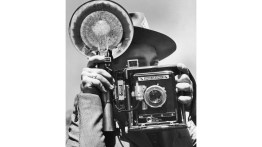
What to do with school photos

They lurk at the back of cupboards. Some are hidden under beds; others are tucked between books. I have been collecting them from a young age, but I still don’t know what I’m meant to do with them. What do you do with school photos? I suppose I could take pictures of my own school photos and bin the originals. But I just can’t do it Whenever I come across one, I enjoy the moment of reminiscence. I cast my mind back to my time in the netball team and choir. Then there are the series of house photos. My friends and I have braces in the early years and orange perma-tans by the end. I’m fond of the May Ball ‘survivors’ photos’ taken as the sun rose. Everyone looks half-cut and happy. I’m less attached to the ironic ones from university days.

School portraits: snapshots of four notable schools

Elstree, Berkshire Elstree – which educates boys and girls from three to 13 – is nestled in 150 acres of stunning countryside near Newbury in Berkshire. The school, which celebrated its 175th anniversary last year, says that its aim is two-fold: ‘to find out how a child is intelligent rather than how intelligent a child is’ and to teach pupils that ‘effort is king’. From Year 4 onwards, children can choose to flexi or weekly board and from Year 5 pupils are taught by individual specialists in all subjects from Year 5, compared with the usual Year 7. Although Elstree is non-selective, school-leavers have received scholarships to – among others – Eton, Harrow, Radley, Marlborough and Winchester.

Tried and tested by the Common Entrance Exam

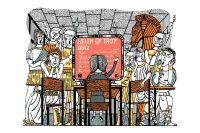
This is about something that did not happen to me at school, an exam I dreaded, but never had to take. It was the only examination that ever really worried me, and it was called Common Entrance. Do not confuse it with modern imitations bearing the same name. In those days, preparing for it involved (for me, anyway) translating English into Latin and French (a proper knowledge of irregular verbs and a wide vocabulary in both those languages was required). It also demanded thorny and tricky types of mathematics, an astounding grasp of largely Imperial geography – and a full knowledge of English history since the Conquest. I actually understood the jokes in 1066 and All That, for which modern children would need a decoder.

Which schools get the most pupils into Oxbridge?

Oxford and Cambridge have released figures showing how many offers they gave to pupils from schools in the 2023 Ucas application cycle. We have combined the figures in this table. It shows how well state grammars and sixth-form colleges compete with independent schools. Over the years, both universities have increased the proportion of acceptances from state schools: 72 per cent, up from 52 per cent in 2000. Of the 80 schools, 29 are independent, 29 grammar or partially selective, 17 sixth-form colleges and five are comprehensives or academies. (Schools are ranked by offers received, then by offer-to-application ratio. If schools received fewer than three offers from one university, this number has been discounted due to Ucas’s disclosure control.

How to survive the start of the school year

At long last, the day has come. After nearly two months of summer holidays, institutions beckon their children back for another school year. The television will resume its status as a post-school treat rather than an indispensable tool to fill the dead hours between events. The kitchen will no longer resemble an all-day canteen, and the house will take on the solemn quiet of the middle of the day. But this kind of peace is only won after a great deal of preparation. First up, school shoes. Unfortunately, children grow at a disproportionate rate to your bank balance. This means that the start of the new school year heralds the annual cash haemorrhage in Charles Clinkard shoe shop or similar.

Why an unhappy childhood is good for you

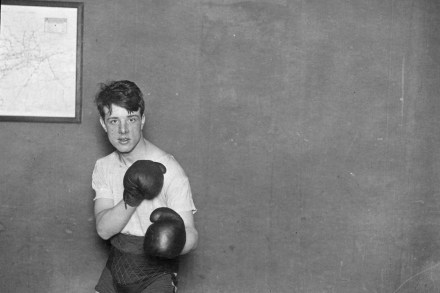
Many years ago I wrote a book called Dreams and Doorways, a collection of interviews with well-known people – writers, actors, politicians, sports personalities – about their childhood. I wanted to find out how their early experiences helped to turn them into the high-achieving adults they later became. And in almost every case, some kind of deprivation or anguish or obstacle was a key factor; they’d been motivated by a determination to overcome adversity. My days were a little less happy. My mother didn’t believe in the permissive child-rearing policy of liberal American moms For boxing champ Henry Cooper, it was extreme, ‘bread-and-dripping’ poverty in South London.

My friend the would-be killer

This is a complex tale involving an American murder, the popular British TV series Flipper, and the philosopher Friedrich Nietzsche – but bear with me. Next month sees the centenary of the conviction of two spoiled Chicago boys – Nathan Leopold, 19, and Richard Loeb, 18 – who admitted carrying out what the press at the time dubbed the ‘crime of the century’.  I had always sensed that my friend had a dark side and that he kept parts of his life secret from me The two student friends were sentenced to life imprisonment for murder, plus 99 years in jail for abduction, after admitting kidnapping and killing a 14-year-old boy, Bobby Franks, before mutilating his body with acid to disguise his identity.

A-level day is not Judgement Day

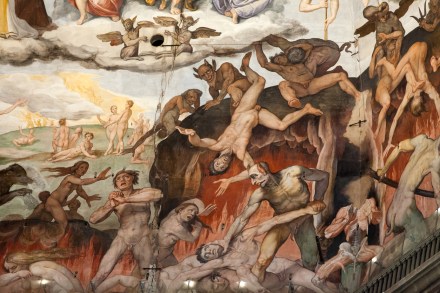
The Guild Chapel in Stratford-upon-Avon presents its congregation with a vision of terror: a medieval Doom painting depicting the Day of Judgment. On the left are those who have behaved themselves – the Saved – who joyously bound towards the gates of Paradise. On the right, sinners pay the price for falling short of the moral mark: they are tortured by demons and fed into the Mouth of Hell, to be swallowed by a fanged serpent. This summer, another Day of Judgment looms. Yesterday, thousands of UK 18-year-olds will receive their A-Level exam results. In one nervous scroll, years of schoolwork was validated, university places confirmed or denied, and future careers seemingly mapped out.

In defence of strict teachers

Labour have become alarmed by the strict, ‘cruel’ approach to discipline in schools and the rise in the number of pupils being excluded. Teachers will need to be more relaxed about ‘bad behaviour’. But though moving the goalposts of acceptable behaviour may reduce the exclusion figures, it is bound to increase the burden of disruptive behaviour on teachers and other pupils. My own experience of teaching tells me that the new guidelines will increase bullying and reduce special needs inclusion, undermine the most disadvantaged families and ultimately increase educational inequality. So why are they doing it?

Why children have stopped reading

It’s only when you read the old stories again, to a child maybe, that you become aware of the extent to which the characters still live inside your mind, bobbing about just below the level of consciousness. I still find myself puzzling over the stories collected by the Brothers Grimm, decades after I first read them. How could Little Red Riding Hood have avoided being eaten? (We read the original, merciless version.) What should Hansel and Gretel have done? Any good book leaves its mark, but the characters from the books you loved as a child embed themselves. They inform the way you think as an adult, which is why it’s so sad and so significant that children all over the West have stopped reading.

The cult of Bedales

Another of my ageing Bedales school cohort has died and so there’s an ad hoc reunion in his honour at the pub in Steep, the bucolic village near Petersfield, scene of our youth, where we used to sneak out to smoke and drink when the teachers weren’t looking. Which they often weren’t. Bedales implanted itself here in deepest Hampshire in 1900, a pioneering co-educational boarding school, quickly patronised by British and European progressivist-bourgeois-bohemian-leftist artists, writers and intellectuals. It has been chi-chi ever since. Since the place was co-educational, plenty of sex education went on behind the bike sheds From its rustic origins, the school has grown and grown and now dominates the no longer quite so sleepy village.

In defence of the personal statement

Ucas, the organisation in charge of university admissions, has announced that it’s bidding bye-bye to a crucial teen rite of passage. It is killing the personal statement. No longer will admissions tutors beetle their brows over flowing paragraphs about when you built an orphanage in Malawi using only a spoon, or how really, really passionate you are about late medieval poetry. Instead, it has decreed that wannabe grads must now answer three dour questions. This move is designed to help those from disadvantaged backgrounds, who do not, in the eyes of a Ucas spokesperson, have access to teachers and family members able to help: and who could argue with that? Well, I think it’s not only a shame, but another sign of the creeping hand of cold and normalising bureaucracy.