Spectator Life

Spectator Life

An intelligent mix of culture, style, travel, food and property, as well as where to go and what to see.

Beware the private school con

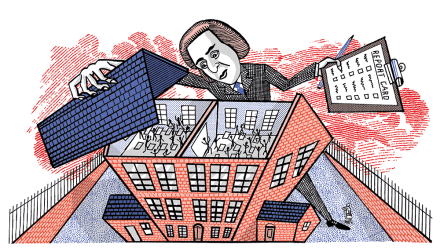
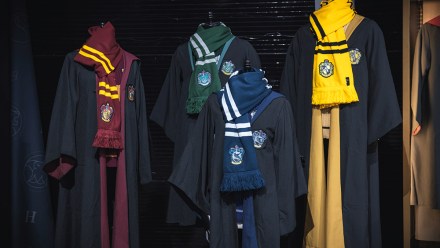
Harry Potter, the poor little orphan, can’t afford Hogwarts these days, now he has to pay VAT. James Bond, another orphan, can’t manage Eton’s £65,000 school fees. And he won’t join MI6, either – no civil servant, licensed to kill or not, can afford to live in central London any more. Now only the super-rich can afford them, private schools have become little more than gilt-edged finishing schools, with parents determined for their children to become their mini-clones as hedge-funders and private-equity tycoons.   In the last 30 years, as school fees have rocketed, so the nature of private schools and their pupils has changed for good.
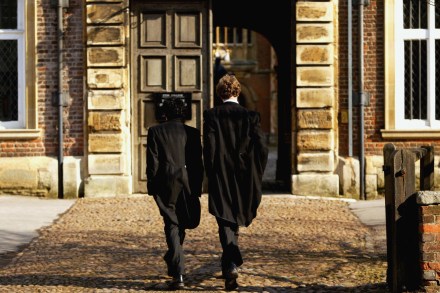
Private schools are part of Britain’s cultural inheritance – and Labour is squandering it 

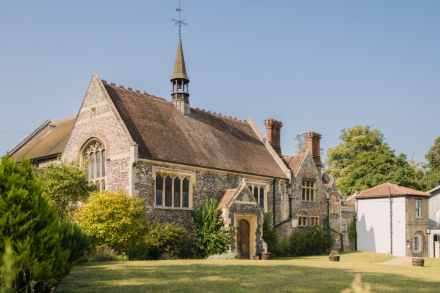
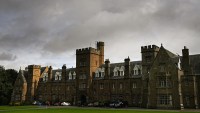
On 31 August, one of England’s oldest schools closed its doors forever, after almost 14th centuries. A thread connecting modern Britain to its past has been quietly severed.  Thetford Grammar’s origins can be traced back to ad 631 when King Sigebert of East Anglia founded a monastery on the site. Two of its classrooms are named after Dean Bund and Bishop Herbert De Losinga, who wrote about the school in c. 1114. Despite a hiatus in 1496, education continued in 1566 with the re-founding by Sir Richard Fulmerston.  The main school site holds within it a great deal of history too. The ruins of the old Blackfriars monastery are woven into the later buildings, and an 11th-century depiction of the tree of life sits over the doors to Old School.

Oldham’s fight to get its own Eton

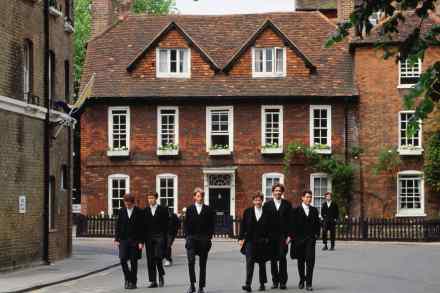
What is Eton? OK, fine, a school. What else? To some, it is a refuge. Prince William said he felt like ‘just another student’ there. To others, it is a chore. Ian Fleming left a year early, removed over an illicit dalliance with a woman. To a few people, some more fictional than others, Eton means everything. Captain Hook’s last words were ‘Floreat Etona’, ‘May Eton flourish’, the school’s motto. And in many, it provokes envy. Etonians are ‘completely detached, deliberately detached’ from reality, LBC’s James O’Brien said recently. He only went to Ampleforth. Eton has long been defined by other people: by its alumni and their reputations, and by its critics. Now the school wants to tell its own story.

The Oxbridge files 2026: which schools get the most pupils in?

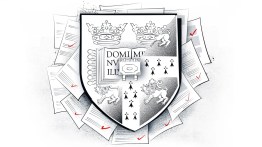
Oxford and Cambridge have released figures showing how many offers they gave to pupils in the 2025 Ucas application cycle. We have combined the figures in this table. It shows how well state schools – grammars, sixth-form colleges and others – compete with independents. Of the 80 schools, 33 are independent (three more than last year), 21 are grammars or partially selective (four fewer), 23 are sixth-form or further-education colleges (two more) and three are comprehensives or academies (one fewer). Schools are ranked by the number of offers received, then by their offer-to-application ratio.

Bring back school pets!

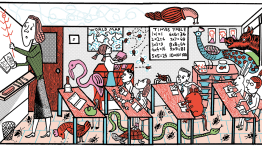
A school pet saved my sister’s life. At our Sussex prep school, pupils took turns to take Hobnob, the classroom hamster, home for a week to look after him. When it was our go, my sister and I would fight over who got to feed him. One evening, at Hobnob’s dinner time, the two of us raced full pelt across the house to be the first to get to his cage. She tripped and whacked her head very hard on the stone kitchen floor. My mother took her to hospital for a scan, just in case. There was no sign of concussion, but the scan revealed something unexpected – hydrocephalus, water on the brain, which is fatal if left untreated. My sister had the operation later that year. Hobnob, then, was responsible for a great good, albeit indirectly. But do many schools have a Hobnob equivalent today?

The sixth forms getting multi-million-pound glow-ups

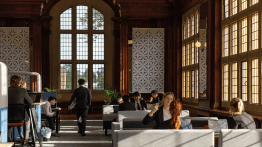
About halfway through my first term at Durham University, I made a breakthrough: I had taught myself to like coffee. And with it came the flirting, lecture decoding and friendship debriefing that could be done over a skinny latte in Caffè Nero on Silver Street. That was nearly 20 years ago. Nowadays, sixth-formers have a head start on café culture. At Canford School in Dorset, pupils slide out of A-level English and on to a bar stool in the newly opened ‘The Hub’, armed with a flat white (real-deal barista coffee, made by pupils). At Brighton College there’s ‘The Club’ – dark-green floor-to-ceiling bookshelves, Habitat-esque light fittings – and ‘Scott’s Café’ with artisan coffee.

School bulletin: The latest news from across the country

And ever the twain shall meet Liaisons between Harrovians and Downe House girls at socials – on and off campus – have long been commonplace but the match is now official. From this month, the two single-sex boarding schools will form a structural partnership whereby they will retain their distinct identities and traditions but there will be a new programme of joint academic, co-curricular and social activities. ‘This partnership is also an investment in our staff and in educational excellence,’ says Emma McKendrick, Downe House’s headmistress of nearly 30 years. ‘For all who work at our schools there will be opportunities to share knowledge, technology and resources.

The case for state boarding schools

Since January, at least five boarding schools have announced their closure – including Thetford Grammar in Norfolk, which traces its origins to ad 631, and Rendcomb College in Gloucestershire, the alumni of which includes Kojo Annan, the businessman son of Kofi, and retired champion jockey Richard Dunwoody. These closures are nothing compared with 2025 which saw a bonfire of private schools. Some 51 ‘mainstream’ establishments announced their demise (in addition to more than a dozen special schools). Such schools could help children break free from patterns of behaviour in places where hope has gone The cause, as you’ll know, is Rachel Reeves’s decision to slap 20 per cent VAT on private education in the 2024 Budget, as well as the end of business rates relief.

What we lose when private schools close

Just after Christmas, I was standing in our woodshed, filling a barrow with logs, when my wife appeared at the door and told me our school was closing. A local tragedy. Nothing seismic in the scheme of things. It was a very small school, just 150 students – a special place, as all good schools are – except there was something unique about it, too. For 850 years it had educated the choristers who sing in Exeter Cathedral. Now the school was closing, and as my wife read out the letter on her phone, I had the feeling that something magical had been lost. Exeter Cathedral School (ECS) sat next to the cathedral, a partnership going back to the Normans. Together they survived the Black Death, the dissolution of the monasteries, the Civil War and two world wars.

Spare parents from overbearing school apps

I was educated in the 1990s, first at a country prep school and then at Eton, and have a clear memory of how my schools communicated with my parents. Basically, they didn’t. They received a letter before the start of each term and some written reports at the end and that was it. If Eton sent your parents a letter in the middle of term it almost certainly meant you had suffered a mortal injury or been expelled. What Eton did do was publish a small pale-green pocket almanac called Fixtures which listed every sporting match in the calendar but also contained essential information such as the courtesy titles of any sons of dukes at the school and the colours of the 4th XV.

What’s your favourite school in fiction?

Ian Rankin It has to be Marcia Blaine School for Girls as depicted in my favourite novel, Muriel Spark’s The Prime of Miss Jean Brodie. It was closely based on the Edinburgh school that Spark herself attended. She was ‘the class dreamer’ and would later refashion the school, its pupils and teachers to create a perfect short novel about friendship, growing up, dangerous charisma and betrayal. Stephen Fry          There’ll always be a soft spot for Greyfriars School in my heart. The common room where the Fat Owl of the Remove, Billy Bunter, ‘frowsts’ and thinks of cake. Growing up, another favourite was the title school in The Fifth Form at St Dominic’s by the now sadly forgotten Talbot Baines Reed.

An open letter to fee-paying parents

Dear fee-paying parents (if I may), Forgive me for addressing you as one large, homogenous group. It sounds terribly pompous, doesn’t it – in the style of one of those endless missives St Paul kept sending to the Corinthians. Frankly, I think he should have put a sock in it after penning number one, giving us the best wedding reading there is and leaving it at that. But I’m getting distracted. Much like the Corinthians, you might well be thinking, ‘Just sod off – you don’t know us’, and you’d be right. Though what I do know, as a former prep-school mother myself, is there are at least as many types of fee-paying parents as there have been education secretaries in the past ten years (also ten, in case you’ve lost count).

School portraits: Snapshots of four notable schools

St Leonards, Scotland St Leonards is a coeducational day and boarding school for pupils aged four to 18 in the heart of St Andrews. It is Scotland’s only school to offer the full International Baccalaureate continuum, taking pupils from the primary years programme through to the diploma. The results are impressive. This year, 88 per cent of higher-level grades were awarded at 7-5, equivalent to A*-B at A-level, while pupils achieved an average diploma score of 35 points – roughly equivalent to three As. Headmaster Simon Brian says pupils leave not only with strong results but ‘the skills and attributes needed to genuinely flourish at university and in life beyond’. Fees start at £7,466 per term for day pupils and £14,933 for boarders.

How Glenalmond made me

Early in 1968, when I was just 13, my father came home one evening with a letter in his hand and an uncomfortable look on his face. ‘You’ve won a big scholarship…’ Long pause. ‘…to Glenalmond.’ ‘But you promised I was going to St Edward’s,’ I protested. St Edward’s was the principal school in the scholarship scheme in which I was indeed a big winner. We had been to see its red-brick campus in Oxford and I was braced for my first boarding experience there. But Glenalmond? Where was it anyway? We had to find it in a road atlas, 300 miles away in rural Perthshire.

Will Harry and Meghan move to the Cotswolds?

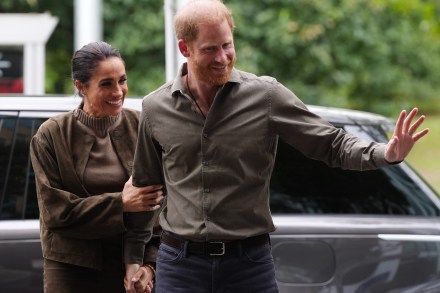
We longstanding residents of Oxfordshire have had a lot to put up with in recent years. First, there were the Beckhams with their faux flat-cap invasion of honey stone Great Tew and queasy talk of 'Golden Beez' honey. Then came Hollywood proper in the form of Ellen de Generes in her quest for ‘Engerland’: a Frankenstein vision of romcom The Holiday and indeterminate fantasies about the Old World. Last, came Maga as American Vice President J.D. Vance’s motorcade howled through the village lanes of Dean last summer. But frankly, we ‘aint seen nothing yet.

It’s madness to sit exams on screens

There is, says Colin Hughes, who is the head of the exam board AQA, no downside to switching pupils from written exams into a gleaming modern utopia of computerised tests. Students, he says, are baffled by the fact that exams don’t take place on screens. He also seems to think the poor dears won’t be able to type if they don’t take exams on computers, as if they weren’t competent enough to learn how to use a keyboard without them. What’s more, boring old exam papers, it seems, have been causing delays in providing results for schools: doing them on a screen would solve that problem instantly, and, shazaam, Johnny and Jemima can get their C minuses in Raffia Work almost instantly. Sometimes I do wonder why certain people are so bedazzled by technology.

The study of classics shouldn’t be elitist

Surprise, surprise! The study of classics at Oxford is dominated by the privately educated. The latest figures from the university show that just 41.9 per cent of those studying Latin and ancient Greek are state-educated. Meanwhile, psychology is the Oxford subject most dominated by comprehensive school pupils. Of the students admitted to these degrees, 84.8 per cent were from the state sector.  The classics numbers are sad – but inevitable. Greek and Latin A-Level have almost entirely disappeared from comprehensives. Grammar schools – cruelly cut by Conservative and Labour governments – are the last redoubt of state classical education. Even there, though, the subjects are in their death throes.

Is this how private schools die?

There is something particularly poignant about the closure of a school. The sound of instruments being played, the cheerful pictures on classroom walls, the life given to a street by children milling about, all that can suddenly disappear.   Unfortunately, for many independent schools, the possibility of closure is edging ever nearer, and in some cases has already happened. This is a result of wider pressures facing such schools, including declining birth rates and increases in the cost of living.

Why Prince George should go to Eton

After three years of theatrical um-ing and ah-ing, the Prince and Princess of Wales have seemingly acceded to the obvious: Prince George is apparently going to Eton. Despite their perennial posturing at being a ‘modern’ royal family (is there such a thing?) there was really only one option. Eton is after all – somewhat paradoxically – the only place capable of offering any semblance of a normal adolescence for George, as well as mentally preparing him for kingship. To an outsider, this sounds ridiculous. How can prancing around in tailcoats while speaking unique slang (teachers are ‘beaks’; Year 9 is ‘F Block’) have any bearing on normalcy? Yet normal is relative. One of the first things you realise at Eton is that the exceptional is unexceptional.

Why the ‘school wars’ are overblown

The recent ‘school wars’ farrago was an act of madness – or, more accurately, Madness. ‘All the kids have gone away/Gone to fight with next door’s school/Every term that is the rule’. So the Camden ska band sang on ‘Baggy Trousers’, their 1980 classic about their school days. Schoolchildren organising to duff up their contemporaries is not new; social media has made it easier for pupils to connect, parents to panic.   For the uninitiated, a TikTok trend thought to have begun in Hackney last month has seen posts pop up across the country – from Nottingham to Watford – encouraging children to meet for clashes between different schools organised into ‘red’ and ‘blue’ teams.

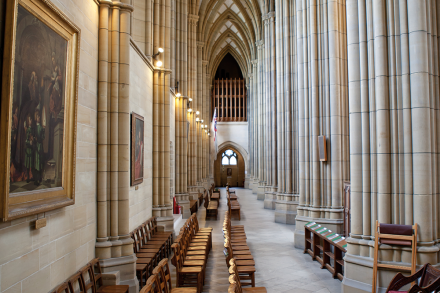
You can judge a private school by how it cares for its chapel

I can still just about recall the exact angle of rotation required of the metal hymn-book casings in the Tonbridge School chapel to produce a piercing scraping sound – perfect for putting any preacher off his stride. God, as St Paul tells us, is not mocked, and as I ascended the pulpit when I returned 12 years later as the school’s assistant chaplain, I heard the old familiar scrape once more, now deployed to distract me. Chapel was the central experience of our school years, the place we remember most clearly In many ways it was comforting. Generations of pupils praying and singing in the same space and inevitably learning the same techniques to distract or annoy. They are teenagers after all.

Woodcote House survived the Blitz, but it couldn’t survive Rachel Reeves

Woodcote House, an all-boys’ independent preparatory school of 76 pupils, closed its doors for the last time on 4 July last year. Asked by the editor to write an elegy for the school, I set about making enquiries. Many ran cold. The website had been shut down. Requests to friends who lived in Surrey fizzled out. Not a year after the closure of the 150-year-old institution, all that remained were digital embers: a sad Instagram post in which former parents and friends of the institution mourned its loss; an online Telegraph article detailing the headmaster’s final letter to parents in which he cited the ‘buffeting headwinds’ and a ‘drop in pupil numbers’ of the independent school sector in the aftermath of Labour’s VAT raid.

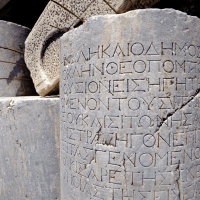
The decline and fall of ancient Greek

Ancient Greek, once central to a western European education, is on life support. Last summer, 206 pupils sat an A-level in ancient Greek. Of those, only a handful were state-educated. So it’s farewell to the language taught in our schools since the 16th century. Farewell to the language of the New Testament; the language Roman nobles revered and the emperors spoke. Julius Caesar’s last words weren’t ‘Et tu, Brute?’ They were ‘Kai su, teknon?’ – ‘You too, my child?’ As A.N. Wilson recently wrote: ‘Someone once said that all western philosophy is just footnotes to Plato. All western literature is just footnotes to Aeschylus, Sophocles, Euripides and Homer.

The invaluable lessons of school mock elections

The 2005 election campaign was brutal. All the major parties succumbed to infighting, the hustings were hostile and the drip-drip of poisonous briefings reached a nadir when a Ukip candidate was compared to Hitler. One special adviser was found crying in the loos. More than two decades may have passed, but the Sherborne School mock election certainly left its mark on those who witnessed it first-hand. I remember it well. In fact, I was that tearful special adviser. I was working for the Labour party (sadly not endorsed by Tony Blair) and during one hustings managed to persuade the crowd to walk away when the Ukip candidate – a close friend of mine in the same boarding house – stood up to speak. I stayed back to watch him deliver his carefully crafted speech to an empty courtyard.

History of art is not a ‘soft’ subject

I may be biased because I teach it, but history of art A-level often feels like the greatest, yet most dismally undervalued, subject in the curriculum. It explores history’s most innovative thinkers, enhances visual literacy, teaches history through the prism of creativity and emotion, sharpens critical thinking, and fosters empathy and open-mindedness. Yet it languishes as a minority character in the pantheon of school subjects. It has always been chronically underappreciated by students, teachers, school heads and governments. I worry that its disparagement tells us something rather depressing about our own cultural values and even our sense of what education is for. Just to scotch a popular misconception from the outset – history of art is not a ‘soft’ subject.

Textbooks will always beat screens

Is the page finally beginning to turn on children and screens? For the first time since the advent of social media, we are seeing a burgeoning alliance across all political divides to protect children from digital harm. In 2024 Jonathan Haidt delivered an urgent manifesto for change in The Anxious Generation, and at the beginning of this year Australia responded with a ban on social media for under-16s. Now even Britain is finally recognising the scale of the problem. Despite this week's decision by MPs to consult rather than enforce, the fight will rage on. Deliberation doesn’t work in the arena of addictive substances. However, the war on classroom screentime has yet to be properly waged, let alone won.