Spectator Life

Spectator Life

An intelligent mix of culture, style, travel, food and property, as well as where to go and what to see.

The false economy of cutting the Combined Cadet Force

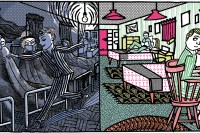
What could be more fun for a 14-year-old boy than messing about in the woods with a gun? My school’s Combined Cadet Force offered precisely that, marching us through the Brecon Beacons and organising mock skirmishes with SA80 rifles (albeit using blanks). When we weren’t trying to shoot each other, we were fighting over OS maps and compasses, trying to find which bit of woodland we were supposed to be sleeping in. One group found a dead body on the side of a Welsh mountain. Another spent an evening drinking vodka and smoking cigarettes with a strange man in a caravan. At some point in the small hours, he got a little too handsy and they all ran back to their bivvies. I was hugely envious when they told us this as we ate powdered eggs, cooked in a mess tin over burning hexamine tablets.


Sir Nicholas Coleridge: ‘Girls at Eton? Never say never’

T he historic graffiti at Eton College, chiselled into its stone walls, wooden panelling and ancient oak desks, serves as a reminder to any Etonian that he’s merely the latest in a long line of boys stretching back to 1440 who have passed through the school and occasionally bent the rules. Two names chiselled together into a wall of the Cloisters are ‘H. COLERIDGE’ and ‘E. COLERIDGE’. ‘Not me!’ says Sir Nicholas Coleridge, Eton’s 43rd Provost, when I visit him on the last day of the summer term, ‘or any of my sons. They’re dated 1817, luckily, so we can’t be blamed.’ ‘The imposition of VAT has been a very damaging thing for education.

Pity the poor offspring of the pushy Pollys

What do tech bros and pushy parents have in common? They’re both fond of citing Samuel Beckett’s most famous quote: ‘Fail again. Fail better.’ For parents, the line is invariably deployed when their ‘gifted’ child has underwhelmed at a crucial juncture. Let’s park the inconvenient fact that Beckett’s line has nothing to do with self-help. Just go with it and nod sympathetically while inwardly enjoying their elaborate contortions in an attempt to save face. Perhaps my favourite example is a West London mother (we’ll call her Polly). Her boy’s failure to get into Cambridge (‘It wouldn’t have been the right place for him anyway, so we’re pretty relieved!’) has proved to be a gift that continues giving.

Should boarding schools be phone-free?

No development has shaken up the cloistered and carefully controlled world of English boarding school life quite as much as the invention of the smartphone. Traditionally, schoolboys might write home once a week. Perhaps they might be able to smuggle in a dirty magazine or other contraband, but for the most part boarders on school grounds were safely tucked away. Today, thanks to smartphones, children are sent to school with access to pornography, internet chatrooms and easy contact with their parents. What horrors might a group of 13-year-olds get up to in a dorm if left unattended with internet access? Should boarding school children be permitted to phone home each night? What horrors might a group of 13-year-olds get up to in a dorm if left unattended with internet access?

The joy of school cricket

Few presidents can claim such an immediate success. At the end of June, I became president of my school’s alumni association and then, just five days later, the First XI won their first match at the annual Royal Grammar Schools’ Cricket Festival since 2017. A coincidence? Well, obviously. But I’d like to think that Colchester’s youth drew confidence from me having a net at the school field on Old Colcestrians’ Day and getting hit on the bonce by the first ball I faced from the sixty something head of Year 12. If this is how poorly the alumni play, they will have thought, we can’t be all that bad. I was never any good at cricket, much as I loved it. One presidential duty was to unveil a plaque on a new scoreboard.

Vivat the Latin motto

In the strange, arcane world of school mottoes, it’s fitting that the most famous one of all belongs to a fictional school. Draco dormiens nunquam titillandus – ‘Never tickle a sleeping dragon’ – is the motto of the Hogwarts School of Witchcraft and Wizardry. J.K. Rowling brilliantly realised that children aren’t put off by boarding schools and the ancient rituals that go with them. They’re gripped by these peculiar places, their roots twisting back through the mists of time. And no school custom is as ancient or beguiling as the Latin motto. My motto, at Westminster School, was Dat deus incrementum – ‘God gives the increase’.

How boarding schools reinvented themselves

Early in his time at Eton College, 13-year-old William Waldegrave, the school’s future provost, was struggling to sleep. He told his dame, and she in turn told the housemaster, John ‘A.J.’ Marsden. The former commando in charge of the boys told Waldegrave that if it happened again, he should knock on his door. A few nights later, the boy did as he was told. Marsden had a solution – they would go for a run, to Bray, seven miles from Eton. Waldegrave slept better that night. Tales of public schools past are legion – some better than fiction, and plenty that have inspired it. Others are less appealing, more appalling. In recent years, memoirs depicting the misery of former boarders’ experiences at school have told tales of neglect and criminality.

Long live eccentric school traditions

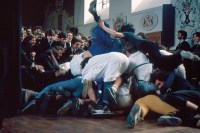
On every Shrove Tuesday since at least 1753, boys at Westminster School have gathered in the hall for a mad scramble over a pancake. The Pancake Greaze (pictured) is a cherished tradition that sees one pupil crowned the winner for grabbing the biggest portion, which the cook tosses into the centre of the hall from a height of 15ft, as the rest of the school cheers on. The champion is awarded a golden coin by the Dean of Westminster, accompanied by the headmaster and sometimes royal visitors. The more unsavoury part of the tradition – nominally beating the cook with Latin primers if he fails to get the pancake over the iron bar three times – has been abandoned. There have been other modern updates.

School portraits: snapshots of four notable schools

Lancing College, West Sussex Lancing is a public boarding school for children aged 13 to 18 in West Sussex. Set within the South Downs National Park, it offers an open-air theatre, a state-of-the-art music school, an equestrian centre and even the tallest school chapel in the world. As impressive as its facilities, though, are its alumni: Evelyn Waugh, Sir David Hare and Lord (Stephen) Green to name but a few. Nowadays, many students at the college – where fees start from £12,602 – come from its sister preparatory schools in Hove and Worthing. Also arriving this month is a new headteacher, Dr Scott Crawford, who will replace Dominic Oliver after 11 years.

The school tie renaissance

In the street across the road from my third-year Christ Church room, sat a pub called The Bear. It marketed itself as Oxford’s oldest inn – as so many of the city’s hostelries do – but it is most famous for its tie collection. More than 4,500 are on display, enclosed in cases around the walls. The collection began in 1952, when the landlord offered half a pint to anyone who would let him snip off a tie end. To qualify, the ties had to indicate membership of some institution: a club, college, regiment, sports team or school. Over the decades, a cornucopia of colours, stripes and logos has been collected. Inspector Morse once enlisted the landlord’s help in identifying one. The collection is now listed and cannot be altered or added to. I’m rather glad.

Why do people feel sorry for me for going to boarding school aged nine?

Sometimes, when I’m chatting about childhood, at some point it will become clear I went to a boarding school from the age of nine. Reactions can be comical. ‘You poor thing!’ an interlocutor might gasp, gripping my forearm, no doubt picturing cold showers and cruelty. I’ve always responded with bemusement, since my experience largely featured comfort and crumpets. I loved my prep school – Dorset House in West Sussex. It was a world in itself, enclosed and beguiling. In some ways it was unchanging, such as the graffitied Latin primers which were the same our grandparents had used. Yet it could be surprisingly forward-looking, as when it made a satellite link-up to a school in America, many years before the internet.

How nannies priced out the middle class

‘Always keep a-hold of nurse/ For fear of finding something worse,’ warned Hilaire Belloc in his poem ‘Jim’, about a little boy who ran away and got eaten by a lion. These days, Jim would be lucky to have a nanny at all given their exorbitant cost. Recent figures released by the nanny payroll provider Nannytax show that the average salary in London has risen to more than £50,000 as pushy parents demand ‘additional services’ such as training in autism, attention deficit hyperactivity disorder (ADHD) and special educational needs (SEN). A far cry from Sebastian Flyte’s Nanny Hawkins in Brideshead Revisited, the new breed of ‘hybrid nannies’ can command up to a 20 per cent salary premium by catering to the growing number of families who now require SEN expertise.

The double agony of GCSE results day – with twins

Back in July 2009, at my baby shower, someone kindly gave me a little book on the benefits of having twins. Apart from the swollen ankles and the enormous bump I was carrying, I already felt pretty blessed that, at 35, I was only going to have to do the whole pregnancy thing once. I like efficiency and this route to procreation was right up my street – not to mention the fact that I only had to give up cigarettes, Brie de Meaux, gin and chardonnay for a single period of nine months. But I hoped there would be some other benefits as I was starting to realise that, with two newborns to prepare for and no hand-me-downs coming our way, twins came with challenges of their own. I quickly scanned through the book; it was very short. Three things stood out.

The competitive cult of the summer camp

‘Before you ask, Mummy, the answer is no.’ While this could be any number of conversations that I have with my seven-year-old daughter, this one has a particular tang. It is the thrice-annual bargaining round that I do in the run-up to any school holiday in which I try to get her to go to a kids’ camp. An executive at Goldman Sachs in equity sales does not work as hard as I do to seal the deal – but I fail every time.  For a brief, prelapsarian period when she was five and more biddable, I had some success. I managed to get her into all manner of summer holiday camps in Oxfordshire: activity camp, Shakespeare camp, tennis camp, even God camp. You name it, I signed her up. Sure, we had some argy-bargy at the moment of drop-off, but in she went.

Let’s slash the school summer holiday

There are three little words that strike horror into the heart of every parent of school-age children. They are the words that cause you to break out in a cold sweat or let out a moan in your sleep in the dead of night – even in the middle of winter. They are ‘school summer holidays’. Hear those three words and you may very well envisage jubilant children spewing from the school gates and then remember the dim, distant sun-kissed summers of your own youth. But mention them within earshot of a parent of appropriately aged offspring and you’ll see the light go out in their eyes. Oh yes, the kids are happy – just like the waving teachers who weep with joy to see their charges depart. But now it’s time for the parents to weep.

Don’t call me ‘Mr’

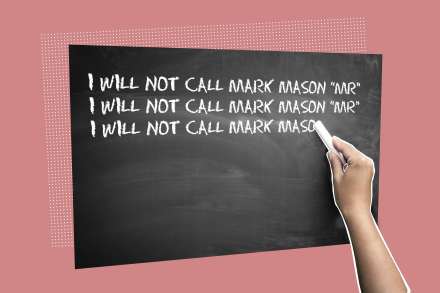
‘Please call me Mark,’ I’ve always said to the teachers at my son’s school. ‘If you call me “Mr Mason” it makes me feel 85 – and if I call you “Mrs Smith” it makes me feel seven.’ I know their first names, and always use them, in emails, phone calls and in person. A few return the compliment, but most keep it formal. It feels wrong, putting distance between us when we’re having a conversation, often an in-depth and important one, about my only child. The best teachers and staff have taught me fascinating things about how to deal with Barney. I’ve only been a parent once; they’ve encountered thousands of kids. It was the same at his primary school, starting with Sonja, when I was a volunteer helping with the class’s reading.

Being a prep school mum? I won’t miss it

My younger daughter finished prep school last week. These years are often billed as the best of one’s life. Indeed, I know the most charming 18-year-old whose pleasingly unfashionable dream is to teach at his old prep school – such were the halcyon times he enjoyed there. At my daughter’s leavers’ assembly, I shed a few tears – as did she, since she’s been exceptionally happy there since she was two years old. There hasn’t been a single day when she hasn’t wanted to go in. She’s had some inspirational teachers, and the occasionally eccentric nature of the educational offering has really suited her. (Another reason I cried was because I’m a sucker for anything remotely mawkish, so a group of kids warbling the chorus of ‘Time to Say Goodbye’ is catnip.

The lesson that changed my life

Ávila, Spain At school I wasn’t much good at anything – until, that is, I had the good fortune to land in Mr Hodges’s French set. It wasn’t just the ten words of vocabulary and the irregular verb we learnt every day, it was the whole structured Hodges approach which gave me confidence, showing how the apparently unmanageable job of learning a language could be broken down into small, achievable tasks. Since Mr H also taught Spanish O-level, when the time came I opted for that rather than German. The scenes of Spanish life in the textbook fascinated me; they were only black and white line drawings but they promised something romantic that I knew I’d never find in cold, wet 1970s Birmingham. I pored over those pictures.

Are you tough enough for the school run?

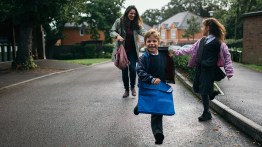
Nothing in life prepares you for the school run. In theory, on paper, it ought to be idyllic. What could be better than feeding a nutritious breakfast to your nine- and five-year-old, before scrubbing their cherubic upturned faces and combing down their buoyant hair, and then helping them get dressed and out to the car for the short drive to school, whereupon they can skip through the gates happily to education-land? Instead, it’s a Thursday morning – by which point the week has taken its toll – and you find yourself shouting ‘GET YOUR SHOES ON’ for the 30th time at the sort of level that would be a serious breach of health and safety regulations were the noise emanating from a hairdryer or lawnmower.  But your children aren’t wearing ear protection.

Inside the Trump Ivy League college

Many years ago, long before Covid and when Donald Trump was still a property magnate-cum-reality TV star, I crossed the pond to study for my PhD at Penn. Not Penn State, which everyone seems to have heard of because of some obscure sex scandal; not Princeton, basking in its Michelle Obama afterglow; but Penn. It’s in the Ivy League, before you crinkle your nose: it has Gothic Revival buildings, frat houses, jocks, and Americans talk endlessly about how old it is. Some call it the Jewish Ivy, thanks to its high proportion of JAPs – Jewish American Princesses – who went there after a Gossip Girl existence at private school in New York. I wasn’t sure what to call it, but I was young, impressionable and ready to wear the Penn merch and Nikes at the drop of a baseball cap.

University should be absurd

My daughter has asked for my advice about what to study at university. Yeah right. She’d rather eat her own hoodie. But I’m going to give it anyway. She is wavering between history and English. Do both, I say. But not many universities offer a joint honours degree, and her (otherwise excellent) teachers seem to think that it is better to focus on one subject, to demonstrate laser-like commitment to your chosen path. I see specialisation as the enemy of the humanities. Everyone should study at least two of these ‘disciplines’ – which of course overlap with each other. In a way, Classics gets it right, for it mixes literary criticism with history and philosophy, and other things too – politics, history of art. I studied English. I loved it, at first.

Are schools taking in too many international pupils?

Browse the website of the Independent Schools Council (ISC), which represents some 1,400 schools teaching around 500,000 children, and it will tell you there are 26,195 overseas pupils at its UK member schools. They make up 4.7 per cent of the total student population. The cosy percentages belie the truth. For rather like the growing importance of foreign students in keeping our universities financially afloat, so there are swathes of overseas pupils enrolled at public schools providing a similar financial cushion. And that was true even before the Labour government slapped 20 per cent VAT on the entire sector.

In defence of single-sex schools

When I first became a teacher, I bought into the notion that single-sex schools were an anachronism – a result of historical happenstance that no longer had a place in the 21st century. I imagined all-boys schools as a macho world of Spartan dormitories and testosterone-charged classrooms. I assumed the boys graduated with repressed memories of traumatic hazing rituals and an unhealthy amount of anxiety around girls. Then, after two exhausting years teaching English at a mixed comprehensive, I moved to an all-boys independent school to see what it was like. I enjoyed it so much that when I moved from London to Oxford, I decided to teach at another (although my current one is co-ed at sixth form).

The artist reviving portrait painting at Marlborough College

The art school at Marlborough looks different. When I was a pupil here in the mid-2000s, conceptual art was cool. Back then, art meant spray-painting a canvas with neon graffiti or making a sculpture out of rubbish. The art school would have been covered in all sorts of zany efforts at abstraction. What there would not have been, however, was much portraiture. And certainly not the abundance of remarkable portraits that now fill the walls. Something has changed. This newfound enthusiasm for portraiture among Marlborough’s pupils is, in large part, thanks to a 25-year-old portrait artist, Grace Payne-Kumar, the college’s artist in residence since September 2023.

How should today’s pupils be disciplined?

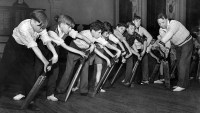
On top of the canings and endless gym-shoe whackings – those ‘short, sharp shock’ corporal punishments endured by prep-school children (especially boys) until the late 1970s – what were the most memorable punishments inflicted on pupils born from the 1930s onwards? To put today’s more humane prep-school punishments in perspective (they’re not even called punishments but ‘sanctions’), I asked people in their seventies and above which punishments they most remembered. ‘The Denzil Blip,’ said Julian Campbell, who was at The Hall School in London in the 1950s. ‘Denzil Packard had been a prisoner of war of the Japanese and had a mangled finger. Offending boys were clipped on the head, with this finger being the point of contact.

Which school gate drop-off tribe are you in?

It wasn’t until I locked eyes with a Premiership rugby player as I got out of my car at 8 a.m. that I realised I might need to up my game for drop-offs at the children’s new school. I would need to start wearing eye make-up, for starters. I should also give a little more thought to an outfit than picking up yesterday’s T-shirt and cut-off jeans from the bedroom floor – although ‘outfit’ is one of those words that makes me wince, like ‘gift’ or a ‘pop’ of colour. Still, ‘outfits’ are what a certain type of woman around here goes in for. Among a sort of country-prep-miles-from-anywhere subset, you will find mothers trying their best to fit into what the Times has identified as the ‘Ganni Mum’ tribe.

The lessons I learned as education secretary

Education secretary really is the best job in government, though sometimes it doesn’t feel that way. Lives can be transformed – hopefully for the better – as a direct consequence of the decisions you make. But you are also firmly in the firing line. There’s no other area of public policy in which everyone is an expert. Only a minority of us have fought in battle, studied the impact of nitrates on chalk streams or contemplated what the correct approach to sanitary and phyto-sanitary standards should be in a trade agreement. But we’ve all been to school. And we all have views – sometimes deeply entrenched and emotional – about what constitutes a good education and therefore sensible education policy.