Spectator Life

Spectator Life

An intelligent mix of culture, style, travel, food and property, as well as where to go and what to see.

Why Prince George should go to Eton

After three years of theatrical um-ing and ah-ing, the Prince and Princess of Wales have seemingly acceded to the obvious: Prince George is apparently going to Eton. Despite their perennial posturing at being a ‘modern’ royal family (is there such a thing?) there was really only one option. Eton is after all – somewhat paradoxically – the only place capable of offering any semblance of a normal adolescence for George, as well as mentally preparing him for kingship. To an outsider, this sounds ridiculous. How can prancing around in tailcoats while speaking unique slang (teachers are ‘beaks’; Year 9 is ‘F Block’) have any bearing on normalcy? Yet normal is relative. One of the first things you realise at Eton is that the exceptional is unexceptional.
Why the ‘school wars’ are overblown

The recent ‘school wars’ farrago was an act of madness – or, more accurately, Madness. ‘All the kids have gone away/Gone to fight with next door’s school/Every term that is the rule’. So the Camden ska band sang on ‘Baggy Trousers’, their 1980 classic about their school days. Schoolchildren organising to duff up their contemporaries is not new; social media has made it easier for pupils to connect, parents to panic.   For the uninitiated, a TikTok trend thought to have begun in Hackney last month has seen posts pop up across the country – from Nottingham to Watford – encouraging children to meet for clashes between different schools organised into ‘red’ and ‘blue’ teams.

You can judge a private school by how it cares for its chapel

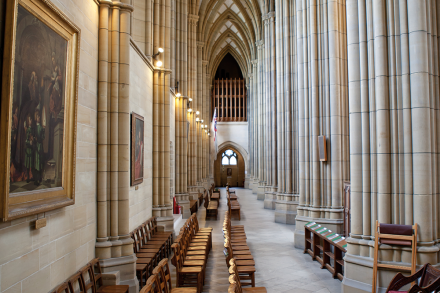
I can still just about recall the exact angle of rotation required of the metal hymn-book casings in the Tonbridge School chapel to produce a piercing scraping sound – perfect for putting any preacher off his stride. God, as St Paul tells us, is not mocked, and as I ascended the pulpit when I returned 12 years later as the school’s assistant chaplain, I heard the old familiar scrape once more, now deployed to distract me. Chapel was the central experience of our school years, the place we remember most clearly In many ways it was comforting. Generations of pupils praying and singing in the same space and inevitably learning the same techniques to distract or annoy. They are teenagers after all.

I was a girl at Eton

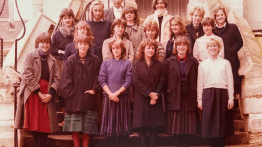
The godson of a friend of mine started at Eton last Michaelmas, and she recently told me how wonderfully it was suiting him. He’s a boy who has suffered from some academic and behavioural challenges, but very quickly these seem to have been ironed out. That school really knows its onions, my friend said. Of course I was pleased for the boy; but my reaction was mixed. Good old Eton, I thought, working its magic again. But why is this magic available to so few – for the most part, only those able to raise fees just shy of £65,000 per year – and none of them girls? Well, not quite none. You might think my reaction somewhat ungrateful if I tell you that I was briefly a girl at Eton, and that it changed my life.

Woodcote House survived the Blitz, but it couldn’t survive Rachel Reeves

Woodcote House, an all-boys’ independent preparatory school of 76 pupils, closed its doors for the last time on 4 July last year. Asked by the editor to write an elegy for the school, I set about making enquiries. Many ran cold. The website had been shut down. Requests to friends who lived in Surrey fizzled out. Not a year after the closure of the 150-year-old institution, all that remained were digital embers: a sad Instagram post in which former parents and friends of the institution mourned its loss; an online Telegraph article detailing the headmaster’s final letter to parents in which he cited the ‘buffeting headwinds’ and a ‘drop in pupil numbers’ of the independent school sector in the aftermath of Labour’s VAT raid.

The decline and fall of ancient Greek

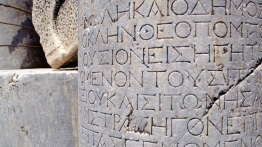
Ancient Greek, once central to a western European education, is on life support. Last summer, 206 pupils sat an A-level in ancient Greek. Of those, only a handful were state-educated. So it’s farewell to the language taught in our schools since the 16th century. Farewell to the language of the New Testament; the language Roman nobles revered and the emperors spoke. Julius Caesar’s last words weren’t ‘Et tu, Brute?’ They were ‘Kai su, teknon?’ – ‘You too, my child?’ As A.N. Wilson recently wrote: ‘Someone once said that all western philosophy is just footnotes to Plato. All western literature is just footnotes to Aeschylus, Sophocles, Euripides and Homer.

History of art is not a ‘soft’ subject

I may be biased because I teach it, but history of art A-level often feels like the greatest, yet most dismally undervalued, subject in the curriculum. It explores history’s most innovative thinkers, enhances visual literacy, teaches history through the prism of creativity and emotion, sharpens critical thinking, and fosters empathy and open-mindedness. Yet it languishes as a minority character in the pantheon of school subjects. It has always been chronically underappreciated by students, teachers, school heads and governments. I worry that its disparagement tells us something rather depressing about our own cultural values and even our sense of what education is for. Just to scotch a popular misconception from the outset – history of art is not a ‘soft’ subject.

Textbooks will always beat screens

Is the page finally beginning to turn on children and screens? For the first time since the advent of social media, we are seeing a burgeoning alliance across all political divides to protect children from digital harm. In 2024 Jonathan Haidt delivered an urgent manifesto for change in The Anxious Generation, and at the beginning of this year Australia responded with a ban on social media for under-16s. Now even Britain is finally recognising the scale of the problem. Despite this week's decision by MPs to consult rather than enforce, the fight will rage on. Deliberation doesn’t work in the arena of addictive substances. However, the war on classroom screentime has yet to be properly waged, let alone won.

The rise of the Oxbridge AI admissions cheat

‘This is the future, my wife says./ We are already there, and it’s the same/ as the present.’ So begins Ciaran O’Driscoll’s poem ‘Please Hold’, about a husband talking to a telephone robot and becoming ever more frustrated at the mind-numbing automation of modern-day life. There’s a lot of ‘Your call is important to us’ and Eine Kleine Nachtmusik and ‘We appreciate your patience’, until eventually the speaker resigns himself to the fate of growing old while on hold. This same reluctant acquiescence can be seen with AI: this is the future, and we are already there. Except instead of asking us to hold, it’s always asking us how it can help, how it can further infiltrate our lives. AI has already transformed how students learn and schools evaluate.

The cut-throat world of school magazines

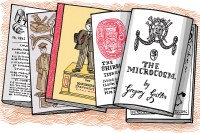
In my mind, there was always a sense of hubris in the air of our tucked-away offices at the Chronicle, Eton’s main student magazine. As in many other domains of our school’s life, we idly assumed ours was the first, as well as the only really consequential, example of a public-school magazine. The early 2000s, when I was a boy there, were a particularly suitable time in which to indulge in such a view; we were all acutely aware of the rise of Boris Johnson. If you were devoid of athletic, dramatic or musical talent, editing the Chronicle was the obvious crown The record for first school magazine does belong to Eton, but it is in fact for a much earlier and odder production, puckishly called the Microcosm, which ran for 40 issues in 1786-7, published as a book the next year.

How to beat Oxbridge’s positive discrimination

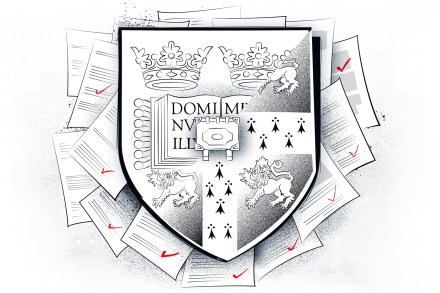
As university admissions have become increasingly obsessed with equal outcomes, many parents fear a kind of reverse discrimination. They worry that a Ucas form bearing the name of an independent school may be bad news for an Oxbridge application. There’s evidence to suggest they’re right. Private-school pupils who transfer to state education after their GCSEs are up to a third more likely to be admitted to Cambridge. Children who remained at private school for A-levels had an acceptance rate of 19 per cent, compared with 25 per cent for those who moved to a grammar school or state sixth form college. Given the assumed prejudice against private school applicants, a recent move by one Cambridge college has surprised many.

‘If you’re inspired by music, you’ll do better in exams’: Conductor Ralph Allwood on why music matters for children

Here’s some life advice Ralph Allwood gives to the teenagers who attend his week-long residential Rodolfus Choral Courses, held all through the summer at various schools and colleges across the country. Some of the singers are being pressured by their parents to take just maths and sciences, or other lucrative career-oriented subjects, for A-level or at university, and to give up music. ‘Right,’ he says, as the teenagers assemble for a final rehearsal, ‘this is how you decide what you’re going to do next. Get advice from everyone you can: from your teachers, your parents, the universities, that aunt who wants you to do a sensible subject. Say thank you, then go into your own room and close the door. There, make up your own mind about what you want to do.

School choir music is in peril

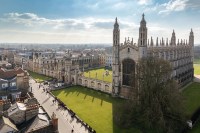
You’d be hard pressed to find a more continuous strand in British culture than the chorister. They’ve been warbling in Westminster Abbey since the 1380s. Every national occasion is marked by choirs, the choristers dazzling in their splendidly anachronistic ruffs and robes, present at moments of collective joy or sadness. Funerals, memorial services, royal weddings, carols from King’s College, Cambridge. They are ornaments to our culture. Oodles of composers, musicians and singers, professional or not, have, over hundreds of years, stood in the choir stalls at dawn, at midnight, and lifted their voices to the vaulting roofs. Some of the most beautiful music in the canon was written for choirs: Gregorian chants, Thomas Tallis.

School portraits: Snapshots of four notable schools

Hurtwood House, Surrey Set in the Surrey Hills, Hurtwood House is England’s only independent boarding school exclusively for sixth-formers. Renowned for its performing arts, the school’s annual Christmas musical is no ordinary affair. The ten-night production is staged with a full West End orchestra and professional directors, choreographers and lighting designers. It is no surprise that alumni include Emily Blunt and Hans Zimmer. Hurtwood can also boast a high level of academic achievement: last year 54 per cent of A-level results were graded A*-A.

My burning ambition for my old school

Every boy longs to see his school burn down and for me the dream came true twice. In February 1977, I was walking to Sunday Mass when I spotted a cluster of teachers at the school gates. The old Victorian hall had caught fire overnight and collapsed. I couldn’t believe it. This was my personal Towering Inferno and I’d missed the whole thing. In my mind’s eye I could see it all: the leaping flames, the burning joists, the black columns of ash rising over south London, and the thunderous roar as the roof crashed to the ground. Nothing was left but a few pathetic wisps of smoke rising from a pile of charred beams. The teachers were standing around looking shocked and miserable – as if mourning the death of a pet rabbit. Why so glum?

A literary guide to how to pay your school fees

Another day, another report on how many children have had to leave their private schools, thanks to Labour’s VAT raid on fees. This particular survey, by wealth management firm, Saltus, found that almost one in ten parents have had to take their children out of the independent sector altogether while 65 per cent of those questioned admitted to making ‘significant changes’ to their circumstances to keep their children in private education.    When belts can only be tightened so far, parents need to get creative.

The teenage Farage story misses the point

In Terence Rattigan’s 1948 play The Browning Version (filmed in 1951 starring Michael Redgrave), a public-school classics teacher called Arthur Crocker-Harris is appalled to discover that he is known to his pupils as ‘the Himmler of the Fifth’. According to the Guardian and the BBC, the Reform UK leader Nigel Farage was a fan of Himmler’s boss, Adolf Hitler, when he was a student at Dulwich public school half a century ago. I suspect that those who are enthusiastically mining this story for its anti-Farage political potential did not attend single-sex male boarding schools in the 1970s. Given the war had ended just a few decades before, it was scarcely surprising that it was the common currency of schoolboy playground conversation.

So what if Nigel Farage was the school bully?

There may well be, somewhere in this nation of ours, a long-established succession of sensitive, emotionally aware 14-year-olds who can appreciate and denounce the impact of bullying. But, honestly, none of them went to my school.  It doesn’t sound like there were many of this cadre at Dulwich College half a century ago either. At least, not if we believe the recent Guardian ‘scoop’ which claims, thanks to the testimony of Nigel Farage’s fellow pupils (much of which was made public years ago), that the Reform leader was a racist, hate-fuelled youth who taunted anyone of a different faith or ethnicity.

How to get Britain eating healthily again

Another week, another government offensive against childhood obesity. This time it’s a fresh round of pleas for new levies on junk food. And right on cue, out come the sympathetic pundits with a familiar lament: the poor simply can’t afford to eat well. Carrots are unaffordable and broccoli is a luxury that only the middle class can stretch to. It’s a predictable narrative. It’s also wrong, or at least, far from the whole truth. I say this having lived the messy reality of fostering, where I’ve had the privilege, and sometimes pain, of stepping into lives different from my own. For more than 20 years, I’ve cared for children pulled from homes where parenting skills are scarce and where ‘dinner’ might consist of a handful of sweets and a packet of crisps.

The rise of ridiculous doctorates

To a certain extent, all doctoral theses are a bit ridiculous – and therein lies their genius. I am allowed to say this because I spent four years of my life researching French Catholicism’s engagement with the first world war for my doctoral thesis, which I nattily entitled Calvary or Catastrophe? Back then, I was a baby academic hoping for critical acclaim and my own office. I’ve long since been disabused of this dream and have left academia’s dreaming spires behind to become a journalist – a profession that offers me neither my own office nor critical acclaim, but a great deal of online abuse. And while I don’t expect anyone ever to read my PhD (although you can DM me any time for a copy), I believe that it had some slim critical justification.

Down with freshers

Now that the autumn term is well underway at universities and freshers’ week has removed its leering, spotty face from the calendar for another year, may I talk about how ghastly it is? Impressionable young people who believe they are completely mature adults but still have another decade or so of brain remodelling to go arrive at an unfamiliar place for the first time. Once any relatives who lugged their bulging suitcases packed with stuff to make them seem grown-up have disgorged the final single sock from the family car and driven off, hiding their tears, the young person is on their own. I remember being 19 and arriving at Edinburgh University. I took the train up from London and hauled my suitcase to the taxi line at Waverley.

Bring back elitism

Elitism has had a bad press in recent years. The concept has, alas, been tainted by its association with the numerous elites who have corrupted it by allowing self-interest and prejudice to become self-perpetuating. It’s been sullied by its association with old school ties and masonic-style handshakes – by closed networks which work to exclude those who happen to fall outside the pre-determined in-group. So no wonder we don’t like it any more. Who would? But its gravest sin of all has been its role in pulling up the drawbridge to protect privilege in general, through a kind of unspoken fish-knife test. If you don’t know what it’s for, you don’t get in. One way people used to storm the castle of privilege was through grammar schools, of course.

Shouldn’t Greenwich’s Royal Naval College be used for something better?

Britain is to get a new ‘super university’, an enormous centre of higher learning that will, from the next academic year, under a single vice-chancellor, educate some 50,000 students. Under the cumbersome name the ‘London and South East Universities Group’, the new university is a merger of the existing University of Greenwich and the cash-strapped University of Kent with its campus at Canterbury. A vital part of the new university’s campus will be the Old Royal Naval College at Greenwich, one of Sir Christopher Wren’s architectural masterpieces, and a World Heritage Site described as being ‘the finest and most dramatically sited landscape ensemble in the country’.

Back-to-school photos have become a vulgar wealth flex

How was National Standing on Doorsteps Week for you? For most, it’s a case of grabbing a picture two or even three days after la rentrée, when you remember that you’ve missed the annual obligation to record the progress of what Mumsnetters call the ‘DCs’ (darling children). Assemble them by the front door, roar at the one who’s kicking off to SMILE and look at ME, lament that you failed to get your sons’ hair cut before they went back as overnight they’ve come to resemble Hamburg-era Beatles, press the button and then bundle them into the car.

It’s easier than ever to get into university

In the next couple of weeks, hundreds of thousands of young people will be heading off to university. They’ll be bracing themselves for the wholesale regret that freshers’ week will undoubtedly precipitate, and possibly contemplating attending a lecture or two. But among their number there will be some who got nothing like the requisite grades advertised on university websites, because clearing has radically changed the application landscape. Clearing shares certain features with the Grand National: tensions run high and chaos reigns as the starting gun sounds, and competitors jostle for position; a frenzied race ensues, and invariably there are a few casualties along the way.

Star pupils: aiming high with Marlborough’s astronomy students

As I trudge up to Marlborough’s observatory, near the top of the playing fields, I’m transported back to my time as a pupil here. I studied astronomy for GCSE, which meant spending many evenings at the observatory, gazing at the night sky. The Blackett Observatory, which houses a superb Cooke 10in refractor telescope, celebrates its 90th anniversary this month. I’ve been invited back by my tutor Jonathan Genton, former head of science and teacher of the GCSE astronomy course, and Gavin James, director of the observatory, who oversees the astronomy programme. ‘Everybody should study astronomy,’ says James. ‘It’s the original science.

The Oxbridge files 2025: which schools get the most pupils in?

Oxford and Cambridge have released figures showing how many offers they gave to pupils in the 2024 Ucas application cycle. We have combined the figures in this table. It shows how well state schools – grammars, sixth-form colleges and others – compete with independent schools. Of the 80 schools, 30 are independent (one more than last year), 25 are grammars or partially selective (four fewer), 21 are sixth forms or further education colleges (four more) and four are comprehensives or academies (one fewer). Schools are ranked by the number of offers received, then by their offer-to-application ratio.