Rupert Hawksley

How Rupert Murdoch destroyed the innocent enjoyment of watching sport

From our UK edition

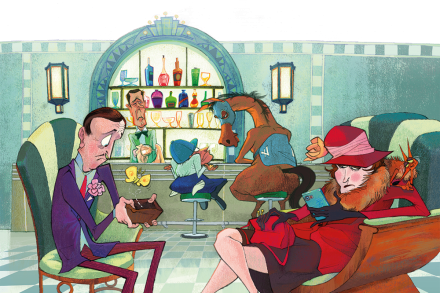
In July 2000, Rupert Murdoch’s Sky acquired an obscure online gambling brand called Surrey Sports. It was little remarked upon at the time but this deal would change football forever. Two years later, Surrey Sports had become Sky Bet and, by 2004, people watching football on Sky Sports could bet on the game via their remote. And why not? After all, as the Sky Bet tagline reminded viewers: ‘It matters more when there’s money on it.’ For football fans, nothing was ever quite the same again. ‘It’s difficult to overstate what the slogan did for the normalisation of gambling in football,’ writes Darragh McGee in his impressive study of how our national sport, seduced by profit, surrendered to the gambling industry.

Inside horse racing’s civil war

From our UK edition

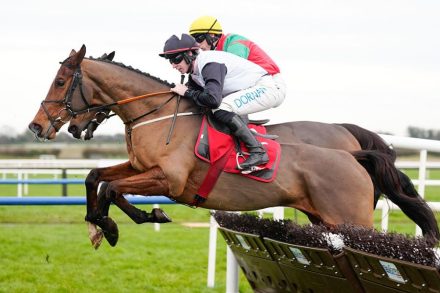
After six turbulent months as chair of the British Horseracing Authority, Lord Charles Allen felt he had no choice but to walk away from the sport. The Labour peer, a former CEO of Granada Television and executive chairman of EMI, was brought in to shake up and modernise a sport wary of change – but he was unable to unite racing’s many factions. His parting words earlier this month were brief: ‘Horseracing is an amazing sport with great potential… I have met some incredibly passionate people, who believe to survive and prosper that change is needed… I wish the sport well for the future.’ He didn’t need to add that he wanted no part of it. Racing is in a deeply precarious position.

The invaluable lessons of school mock elections

From our UK edition

The 2005 election campaign was brutal. All the major parties succumbed to infighting, the hustings were hostile and the drip-drip of poisonous briefings reached a nadir when a Ukip candidate was compared to Hitler. One special adviser was found crying in the loos. More than two decades may have passed, but the Sherborne School mock election certainly left its mark on those who witnessed it first-hand. I remember it well. In fact, I was that tearful special adviser. I was working for the Labour party (sadly not endorsed by Tony Blair) and during one hustings managed to persuade the crowd to walk away when the Ukip candidate – a close friend of mine in the same boarding house – stood up to speak. I stayed back to watch him deliver his carefully crafted speech to an empty courtyard.

Britain is not ready for war – and Labour isn’t doing enough

From our UK edition

38 min listen

Britain is defenceless, declares the Spectator's cover piece this week. From the size of the armed forces to protection against cyber warfare, the government is not spending fast enough to meet the UK's security challenges. But is the public ready to choose warfare over welfare? And can we blame the young people who don't want to fight for their country? For this week's Edition, host William Moore is joined by opinion editor Rupert Hawksley, columnist Matthew Parris, and Whitehall editor of the Financial Times Lucy Fisher. As well as meeting Britain's defence challenge, they discuss: whether the Mandelson scandal is bigger than the Profumo affair; the organised gangs terrorising rural farmers in the UK; and, why some people just can't get enough of conspiracy theories.

Britain is not ready for war – and Labour isn’t doing enough

The gangs terrorising the countryside

From our UK edition

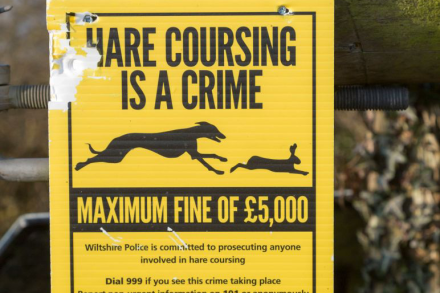
Sergeant Rob Goacher was on patrol recently when the radio crackled with a tip-off. Two men were hare coursing – chasing and killing hares with greyhounds or lurchers – in the fields near Winterbourne Monkton, a small village in Wiltshire. When Goacher arrived, a silver Subaru with the exhaust hanging off edged out of a field and accelerated through the country lanes, hitting 60mph before reaching the M4. ‘The driver then suddenly decided to exit the motorway,’ says Goacher. ‘Over a verge, through a fence, and out through the farm. The field was full of cattle, which could have easily escaped onto the motorway. Then we’d be looking at a massive pile-up and fatalities.

The ‘boring twenties’, population decline & happy new year

From our UK edition

35 min listen

A far cry from the ‘roaring twenties' of the early 20th Century, the 2020s can be characterised as the ‘boring twenties’, argue Gus Carter and Rupert Hawksley in our new year edition of the Spectator. Record numbers of young people are out of work but even those with jobs face such a dire cost-of-living situation that they have no money left over to spend on fun. Traditional cultural outings – like going to the theatre – are increasingly confined to older, richer generations. This is long-standing issue, but compounded by Labour’s economic policies. A slightly downbeat start to the new year here at the Spectator, but at least the episode provides a free dose of fun.

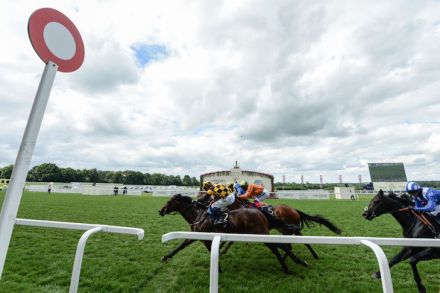
Labour is doing all it can to kill off horse racing

From our UK edition

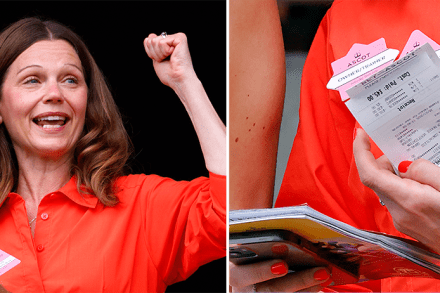
In July, Victoria, Lady Starmer was photographed at Royal Ascot, celebrating with friends after backing the winner of the Princess Margaret Stakes. Lady Starmer, whose grandmother lived near Doncaster racecourse, is a keen follower of flat racing, a passion she apparently shares with her husband. In 2024, the Prime Minister flew home from Washington D.C. to attend Doncaster’s St Leger meeting and told reporters: ‘There aren’t many better days out than the races in the sunshine.’ So it’s odd that Keir Starmer and his government appear to be doing all they can to kill off horse racing. Swingeing tax rises on the gambling industry, introduced in Rachel Reeves’s Budget, have left the sport, the second most attended in the UK, in a fight for its future.

Christmas I: James Heale, Gyles Brandreth, Avi Loeb, Melanie McDonagh, Mary Wakefield, Richard Bratby & Rupert Hawksley

From our UK edition

45 min listen

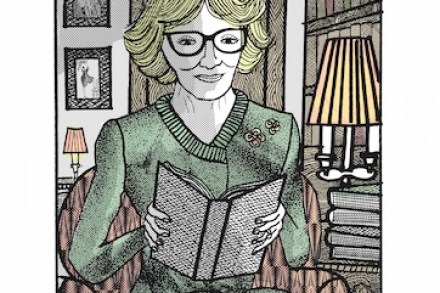
On this week’s special Christmas edition of Spectator Out Loud – part one: James Heale wonders if Keir Starmer will really have a happy new year; Gyles Brandreth discusses Her Majesty The Queen’s love of reading, and reveals which books Her Majesty has personally recommended to give this Christmas; Avi Loeb explains why a comet could be a spaceship; Melanie McDonagh compares Protestant and Catholic ghosts; Mary Wakefield explains what England’s old folk songs can teach us; Richard Bratby says there is joy to be found in composers’ graves; and, Rupert Hawksley provides his notes on washing up. Produced and presented by Patrick Gibbons.

Washing up is an artform

From our UK edition

Right, who’s doing the washing up? It’s 6 p.m. on Christmas Day and the table, which was meticulously set for 12, is now a mess of paper hats, gravy spills and glasses – so, so many glasses. Just don’t go into the kitchen, where you’ll find, in no order at all: six saucepans (unsoaked), 12 plates, one grater, 12 bowls, three baking trays, two sieves, four ceramic dishes, one warm turkey carcass and at least 17 bone-handled knives which absolutely cannot go in the dishwasher. There are vague murmurings that someone should probably do something about it. I hate to say it, but if you haven’t done any of the basting or the chopping or the stirring, that person is you. But this is not a skivvy’s job.

Benefits Britain, mental health & what’s the greatest artwork of the 21st Century?

From our UK edition

23 min listen

‘Labour is now the party of welfare, not work’ argues Michael Simmons in the Spectator’s cover article this week. The question ‘why should I bother with work?’ is becoming harder to answer, following last week’s Budget which could come to define this Labour government. A smaller and smaller cohort of people are being asked to shoulder the burden – what do our Spectator contributors think of this?  For this week’s Edition, host Lara Prendergast is joined by opinion editor Rupert Hawksley, arts editor Igor Toronyi-Lalic and columnist Matthew Parris.

Reeves’ Budget could mark the finish line for British horse racing

From our UK edition

When Rachel Reeves confirmed in her Budget that horse racing will be exempted from rises in gambling taxes, there were cautious celebrations. Racing Post editor Tom Kerr described it as ‘a reprieve for the sport’s battered finances’. Trainer Mark Walford, referring to the industry’s ‘Axe the Tax’ campaign, told the trade newspaper: ‘Racing as a whole has got behind the campaign, and it shows what we can do.’ This was a disastrous – potentially existential – day for racing My advice would be to put the champagne away. This was a disastrous – potentially existential – day for racing.

The curious cult of solitude

From our UK edition

The thing that really fascinates me about solitude is the need to talk about it. The contradiction seems lost on people. ‘I must tell you about the silent retreat I’ve just been on.’  ‘It was so nice to just sit with my thoughts for a bit.’ Solitude is the new wild swimming: if you don’t talk about it, did it even happen?   And I fear this habit is about to get a whole lot more irritating because the benefits of solitude – all fairly predictable – are increasingly being ‘studied’ and presented in quasi-scientific jargon. ‘It creates spiritual sustenance,’ writes entrepreneur and author Ari Weinzweig.

Is Labour trying to kill the gambling industry?

From our UK edition

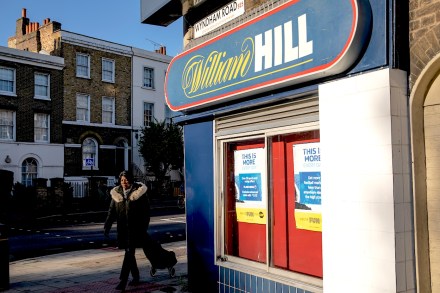
It seems Labour will not rest until the gambling industry is dead and buried. In the latest attack, more than 100 Labour MPs have signed a letter to Chancellor Rachel Reeves calling for significant tax rises on ‘harmful online gambling products’. The letter, written by MPs Alex Ballinger and Beccy Cooper, both members of the All Party Parliamentary Group for Gambling Reform, suggests that the revenue should be ‘ringfenced to help address child poverty and related harms.’ We risk seeing an exodus of gamblers from mainstream bookmakers The letter follows an intervention by Gordon Brown, who described raising gambling levies as a ‘straightforward Budget choice’.

Labour’s Terminator, Silicon Valley’s ‘Antichrist’ obsession & can charity shops survive?

From our UK edition

37 min listen

First: who has the Home Secretary got in her sights? Political editor Tim Shipman profiles Shabana Mahmood in the Spectator’s cover article this week. Given Keir Starmer’s dismal approval ratings, politicos are consumed by gossip about who could be his heir-apparent – even more so, following Angela Rayner’s defenestration a few weeks ago. Mahmood may not be the most high-profile of the Starmer movement, but she is now talked about alongside Wes Streeting and Andy Burnham as a potential successor to Starmer. But – it all depends on what she can achieve at the Home Office. So, who does she have in her sights?

Save our charity shops!

From our UK edition

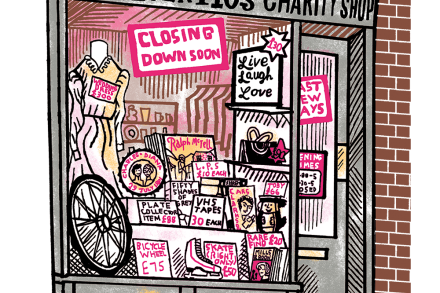
If, like me, your tailor of choice is the British Heart Foundation or Save the Children, it is beginning to feel like the end of days. Old people are still dying, their wardrobes still being emptied into bin bags – but we vultures are being starved of their corduroy carrion. Charity shops are in crisis. Scope has shut more than 50 stores this year already. Two more – in Beverley and Fleet – are closing this week. Taunton, Portsmouth, Skipton and Bangor are all completely Scopeless. The Charity Retail Association (CRA) is gloomy, explaining that the British Heart Foundation, Barnardo’s, Oxfam and Cancer Research UK – the big four – have all been struggling to maintain healthy sales.

The strike to save the future of horse racing

From our UK edition

Horse racing is a notoriously factional sport. The interests of owners and trainers, for example, are quite different from those of racecourses and administrators. Even for those not in the saddle, the chafing can be painful. But on Wednesday, this dysfunctional family will unite to go on strike for the first time in the sport’s history. Scheduled meetings at Carlisle, Kempton, Lingfield and Uttoxeter will not go ahead: no horses, no jockeys, no bookmakers, no punters. Racing is shutting its doors. Walk into any high street bookmaker and watch the desperate and the vulnerable feeding coins into the flashing maws of these machines; it has nothing in common with betting on horses.

Mugs game: what does your cup say about you?

From our UK edition

Rishi Sunak found himself in hot water last week, though fortunately it was not too hot. Just the right temperature, in fact. The Chancellor was photographed at his desk with a £180 ‘smart mug’, which keeps his drink somewhere between 50°C and 62.5°C for up to three hours on the move or indefinitely if placed on its charging coaster. Very sensible, you might think; but some thought the picture was revealing. Labour MP Beth Winter was quick to point out that her mug, turquoise and shaped like a dinosaur, had cost just £3. ‘No wonder,’ Winter tweeted, ‘he said no when I asked him this week about a wealth tax.’ Sunak is not the only politician to have had their mug scrutinised as a supposed extension of their personality.