Alexander Pelling-Bruce

Alexander Pelling-Bruce

What happened to the London bus?

From our UK edition

To understand Sadiq Khan’s tenure as Mayor of London, you need only ride one of his buses. Eight years of repeating that he is the ‘proud son of a bus driver’ have not yielded a single improvement to the experience of travelling by the famous red bus. In fact, many things are worse.  she suggested I couldn’t have lived in London for very long and then burst into tears Tap your card and find your way to one of few seats unsullied by chicken bones, unfinished soft drinks and disposed of vapes. Sit down and endure the tinny sounds your fellow passengers deem acceptable to broadcast from their handheld portals to hell. Request that they use headphones and risk being stabbed. Even if you can avoid all this, you can’t escape being infantilised by the recorded announcements.

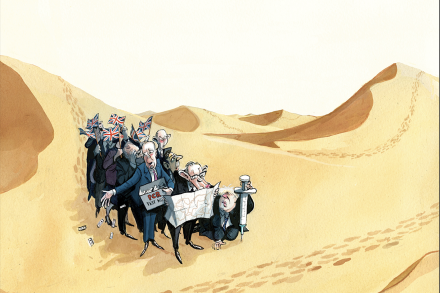
Roadmap to nowhere: will life ever return to normal?

From our UK edition

38 min listen

Will life ever return to normal? (00:50) Is the government pandering to statue protestors? (14:30) And what’s Prince Harry’s new job? (27:55)With Kate Andrews, the Spectator's economics editor; Spectator columnist Matthew Parris; Spectator contributor Alexander Pelling-Bruce; Historic England CEO Duncan Wilson; Dominic Green, deputy editor of the Spectator's US edition; and Sam Leith, literary editor of the Spectator.Presented by Lara Prendergast.Produced by Max Jeffery, Cindy Yu and Arsalan Mohammad.

The misguided plan to ‘retain and explain’ statues

From our UK edition

When Mao’s Red Guards first got to work in China, they defaced statues before they tore them down. It was common to find a statue of Buddha, for example, with new signs saying: ‘Destroy the old world! Establish a new world!’ Boris Johnson’s government isn’t keen on statue removal, but it is offering a compromise. Oliver Dowden, the Culture Secretary, has adopted a policy of ‘retain and explain’, whereby the statue remains but with a plaque giving more historical context. Explanation, it is assumed, can only be good. Yet you only have to look at the single case where ‘retain and explain’ has been deployed to see what we could be in for.

Football needs more female referees

From our UK edition

In his 1992 football memoirs, Fever Pitch, Nick Hornby remarks on the ‘maleness of it all’. Rebecca Welch’s appearance yesterday as a referee in a Football League match between Harrogate Town and Port Vale is a sign of how much things have changed.  It is not surprising, however, that there are sceptics. After all, we live by a creed which demands we promote women because of their sex and makes heretics of those who describe any feature of that sex. But Welch's performance made it clear that female referees in the men’s game are a good idea.  First, the players seemed to afford her greater respect than they might otherwise to an official. This was most apparent after an incident in the 23rd minute.

The Dragon school’s bizarre decision to ban Gunga Din

From our UK edition

Why should radical leftists bother destroying institutions when the establishment will do the work for them? The governors of the Dragon, the prep school in north Oxford, have decreed that one of its boarding houses, Gunga Din, shall now be known as Dragon House. Presumably no consultancy fees were incurred for that name. In a letter to Old Dragons, which as an alumnus I received, the chair of governors, Andrew Webb, sets out the wonderful contortions that led the board to the decision. The name was originally chosen by ‘Hum’ Lynam, headmaster from 1920 to 1942, from Rudyard Kipling’s 1890 poem. The poem’s hero is a regimental bhisti (a water-carrier) in the service of the British military in India, whose activities are narrated from the view of a British soldier.

The problem with mandatory face masks

From our UK edition

Last week the Prime Minister was photographed oafishly browsing in an Uxbridge shop, wearing a lurid blue mask. In the past, he has defended the right of people to go around looking like letterboxes; in kind we should uphold his right to go around looking like an attenuated Smurf. Aesthetic eccentricity has always been his strong suit. Personally, I wouldn’t be seen dead in a face mask and from tomorrow will be resisting the imposition to wear one. Before you think ‘here goes another civil libertarian nutjob’ let me immediately state that the argument against personal liberty in favour of masking up is redundant. Mask advocates have used it to proclaim their righteousness whilst decrying the selfishness of detractors.

The Black Lives Matter movement is re-racialising society

From our UK edition

Every day I thank God for the British Empire. Without it I wouldn’t exist. My Gold Coast-born mother would never have met my English father. She herself is the descendant of a Scottish merchant called Bruce. Now she lives happily in rural Perthshire. She’s the only black in the village. Growing up in the 1990s, I faintly remember debate over whether non-whites could be British. Certainly the question had receded by the time Monty Panesar made his England cricket debut midway through the following decade. Meanwhile, however, Britain quickly became one of the best places for cultural entrepreneurs to promote the pernicious fallacy that we are best understood through the prism of race and culture.

Are the police still impartial?

From our UK edition

The only silver lining of Churchill's encasement is that he didn’t have to suffer the indignity of seeing thugs perform Nazi salutes in front of him. It's a toss up whether this was more grotesque than the hoodies of the week before who threw bikes and bottles at police. Rightly, there was the proper police presence over the weekend to prevent widespread crime and disorder. But why did police surrender to one mob and not the other?  The job of police is to uphold the law. But is that always still the case?

League of nations: guessing our way out of lockdown

From our UK edition

38 min listen

European countries all seem to be doing something different, so what are the lessons from the continent (00:45)? Plus, how the West's lockdown impacts the developing world in a very real way (13:05). And last, rediscovering the joy of driving on the country's empty roads (24:55).With economist Fredrik Erixon, the Economist's Anne McElvoy, Stanford Professor Jayanta Bhattacharya, Indian economist Ashwini Deshpande, writer Alexander Pelling-Bruce, and transport journalist Christian Wolmar.

Lockdown, foot down: driving in the time of Covid

From our UK edition

After the post-apocalyptic fall-off in traffic at the start of lockdown, cars are now slowly starting to return to the roads. Well, if you’ve seen a smug git cruising through north Perthshire in a 1989 Atlantic Blue BMW 320i convertible, that’s me. I’m rediscovering the love of the car. I started lockdown in London, hurtling down Edgware Road blasting out ‘Ghost Town’ by the Specials. Having decamped to the Highlands (in defiance of the SNP edicts to stay away), I now chug along at 20 miles per hour below the speed limit, with a gentle accompaniment of Hall & Oates. It’s pure bliss. Is driving for pleasure within the government’s lockdown guidelines? It’s certainly not ‘essential’ travel.

Why Tom Watson’s peerage should be blocked

From our UK edition

Is Jeremy Corbyn attempting to foment the abolition of the House of Lords? His recent peerage nominations suggest so. Corbyn has put forward a former Speaker mired in bullying allegations who facilitated a parliamentary revolution. A failed apparatchik under investigation for her handling of anti-Semitism. And Tom Watson. The former Labour deputy leader is perhaps the most reprehensible choice given his role in the Carl Beech affair. Beech, known as 'Nick', made multiple false allegations of sexual assault and murder, which led to the destruction of the careers, livelihoods and reputations of several men who truly served the nation. But there is nothing inevitable about Watson being elevated to the Lords.

Let’s bring back hereditary peers

From our UK edition

There is a new law of politics: if it happened under Tony Blair, it’s almost certainly bad. Brexit has certainly shown up the fallacies of New Labour's constitutional reforms, in particular the creation of the Supreme Court, whose might was mistakenly thought to be symbolic. But one Blair era reform, which took place twenty years ago this week, has been largely overlooked: the decision to eject the majority of the hereditary peers from the House of Lords. It's time to bring them back. The key problem with the post-1999 Lords is that it introduced a system of unfettered patronage – the overwhelming majority of its members are there for life at the gift of the prime minister of the day.

The Oliver Letwin speech that first revealed the Benn Act game plan

From our UK edition

On Coffee House last week, I wrote that the judgment of the Supreme Court shows that the Benn Act is unconstitutional. It is more than that: it constitutes a revolution in the way in which Britain is governed. Oliver Letwin, who helped draft the Act, made this abundantly clear when speaking in the House of Commons on 14 February. His speech came in the run up to the first time Parliament took control to direct Government policy by legislation. But it also reveals the game plan that ultimately led to the Benn Act and the topsy-turvy situation we now find ourselves in.

Has the Supreme Court handed Boris Johnson a Brexit escape route?

From our UK edition

The Supreme Court's judgement is the latest constitutional perversion after the Benn act. But ironically it may assist the Government in achieving its objective of Britain leaving the EU by 31 October, without having to seek an extension to the Article 50 process. In paragraph 34, the Supreme Court states that its 'proper function' under our constitution is to give effect to the separation of powers (which justifies court intervention in relation to prorogation). Then, in what appears to be an innocuous sentence in paragraph 55, it says that it is to be “remember[ed] always that the actual task of governing is for the executive and not for Parliament or the courts.” Yet the Benn Act manifestly contradicts this principle.

How Boris Johnson boxed his Brexit opponents in

From our UK edition

As a Leave voter, it is satisfying to watch Boris's Johnson's bold Brexit plan unfold. The predictable backlash to it – what Jacob Rees-Mogg called the 'candyfloss of outrage' – is also an entertaining spectacle, with some of those most determined to stop Brexit resorting to ever lurid analogies to describe the Prime Minister. But why are the Government’s opponents now wailing so loudly? The answer is simple: because they know this week’s prorogation move has boxed them in. First, let's be clear: whatever some of Boris Johnson's supporters might say, the plan to suspend Parliament is a deliberate attempt to decrease the parliamentary time MPs have to act to pass anti no-deal legislation.

Caroline Lucas and the problem with diversity

From our UK edition

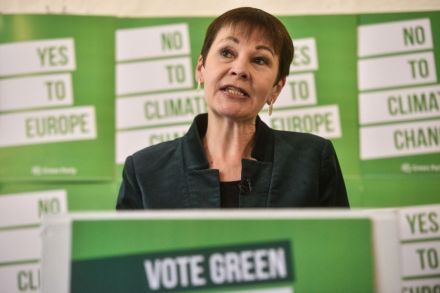
As Caroline Lucas found out last week, there comes a moment when a defective ideology collapses under the weight of its absurdities. For the doctrine of diversity, the meltdown happened when the former Green party leader was forced to apologise for including no black people in her all-women fantasy Cabinet. Labour supporters were particularly angry at Lucas's omission of Diane Abbott. Why hadn't the shadow Home Secretary been included? Yet in leaving Abbott out, Lucas actually did Labour a favour. She showed, all too clearly, that even as a thought-experiment when you have controlled for sex, views on Europe, and position on the left/right spectrum, Diane Abbott still does not make the cut.

Why October 10th is Boris Johnson’s best bet for a snap election

From our UK edition

Boris Johnson thrives on risk. His political life so far has consisted of a succession of gambles that have paid off: leaving the Commons to be Tory mayoral candidate in a Labour-voting city; choosing Leave in the referendum against the odds and the establishment; resigning as foreign secretary; and then becoming Prime Minister when many thought he was a busted flush. These decisions are the marks of a man from whom we ought to expect the unexpected. And there is good reason for him to now make the ultimate bet and call a snap election. It's now widely assumed that Jeremy Corbyn will table a motion of no confidence soon after Parliament returns from summer.

Jacob Rees-Mogg and the mystery of the conference recess

From our UK edition

“What is going on with the conference recess?” asked Valerie Vaz during Jacob Rees-Mogg’s first outing for Business Questions as Leader of the House. She sounded exasperated, and who can blame her? After all, it was the sixth week in a row she asked the question. And it was the sixth week that she was fobbed off. So what is going on? Normally conference recess dates are bundled together with the dates of other recesses and tabled earlier in the parliamentary session. In 2018, the recesses for the forthcoming summer, conference, November and Christmas were approved on March 20th. In 2017, summer and conference went together on June 22nd (after the general election).