Spectator Life

Spectator Life

An intelligent mix of culture, style, travel, food and property, as well as where to go and what to see.

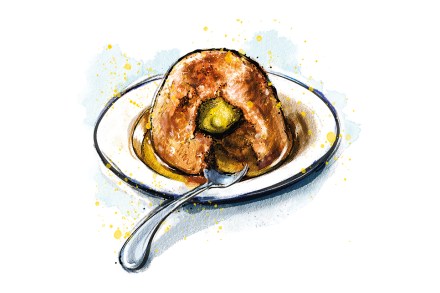
Sussex pond pudding: the perfect January pick-me-up

I always feel pulled toward citrus at the start of the year. Initially it was subconscious: I’d just find myself in the kitchen making a lemon drizzle cake. But now I actively plan my citrusy January. As Christmas recedes, I make notes of recipes that I’m craving, and almost all of them call for a whack of lemon or grapefruit or orange. It doesn’t take much analysis, does it? It’s a bit like having a dream about doing an exam unprepared – what could it possibly mean?! The literal brightness of the fruit and the figurative brightness of the flavour – its zinginess – bring you back to life; it is the perfect ingredient for fresh starts, for leaves turned over. This is so much more than a lemony sauced pud.
Better than the original: Scott’s Richmond reviewed

Scott’s, Richmond, is a fish, champagne and oyster bar, and a new branch of Scott’s, Mayfair. The original Scott’s was part of what became the Trocadero Centre. (Ian Fleming was a regular. He would take captured U-boat officers there to get them drunk and chatty. James Bond visited too.) It moved to Mount Street and was bombed by the IRA in 1975. This Scott’s is on the Thames at Richmond and is part of a development by the King’s favourite architect Quinlan Terry, who managed, in the mid 1980s, to throw up a Domestic Revival village on the water. It looks very weird, but I’ve always liked it because the alternative is worse.

Is Eddie Jones’s fate written in the stars?

Something is happening here, and you do know what it is, don’t you Mr Jones? Stargazers – and even some more grounded folk – reckon it’s written in the heavens: that the team Eddie Jones was supposed to have been coaching will meet the team he will be coaching in the rugby world cup final on Saturday 28 October in the Stade de France in Paris. Jones, jilted last month after a seven-year relationship with England, the team he was preparing for the tournament that starts in France on 8 September, has this week been welcomed back into the arms of his former flame, Australia (also the nation of his birth), with whom he enjoyed a four-year partnership from 2001-5.

English food has always been a moveable feast

There is a lot to like about Diane Purkiss’s English Food. It’s a hefty thing, packed full of titbits to trot out down the pub, but also a serious consideration of how English food has changed over time, and of the perils of assuming there has ever been a golden age, or even a very stable one. The layout is good, organised thematically rather than a chronologically, which saves the book from getting bogged down in repetition, and avoids the common trap of listing endless menus and foodstuffs. The best chapters are often the shortest. The one on apples includes a fascinating collection of facts, folklore and recipes, as well as a consideration of just how difficult it is to work with historic definitions. The section on codlins – a big or small apple? One that cooks to a foam?

In defence of Spotify

‘Pitiful.’ That’s the verdict of Damian Green MP, acting chair of the digital, culture, media and sport committee, on the payouts that streaming companies such as Spotify and Apple Music provide to musicians. An update to the group’s Economics of Music Streaming report, published on Friday, calls on the government to take a ‘proactive strategic role’ to make sure Britain’s music industry – one of the few that truly is world-beating – gets the cash it deserves. With streaming now accounting for 84 per cent of UK recorded music revenues, its businesses model really matters.

Why are experts always wrong about house prices?

Over the past two generations, those with property in the UK have been unwittingly transformed from owners to investors. This makes no sense, and has led to a lot of baby boomers feeling smug and clever when in reality they’ve just been lucky. However, the effect has been lasting and means property owners are now a politically valuable group – and that what your house is worth has disproportionately strong influence on how rich you feel. And of course, now that everyone has an interest in the value of their home, there are plenty of supposed experts willing to pretend they’re helping you look ahead to see what will happen in the market. It’s particularly prevalent at this time of year, i.e.

Don’t bring back Frasier

At the end of the Frasier theme song, its star Kelsey Grammer always sang the words: 'Frasier has left the building!' And when the show finished in 2004, it felt as if Frasier, Niles, Daphne, Martin, Roz and the rest had indeed left the building. In truth, the popular programme did not end in glory. Ever since Niles and Daphne had become a couple, ending its greatest running joke, there was a sense of past glories being retrodden. By the time Daphne’s siblings appeared with the strangest 'British' accents ever known, it was hard to avoid the feeling that Frasier’s departure was past due.

In praise of meatless steak

Sirloin, rump, tomahawk, fillet, rib-eye. However it comes, is there any food that gets salivated over more than steak? Restaurant reviewers compete to outdo one another with their florid descriptions of the sensual delights of tucking into a particularly prime example. But then steak comes loaded with far more than a dollop of garlic butter or hollandaise. More recently, tucking into a juicy slab of meat has also become a bold statement of ‘I will eat – and live – as I please’, a carpe diem rejection of vegan-botherers and eco-worriers. Veganism is on the rise, with the number of vegans in Britain quadrupling between 2014 and 2019.

Snow question: Europe’s most reliable ski resorts

It’s every skier's holiday nightmare. You turn up to the slopes and, instead of fresh white powder, you’re greeted by a mass of sludge slowly liquefying into green-brown mud.  The Alps have had a torrid season, with higher-than-average temperatures and heavy rain forcing many resorts to close, sometimes within weeks of opening. For long stretches it was too warm even to operate snow cannons, which can magic up artificial snow but require low temperatures to work. While snowfall has picked up in time to save the season in some places, in Italy alone there are now 200 fewer ski resorts than in the 1980s.  But there are still some pockets that can offer a reliable season.

Why tax-free shopping matters

One initially overlooked aspect of Liz Truss and Kwasi Kwarteng’s ill-fated mini-Budget was the plan to restore VAT-free shopping for tourists. The scheme, which allowed non-EU visitors to claim back 20 per cent on their purchases, was scrapped in 2020 by then chancellor Rishi Sunak but looked set for a comeback. This was excellent news where I live – Japan – and throughout Asia, where holidays are short and shopping plays a big part in overseas trips. But just as tourists were writing up their lists and planning their itineraries, Jeremy Hunt pulled the rug from under their feet by cancelling the uncancelling before it had even reached Kwarteng’s promised consultation phase. Was he right to do so? Almost certainly not.

Do you have ‘smart meter stress’?

Are you suffering from SMS? Smart meter stress, that is. When we decided recently to accept our energy provider's offer to install a smart meter, I had no clue how anxiety-inducing the digital display on the little black monitor could be. Smart meters tell us (and our suppliers) how much energy we’re using, minute by minute. In theory they make life easier, helping us identify where we can reduce consumption and sending automatic readings so that we’re less likely to underpay or overpay on our bills. There are already 29.5 million smart meters installed across the UK, and by the end of 2025 every home and office in Britain will have been offered one.

Why Avatar 2 has confounded the critics

The pundits called it long ago: Avatar 2: The Way of Water was going to be a flop. They did allow that betting against the so-called ‘king of the world’ James Cameron was rash – after all, Titanic and the first Avatar film overcame almost hysterically negative buzz in order to become box office behemoths. But there were too many reasons why the latest Avatar was going to fail. Nobody remembered the first film, they said. It wasn’t meme-able, they warned. Sam Worthington, its supposed star, was a nobody. There were too many blue people in it. The first film had had the novelty of 3D, but that was now a completely defunct format, popular only in China. People had moved on.

Our flawed body politics

‘New year, new you’, or so they say. And as sure as eggs is eggs (particularly for the high protein advocates), new year’s resolutions for many will have revolved around the quest for a new body. I use the word ‘body’ specifically because our prevailing culture keeps finding new and alarming ways to reduce us all, but women in the most dehumanising terms, into mere bodies; bodies that can be chopped, changed, rearranged increasingly even to accommodate the outward trappings of the opposite sex. This manifests itself most completely of course in porn, as it always has, where the cold-eyed camera sees everything of the body and nothing of the person inhabiting it.

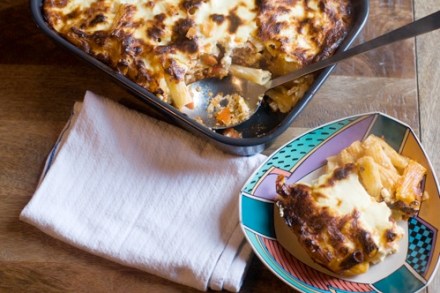
Pasta bake: a recipe to cure the January blues

I love pasta bake more than is reasonable: I would struggle to name a dish that brings the same level of comfort even from first thought. From the moment I consider making one, I am already reassured: confident in the knowledge that it is a dish which will deliver everything that is required for culinary succour. This isn’t your average student pasta bake: slow-cooked ragu, a topping cooked at a hot temperature until blackened in places and blistering; a time investment that means delayed gratification, but for the most part can be left to its own devices, to simmer, to bubble, to bake. Saucy and deeply savoury, hot and packed with carbs: it can’t fail to please.

Back two mudlarks in the big weekend handicaps

Ground conditions at both Warwick and Kempton Park are likely to decide the winners of the two big weekend handicaps tomorrow. A month ago, clerks of the course and groundsmen up and down the country feared it might never rain again. Now it seems to pour almost every day and, as a result, it is essential to back horses that revel in the mud. The big race at Warwick tomorrow is the Wigley Group Classic Handicap Chase (3 p.m.) over a marathon trip of 3 miles 5 furlongs. With the going already ‘heavy, soft in places’ and with more rain forecast, only gritty battlers who can handle the ground are going to play a hand in the finish.

Noma and the death of fine dining

The Menu is a horror film about fine dining that revolves around a psychotic head chef (Ralph Fiennes) who runs a destination restaurant on an American island. The island is uninhabited apart from the chef and his staff, who pluck it for the most refined marine treats to serve the obnoxious clientele on a nightly surprise menu. As I sat in the cinema watching it recently, I felt delighted, then sick, then scared – and then enlightened. Enlightened because I finally understood that fine dining – once the summit of high living and my own former obsession as a greedy twenty-something working in lifestyle journalism – is over. It is not just that in this era of obsessive authenticity and sentimentality fine dining feels passé.

Is this Britain’s most historic house?

Hyperbole in estate agents’ brochures isn’t unusual – but when it comes to a write-up for Great Tangley Manor, which has gone on the market for £8.95 million, overkill is almost impossible. Believed to be the UK’s oldest continuously inhabited property – its Saxon foundations date from 1016 – the Grade I-listed moated manor house, in the village of Wonersh in the Surrey Hills Area of Outstanding Natural Beauty, comes with an extraordinary roll call of associated famous names. From the spheres of royalty, art, literature, garden design and even America’s Gilded Age, all have played their part in shaping secluded Great Tangley into a country house with a compelling story.

In defence of Prince Harry’s necklace

The revelation that Prince Willy allegedly broke Prince Harold’s necklace in a fight shows how unshockable we’ve become when it comes to Harry and Meghan drama. Because my main question after this particular episode isn’t about press standards or dysfunction in the royal family – it’s ‘why was he wearing a necklace?’. When I was a child, my mother would impress upon my brother, sister and me the importance of not being seen to do or wear anything that could be regarded as ‘naff’. Tattoos and earrings or necklaces (on men) were all deemed especially naff. As a result, between the three of us we have 12 tattoos at the last count. I also have an earring and a necklace.   Yet men’s necklaces are not as nouveau as my mother feared.

Why is social media pushing young women to donate our eggs?

As a millennial who spends a lot of time on social media, I assumed I was desensitised to adverts. I thought I was ad-blind, until I started being bombarded with posts asking me to donate my eggs. It was a post from the London Egg Bank which first caught my eye, offering a ‘freeze and share’ scheme. In this country egg donors are only allowed to be paid £750 in compensation, but there’s nothing to stop them being given treatments in lieu of cash – and egg freezing is expensive. The average cost to collect, then freeze a woman’s eggs is around £3,350. Medication and yearly storage add at least another several hundred pounds. To have the eggs thawed and implanted into the womb costs another £2,500 on average.

When street hawkers were a vital part of London life

If you read only the title of Charlie Taverner’s book Street Food you could be forgiven for assuming it was an exploration of the stalls that line the trendier streets of our cities, offering bibimbap and bao, jerk chicken and jian bing. But the author’s focus predates brightly coloured gazebo hoardings and polystyrene packaging and looks instead at the working lives of the itinerant traders who populated London before 1900, touting everything from oysters to milk, and what their work meant for a changing capital city. By placing these vendors at the centre of the story rather than as faintly comic support acts, Tavener provides something that goes beyond individual characters.

Will shoe-polishing be given the boot for good?

As I digest the news that Kiwi are ceasing the sale of its shoe polish in the UK, due to plummeting demand in the age of trainers, I find myself in mourning chiefly for the tin. What will the ritual of shoe-polishing feel like when it no longer starts with the thumb-against-index-finger rub of the butterfly-twist opener? That was a brilliant invention by Kiwi, and I’m afraid that the shoe polish tin that survives in the British market – Cherry Blossom’s, the same shallow cylindrical shape as Kiwi’s but with a ‘press hard here and the other side pops off’ opening system – doesn’t provide quite the Proustian kick of Sunday evenings in the 20th century: that combination of nausea at the strong smell and at the thought of tomorrow’s history test.

Not enough snow on the slopes? Try Tromsø

Europe’s ‘winter heatwave’ has left large parts of the Alps and Pyrenees bereft of snow over the past fortnight, causing grassy pistes and cancelled ski holidays. So where to go for a guaranteed winter wonderland? Well, Tromsø in Norway is 350km north of the Arctic Circle, so reliably snowy. In an average winter, it sees 160 days with at least 25cm of snow on the ground – and at the moment locals are having to dig out their cars. This small yet sophisticated city on the periphery of continental Europe is well worth a trip, especially if you’re after some wintry pursuits a little less high octane than downhill skiing.

The dark side of laughing gas

In his memoir Spare, Prince Harry has revealed he ‘enhanced his calm’ during the birth of his son Archie in 2019 by taking ‘several slow, penetrating hits’ of the canister of laughing gas in his wife Meghan’s hospital room. He described how when a nurse returned and tried to give Meghan a dose for pain relief, there was none left: ‘I could see the thought slowly dawning. Gracious, the husband’s had it all. “Sorry,” I said meekly.’ He is far from alone in enjoying the high that comes from laughing gas. Also known as nitrous oxide, it has become the second most popular drug (behind cannabis) among 16- to 24-year-olds, according to data from the Office for National Statistics. An astonishing 3.

The secrets of London by postcode: NW (North West)

This month our trivia-inspired tour of London’s postcode areas reaches NW, where Tim Burton snored, Madness caused an earthquake and Desmond Tutu asked policemen for directions even though he knew where he was going… The Renaissance hotel at St Pancras station had the first revolving door in Britain. It was installed at the Midland Grand (as the hotel was then called) in 1899, by the device’s inventor Theophilus Van Kannel. (The door itself – or rather a modern replacement – is still in the same spot, at the entrance nearest the road, rather than the main one set further back.) Another innovation was the Ladies’ Smoking Room, the first in Europe where women could light up.

The unstoppable march of the celebrity author

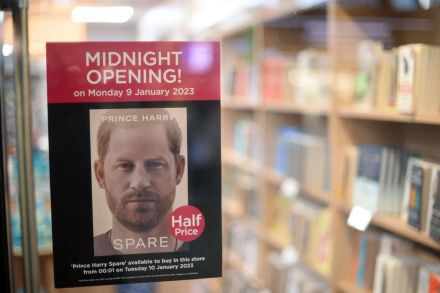
The anticipation surrounding the release of a certain memoir today obscures a bigger question about the changing face of our publishing industry. Why does every Tom, Dick and Prince Harry think they can write a book these days? Figures last week showed the number of independent bookshops in Britain reached a ten-year high in 2022, thanks to a reading frenzy fuelled by pandemic lockdowns, the mushrooming of book groups and, perhaps most of all, the incessant, unstoppable march of the celebrity (not to mention royal) author. It is good news that there are now more than 1,000 independent bookshops in Britain and Ireland, the culmination of six years of growth at a time when other retail sectors have taken a battering.

10 films about brothers at war

Sibling rivalry is nothing new, as the Old Testament’s story of Cain and Abel attests. Back in 1966, director John Huston cast hellraiser Richard Harris as fratricidal bad boy Cain in The Bible: In the Beginning. Years later, Ray Winstone played Cain’s even naughtier descendent Tubal-Cain in Darren Aronofsky’s decidedly odd Noah (2014). 2009 also saw the tale of Cain and Abel recounted more jocularly in Year One (2009), with David Cross and Paul Rudd as the feuding brothers. Of course, the Biblical duo’s argument was settled in a more lethal way than Harry and William’s ‘dog bowl brawl’.

AI is the end of writing

Unless you’ve been living under a snowdrift – with no mobile signal – for the past six months, you’ll have heard of the kerfuffle surrounding the new generations of artificial intelligence. Especially a voluble, dutiful, inexhaustible chatbot called ChatGPT, which has gone from zero users to several million in the two wild weeks since its inception. Speculation about ChatGPT ranges from the curious, to the gloomy, to the seriously angry. Some have said it is the death of Google, because it is so good at providing answers to queries – from instant recipes comprising all the ingredients you have in your fridge right now (this is brilliant) to the definition of quantum physics in French (or Latin, or Armenian, or Punjabi, or – one memorable day for me – Sumerian).

Crying shame: the weaponisation of weeping

‘Tears are not enough,’ ABC once sang defiantly - but these days, they’re more than enough for handsomely rewarded celebrities to assure us that they suffer like the rest of us, so please don’t hate them. Watching the BBC Breakfast presenter Sally Nugent - a 51-year-old woman - boo-hooing recently after watching a clip of some cute guide dogs, I sincerely wished that Lord Reith might rise from his grave and bundle the heaving hack under a cold shower. I’m just so bored by celebrity tears. Or take Frankie Bridge, the ex-Saturdays singer, an attractive young woman with an adoring husband and adorable children, who like her footballer spouse Wayne has a net worth of around £9 million.

Books to look out for in 2023

After a fair-to-middling 2022, it’s not unreasonable to hope that 2023 will see several stars burn brightly in the literary firmament. Whether what promises to be the most talked-about book of the year, Prince Harry’s Spare (out tomorrow with Bantam), is included in this number remains to be seen. On the plus side, the Prince has the estimable J.R. Moehringer as his ghostwriter; on the negative side is the fact that his every public appearance over the past few years has been so combative that we might expect little more than a 416-page exercise in score-settling. More reliable pleasures await. Pamela Anderson’s memoir Love, Pamela (Headline, January) should be a revelatory and fascinating dive beyond the usual bimbo clichés.