Spectator Life

Spectator Life

An intelligent mix of culture, style, travel, food and property, as well as where to go and what to see.

2025 has been a fantastic year for music

Norman Lebrecht, who attends concerts as frequently as falcons swoop over St John’s Wood, has declared 2025 to be a terrible year for music. We are at the mercy of political activists, he thinks, and he has a point. Zealots, particularly those who pursue pro-Palestinian causes, are relentless troublemakers for whom an undefended concert hall or opera house offers an easy target for protest. But for this concert-goer, 2025 was a wonderful year, in terms of quality and variety. So far the inventory reads 43 concerts and nine operas. Not the grandest of totals, and nowhere near a personal best, but a decent tally – with power to add, too. December is full of plums, including a first-ever Messiah.

Would you pay for your office Christmas party?

If Christmas is a time for giving then it seems the message isn’t getting through to nearly enough office managers. For the umpteenth year running, I’m getting the annual stream of resigned-sounding complaints from friends who have office-based careers. Office life has its perks, of course; unlike my mostly-bed-and-airport-based freelance life, you actually know what you’re going to be paid at the end of each month. But my decision to accept the Faustian pact of being a sole trader never feels more validated than when my pals tell me about the plan for their office Christmas party – and the demand that they pay for it themselves.

The march of the useless machines

In search of coffee on my way to work the other day, I stopped short mid-way into a branch of a popular coffee shop when I noticed the digital ordering screens. Nothing will lose my business faster than being asked to queue twice and do the work of someone else for something simple. But these ordering screens seem to be becoming ubiquitous in our towns and cities, forcing those of us who have actually come into the office, likely to sit in front of a screen, to spend our lunchtimes also staring at a screen scrolling through options, when there is an actual human being standing behind a counter a few feet away with nothing to do.

Hitler and Churchill: the artists at war

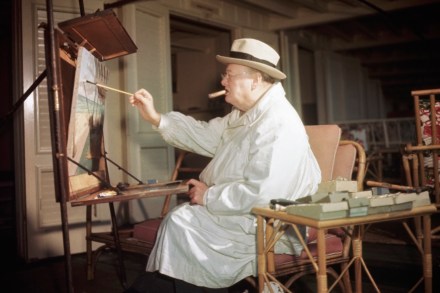
Winston Churchill and his arch enemy Adolf Hitler didn’t have a lot in common, but one passion they did share was painting: both the heroic wartime prime minister and the genocidal Nazi dictator were keen amateur artists. While auction houses are reluctant to handle or sell Hitler’s landscapes for obvious reasons, Churchill’s pictures have vastly increased in value since his death. One study of a Moroccan mosque, which the great man painted after the Casablanca conference in 1943, was acquired by actors Angelina Jolie and Brad Pitt when they married. After they divorced, Jolie sold the picture in 2021 for £7 million.

Radiohead are joyless

Last week a Radiohead-head friend offered me a ticket for the last of their run of shows at London’s O2 Arena. The poor, deluded fool had paid several hundred quid and was looking to recoup. I politely declined, saying I would rather suffer from decompression sickness. My friend was not amused – but then that’s Radiohead fans for you; liking the band is a serious business. The band is currently on a mega tour of Europe and the reviews have been mixed. Some fans complain about the relentless flashing imagery, while others have pointed out that hanging gauze curtains around a circular stage might not be the best way to feel close to your heroes. Not that they’d be missing much. I mean, you’d hardly describe Radiohead as flamboyant showmen.

So what if Nigel Farage was the school bully?

There may well be, somewhere in this nation of ours, a long-established succession of sensitive, emotionally aware 14-year-olds who can appreciate and denounce the impact of bullying. But, honestly, none of them went to my school.  It doesn’t sound like there were many of this cadre at Dulwich College half a century ago either. At least, not if we believe the recent Guardian ‘scoop’ which claims, thanks to the testimony of Nigel Farage’s fellow pupils (much of which was made public years ago), that the Reform leader was a racist, hate-fuelled youth who taunted anyone of a different faith or ethnicity.

How to save the King’s English

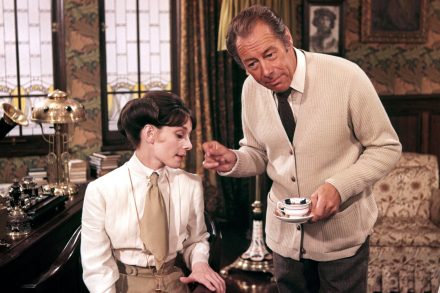
When a survey of 10,000 teachers revealed this month that Britain’s primary school pupils are increasingly relying on Americanisms (the Times front page declared ‘Trash-talking children are sounding like Americans’) I realised immediately what we needed. Rex Harrison. And if not Rex Harrison himself, then a dose of arguably his greatest role – that of Henry Higgins, the cantankerous professor of phonetics who first burst into the national consciousness in 1914 with the London premiere of Pygmalion.

Inside the mind of a modern-day heretic

When I was growing up, it was generally accepted (unless you were a football hooligan) that, however much you disagreed with someone, they were entitled to their opinion. You listened, occasionally interjecting, and then made your case – sometimes forcefully. In the end, you might agree to disagree, but you didn’t harbour any enmity. These days, the idea that a person is free to hold their own beliefs, especially if they run contrary to your own, is considered laughably old-fashioned. The aim now is to silence that individual. If necessary, you eviscerate them, figuratively – usually online. Sometimes, tragically, their views are deemed so unpalatable that they’re silenced for good.

The best American band you’ve never heard of

Earlier this month, the best rock band to have come out of America in decades played London’s Roundhouse in front of 3,000 very excited British fans, all of whom sang along to every song the Alabamans played. It was the best gig I’ve been to in years, mainly because the Red Clay Strays are musically so damned good and that smart British audience got everything they were offering. It had that rowdy, joyful atmosphere that Faces gigs did in the early 1970s. Stay with me, Spectator readers.

Robert De Niro has a serious case of Trump envy

The past few weeks has seen the pleasing spectacle of beautiful female film stars (Sydney Sweeney, Keira Knightley – even the previous Trump Derangement Syndrome sufferer Jennifer Lawrence, who once said that an orange victory would be ‘the end of the world’) refusing to toe the accepted Hollywood line on politics, be it by not kowtowing to trans activists or not accepting that everything is racist. Lawrence actually said: ‘Election after election, celebrities do not make a difference whatsoever on who people vote for’ – or as I wrote here in the spring: ‘How dim would a political party need to be to understand that not only do celeb endorsements not work, but have an actual repelling effect?

Have we learned anything in the 30 years since Leah Betts died?

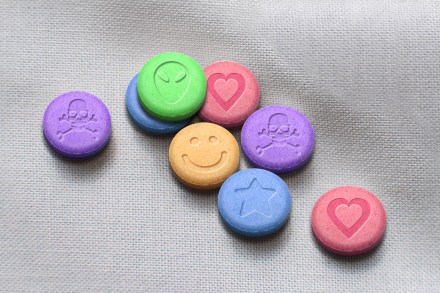
In the mid-1990s, ecstasy was a drug of the suburbs. My friends and I, all A-level students and shortly to become beneficiaries of the final years of higher education that didn’t come with tuition fees, did not fit the model of ‘drug users’ that the media, still in thrall to 1980s heroin hyperbole, fixated on. When we took ecstasy, it was in the clipped gardens of semi-detached houses that had been vacated by parents for the weekend. We popped pills in beer gardens, in rickety small-town clubs with swirly carpets and fogged mirrors or, in summer, in the sun-bleached parks of central Chester. We cared not for the risks, judging them to be inconsequentially small compared with necking a bottle of vodka or even driving without a seatbelt.

I’m the heir to Manhattan

I’m owed around $680 billion. Some 77 acres of downtown Manhattan belong to the Carter family, according to a letter written in 1894. Wall Street, Broadway and One World Trade Center – they all sit on a plot that is, by rights, mine. Yet here I am, grumbling about what ought to be in the pages of The Spectator. What went wrong? The story goes something like this. Shortly before independence, a pirate called Robert Edwards was licensed by the British to hunt down Spanish ships. He was so successful that the Crown gave him a slice of Manhattan as a reward. Edwards leased the land for 99 years to two brothers and subsequently died, lost at sea. That lease expired in 1877 and was supposed to be apportioned off to Edwards’s heirs. But that never happened.

What happens when there’s nothing left for AI to scrape?

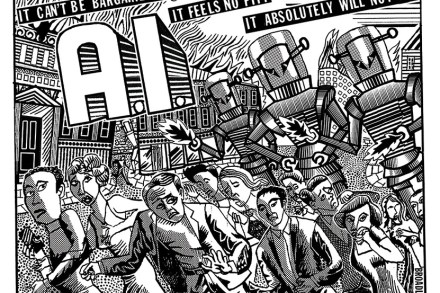
There are several class actions going on against developers of Large Language Models. Jodi Picoult, George R.R. Martin, John Grisham and several other well-known authors are among those engaging in long-drawn-out lawsuits with tech companies such as Meta (who developed the chatbot LLaMA), OpenAI (who developed ChatGPT) and Google DeepMind (who developed Gemini). These companies, without seeking permission (imagine!), used books, newspapers, websites and other text sources to generate datasets to train their machines. The lawyers for these tech companies claim it was ‘fair use’. No one actually copied and resold anything, they say; it was used to train, and only to train.  One of my novels was ‘scraped’ by Meta, and features, in a tiny way, in the lawsuit.

Was Elgar really a snob?

There’s not much point pretending to be an expert on Elgar (or so The Bluffer’s Guide to Music assures us) because everyone already thinks they are. And there’s definitely no point getting hung up on the historical accuracy (or otherwise) of Alan Bennett and Nicholas Hytner’s new film The Choral. It’s set in a West Riding mill town during World War One and the plot pivots around the local choral society’s performance of The Dream of Gerontius. This being Bennett, of course, there’s rather more to it than that, but in any case – spoiler alert, and there’ll be more – Sir Edward himself makes a cameo appearance: Simon Russell Beale, looking oddly like the late Ken Russell in a white fright-wig. So here we go again: imaginative fiction collides with historical reality.

The rise of the on-the-day party drop-out

A new drinks-party-shirking method has taken hold in British society. I call it ‘Lastminute.non’. Previously, the way of not going to someone’s party was to write a polite message of refusal at least a week in advance, giving the host or hostess ample time to absorb the sad but inevitable fact that various friends would not be able to attend – usually for copper-bottomed reasons, such as that they had other plans for the evening or would be away on holiday. The new trend seems to be to accept an invitation, and then, mere hours before, to duck out of it. This means that from breakfast time onwards throughout the day of the party, the host will receive a steady stream of apologetic messages.

Teen Vogue and the end of woke

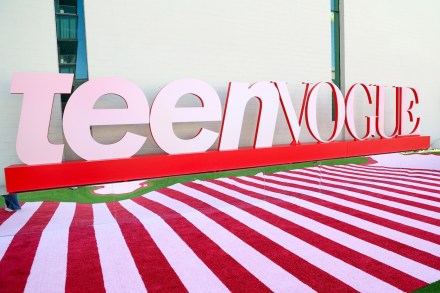
Teen Vogue published ‘9 Climate Activists of Colour You Should Know’ in January 2020. The article already seems like it belongs to a lost world, which is perhaps why Teen Vogue ceased publishing this month. It is an artefact of those frantic Metternichian years from 2020 to about the end of 2023, when Donald Trump was pulled from office and the first wave of populism was declared to have failed. There were firings, criminal investigations, vaccine mandates. ESG was enthroned in the boardroom. Little Amal, a giant frowning puppet of a refugee, made wordless progress through the globe’s capitals, as if on patrol. Superintending all this were activists such as those listed by Teen Vogue.

Am I being haunted?

Asked if he actually believed in ghosts, M.R. James, author of the greatest ghost stories in the English language, answered equivocally that he was prepared to consider anything for which there was sufficient evidence. It’s the time of year when Monty James used to invite students to his rooms at King’s College, Cambridge, and turn down the lights. The students would listen to him read the terrifyingly chilly tales that he created every winter, set in the sedate surroundings of cathedral cloisters, country houses and East Anglian seaside towns. Now that I too live in an ancient cathedral city, I also want to see a ghost.

The scourge of the cultural inheritance tax

Remember when history cost a few shillings? We wandered through romantic ruins, wondered who painted that dusty landscape above the fireplace, brushed lichen off carved stone and got shoes muddy spotting weeds in herbaceous borders. Visiting was about letting the quiet authority of age do its work; the place spoke for itself. After a financially bruising encounter with a sequence of heritage attractions in the past month, I’ve realised this experience is no longer available in Britain. Accessing our history today means a digital entrance gate, a logo, a QR code and a moral message – plus a fee that makes your eyes water. At St Paul’s Cathedral, the entry price for an adult is £26. A couple fork out £52 even before the gift shop. It cost £9 in 2007.

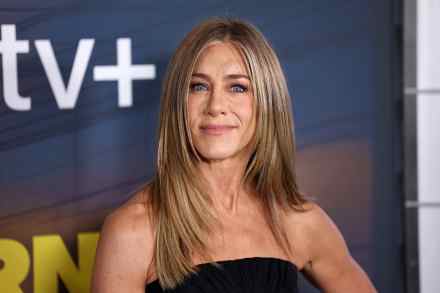
Jennifer Aniston and the allure of woo-woo

There was a time when, whenever the gossip mags wrote about Jennifer Aniston, they’d always preface her name with ‘Sad’. Sad Jen Aniston – it became one of those three-part names, like Sarah Jessica Parker or Sarah Michelle Gellar, only condescending rather than smug. For someone who was allegedly one of the most desirable women on earth, this must have been extremely annoying, recalling the line purred by the courtesan played by Marlene Dietrich in the 1932 film Shanghai Express: ‘It took more than one man to change my name to Shanghai Lily.’ It took more than one man to change Aniston’s moniker to Sad Jen: Brad Pitt, John Mayer and Justin Theroux, for starters.

Give Andrew Miller the Booker

The winner of this year’s Booker Prize will be announced tonight. Of the six shortlisted novels, Andrew Miller’s The Land in Winter looks like a good bet for the £50,000 award. It might even be a contender for best Booker novel ever. The prize’s judges have been known to make strange calls – and always bet responsibly! – but the odds on Miller are good. The story takes place against the backdrop of snowbound Britain’s ‘Big Freeze’ between December 1962 and February 1963. ‘For a mile from the Kent coast,’ Miller writes, ‘the sea had turned to pack ice.’ This was the time of Beeching, Babycham, Benny Hill, Acker Bilk, Dr Kildare, the Daily Herald, the Kray twins, London smog, shillings in the meter, the H-bomb and flying saucers.

Just how sick are Gen Z?

Anyone who has allowed themselves to spend time on TikTok – to say nothing of those who have ever looked at porn on the internet – will have an inkling of the vortex that lurks. Even for those of us who have so far resisted full-blown internet addiction, the ever growing appetite can never be satisfied for more than a second or two. Gen Z, as we know, has been more shaped by these dynamics than anyone else. This has produced well-documented traits such as extreme sensitivity and apparent inability to cope with criticism or challenge; social anxiety leading to a lack of interest in spending time with others in person, ready hostility, a failure to mature emotionally and economically, and a complete estrangement from the old go-to escapist pastime of reading printed words.

Why the authorities hate Lewes bonfire night

One of the first articles I wrote for The Spectator back in 2011 described the explosive celebration of Bonfire Night in Lewes, the ancient county town of East Sussex where I then lived. Today, such is the relentless march of purse-lipped Wokedom, it is necessary – in writing about this eccentric folk festival – to defend its very existence as well. The simple survival of ‘Bonfire’ (as it is known to Lewesians) every 5 November is in fact something of a miracle in our painfully politically correct age.

Winter is coming. Thank goodness

The leaves on the oak tree in the park are three-quarters brown and bring to mind the two-tone hair of a model in the ‘before’ picture of a dye advert. The tiny leaves on the apple tree over the garden wall look as though they have been individually removed and stuck in an air fryer to crisp up nicely before being painstakingly reattached. The sky is leaden, the colour of Sunday afternoons on the box in the 1970s, when the grey screen swarmed with Messerschmitts, Heinkels and Spits… It can only mean one thing. Winter is coming. And just in the nick of time. Because winter is wonderful – easily the best season, no matter what others may claim. How so?

The children of Hitler’s henchmen

As a historian who studies and writes about Nazi Germany, I have occasionally met the descendants of the criminals who ruled the Third Reich. I’ve always wondered how they can possibly bear the burden of carrying the genes that wrought so much evil. The answer is curious and reminds me of the saying of German philosopher Immanuel Kant that nothing straight will ever be made from the crooked timber of humanity. The Daily Telegraph carried an interview this week with one such unwitting victim: a 49-year-old psychotherapist named Henrik Lenkeit, who lives in Spain and recently discovered by chance that he is the grandson of one of the most notorious Nazis of them all: SS overlord and Holocaust architect Heinrich Himmler.

How to endure November

Grey rain slants down over the brown heather of the Lochaber hills, falling relentlessly into Loch Linnhe, and drenching the Caledonian Sleeper idling beneath my window on the platform at Fort William. November is technically still autumn, but already the long evenings of British Summer Time seem to belong to a different world. Pleasant as it is to wrap up in a coat, to feel invigorated by stepping out into a chill, or delighted by returning to the warmth within, the dying year is no cause for celebration. Christmas, the adopted pagan festival, is like Halloween – not put there because the days are joyous, but so we can thumb our nose at the downcast season. Defiance is the right attitude.

Trick or treating is vital life experience

I first got a door slammed in my face in 1987. Looking back, I can’t help but feel that moment, at the age of eight, was my first bit of training as a journalist. I wasn’t seeking a scoop back then, of course. For eight-year-olds a scoop is something you get two of with your cornet from the ice cream van. Rather I was after a Chomp bar or a bag of Bensons crisps, and all the while hoping beyond hope that I (and my accompanying gaggle of friends) wouldn’t be palmed off with a satsuma. Such was the freewheeling Friedman-esque world of trick or treating – a custom that has dwindled into what, these days, is considered by many parents to be either rude, dangerous, immoral, paganistic or a combination of all four. The ritual clings on in diminished form.

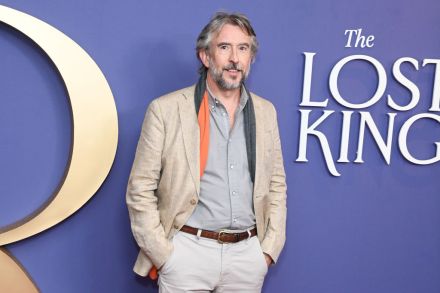
The sanctimony of Steve Coogan

About 20 years ago, the actor and comedian Steve Coogan did a tour called, with typical self-deprecation, Steve Coogan as Alan Partridge and Other Less Successful Characters. I saw the show and it was, as you’d expect from Coogan, amusing and cleverly performed. Yet it ended strangely; Coogan sang a self-lacerating song called ‘Everyone’s a Bit of a Cunt Sometimes’. It was oddly bitter and angry, but clearly Coogan stood by its sentiments, because he attempted to reprise the number in a dream sequence from his restaurant-review comedy The Trip several years later. The song, given full production values, was, perhaps wisely, deleted from the programme’s final cut. (Although you can still find it on YouTube.

Daylight savings is anti-feminist

It is, officially, ‘cosy’ season. My social-media feeds have suddenly become very homely and wholesome: full of pictures of chunky knitwear, crisp leaves, soft blankets, flickering candles and crackling fires. I want to embrace this romanticisation of winter, I really do. I want to enjoy this slower routine of fluffy pyjamas, Christmas movies and aesthetically pleasing pumpkin lattes. I want to say that I love coming home from work, drawing the curtains and snuggling on the sofa with a glass of red and a paperback. I want to laugh that it doesn’t matter if I don’t see direct sunlight for the next four months because I can wear cashmere socks or buy new fragranced bubble bath. The problem is that I have a toddler.

Films aren’t art

My late son took film seriously, a taste I was delighted to see him develop, and regret not being able to see him grow out of. When he was little we watched the Pixar films, and they gave us great joy. The first 20 minutes of Up and the last 20 of Toy Story 3 have been called the only perfect bits of cinema, a formulation with a high quotient of truth. After our son’s death, my wife commented that she had never before seen me cry. I had always wondered if she’d spotted my tears at the end of Coco, or those I shed during Guardians of the Galaxy 3, during a Sicilian family holiday, but I don’t cry easily. We watched Coco, which is about remembering the dead, shortly after my mother’s funeral. In Sicily, I wonder if it was a reaction to being uncomplicatedly happy.