Spectator Life

Spectator Life

An intelligent mix of culture, style, travel, food and property, as well as where to go and what to see.

Bring back the big family

As a species we are richer than we’ve ever been before. We live longer. We have more food to eat than is good for us. We have abundance in all things. And yet we are no happier than we were. In fact, many of us are downright unhappy. Among our woes is an epidemic of loneliness. Some 8.4 million of us are now living alone in Britain, and more than 3.8 million report being chronically lonely. We lock up more people in our prisons than ever and we can see for ourselves the signs of friction in our society, one which is clearly not entirely at peace with itself. So somewhere we have gone wrong. And I think I know where. It’s our families. They are simply too small. The average number of children born per woman in England and Wales has fallen to 1.

The greatest writer you’ve never heard of

The recent commemorations surrounding the 150th anniversary of John Buchan’s birth – not least in The Spectator – have stirred up literary memories for me. Not of Buchan or his work particularly, I was a little too old for the glaring coincidences of The Thirty-Nine Steps when I read it in my twenties, but of a lifelong Buchan-admirer I knew slightly, the late author Peter Vansittart. Unlike many, Vansittart, a historical novelist among other things, took Buchan seriously, extolling ‘the romantic… the novelist, the adventurer… tolerant and humane.’ Buchan’s The Three Hostages he read every year, he said, as a kind of ritual: ‘curtains drawn, telephone unhooked, the fireside, the whisky, the old delight.

I’m beginning to question our gun laws

Whenever Europeans feel inadequate in relation to America, and have a yearning to console themselves, there is one subject that always comes up: the Second Amendment of the US Constitution, i.e. gun law. Yes, the Yanks may be richer than us. Yes, a dockworker in Delaware can earn more than a British cabinet minister. Yes, America has a dynamic economy and the world’s most powerful military, with a huge lead in science, tech and finance. But remember: ‘in Europe we don’t have mass shootings.’ ‘British children aren’t taught how to dodge bullets.’ ‘You may have Silicon Valley, but we don’t have lunatics wandering around Tesco with AR-15s.’ This feels even truer right now, as America reels from a horrific assassination, by a shooter on a roof with a rifle.

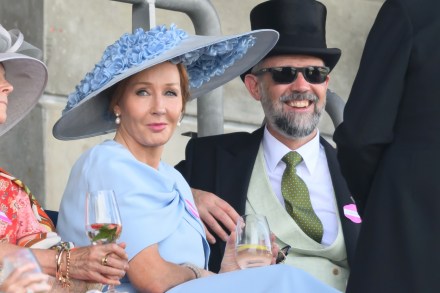
J.K. Rowling is a phenomenal plotter

As I write, a copy of The Hallmarked Man sits beside me. Not being on holiday, spending the morning reading a new detective novel would seem as louche as a pre-brunch martini. Not being David Niven, I’m making the book wait until at least after lunch. J.K. Rowling’s new book, under her pen name of Robert Galbraith, comes in at around 900 pages. I expect to rip through it smartly. I am not an ideal reader of detective fiction, nor the thrillers and mysteries that have a whodunit at the core of their tightly planned plots. My ability to figure out the murderer – even my interest in trying – is vestigial.

David Bowie’s roguish plans for a Spectator musical

David Bowie wrote a musical. Well, nearly. A cache of notes found in his New York apartment after his death indicates that he was planning a new theatre project in the final months of his life. The archive includes the phrase ‘18th cent musical’ among a collection of Post-it stickers filled with ideas and motifs. Creating a musical would have satisfied a lifelong ambition. ‘Right at the very beginning,’ he told the BBC in 2002, ‘I really wanted to write for the theatre. I could have just written for theatre in my living room but I think the intent was to have a pretty big audience.’ He seems to have chosen Spectator as the show’s title.

Britain’s problem? We’re too nice

Studying our national character and current malaise has convinced me that the root cause of Britain’s problems is that we are too nice. Compared with our nearest European neighbours, let alone with most other countries in the world, being British automatically confers a series of characteristics not generally shared elsewhere. For a start we are polite. We do not shove ahead of other people in queues like the Italians, nor do we scream obscenities at random strangers in the street as they do in New York, and buying a cup of coffee is not regarded as a personal insult by cafés staff, as it is in Paris, for example.

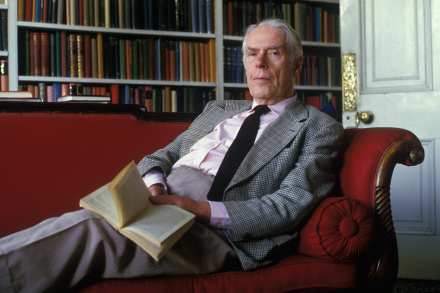
Why A Dance to the Music of Time has stood the test of time

Fifty years ago today, a literary masterwork of the 20th century reached its conclusion with the publication of Hearing Secret Harmonies, the final volume in Anthony Powell’s 12-novel sequence A Dance to the Music of Time. Inspired by the painting of the same name by the 17th-century French artist Nicolas Poussin (which you, like Powell, can see at the Wallace Collection), the series began with A Question of Upbringing, published a quarter of a century earlier in 1951. This introduced us to the English narrator of the whole endeavour, Nicholas Jenkins (uncoincidentally he shares the Christian name of the painter, albeit with an Anglicised aitch), who attends a boarding school – unnamed but modelled on Powell’s time at Eton.

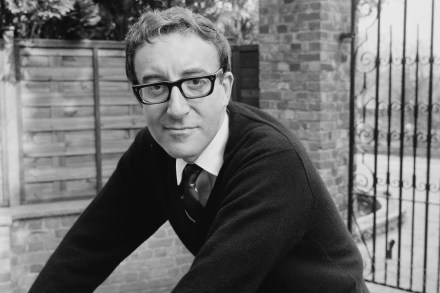
Peter Sellers and the comic tragedy of The Producers

It’s October 1994 and I’m rooting around in a garage in a non-descript LA neighbourhood, a few blocks from 20th Century Fox. The garage is piled high with clothes, cameras, audio tapes, reels of film and, in pride of place, a Nazi storm trooper helmet. This was the last resting place for a mountain of paraphernalia belonging to comedy legend Peter Sellers, who was born 100 years ago today. The house was owned by Sellers’s widow, Lynne Frederick, who had been found dead there just six months earlier. Now her mother lived there alone and was the keeper of the trove. After several G&Ts together, she agreed to allow me access. I was in LA filming a series of interviews for The Peter Sellers Story, a documentary for the BBC’s Arena.

The Stuarts were our worst monarchs

This year marked the 400th anniversary of the death of King James I of England (James VI in Scotland), the first monarch of the generally disastrous Stuart dynasty. By no means forgotten by historians, the anniversary was marked by no fewer than three heavyweight biographies, and headlines devoted to the King in the Times and the Telegraph. James’s son Charles I lost both a civil war and his head; his grandson Charles II presided over the plague, the Great Fire of London, and saw his fleet towed away by the Dutch; his second grandson James II lost the throne entirely and fled into exile. But in spite of this dismal record, of all the Stuart sovereigns, the first James was easily the worst and most disgusting monarch ever to have occupied the throne.

Why September feels like the true new year

Gardens are past their best, large spiders are appearing indoors, chill mornings herald coming mists, the days are not so long, and adverts have replaced barbecues with ‘back to school’ offers. Elderberries have turned a purple that fades into black, and soon will drop and stain the ground. The daily commute remains relatively quiet for another few days but summer, and the summer holidays, are coming to an end. For many of us, September feels more like a new year than January, long after our days of school and study. The cold days of January are much like each other; but at the end of August there is a palpable sense of change. Excitement and melancholy marry. Which one dominates probably depends on how happy you were at school or university.

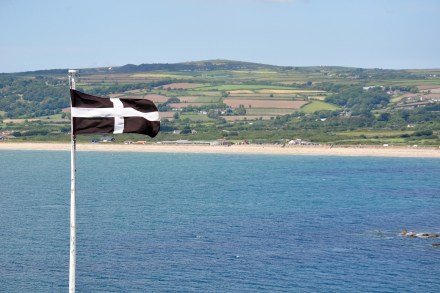
No England flags, please – we’re Cornish

There’s been a lot of talk recently about flags, especially English ones. The start of the Women's Rugby World Cup – a good excuse to bring out the bunting – has coincided with a renewed interest in proclaiming national identity. Some might see it as an outpouring of patriotic pride, while others view it as a far-right provocation. But whether it's ‘Operation Raise the Colours’ or roundabouts painted red and white (although some bright spark in Birmingham managed to paint a Danish flag by mistake), if the sight of a cross of St George sends you into a panic, I have a suggestion: head to Cornwall. If my recent experience is anything to go by, you’ll be lucky to see a single English flag.

In defence of voice notes

From emails to ‘breaking news’ alerts to texts, our phones come under a bombardment of notifications these days. But there’s one kind that always brightens my day – the one that tells me that a friend has sent me a voice note. This, however, seems to make me unusual. ‘I don't want to hear your mini-podcast,’ complains Emma Brockes in the Guardian; voice notes are ‘self-indulgent’, sniffs Anniki Sommerville in the i Paper; and the Independent's Lucie Tobin denounces them as ‘rude’ and ‘invasive’. In the latest issue of The Spectator, Mary Killen advises a correspondent who’s had enough of them to update their WhatsApp profile ‘to clarify their tastes… “please do not leave voice notes”’.

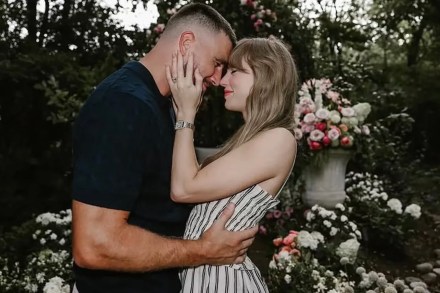
Taylor Swift is saving America

Elon Musk and Taylor Swift fans rejoice! America’s birthrate is saved! News of the engagement between America’s reigning sweetheart, Taylor Swift, and jock, Travis Kelce, can mean only one thing: a millennial marriage boom is upon us. And with it, natalists will hope, an impending baby boom. I’m no Swiftie. Nor am I one of those men who’s organised his entire political identity around hating the singer. Still, I can’t deny that I feel uplifted by the jubilation erupting across the US and beyond this week. Why? Because Taylor and Travis are taking a stand against pessimism. America’s permanently heartbroken oldest daughter has escaped her fate (for now). These are people taking the leap! Committing to something! How exciting is that?

Leave 4chan alone

The British government is going to war with 4chan, the controversial internet message board that has been around for more than 20 years. It’s surprising that it has taken them so long. 4chan users have committed murders, propagated hoaxes and shaped much of the online right. Since the Online Safety Act came into effect, no one at the site has responded to Ofcom’s statutory information requests or explained how 4chan will ‘comply with … safety duties about illegal content’. Officials want 4chan to get better at removing illegal content and to introduce an age-verification system. Under the new law, tech owners are legally responsible for protecting users from each other. 4chan will be fined £20,000 a day until the nastiest place on the internet can sort itself out.

Where is the British Houellebecq?

The British literary scene has no one like the French novelist Michel Houellebecq. We are worse off for it. His novels combine a startling number of blowjobs with beautiful writing about God, religion and love. The British publishing industry would never allow someone who is white, male, very heterosexual, sides with Christianity against Islam, writes about the male condition and, perhaps most controversially, takes down modern feminism. Perhaps they think Brits just aren’t good at dealing with abstracts. It’s true that the Anglo-Saxon mind prefers to stick with everyday practicalities; we struggle with the existential truths in the likes of Atomised.

The rats that predicted our future

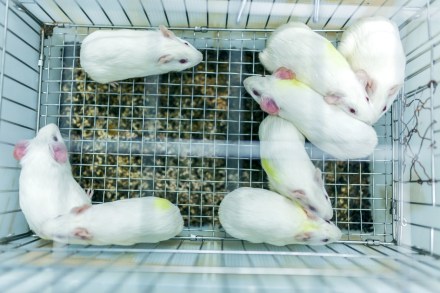
Next month is the 30th anniversary of the death of the American ethologist John B. Calhoun. In the early 1960s, he created an series of experiments to discover the causes of social dysfunction. His most famous work involved a so-called ‘rat utopia’ in which rodents were provided comfortable living quarters with unlimited food, water and warmth, and protection from predators. In this cosy environment, the only bar to ratty heaven was that space was limited. Nonetheless, the happy rats bred prodigiously until their quarters became uncomfortably overcrowded. This lack of space meant they were unable to control with whom or how often they came into social contact.

The gaudy glory of Elizabeth Hurley

I’m not awfully keen on family members of famous people putting themselves in the picture; nepo babies are the worst, the equivalent of Japanese knotweed when it comes to the landscape of modern popular culture. But pushy parents are annoying too: Stanley Johnson and the wittering senior Whitehall jumping on the bandwagon when they should be putting their feet up, or the phenomenon of the creepy ‘momager’ touting out her daughter for the delectation of the paying public. But when I saw a photo on Instagram of Liz Hurley, 60, with her mum Angela, 85 – both in leopard-print swimwear from Hurley Junior’s extremely successful beachwear range – I felt absolute glee.

ChatGPT is a narcissist

In Isaac Asimov’s 1956 short story ‘The Last Question’, characters ask a series of questions to the supercomputer Multivac about whether entropy – the universe’s tendency towards disorder, and the second law of thermodynamics – can be reversed. Multivac repeatedly responds ‘INSUFFICIENT DATA FOR MEANINGFUL ANSWER’, until the ending, which I won’t spoil here. If I were to put the same question into ChatGPT, it would be a very different story. I’d likely get some fawning pleasantries, some ooh-ing and aah-ing about how deep and wise my enquiry is, before a long, neatly bulleted summary, rounded off by a request for further engagement (‘Let me know if you want to go deeper into any of these cases!’).

What’s the point of Notting Hill Carnival?

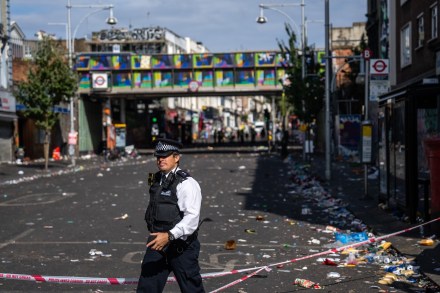
Like the fearful townsfolk of Dodge City awaiting the arrival of outlaws, the residents of Notting Hill have been chalking off the hours. Many have resorted to drilling wooden boards over their windows and doors. Some have hired private security and left the city for the weekend. It’s Carnival once again, that annual ritual of comradeship which often degrades into violence, passed off as a community triumph. Yes, it’s time for the traditional bank holiday fib. If only those most directly affected could speak freely. The police officers, for instance, who must wear coat-hanger smiles, even as they see drugs dealt openly by aggressive young men. These smiling officers sometimes find themselves spat at, punched and headbutted. But they must continue grinning.

Confessions of a student radical

Recently, I was on my way to buy the Saturday papers when my ears pricked up. In the distance, I could hear the unmistakable sound of a protest: whistles, slogans, klaxons. I strained to make out what people were shouting, but, given the grim images recently beamed from Gaza, odds were, it was about the Israel-Hamas conflict. What had promised to be a typical day in suburbia was about to get more interesting. I imagined the ranks of police retreating under a barrage of missiles. The keffiyeh-wearing protesters surging forward, battering the coppers with their homemade placards. As the din grew louder, I wondered if I’d make it to the shops before the street battles began. And then they came into view.

Why are the young turning to God?

There are opinion polls that are so striking they change history. Many Britons will remember the YouGov poll in September 2014. It was the first poll in the Scottish independence referendum campaign to show the Yes side ahead by 51 per cent to 49. That poll shocked SW1, panicked the Cameron government, and led to ‘The Vow’ – the last-minute promise of further devolution if Scotland stayed in the UK. And lo, ‘No’ scraped home, and Britain staggered on. Then there are polls that go beyond striking into ‘whoah, can that possibly be true?’ territory. Polls so unexpected they feel world-changing. The same company, YouGov, has produced just such a poll. It shows that religious belief among 18 to 24-year-olds has tripled in just four years, from 16 per cent to 45 per cent.

The pensioner Intifada

To anyone brought up in the seventies and eighties, the fact that so many Palestine Action protestors are themselves in their seventies and eighties is the least surprising fact of the year. These people were the original ‘Boring Old Hippies,’ those dreary teachers and lecturers whom so many of us had to suffer the first time round. Since age confers a harmlessness on everyone, it was rather sweet to see them again, enjoying one last stab at rebellion before marching off to that Great Student Demo in the Sky. And yet when I was growing up, these ‘rebels’ were the very people we rebelled against. Musically, we couldn’t bear their Pink Floyd, their early Genesis and those heavy slabs of prog rock inspired by the Hobbit-y tosh of Tolkien.

The vapidity of New York’s intellectuals

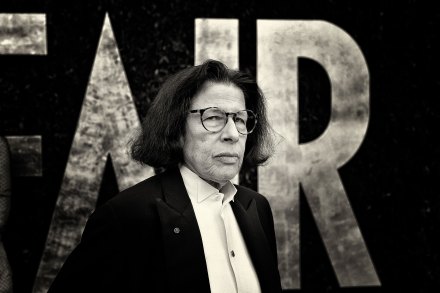
Fran Lebowitz, the apparently acid-tongued commentator on Manhattan manners, will slip through British customs next month to dazzle the easily dazzled. Though to judge by the interview she granted an earnest lady in the Observer, other verbs leap to mind. From this distance it looks suspiciously like a fog of self-regard. According to the profiler, Megan Nolan, Lebowitz is ‘a poster girl for a certain kind of crusty but erudite and essentially good-natured New York archetype, intellectual and judgmental, and walking the line between rudeness and frankness with engaging grace’. Cor! Is this a private ritual between consenting adults, or can we all join in?

Do you have a Facebook stalker?

We’ve all seen appalling stories of people, usually – but not exclusively – women, being stalked by a spurned suitor, and how this can have terrifying and sometimes life-threatening sequelae. However, the popularity of social media has brought about the advent of the less dangerous but mighty irritating social media stalker – or ‘smalker’, as I like to call them. The smalker is usually a spurned friend who has been chewing her lips with fury since you removed her from your Facebook ‘friends’ list. Sometimes they only requested to be your ‘friend’ in the first place so they could lurk on your page, twisting their face into a sucking-a-wasp grimace: an upside-down smile with a wrinkled nose.

The politics of nudity

A recent, rather beautiful piece published here told of how the writer, Druin Burch, initially somewhat alarmed by the variety of naked bodies he unexpectedly encounters while swimming in the Med (‘I wouldn’t mind if it was only young women,’ he says to his wife) comes to appreciate the loveable imperfection of the human form. I can’t say I’m with him on this. I totally understand fit women wanting to take their tops off in public as an expression of sheer high spirits; as a teenager, I used occasionally to do it. But humanity generally? Put it away, puh-leeze! As a resident of the fair city of Brighton and Hove, I’ve got skin in the game, metaphorically.

Am I cursed when it comes to my pets?

You could say my unfortunate track record with pets began in the cradle. At the time of my birth my Hungarian parents had a dachshund named Herr Doktor (because of the serious expression he always wore), or Doki for short. He was very put out by my arrival, as I received much of the attention previously afforded to him, and because my fastidious mother wouldn’t allow him into the nursery. So he upped sticks and moved in with the family next door. But as Doki was unfamiliar with the terrain there, one day he darted on to their driveway at the wrong moment and was run over and killed. While I obviously wasn’t to blame for Doki’s sad demise, I did play a role in it. And in time the incident seemed to fit into a pattern in my life.

‘Mankeeping’ is the secret of a successful marriage

Don’t women have a bum deal? Not only do we have to bear children and make our way on the harsh plains where second-wave feminism and rampant neoliberal professionalism meet, but apparently now we must also perform ‘emotional labour’ for our husbands. Sorry: husbands and partners. This emotional labour has been christened ‘mankeeping’, the latest feminist buzzword. Dreamed up by Angelica Puzio Ferrara, a psychologist at Stanford, it describes the heavy lifting that women in heterosexual relationships do to keep ‘the family harmony alive’.  And it appears to have struck a chord. ‘Mankeeping: finally, a word to describe the emotional labour of my 38-year marriage,’ declared a recent Telegraph headline.

My shopping list for the apocalypse

So far this summer we’ve had the blackouts in Portugal and Spain, that rather astonishing Heathrow fire, yet more sabre-rattling between Russia and America and the former head of the Army warning that Britain must be ready for the ‘realistic possibility’ of war within five years. Then there was an old general on the radio telling civilians to prepare themselves for the struggle both mentally and practically – by stocking up on foodstuffs, loo roll, an FM radio and cash. Normally I don’t do what the radio tells me, but he got me thinking. And it turned out my wife – who is an actuary and is to risk what the Wicked Witch of the West is to tap water – had been pondering something similar. So we’ve begun ‘prepping’.

I’ve been bitten by the ancestry bug

Although a historian, until very recently I have been curiously incurious about researching my own slightly peculiar family. How was it, for example, that my grandfather, originally a penniless Welsh peasant, sired a dynasty that in three generations has spread to three continents and includes a squillionaire who founded a multinational club business with 75 branches in 42 cities around the world? And on the dark side of family secrets, why did my father marry a dying woman just released from Holloway jail after killing her own child? What diseases did my immediate ancestors suffer from, and are they likely to kill me too?