Spectator Life

Spectator Life

An intelligent mix of culture, style, travel, food and property, as well as where to go and what to see.

How to solve the birth rate crisis: lower standards

There comes a moment, a few weeks after you give birth, when your baby outgrows their Lilliputian clothes and you’re obliged to replace ‘newborn’ with ‘0-3 months’. At which point, usually while still absolutely steaming with hormones, you find yourself sitting on their bedroom floor, staring at these teeny garments, trying to decide if you’re going to keep them (have another baby) or give them to the charity shop (start leaving leaflets about vasectomy around the house).  Historically, this was a major decision for you, but one which had almost no relevance to anyone else.

Take Back Power is no Robin Hood movement 

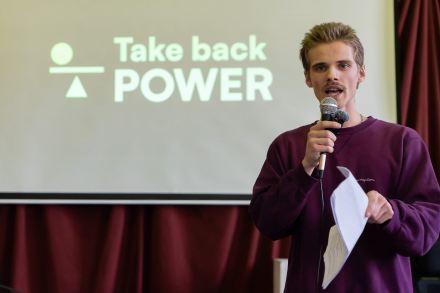
The biggest rebel in my year at school (a pretty raggedy state comprehensive near Chester) was a guy called Paul. He had very long hair, wore a trench coat and was regularly told to ‘have a bath’ by the more boorish elements of the playground. Paul railed against the system in the way that only teenagers who have experienced nothing of life but have read at least half of The Catcher in the Rye and The Outsider can. The more militaristic tranche of our teachers also hated him for the permanent odour of weed that followed him around and the crude drawing of Che Guevara on his rucksack. He was one of my best friends. Paul cut his hair and stopped reading Noam Chomsky in his mid-twenties.

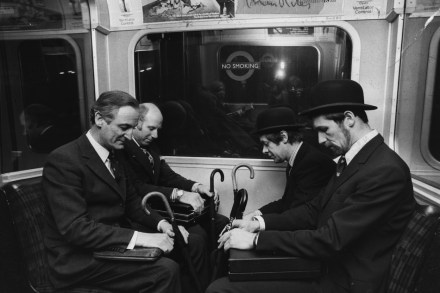
Should trains have child-free carriages?

Amid the distractions of Donald Trump and Davos, France’s state-owned railway operator decided last week was the opportune time to slip out some news. Welcome to ‘Optimum’, the new and exclusive area of the train where kids are not welcome. Business people and misopedists travelling to and from Paris on the weekday high-speed TGV services will no longer have to tolerate the under-12s. The operator, SNCF, justified its ban on children by stating it would enhance the travelling experience of those who cherish ‘exclusive comfort in a fully dedicated first-class carriage, with seating arrangements designed to preserve your privacy, for a calm journey, ideal for working or relaxing’.

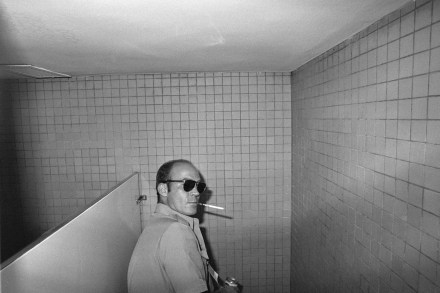
Was Hunter S. Thompson murdered?

Gonzo journalist Hunter S. Thompson is best known for his 1972 narcotics-fuelled fantasia Fear and Loathing in Las Vegas. In some ways, his is a story of life imitating art. Thompson lived large, once saying: ‘I hate to advocate drugs, alcohol, violence, or insanity to anyone, but they’ve always worked for me.’ He killed himself in 2005, at the age of 67, fearing that health problems would ruin what was left of his life. His funeral was a grand, set-piece affair, costing $3 million and paid for by Johnny Depp with the swag from his Pirates of the Caribbean movies; it ended with Thompson’s remains being shot out of a cannon to Bob Dylan’s ‘Mr Tambourine Man’. He went as he lived, in a blaze of glory. Except members of Thompson’s family are now telling a different story.

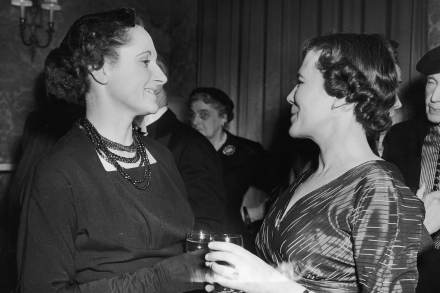
In praise of Elizabeth Taylor (no, not that one)

On 15 November 1975, Elizabeth Taylor died. No, not that Elizabeth Taylor – she had many more years, and many more husbands, to get through. I mean Elizabeth Taylor the author, whose 12 novels and four volumes of short stories so piercingly and hilariously chronicle the quietly desperate lives of middle-class women in and around the sleepy towns and villages of the Thames Valley in the middle part of the last century. Kingsley Amis thought her ‘one of the best English novelists born in this century’. Anita Brookner considered her ‘the Jane Austen of the 1950s and 60s’. Despite such accolades, Taylor never quite achieved the status she deserved. She was never a bestseller; she never won a prize. In fact, a faintly patronising air bedevilled her throughout her writing life.

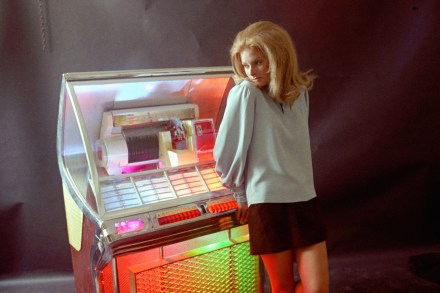
The joy of the jukebox

One of the peachiest moments in a life of unrepentant tavern-dwelling was my introduction to P.J. Clarke’s on Third Avenue. Here was a bar from central casting – Billy Wilder mocked it up, after a fashion, in The Lost Weekend – and the dollop of cream on this peach was the jukebox. P.J. Clarke’s was described to me by one regular as ‘a midtown saloon for the tasselled-loafer set’. It remains the glory of Manhattan, which will never run short of places to hang one’s hat. And its jukebox had plenty of hits, but not the obvious ones. Americans love their jukeys. One of the most generous belonged to Sterch’s, in Oak Park, Chicago, where a couple of bucks bought a dozen plays. Chicago is a famous music town, so you didn’t struggle to find something decent.

In defence of Robbie Williams

I write this piece while listening to an album that I suspect will be widely regarded as one of the best of the year. That it is by Robbie Williams may come as a surprise to many. After all, Williams has often been mocked as a cruise ship entertainer who got lucky, a Butlins redcoat who has somehow become Britain’s most successful solo pop star. If his new album, Britpop, goes to number one in the charts – and he deliberately delayed its release from last autumn so that it could avoid being trampled by Taylor Swift’s The Life of a Showgirl – it will be his sixteenth chart-topper, thereby setting a record that even the Beatles were unable to equal.

Does it really matter if Grok undresses us all?

I’ve been fat and I’ve been thin; I’ve been pretty and I’ve been plain – ugly, even. Throughout this, my self-esteem has stayed generally constant, as if you’re going to base it on something as ephemeral as physical beauty, you’re going to run out of road very quickly indeed. This objective attitude to my own appearance reminds me of a funny story from the infant days of the internet. Imagine my surprise one morning to receive a message from an unknown recipient informing me that they had film of me masturbating to online pornography which they would make available to a wider audience should I fail to pay a ransom. (Don’t judge – I was young-ish and frisky and it was all so new – I soon grew out of it.

Britain’s fatal good manners

One of the guilty pleasures of the patriotic British travel writer is encountering yet another country, city or island that we invaded, occupied, colonised or just menaced into submission with a couple of gunboats. For example, did you know we casually took out Uruguay back in the day? It’s true – we demolished the walls of Montevideo in 1807, during the Battle of the River Plate, as I discovered on my first visit there last year. I’ve had the same experience all over. The Maldives. Kefalonia. The Colombian coast (we were so punchy and piratical half the Colombian nobility decamped 200 km inland). Also, Menorca, the Faroes, Haiti, Iceland, Bolivia (our economic colonisation is the reason women in La Paz wear bowler hats).

The great rail ticket swindle

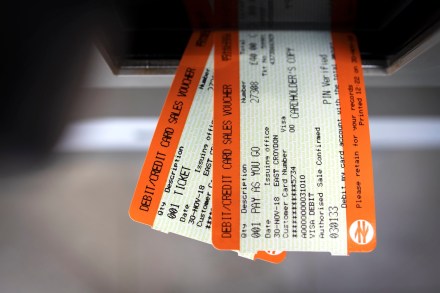
Normally rail ticket prices are raised in line with the Retail Prices Index (RPI) plus 3 per cent. This January, unusually, they didn’t increase. But that is not how it will feel if you fancy a short break in Edinburgh. In that case, you may well find yourself paying double what you used to pay. Say, on the spur of the moment, you fancy a short trip to the Scottish capital from London this weekend, but you are not quite sure which train you can leave on and when you want to come back. In the past, you could have bought a Supersaver Return, which allowed you to take any off-peak train there and back.

Long live the joint bank account!

My husband and I share a bank account, and I don’t care who knows it. This detail lumps us in with many Boomer couples who have typically shacked up together financially – for better or worse, richer or poorer – for the duration of their married life. As (geriatric) millennials, our joint bank account therefore renders us something of an anachronism, but we’re used to this by now. We are outdated and unfashionable in our approach to many things, including (but not limited to) childcare, housework and car management.

Amol Rajan never quite suited the Today programme

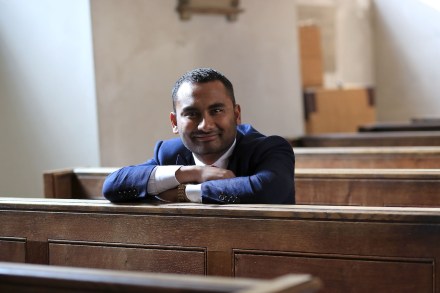
The fairground attendant has stepped off the carousel. Amol Rajan, with all his honours on, is standing down from Radio 4’s Today programme, the breakfast show that sends us out into the world feeling a little bit braver, to set up his own company. What took him so long? Many listeners may think he established that business many moons ago, for Rajan Enterprises (Me Me Me) is not exactly a secret in metropolitan media world. In the past two decades the Cambridge-educated south Londoner has plucked some of the juiciest plums in the journalists’ orchard. Editor of the Independent, BBC media editor, and for the past five years a Today host. Presenting University Challenge on BBC2 is a mere bagatelle to pay a few bills.

Why I’m keeping my Christmas decorations up until February

It feels like the 57th day of January. Last week the coldest temperature of the winter so far (-12.5°C) was recorded about 20 miles west of my house. And according to every newspaper and social media feed I have scanned since new year, I should be purging my body of toxins by eating ‘plant-based meals’, abstaining from alcohol or otherwise giving up any semblance of comfort and joy. But there is another way. This may be ‘the worst time of the year… the very dead of winter’, as T.S. Eliot described the season in ‘Journey of the Magi’, but we are still in Christmastide – right up until 2 February, or Candlemas.   Twelfth Night used to be about fun and misrule, incorporating elements of the Romans’ midwinter festival Saturnalia.

Why was this stranger in my friend’s house?

I was walking my dog when a WhatsApp message and photo came through from Simon, an old school friend of more than 50 years. His kids had sent him a picture of a man who had turned up unexpectedly at the family home. The accompanying message said simply: ‘Your friend Andrew from Epsom College is here?’ Simon, who was out shopping, didn’t recognise him. Did I? No, I replied, but he looks familiar. But then again he was white, rotund and greying and thus a 99 per cent DNA match for one of our social circle: i.e. a well-fed 60-something with a 20-something handicap. The more I studied the photo the more worried I got. For Simon and his family. Who on earth was this mysterious visitor standing in the middle of his kitchen? What did he want?

I’ll take a country walk over the gym any day

Despite having eaten my own body weight in chocolate over Christmas – and vowing to do better in the new year – my inner Augustus Gloop means I still feel duty-bound to finish what’s left. Self-control when it comes to eating has never been one of my strengths. My New Year’s resolution about a healthier diet will have to wait. In addition to buying the usual tubs of festive favourites – Heroes, Quality Street and Roses – I got a ton of confectionery as Christmas presents. I reason that it would be ungrateful not to enjoy it. My New Year’s goals are perennial: eat less and exercise more. I fail every time. I mean, I do a reasonable amount of exercise anyway: at least 10,000 steps a day with the dog, yoga every evening and a martial arts class once a week.

Northern pride is becoming a parody

The Ship of Fools lies rigged and masted, awaiting departure for Cloud Cuckoo Land. But lo! here come a few stragglers. They’re wearing cloth caps and clogs, and carrying buckets of coal. By ’eck, they must be northerners! Clamber aboard, noble savages, we are ready to cast off. Steerage, purser. You can’t beat a good old stereotype, and when it comes to stereotypes it appears you can’t whack those northern students at the University of York who feel, boo hoo, they are surrounded by intruders from the south. ‘We’re being overrun’ is the gist of it, so they have revived the university’s Northern Society to assert their independence. Nor are they alone.

David Bowie and why we love working-class pop stars

The only time I ever saw David Bowie live was at a ropey festival in an old airfield near Stratford-upon-Avon in the latter half of the 1990s. Frankly, I thought he was pretty awful. It was the peak of Britpop, electronica and trip hop were in the ascendency and the campsite and smaller stages that weekend were fervent with fast beats, French crops and chemical ingestion. Bowie, to my late-teenage eyes and ears, seemed like an embarrassing dad, attempting to remain ‘with it’ via his recent drum and bass-infused song ‘Little Wonder’. I sloped off before the end to go and watch Goldie instead. I’ve listened to much more Bowie since then, and although I maintain that at least 50 per cent of his vast output is distinctly average, the best bits are transcendent.

The imposters who pretend to be heroes

‘Every man thinks meanly of himself for not having been a soldier, or not having been at sea,’ wrote James Boswell of Samuel Johnson in his biography of his friend in 1778. Evidently Jonathan Carley did. The retired teacher was found guilty on Monday of impersonating a rear admiral without permission. The 65-year-old was fined £500 by Llandudno magistrates’ court, and ordered to pay £85 prosecution costs and a £200 surcharge. Carley was arrested last November, days after he had appeared at the town’s Remembrance service in naval uniform with a dozen medals pinned to his chest. He told police that he had carried out the deception to have a sense of ‘belonging and affirmation’.

The death of personality

My late mother was a kind woman – who I treated badly in adolescence, as teenage girls are often inclined to do – so the few times she said nasty things to me stick in my mind. In fact, I can only think of one: when I was 11, she told me that I had ‘no personality’. I remember sitting in my bedroom, staring at a poster of David Bowie, my eyes practically crossed in crossness. What did she mean, ‘no personality’? I was a right weirdo, already well under way with the process of changing myself from a wholesome working-class Bristolian schoolgirl into a total freak, thanks to growing immersion in the works of the Velvet Underground and Oscar Wilde.

Life is more complex than we like to admit

In this strange new world we inhabit, where many people appear to struggle with nuance, the oversimplification of complex problems means that any shades of grey are ignored. This informal logical fallacy, in which every situation is presented as having only two possible options when, in reality, more exist, is now standard in politics and across mainstream and social media. However, rather than being seen as a sign of intellectual weakness, taking entrenched positions is considered perfectly reasonable. Think 7 October was depraved and insane? You’re Zionist sympathising scum. Appalled by images of children in Gaza made homeless by the conflict, struggling to lift a spoon to their mouth because they’re shaking so violently from the cold? You’re a pathetic Hamas apologist.

Janus and the back and forth of the new year

The Roman god Janus is about to play his annual trick on us. 31 December, the last day of the year, will be followed by 1 January, the first day of the year. We’ve ended up right back where we started. Frustrating, but at the same time reassuring. Janus, after whom the new month is named, was always pictured with two faces, one looking forward, the other back. He is the god of both beginnings and endings. The notion of returning to 1 January has always bothered me slightly, as though all that effort last year was for naught. Indeed the fact that each day of the year is a ‘copy’ of all the equivalent days in previous years seems troublesome too.

‘Doomer jazz’ and the strange afterlife of Taxi Driver

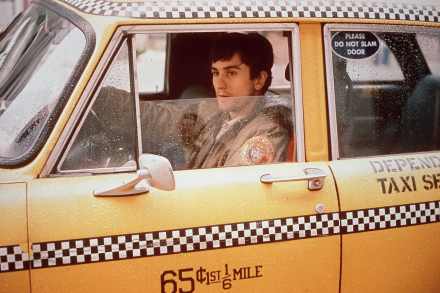
Bernard Herrmann died 50 years ago this month. He only just lived long enough to complete the suite of instrumental jazz that’s now regarded as not only his finest work across many decades as a movie composer, but one of the greatest celluloid soundtracks of all time. There are very few movies which you can honestly state simply wouldn’t have got out of the traps were it not for the soundtrack. Taxi Driver is one of them. There’s more than enough available film critic geekery about Martin Scorsese and Robert De Niro’s finest hour to plough through already. But the curious afterlife of the Taxi Driver soundtrack was something I had no idea about until a recent Spotify sleuthing session. You’ve heard the main siren call theme of the movie.

I walked out of my son’s nativity play

To walk out of a public performance before the end – be it the theatre, a concert or a lecture – is not the done thing. It’s considered an antisocial act that disrupts the performance and thus other people’s pleasure. To walk out provokes tuts of disapproval and scowls of indignation. And yet while it’s something we all disapprove of (at least in theory) it’s also something we all secretly long to do. Who hasn’t sat and squirmed in their seat at some tedious piece of theatre and wondered: how much more of this must I suffer? And who hasn’t been subjected to one of those long, sycophantic interviews with some self-adoring author flogging their latest book and not prayed for the courage to make a run for it?

The march of lazy children’s books

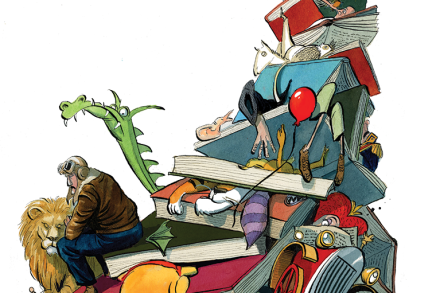
There’s a myth that lots of us fall for/ ‘Kids’ books are so easy to write’/ And you can see why we might think so/ As so many of them are shite. Little poem by me there. As the dad of a six-year-old and a three-year-old, I have spent perhaps 100 hours reading some wonderful books, and hearing gorgeous books read to me. But parents everywhere will know what I mean when I say: Christ there’s a lot of dross out there. Why are so many children’s books so bad? Children learn through books. If they read lazy poetry, they’ll become lazy writers and lazy thinkers While looking for kids’ books to name and shame for this piece, I realised that some of the very worst offenders are now in a charity shop or the bin.

Step forward the undeserving: it’s honours season again

Once Christmas Day’s out of the way and we’re stuck in that no man’s land between one year and the next – known, tweely, as ‘Twixmas’ or, if you’re posh, the ‘interregnum’ – one thing guaranteed to make the front pages is the announcement of the New Year’s Honours List. News of the worthy – and not-so-worthy – recipients will be released, and we’ll get to see who’s been elevated to the Lords, knighted or handed one of the lesser gongs. Among the very deserving recipients will be those who make you think: hang on a minute – how did that happen? When news broke that former prime minister Tony Blair was to be made a Knight Companion, more than a million people signed a petition calling for the honour to be blocked.

Shakespeare isn’t difficult

Chloe Zhao may have co-written and directed Hamnet (a film about William Shakespeare’s son), but she claims that she couldn’t understand Shakespeare’s words and had to rely on the actor Paul Mescal to help her. You might have thought that Zhao, who spent her sixth form years at Brighton College (where, one hopes, she at least sniffed at some form of Shakespeare), could have bestirred herself to read one of the many editions with glossaries, or even to bone up on the CliffsNotes, but no. Instead, she is simply contributing to the enduring, frustrating idea that reading Shakespeare is ‘difficult’, as if it were on a par with analytical philosophy or Judith Butler wanging on about hegemonies.

I’m a Jew who loves Christmas

On more than one occasion, I have found myself being lectured by non-Jews (always men) about why I am incorrect in my Jewishness. Judaism is a religion and I can’t be Jewish if I am an atheist, some say. The ones that accept the atheism then feel compelled to categorise me as a ‘cultural’ Jew whose identity is defined by rituals and customs passed down over the centuries. And then there’s the stern mystification about the relatively minor role that Hanukkah plays in the spiritual calendar for Jews. It is hard for some to realise that while it involves lights and wintry nights, Hanukkah is not remotely the equivalent of Christmas. Nothing in Judaism is.

Can Karl Loxley make classical music cool?

I’m backstage with classical crossover singer Karl Loxley and his pianist Tim Abel at Stratford-Upon-Avon’s Rother Street Arts House. The sound and lighting team are setting up in the empty theatre for what will be one of the final shows in Loxley’s ‘Songs of Christmas’ tour. Since 2015, when Loxley sung Puccini’s ‘Nessun Dorma’ on the TV talent show The Voice, he’s been on a mission to make classical music cool. I’m here to see exactly what that involves – and if he’s succeeding.  Loxley is charming, expansive and – at least when I interview him, a couple of hours before showtime – relaxed. Appearing on The Voice, he tells me, was ‘a very nerve-wracking experience. I don’t think I would have the nerve to do it now.

The economic purge of the young white male

I can remember when I first realised that something strange was happening to white men in Hollywood. It was around 2014, and my younger colleagues in LA – often British writers, directors and actors who had moved to California to ‘make it’ – began reporting, anecdotally, that their work was disappearing. By that I don’t mean the normal vicissitudes of a volatile creative industry. I don’t mean actors ‘resting’ or scripts getting stuck in ‘development hell’. I mean that all jobs, and job opportunities, were abruptly vanishing. Applications went nowhere, CVs were binned, hopeful meetings were suddenly cancelled.