Latest from Coffee House

Latest from Coffee House

All the latest analysis of the day's news and stories

The secret to dressing exceptionally well

As I scribble these words on a train to London, I’m wearing a lightweight Italian wool suit, a shirt from Gieves & Hawkes, a silk spotty tie and a pair of Church’s suede brogues. You might mistake me for a prosperous Neapolitan gentleman of a certain age. But in fact, I’m a charity-shop dandy – my outfit came to less than £60. That’s less than a pair of new trainers for my teenage daughter. I’m particularly pleased with the shoes, which I picked up locally for £30. A new pair would set you back £700. If you’re not too grand to buy secondhand, it’s actually far easier and cheaper for men to dress smartly than to be slovenly. I learned this important fact in my early twenties.

dressing

Even Andy Burnham doesn’t know what Andy Burnham stands for

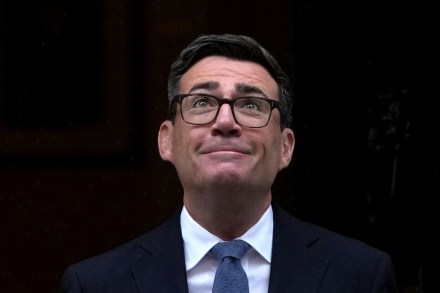
The British constitution is an admirably flexible thing, so I would not claim that Andy Burnham’s leadership campaign, and the coverage thereof, is unconstitutional, but it is certainly unseemly. Why did a BBC helicopter follow his train from Manchester to London (which arrived, of course, late) as if he were Lenin heading for the Finland Station? And why was he allowed to preempt his result with a mass selfie with about 200 of his supporting MPs in Westminster Hall? He is merely a new Member of Parliament, until he isn’t. Turning the place into his stage set is a way of intimidating possible challengers. If he is challenged, he will surely still become leader, but the point of a challenge is to force him to say what he means to do.

andy burnham

Venezuela’s earthquake is the cruelest blow

Venezuela thought its luck was changing. Then the earthquakes stuck. For a country that's economy has long been in tatters, parts of Venezuela are now in ruins. The huge 7.2 of and 7.5 magnitude quakes have devastated pockets of Venezuela, with parts of the capital, Caracas, and the northern coast dotted with mounds of rubble. Rodriguez could also use this tragedy to argue an election is not what the country needs It's a cruel twist of fate the South American nation that was finally beginning to pull itself out of dismal abyss it had found itself in. Many Venezuelans, little by little, were allowing them to be more optimistic this year. Nicolás Maduro was out of the picture following his capture in January. Hundreds of political prisoners had been released.

The highs and lows of life as an artist

Provence “Painting is a stupid job. Do something useful and train to be a nurse,” commented a man beneath a column I wrote last month. Although well used to the vitriol leveled at artists from some quarters, I found this particularly annoying. I was a general nurse from 1981 to 1985, after which I completed psychiatric training and spent five years working in acute psychiatry in the East End of Glasgow. That was followed by a year as a district nurse and seven more as a practice sister. I nursed because my lower-middle-class background, with its discouragements and lack of contacts, didn’t equip me even to consider somehow making a living from the two things I’d loved most since I was a child: books and art.

Americano Presents

‘Almost all of it is suspicious’: who is really behind the attempts to kill Trump?

In praise of Peter Murrell

When people ask me what my politics are, I have to explain that I support a dwindling faction you might call the Terry-Thomas wing of the Conservative party. This faction dominated the party in the 1980s – the kind of spivvy garagiste who, no sooner was your back turned, would knock down a row of medieval cottages to open a Hyundai dealership. There were probably a few too many of them in the 1980s. Today we need them back. Shakespeare depicts this archetype very well, possibly because (as a Brummie entrepreneur) he was one himself. He understood that you need a few chancers around to make things happen. Where are they now? I raise this point because, while we know that Britain is overly regulated, the root cause may be that we are also far too moralistic and judgmental.

peter murrell
burnham

Can Burnham resist the siren call of the left?

Power, when it is gained and lost, is transferred in stages: the actual, the visual and the constitutional. The latter took place on June 23 when the prime minister presumptive sent a letter to Antonia Romeo, the Cabinet Secretary, requesting that she commence access talks with his team. Keir Starmer had already given permission for them to proceed, but the propriety and ethics team in the Cabinet Office had told Romeo she could not initiate proceedings. Andy Burnham had to ask first. To all intents and purposes, he is already the vessel from which power flows. At the same time, it became clear that James Purnell, the former Blairite cabinet minister, will lead the transition team and stay on to become chief of staff in 10 Downing Street.

donald trump

Is Trump’s quest for peace doomed?

J.D. Vance jokingly compared himself to Richard Nixon yesterday. "Young senator, vice president, writes some bestselling books, is hated by the media... kinda sounds like J.D. Vance," he said at the Richard Nixon Library and Museum in Yorba Linda, California. "I’ve always liked Richard Nixon." At the same time, 8,000 miles away, in the Strait of Hormuz, Iranian forces struck another ship, further undermining what critics have called "the Vance deal" – the "Memorandum of Understanding" between Tehran and Washington. And that suggests, at a foreign-policy level, the Nixon-Vance parallel is more apt than the 50th Vice President realizes. Of course, Nixon was Commander-in-Chief and Vance is not. And the Vietnam War is very different to America’s current fight with Iran.

Andy Burnham’s worryingly vague vision for Britain

Once again the question occurs: “Why do they want it?” Keir Starmer held a very important role in the legal profession before entering parliament, but for some reason he desperately wanted to be even more political. As soon as he became an MP it was plain that he was so keen to get the top job that he was even willing to go through the Jeremy Corbyn period – immiserating his reputation and presumably himself by spending years having to pretend that Corbyn was a suitable candidate for prime minister. Serving in Corbyn’s shadow cabinet was not something that any decent person would do – leading some of us to conclude either that Starmer was not a decent person or that he had such a surfeit of ambition it didn’t matter because it was a means to an end.

South Africa

South Africa now has its answer to ICE

A force of 10,000 inspectors is being recruited to weed out foreigners: door-to-door across the nation, they will check mines, factories and shops, rounding up those without papers for deportation. Oh, and the target will be black people! Trump madness? Marine le Pen? No, this is South Africa and a project launched by President Cyril Ramaphosa to expel millions of black migrants from across the rest of Africa who have jumped the border or overstayed their visa.  It's Africa's answer to ICE, though you won't find many people protesting: quite the opposite.  Government and the police are desperate to demonstrate they're on top of the problem; to assuage the rising rage of native South Africans, and try to stop them taking matters into their own hands.

Bibi

Will Bibi go into exile?

In January 2027, Benjamin Netanyahu could leave office for the final time. In the middle of a corruption trial at home and facing arrest in many countries due to an International Criminal Court warrant, Netanyahu can’t spend his retirement traveling the world or relaxing at home.  Some have speculated that Bibi, who’s grown to enjoy the finer things in life, might follow in the footsteps of the two Yairs – his younger son Yair and former Brazilian president Jair Bolsonaro – and head off to a luxurious exile in Florida, sheltered by the Trump administration from his worries at home and abroad.  Of course, this all depends on whether he loses the election.

Can Israel fend off Hezbollah without alienating America?

As the 60-day period of negotiations stipulated by the Memorandum of Understanding between Iran and the US gets under way, the issue of Lebanon is fast emerging as a central bone of contention. It is also revealing significant differences in the stances of America and Israel.   Israel has sought throughout to detach its battle with the Iranian proxy group Hezbollah in Lebanon from the negotiations – and from the larger effort to settle the conflict between the US and Iran. The logic is as follows: Hezbollah intends to continue its war against Israel.

israel lebanon

Trump’s ‘greatest’ rally ever

Freedom 250’s “Great American State Fair” opened on the National Mall yesterday – just not with a concert, as initially planned. Instead, Donald Trump gave a half-hour speech, telling the crowd, “We have the greatest people on earth,” as fighter jets and B-2 bombers flew overhead. There was a lot of talk of “the greatest” from the President’s warm-up acts. The greatest firework celebration, the greatest state fair, the greatest kickoff, the greatest president, the greatest country. Speaker after speaker drummed that word into the heads of the few thousand-strong crowd. Trump danced his way off stage and the crowd stood up cheering Musicians sang about pride in the country and a commitment to God. With the Marine Corps band present on stage from 7 p.m.

What Iran could learn from Denmark

Iran is looking increasingly Danish, which sounds like a strange thing to say. What could Iran (a theological dictatorship which massacred 30,000 of its citizens earlier this year) and Denmark (a social democracy which is one of the world’s most generous foreign aid donors) possibly have in common? Iran has chosen a great short-term policy in asserting its control over Hormuz, but a mediocre long-term one But Iran’s theologians like to keep themselves half a millennium back from contemporary mores.

The Spectator’s role in the birth of America

The Spectator was there at the founding of America. George Washington had six copies of the original, 18th-century Spectator at his Mount Vernon estate and read them often. He shared with Joseph Addison, The Spectator’s co-publisher, an interest in how to educate ideal citizens: men and women with wit and grit. Young Washington read The Spectator in the hope of bettering himself, too. Both of his older half-brothers had been educated in England and he wished also for the manners and polish of an English gentleman. For the pioneering, self-improving men who would go on to create an independent America, the 18th-century Spectator was both an education and a guide. “I bought it, read it over and over, and was much delighted with it,” wrote Benjamin Franklin in his Autobiography.

Why Jack Schlossberg lost

Jack Schlossberg was, until yesterday, a high-profile candidate in New York’s 12th congressional district who seemingly had everything you might need for a modern political career: a winning smile, a Kennedy connection, an engaging social media presence. The only thing he was missing? Actual policies on which to predicate his campaign. He came third in yesterday's primary, after securing just over 10 percent of the vote. “Jack didn’t have a message other than, ‘It’s time to shake up politics,’” Democratic consultant Chris Coffey told the New York Times.

jack schlossberg

Northern Ireland has been the biggest loser from Brexit

In the decade since the vote to leave the European Union, arguably no issue has consumed more energy, column inches, political capital and careers than how to solve the problem of Northern Ireland. It was on that narrow, jagged border between North and South that the substantive skirmishes took place between the UK and EU on what their future relationship would look like. While Michel Barnier and Lord Frost arguing the toss over the finer points of agri-food regulation may lack the luster of the Battle of the Boyne or the romantic connotations of 1916, it was no less significant a moment in Northern Ireland’s history.

northern ireland

Britain is the weak man of Europe on border control

Britain and France have rewritten the "one in, one out" migrant deal nearly a year after it came into effect. The treaty, described as "groundbreaking" by both countries last summer, has struggled to stem the numbers of migrants heading from France to England in small boats. It soon became apparent that the deal contained a loophole that enabled a handful of deported migrants to return to Britain in the back of a lorry. Britain's Home Secretary Shabana Mahmood has agreed with her French counterpart, Laurent Nuñez, to close this loophole by tweaking the treaty to stipulate that its terms apply to any returning migrant regardless of whether they enter a second time by boat or by vehicle.

The rise and rise of America’s radical left

Mayor Zohran Mamdani endorsed three fellow socialists in the New York City Democratic Congressional primaries and all three won last night. Democratic incumbent Dan Goldman lost to Brad Lander, who was a member of the Democratic Socialists of America until 2023. DSA Member Claire Valdez won nomination for a Brooklyn House seat. But the eyepopper is the victory of Darializa Avila Chevalier, a 32-year-old DSA member and PhD graduate student, in East Harlem and the Bronx. She defeated Adriano Espaillat, the chair of the Congressional Hispanic Caucus, and will easily become the most radical House member since Vito Marcantonio of the American Labor Party represented the same area in the 1940s.

The unique charisma of Pope Francis

The anniversary of Pope Leo XIV’s election last month generated lots of thoughtful but inconclusive analysis from mainstream Catholic commentators – and, on social media, far more heat than light. Traditionalists in particular have turned on each other. Some think Leo is quietly reversing the mistakes of his predecessor, or at least planning to do so. Others describe him as "Francis II" or "Bergoglio in nicer vestments." I believe that the former position is closer to the truth.

pope francis

The real threat to democracy after Brexit

Ten years after the Brexit referendum, its long-term impact on British politics is evident. Not so evident is why this is the case. Every general election sees comparable debates. So too did the 1975 referendum on membership called by Harold Wilson. But none of these other elections has ever produced such an extreme and long-lasting reaction, or a concerted attempt to use both informal and formal methods – constitutional and legal – to block the result.

brexit

Ahmed al-Sharaa can be a great man of history

Trump’s Middle East tour in May last year felt like the end of an era. Here was the former al-Qaeda commander, Ahmed al-Sharaa, now leader of Syria, shaking hands with a vulgar American Commander-in-Chief, who resembles the caricature of a US president we might find in an al-Qaeda cartoon. Yet the War on Terror’s two leading men, the President and the Jihadi, having ended the last act at each other’s throats, have returned to the stage arm-in-arm to take a bow. Al-Sharaa has trimmed his beard, put on a suit, replaced Bashar al-Assad as president and begun welcoming western investors to help him rebuild his country after a decade and a half of civil war. Trump has dropped the showy religiosity and moral posturing of his predecessors.

Has America really lost to Iran?

Vice President J.D. Vance is returning from the Swiss Alps having concluded the opening phase of the Iran talks with a view to achieving a peace deal. Are critics right to claim that the whole war has been a humiliation for America? Freddy speaks to Stanford professor Victor Davis Hanson about MAGA foreign policy, the midterms, why oil is so important to the American voter and the right-wing realignment in Latin America. Learn how to earn yield on gold, paid in gold, at Monetary-Metals.

Has America really lost to Iran?

What I saw at the Montréal shooting

We were running late to check out of our hotel because my two young girls had demanded to use the pool one last time. I indulged them. The squeals of laughter were worth it. Afterward, we hustled to pack, race out the room and at 11:40 a.m. the elevator doors opened in the lobby of the Hilton in Côte-des-Neiges district of Montreal. Our path was blocked by staff. There was, one hotel worker informed us, a shooter. I sent my wife and children back up to our room and, with the dubious conviction of a professional journalist, went to investigate. My family and I had come to Montréal for a joyful Jewish wedding Through the glass of the hotel entrance, I saw a male officer lying in the street and female cop with her pistol drawn scanning the area.

montréal montreal

The very personal tragedy of Keir Starmer

Now that the end has come for Keir Starmer, history can get to work, analyzing and anatomizing his failures. The central question for posterity: how did a politician win a huge majority yet end up powerless less than two years later? A lot of the political obituaries will rightly talk about a lack of politics. Starmer just wasn’t interested enough in party politics or, especially, party politicians. His Labour colleagues were not just strangers but strange to him. The tearooms were foreign territory, so their residents were never inclined to do his bidding. How did a politician win a huge majority yet end up powerless less than two years later? There will also be a widespread view that he lacked ideas.

Why Japanese students aren’t woke

One of the joys of living in Japan is the lack of wokeness. It is not that it doesn’t exist – there is a Tokyo Pride, the odd Gaza protest, and gender equality is increasingly discussed – it’s simply that the concept doesn’t quite translate. Like the strikes that only take place at the weekend so as not to inconvenience customers, woke protesters here are tiny in number, generally polite and devoid of the threatening aggressiveness of the West. And diversity isn’t really a thing. Maybe that’s another reason tourist numbers have exploded. You can get away from all that here…  The young in particular seem charmingly oblivious to the culture wars, and universities are generally safe spaces for the woke-phobic.

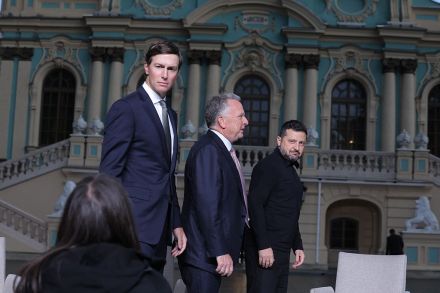
Is Zelensky about to attack Belarus?

There has long been a worry that Russian escalation or miscalculation might see the Ukraine war widen into a broader European one. But what if it’s Kyiv, not Moscow, that starts this process? The flashpoint is Belarus. Minsk’s dictatorial leader, Alexander Lukashenko, is beholden to Vladimir Putin, but not a helpless vassal. On the one hand, he has refused to join Putin’s war directly, saying that he won’t allow Belarusians to become "mincemeat." On the other, he has been willing to let Russian troops use facilities in his country, and fly drones and missiles through his airspace.

How a Trump-loving lawyer nicknamed ‘The Tiger’ became Colombia’s president

Abelardo de la Espriella was never going to be a typical Colombian presidential candidate. Nicknamed "The Tiger," the defense lawyer who has represented a string of controversial clients is also a businessman and owns a number of clothing and alcohol brands, a Miami restaurant and even music albums. De la Espriella campaigned on a radical and robust security agenda, vowing to rid Colombia of its violent and criminal woes. “I will wipe out narco-terrorism..I will unleash the wrath of God upon them as never seen before,” de la Espriella said “I will wipe out narco-terrorism, those I have sentenced and declared military targets, like cockroaches, like rats. I will unleash the wrath of God upon them as never seen before,” de la Espriella said during his campaign.

The small Dutch town that said no to more asylum seekers

A political crisis is unfolding in the small Dutch town of Maassluis, a former fishing village which sits between Rotterdam’s vast port and industrial complex, the glasshouses of the agribusiness powerhouse known as the Westland, and the historic fishing town of Vlaardingen. Despite what some may claim, it is not a far-right insurgency, just a group of local politicians responding to concerns widely shared by their electorate The natives of Maassluis were once nicknamed "snails." They acquired the name in the 1770s, when the parliament of the Dutch Republic decreed that Psalms should be sung at a faster tempo in church.

dutch
hans-georg maassen

‘Make Germany normal again’: an interview with Germany’s exiled spy chief

Hans-Georg Maassen is an unlikely dissident. In his trademark three-piece suits and small glasses, he looks more like a law professor. Indeed, that is what he studied, earning a doctorate on the legal status of asylum seekers in international law. This bourgeois exterior is the perfect cover for a man who was Germany’s top spy, charged with protecting the country from the far-right and Islamists. But now he is no longer under the quiet protection of the German state; he is its victim. He is under investigation from the agency he once led, the Federal Office for the Protection of the Constitution (BfV). Like George Smiley, Maassen is a remnant of an older and more powerful country, soldiering on in spite of the decline, trying to preserve what he can.

Will Vance regret being the face of the Iran deal?

After a week of international agonizing, it looks as if the first round of the latest peace talks between America and Iran will not begin today – at least, not formally. The Memorandum of Understanding has been signed – electronically by Iran and by Donald Trump’s hand in Versailles on Wednesday. But J.D. Vance’s big Switzerland trip, originally planned to kick off the talks, has been put on hold as the Lebanon issue reared its troublesome head overnight. Late yesterday afternoon, Hezbollah fired several salvoes of rockets at IDF targets, killing four soldiers. Israel responded with a wave of airstrikes in Southern Lebanon, killing 18 and wounding 33, according to the Lebanese ministry of health.