Daniel DePetris

Daniel DePetris is a fellow at Defense Priorities, a syndicated foreign affairs columnist at the Chicago Tribune and a foreign affairs writer for Newsweek.

The contempt Trump feels for his Nato allies is mutual

The war in Iran has revealed plenty about America’s ability to inflict damage on its enemies, Tehran’s capacity to resist pressure and Washington’s broader tendency to get itself stuck in the Middle East – a region several US presidents planned to extricate from. The conflict has been paused since 7 April due to a ceasefire that Trump extended earlier in the week. But it is nonetheless revealing a gradual systemic shift in the so-called international order that has been bubbling beneath the surface for years. The movable object is none other than the transatlantic alliance which, through Nato, has bound the United States and most of Europe into a single security construct.

Why Trump stepped back from the brink

At 5 p.m. Washington time, speculation was rife that a deal between the United States and Iran was in the works. Pakistan’s Prime Minister, Shehbaz Sharif pleaded for President Trump to extend his 8 p.m. Tuesday deadline – before he destroyed every bridge and power plant in Iran – by another two weeks in order to give diplomacy more time to work. Yet the New York Times reported that Iranian officials cut off direct contact with their American counterparts. And the White House wasn’t offering definitive answers about whether Trump was leaning toward escalation or a ceasefire.

Europe is finally standing up to Trump

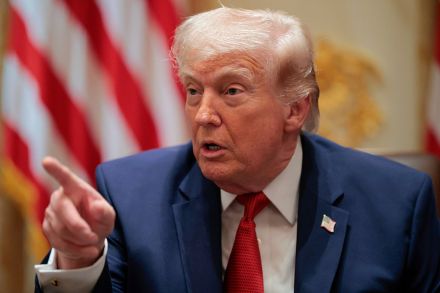
The longer the war in Iran churns on, the more hot-tempered and unhinged President Trump becomes. On Tuesday, Trump was at it again, lambasting Washington’s European allies on Truth Social for sitting on their hands and refusing to lift a finger to reopen the Strait of Hormuz, the Persian Gulf chokepoint through which around 20 per cent of the world’s crude oil passes. Calling out the United Kingdom specifically, Trump went on to scold the allies much as a parent would tell a lazy 28 year-old to get out of the house. ‘You’ll have to start learning how to fight for yourself, the USA won’t be there to help you anymore, just like you weren’t there for us,’ Trump wrote.

The US and Israel launch a major attack on Iran

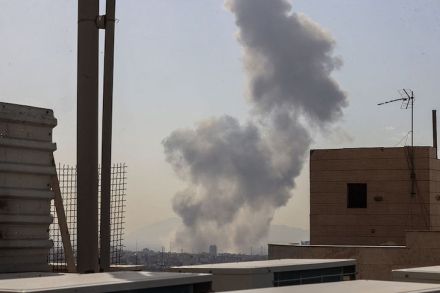
Donald Trump has urged Iranians to 'take over' their government after the United States and Israel struck targets across the country. A multitude of Iranian military and government targets were hit by missiles in what is turning out to be a joint operation far more comprehensive than the 12-day air campaign last June. Back then, Trump’s objectives were limited: degrade Iran’s three largest nuclear facilities. This time, Trump’s eyes are on a bigger prize – a full-scale decapitation of the Iranian leadership and a degradation of Tehran’s military power.

US troops finally leave Syria

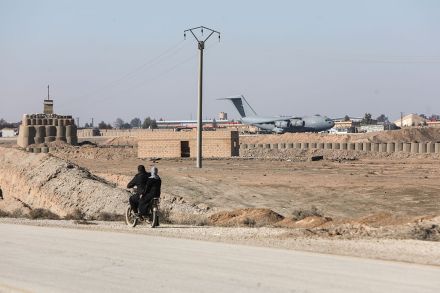
In December 2018, to the shock of pretty much everybody in the US national security establishment at the time, President Donald Trump publicly ordered the withdrawal of all US troops from Syria. The announcement caused a panic within the Defense Department, State Department and National Security Council, whose officials teamed up to dissuade Trump from going through with it. A similar story unfolded ten months later, in October 2019. Again, the bureaucracy pushed back; in October 2019, the House went so far as to pass a resolution opposing a US withdrawal, with senior Republican lawmakers signing onto the measure. Fast-forward more than six years later, and the US troop withdrawal Trump floated about during his first term is finally coming to fruition in his second.

Syria

Iran is out of good options

Over the last week, the USS Abraham Lincoln aircraft carrier, additional F-15 fighter planes and naval vessels carrying sea-launched cruise missiles have been making their way to the Middle East in what can only be described as a bid by President Trump to squeeze Iran into submission. In case anybody doubted this is what Trump was after, he took to Truth Social early in the morning to send the Iranians a message: give me what I want or face bombing the likes of which you’ve never seen. "A massive Armada is heading to Iran. It is moving quickly, with great power, enthusiasm, and purpose,” Trump wrote. "Hopefully Iran will quickly “Come to the Table” and negotiate a fair and equitable deal – NO NUCLEAR WEAPONS – one that is good for all parties.”What deal is Trump referring to?

Iran

Will Venezuela change?

The US military operation to track down, capture and fly Venezuelan dictator Nicolas Maduro back to the United States for prosecution on drug trafficking charges went flawlessly. It was well-coordinated, meticulously planned and executed to a tee. Nearly two days after Maduro and his wife, Cilia Flores, were taken into U.S. custody, details of the snatch-and-grab mission are beginning to percolate into the US media. It involved a cyberattack against Caracas’s electricity system, precision bombing against several Venezuelan airfields and ports, a low-flying helicopter assault on Maduro’s hideout and a CIA deployment that was operating in the country since August.

Trump

Fact-checking the Venezuela war hawks 

As the US Navy remains primed for action in the Southern Caribbean, Venezuelan dictator Nicolás Maduro prepares for what could be an American attempt to remove him. And as President Trump alternates between calling Maduro on the phone and authorizing air strikes, a bevy of misinformation is being peddled by public figures with an agenda. There are so many claims and counter-claims on the air waves right now that it’s difficult to separate fact from fiction. A sizable chunk of this disinformation is of course being sold by Maduro himself, a man who has learned from his predecessor and mentor, the late Hugo Chávez, that it’s easier to blame the United States for all of your problems than own up to your own catastrophic policy errors.

The Israel-Lebanon ceasefire is in danger of shattering

It's been almost a year since Israel and Hezbollah, the Lebanese militia that arguably held more power in Lebanon than the government itself, signed a ceasefire to end a ferocious two-month long war. The deal couldn’t have come at a better time; thousands of Israeli air and artillery strikes had pulverised southern Lebanon, Hezbollah’s traditional base of operations, leading to a displacement crisis and killing close to 4,000 Lebanese. Whole swaths of northern Israel had been vacated due to Hezbollah missile attacks, forcing the Israeli government of prime minister Benjamin Netanyahu to spend money on tens of thousands of civilians bunking in hotel rooms. But the agreement is wearing thin. The ceasefire is really a ceasefire in name only. Will it hold?

Trump has a new European target in his crosshairs

From our UK edition

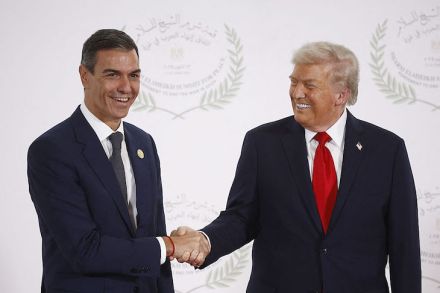
There was a time not so long ago when Germany was US president Donald Trump’s favourite punching bag in Europe. During his first term in office, Trump had a penchant for biting Berlin’s ear off, blasting its political leadership as grossly incompetent, blaming the country for destroying itself by accepting a million refugees and wagging his finger at the Germans’ unwillingness to take more responsibility for their own defence. Trump hasn’t forgotten what happened in the lead-up to the Nato summit over the summer Yet those days are over. Trump, now in his second term, has a new European target in his crosshairs: Spain.

Trump pitches Gaza peace plan

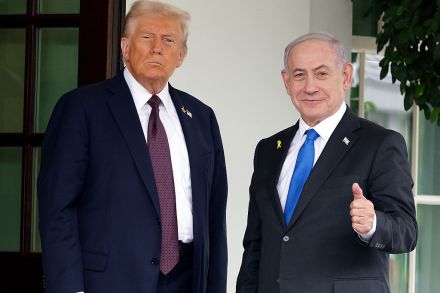
Donald Trump is perhaps one of the world’s most gifted salesman. But as he was speaking at the White House with Israeli Prime Minister Benjamin Netanyahu today, even he had trouble selling his 20-point peace plan to end the war in Gaza. This wasn’t for a lack of trying. “Today is an historic day for peace,” Trump told the assembled press corps. Calling today "a beautiful day, potentially one of the great days ever in civilization,” Trump went on to outline in broad strokes his diplomatic initiative, which aimed to thread the needle between Netanyahu’s vocal objections to a Palestinian state and the Arab world’s demand that any plan put forth provide the Palestinians in Gaza and the West Bank with an opportunity to take control of their own future.

Donald Trump

What Israel’s Qatar strike on Hamas reveals

From our UK edition

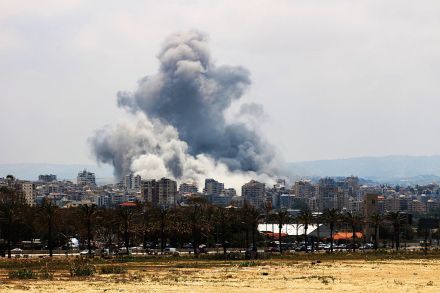
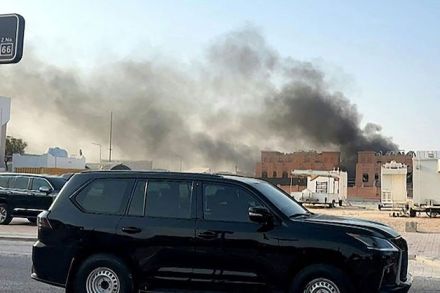
'We are ready to accept a deal (with Hamas) that would end this war, based on the cabinet decision,' Israeli foreign minister Gideon Sa’ar said this morning. Yet whatever diplomatic momentum existed evaporated into thin air hours later. In an unprecedented Israeli operation in Qatar, Israel targeted the very Hamas officials they were supposed to be negotiating with. In the blink of an eye, smoke was rising from a building in the Qatari capital, Doha. Hamas’s chief negotiator, Khalil al-Hayya, was targeted in the attack. Israel said the raid was in response to this week's Jerusalem bus attack and the atrocities of October 7.

What does Trump really want in Gaza?

UK Prime Minister Keir Starmer, French President Emmanuel Macron and the rest of Europe’s leaders are clear about what they want to see in Gaza: an immediate ceasefire, the release of the 50 remaining hostages in Hamas’s grasp, an acceleration of aid supplies and an end to a nearly two-year war that has turned the coastal enclave into a real-life version of Dante’s Inferno. Macron went one step further several days ago, announcing that France will recognize an independent Palestinian state at next month’s UN General Assembly meetings in New York. Starmer, under pressure from Labour backbenchers, is moving in a similar, albeit more conditional, direction.

Trump is turning ‘Biden’s war’ into his own

From our UK edition

It’s official: President Trump is tired of Russian President Vladimir Putin’s bloody shenanigans. While he won’t admit it, it’s likely Trump feels strung along and publicly humiliated. Every time he ends a conversation with Putin that he’s relatively pleased with, he learns a few hours later that another batch of Russian drones and missiles have slammed into Kyiv and killed more civilians. Today’s meeting at the White House with Nato Secretary General Mark Rutte, during which Trump said yet again that he was ‘very unhappy’ with Russia over the war in Ukraine, came after weeks in which the US president was increasingly expressing his frustration, even anger, with how Putin was behaving.

Prepare for Iran to retaliate

From our UK edition

On Thursday, President Trump gave Iranian Supreme Leader Ayatollah Ali Khamenei and the regime he has led for more than 35 years an ultimatum: start negotiating over your nuclear programme, or face the full consequences. He would allow another two weeks, at most, for Tehran to prove its willingness to negotiate sincerely.  The armchair warriors on cable TV news are gloating about how great the operation turned and how resolute Trump proved to be, but none appear particularly interested in the first, second and third order effects of the decision The two weeks, however, was only two days.

How will Iran respond to the Israeli airstrikes?

From our UK edition

President Donald Trump was off the mark when he was asked about the likelihood of an Israeli military strike on Iran’s nuclear facilities on Thursday afternoon. “I don’t want to say imminent, but it looks like it’s something that could very well happen,” he said. Hours later, the Israelis conducted a major bombing campaign against dozens of Iranian targets purportedly linked to its nuclear, missile and military programs. Dubbed “Operation Rising Lion,” Israeli Prime Minister Benjamin Netanyahu claimed the operation was geared to hit the heart of Tehran’s nuclear capability in order to protect Israel’s survival.

Is Trump’s unified Republican front fracturing over Russia?

For the most part, President Trump hasn’t had to worry too much about the loyalty of his fellow Republicans on Capitol Hill. Sure, he needed to make a trip to the other side of Pennsylvania Avenue to pressure a few Republican holdouts to support his “big, beautiful” package of tax cuts and spending cuts, but the rank-and-file has tended to blindly follow whatever the White House wants.  Yet over the last several days, a slight divide has emerged between Trump and Republicans – or more specifically, Trump and Senate Republicans – on Ukraine and Russia policy.

russia republican

Biden has learned nothing from his foreign-policy experience

Historically, ex-presidents spend their golden years on the speaking circuit, writing their memoirs or planning for the inauguration of their presidential libraries. What they don’t do is lash out at their successors when they disagree with a policy or decision. Joe Biden, however, has no intention of keeping quiet. A little more than three months after vacating the White House, Biden is unencumbered from conventional decorum and feels free to speak his mind. Last month, he gave his first post-presidency speech in Chicago, where he blasted the Trump administration for taking a sharp hatchet to the federal workforce, including the Social Security Administration.

biden russia

What will Trump do if the Ukraine peace talks fail?

From our UK edition

With the war in Ukraine now in its fourth year, Trump administration officials, including Donald Trump himself, have spent the last month dialling their Ukrainian colleagues, jetting to foreign capitals to meet with Ukrainian and Russian officials and huddling with European ministers in an attempt to bring the conflict to a conclusion. The latest meeting happened this week, when U.S. Secretary of State Marco Rubio and Steve Witkoff, Trump’s special envoy, traveled to Paris for an all-hands session. Trump, however, doesn’t have much to show for his efforts. U.S. officials continue to put on a brave face and insist that Trump, and only Trump, has the knowledge, skill-set and experience to negotiate an end to Europe’s deadliest war in 80 years.

Marco Rubio treads a fine line at NATO

Secretary of State Marco Rubio’s trip to NATO headquarters in Brussels couldn’t have been easy for either Rubio or the Europeans.  The normally copacetic relationship between the United States and Europe isn’t in shambles as the more overly sensitive lawmakers and pundits would have you believe. But it’s not exactly rosy either. European policy elites for the most part like to downplay their differences with Trump’s Washington and emphasize the positive, but it’s hard to be a European politician these days and not be terrified of the future.

nato