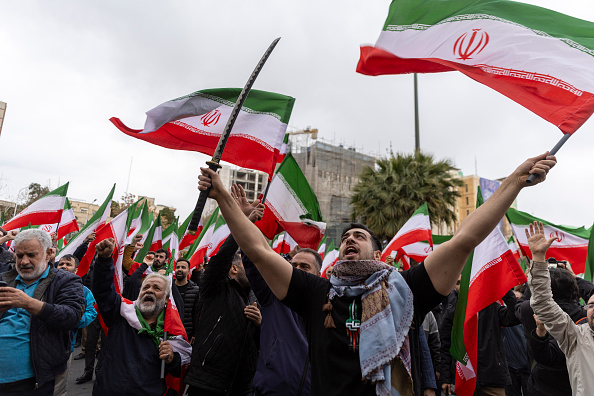
Ayatollah Ali Khamenei, a man whose life has been defined by the harshness of his rhetoric against the West (specifically, the US and Israel) and his ruthless rule, has died a martyr’s death under the rubble of his compound in Pasteur, Tehran.
It was always going to end this way. Khamenei came to prominence as a revolutionary first and then second as a wartime leader when he assumed the role of President of Iran during the Iran-Iraq war.
What is needed is a clear plan that can unite Iranians behind a shared, inclusive vision of their country
The Islamic Republic is facing its most serious crisis since January, when it set about killing its way out of nationwide protests. In the absence of a Supreme Leader, it has turned to a committee-style temporary leadership whilst its organs of state chose a new ruler. It is thought that the new leader could be former reformist President Hassan Rouhani or Hassan Khomeini, grandson of Ruhollah Khomeini, the Islamic Republic’s first Supreme Leader. The streets of Iran are simultaneously jubilant, fearful and vengeful. The Islamic Republic is certainly weak and definitely unpopular,
but how close to the toppling point it really is we will only find out in the coming days.
President Donald Trump’s diplomatic style with Iran has been nothing if not confusing. Having enacted crippling sanctions on Islamic Republic and killed Qassem Soleimani in his first term, his second administration began with a meeting between Elon Musk and Said Iravani, Iran’s ambassador to the United Nations in New York. Since then, Trump has oscillated between diplomatic pressure and military threats and occasional forays into creative diplomacy through the talks. At the height of the protests, Trump reached for an ideological tone, seeking to portray himself as a defender of the Iranian people, calling for Iranians to overthrow a heavily armed and utterly brutal regime with little more than their bare hands.
Let’s not forget that under Trump, support for Iranian dissident media outlets in the US has been all but ended, and that USAID, a vanguard of soft power and influence, is no longer. In the past few weeks, the talks in Oman and Geneva have progressed well, with Iran offering unprecedented concessions to whet the appetite of the more commercially minded in the White House.
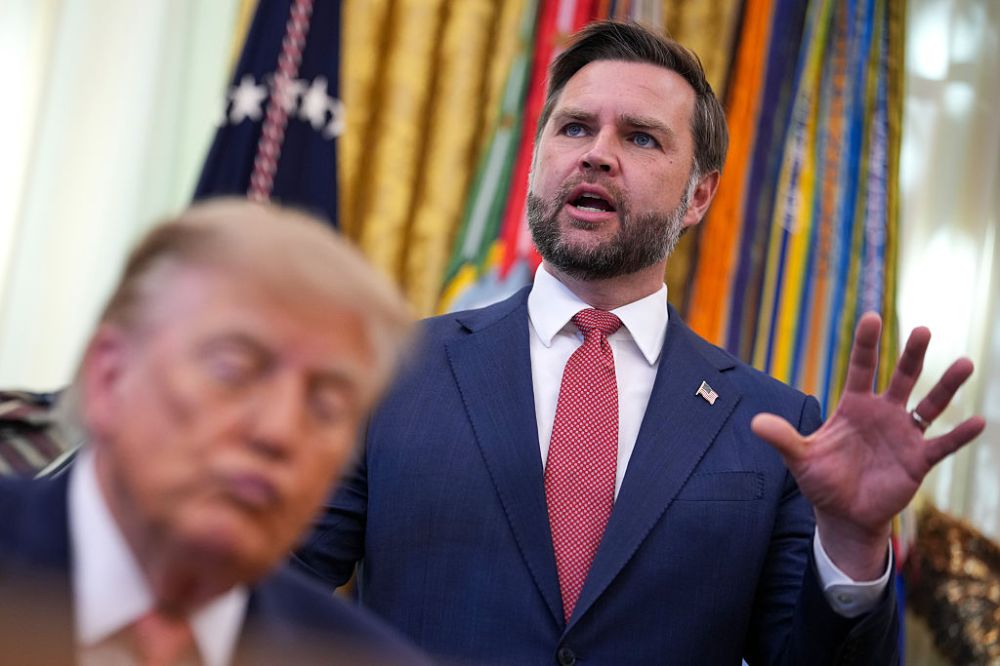
But underneath these shifts and changes has run the grim logic of red lines too far apart, hostilities running too deep and the sense from within the office of Iran’s former Supreme Leader that they simply cannot make a deal with the Great Satan.
The Islamic Republic’s DNA is resistance to and hatred of the US, and the US returns this sentiment. These are the deeper currents which will continue to dog relations should Trump look to install an Islamic Republic-flavoured puppet in Tehran with whom he can ‘do business.’ Sometimes there are no surprises, just patterns repeating themselves over and over again.
Yet for all of Trump’s noble rhetoric – he once again called on the brave people of Iran to rise up and overthrow the Islamic Republic – the most likely outcomes are for the Islamic Republic either to continue to resist to the very end, dragging the US and Israel within Iran’s borders for a bloody conflict, or for the United States to affect a coup in Iran that places a pragmatic IRGC or regime figure at the head of a country that is subservient to US economic interests. Yesterday, as the strikes were ongoing, Trump spoke positively of some good figures within the regime who might be interested in working with the US, though he wouldn’t say exactly who,
But it seem unlikely that any accommodation with the United States from within the regime will materialise in the short term, at least not whilst the Islamic Republic continues to have command control structures in place over its people.
Further afield, Iran’s proxies have not, so far, answered Tehran’s call to action. There have been pro-Khamenei and anti-US rallies in Iraq, and some stern words here and there, but the damage done to Qatar, the Emirates, Kuwait and Bahrain has all been directed from within Iran. A sign, perhaps, that even Iran’s proxies know that now is not the time to bet on the Islamic Republic.
This should be seen as a temporary retrenchment rather than a full-scale abandonment. In the absence of leverage through its proxies, Tehran’s tactic of hitting Gulf and regional Sunni neighbours hopes to drive a wedge between the US and its regional Sunni allies. So far that tactic is having the opposite effect. Arab powers see a clear possibility that the Islamic Republic, long seen as a regional menace, might just be about to fall.
Anything that weakens their longtime sectarian and regional rival is to be welcomed. What they might not welcome is a fragmented war which becomes the driver of Sunni-Shia violence across the Middle East. As weak as Iran may be, it can still hurt trade, tourism and energy infrastructure.
Foreign policy works when it is joined up with an alignment between tactics and strategy and a discernable guiding logic, evidenced in word and deed. Does Trump want a truly free Iran ruled by good men and women, or is this conflict simply a grim tactic to force more concessions out of a new but not all that different Iranian leadership?
The death of Khamenei undoubtedly carries hope for the Iranian people who longed to see him gone. But should we see a ruinous war erupt within Iran, an ethnic bloodbath every bit as violent as we saw in Iraq, Syria, Libya and Afghanistan, and or the emergence of a reconstituted Islamic Republic favourable to the US yet still brutally repressive, Iranians may not thank Trump.
What is needed is a clear plan that can unite Iranians behind a shared, inclusive vision of their country that is not Perso-nationalist (as we have seen from Reza Pahlavi) and that is not a continuation of this tyrannical regime. Only then can Iranians begin to hope for a better future in which Iran plays a positive, economically prosperous role on the global stage, a role that is commensurate with its great intellectual, cultural and artistic gifts.



Comments