
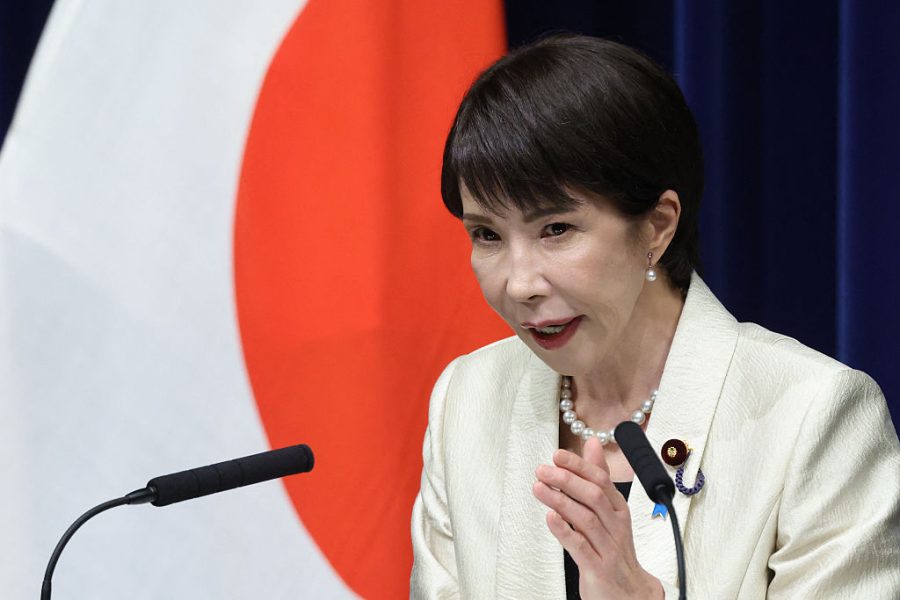
One of the most serious issues in the well-filled in-tray of freshly endorsed Japanese Prime Minister Sanae Takaichi is Taiwan, which China claims as its own sovereign territory, and the lamentable state of Sino-Japanese relations. Takaichi provoked fury with comments in the Japanese parliament in November when she stated that were China to attack Taiwan, it would be interpreted as a “survival-threatening situation” for Japan, implying a military response could follow.
Under the terms of its constitution, Japan is severely limited in its military options but Takaichi appeared to be preparing more solid ground with her phrasing. A 2015 law changed the constitution allowing Japan to retaliate if the country faced a “life-threatening” situation. Frank Hoffman writing in the Medium states that her “particular term of art” was legalistic and calculated and far more than a “rhetorical flourish.”
A bit of Japan-bashing always goes down well
The importance of Taiwan to Japan is hard to overstate. A successful Chinese takeover would mean control of vital shipping routes through which pass essential resources, most significantly LNG (liquefied natural gas). Japan, in its post-Fukushima energy posture, relies on LNG for around a third of its needs. Reserves held in storage tanks in supply terminals amount to just over a month’s supply. A Chinese blockade of sea routes around Taiwan could seriously imperil Japanese energy security and thus could plausibly be argued as a “life-threatening” situation.
Beijing’s response to Takaichi’s comments was immediate and fierce. The Chinese government summoned the Japanese ambassador for a dressing down and China’s general counsel in Osaka, Xue Jian, even made a comment to the effect that Takaichi should be decapitated. Chinese citizens were warned not to visit Japan, which led to thousands of flight and hotel cancellations and the bizarre situation of 5-star hotels in Japan’s crown jewel city of Kyoto offering rooms at 1-star prices.
China also stepped up its ongoing trade war with Japan by embargoing over a thousand “dual-use” products (with dual-use meaning basically whatever Beijing decided) this week. This is on top of the already contentious ban on Japanese seafood (eased in 2023 but reimposed in November last year) following the decision to release wastewater from the Fukushima nuclear accident (China claims the water is unsafe, every scientific authority says the opposite).
When asked about the diplomatic tensions with China during the election campaign, Takaichi merely said that Japan would respond to any good faith initiative that was in the country’s best interests. In other words, the ball is in Beijing’s court. Takaichi will not retract her comments on Taiwan (which were, in any case, not much different from similar statements made by officials in the administration of her mentor Shinzo Abe). Nor will she make any especial effort to rebuild bridges with Beijing, which were no more than pontoons anyway given how long relations have been frosty (Xi Jinping has yet to visit Japan).
She is right to do so. Her strong stance undoubtedly contributed to her electoral success. Whereas recent prime ministers have tiptoed around the Taiwan issue or just not commented, Takaichi was at least clear. A few called it reckless but the consensus was that it was refreshingly bold.
In any case, Japan has been wisely preparing itself for Chinese sanctions for years. After a previous spat in 2010, Japan launched a series of initiatives aimed at limiting its reliance on Chinese imports. The publicly-owned Japan Organization for Metals and Energy Security was created and tasked with stockpiling strategic reserves and seeking out alternative suppliers. Investment was made in new rare earth refineries in France, Australia and Namibia.
In 2022 the Economic Security Promotion Act was passed requiring government departments to monitor critical materials and supply chains and empowering the government to veto foreign investment and incentivize (through subsidies) reshoring initiatives. The “de-Chinafy” strategy is paying dividends: Honda, Nissan and Volkswagen are now using Japanese rare earth-free magnets in their vehicles.
It could be that Takaichi judged that while China’s response to her comments would be furious, it would also be largely performative. Some have suggested that the backlash was less about what Takaichi said about Taiwan and more a reflection of China’s “internal vulnerabilities.” With youth unemployment rising, a faltering economy and growing internal dissatisfaction, external tensions can prove useful. A bit of Japan-bashing always goes down well.
Beijing may have been concerned by Takaichi’s strong start and her love-in with President Trump in October. Sensing a strengthening Japanese-US relationship and a Sino-skeptic patriot in Tokyo likely to be in office for some time, they seized on a chance to cut her down to size – perhaps even to influence an early election.
If so, this strategy has backfired. Takaichi triumphed and is now in full command. She will visit Washington in March for a no-doubt all-smiles summit with President Trump. Trump, in turn, will visit Beijing in late March or early April. Taiwan will no doubt be high on the agenda in both meetings.
This triangular diplomacy over Taiwan will likely be a persistent feature of US-Sino-Japanese relations in the coming years and tensions between Beijing and Tokyo are unlikely to ease anytime soon. But round 1 goes to Takaichi.






Comments