
A good quiz question in the year 2050 will go something like this: “True or false, the ‘green’ in the ‘Green Party’ originally referred to the environment.” By this point, the etymological origins of Britain’s sectional Islamic party will be as obscure as the relationship between British Conservatives and 17th century Irish bandits.
A key milestone, our mid-century quiz regular will inform his teammates, was the 2026 Gorton and Denton by-election in which the Greens stood neck and neck in a three-way race with Labour and Reform before voting opened.
If decades of generous immigration policies have created constituencies where people vote along religious lines, there is nothing to stop someone appealing to that market. It’s within the rules of democracy, if not the spirit
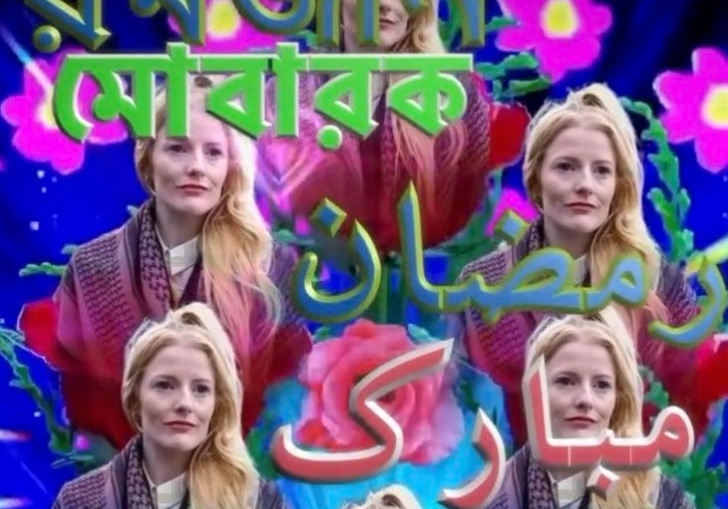
Eagle-eyed observers these past weeks will have noted how the once environment-focused party have been pitching at particular sections of “the community,” with campaign leaflets featuring candidate Hannah Spencer wearing a red and black keffiyeh while posing in front of a mosque.
Written in Urdu, the pamphlet calls for voters to: “Push the falling walls one more time. Labour must be punished for Gaza. Reform must be defeated and Green must be voted for. Vote for the Green party for a strong Muslim voice.” Then it adds, in English, “Stop Islamophobia. Stop Reform.”
There was also an Urdu-language video linking Reform party candidate Matt Goodwin and leader Nigel Farage with Donald Trump and ICE deportation raids. The video then cuts to Gaza, before showing Keir Starmer beside India’s Narendra Modi. Subtle stuff.
The video states in Urdu: “A cruel politician can win if we don’t vote Green to stop the Reforms… Workers, cleaners, drivers, mothers – it’s us who keep this area running. But the politicians are not working for us… The Reforms want to break up our communities. They want to deport families who have lived here for years, and they want to tax people born abroad even more. They give air to Islamophobia, and they put our safety and dignity at risk.”
Over the weekend the party told activists that “We hit all 14 mosques this Friday… Our Ramadan cards went down a treat, even with the battle of the leaflets against Labour! We are now in our critical final five days, and we need volunteers to help with Taraweeh conversations and leafleting. Do you attend evening Taraweeh at any of these mosques? If so, can you help with leaflets and conversations after prayers?” Spencer even shared on Instagram that she was fasting to observe the beginning of Ramadan, although she only fasted for a day – in February. In northern Europe.
Party leader Zack Polanski seems to think it’s all very funny, as does his deputy Mothin Ali. Look how the right-wing trolls are triggered! Ali justified the video on the ground that “We’ve tried to appeal to people from all kinds of backgrounds. Some of the slogans are based off Bangladeshi or Pakistani typical political slogans. The same slogans have been used to find a message that people can resonate with. That’s just about inclusivity.” Sure – nothing says inclusivity like campaigning in a foreign language which 97 per cent of the UK population cannot understand.
But then, in the worldview of some, “inclusivity” is anything which furthers the interests of favored minorities, just as “equality” is anything that raises their status relative to less favored groups. Everything is about power imbalances, the thinking behind asymmetrical multiculturalism, in which the sectional interests of minority groups are to be promoted and patronised (in both senses), without consideration about what this entails. It has even led white secular progressives to encourage overtly sectarian Islamic politics, playing with fire and laughing at how edgy and provocative they are.
Britain’s Green party has historically been a thing of amusement to many, a bunch of harmless hippies and Quakers with wacky beliefs; at the time of their first breakthrough in the early 1990s their most high-profile figure was the daytime TV presenter David Icke, then seen as an amusing crank with interests in new age mysticism and alternative medicine.
As traditional politics fractured, the Greens came to fill the space inhabited by high-education, low-income graduates, the group who most favor redistributive economics and highly progressive social policies. Yet political parties have no souls, as such, being merely vote-seeking businesses, and they go where the market is – and now they find the lowest hanging fruit in appealing to sectarian interests.
If decades of generous immigration policies have created constituencies where people vote along religious lines, and are more comfortable with the national language of Pakistan than English, there is nothing to stop someone appealing to that market. It’s within the rules of democracy, if not the spirit.
Gorton and Denton is among the increasing number of constituencies in which a candidate can win by appealing overtly to the Islamic vote. “Gaza independents” won five seats in parliament in 2024 and could win ten or 12 by 2029 and 20 or 30 by the election that follows; after that, the ceiling is limited by high levels of segregation. This could be good news for the Green party, if that’s the path they want to go down, and they certainly don’t seem to shy away from the prospect.
Polanski has welcomed the endorsement of the Muslim Vote. In February he told Politics Home that “I think any organization that wants to back the Green party because they align with our values is something that I applaud and welcome.”
It would be interesting to know to what extent he thinks they do align with their values. This is a party which supports giving children puberty blockers as part of “gender-affirming care.” A party which wants to legalize all drugs and prostitution. Having the most radical views on the gender issue of any party, even its co-chairs, historically a man and woman, have been described as “Self identifying Non-Male Co-Chair: (female)” and “Self identifying Non-Female Co-Chair: (male).” Back in January the former co-chair of Green party Women “was found to have breached diversity rules by making ‘clearly antagonistic’ comments about ‘fae/faer’ pronouns, a type of ‘neopronoun’ inspired by the mythical world.”
This is eccentric by the standards of the median British voter, and British Muslims have far more socially conservative views than the median voter, by a huge distance. This is especially true regarding homosexuality and the role of women. The most ruddy-faced bar room reactionary at the 19th hole is a blue-haired college radical in comparison. (Incidentally, I’m also not sure how the Green party squares their environmental transport policy with the fact that British-Pakistanis tend to favor cars, as social conservatives with families.)
If this seems like an incongruous coalition, where the Green party’s two blocs of voters agree is in shared oppositional politics, both to the wealthy at home and to the West’s dominance and past crimes, which Israel has come to represent. Politics is not about values, but about who’s on your side, which parties signify by supporting voters on the key issues. The nature of oppositional politics is why Muslims tend to vote for left-wing parties in Europe and conservatives back in the old country. In the West, they form part of the oppositional culture, in Pakistan or Turkey they are the equivalent of Reform voters, if Reform was about three times more right-wing.
British Muslims tend to prioritize two issues in voting: Palestine and immigration. Palestine is important for religious and group identity, while looser immigration controls help relatives back in the old country, increase the size of the group, and further signal that a politician and party is on their side. This has become more necessary amid a rising sense of unease about their place in the country, and an acute fear of outside hostility (I have issues with the term “Islamophobia,” but I’d agree that it is widespread.)
While British Muslims may have negative views about homosexuality, this is a low priority, as social issues tend to be. (Similarly, while most voters opposed gender self-identification, it was not a pressing issue, which is how activists were able to achieve so many wins.) This is how you end up with a party where the leader is gay, Jewish and vegan, and the deputy a Muslim whose wife entirely covers her face with a black niqab, and who first came to public attention after winning a local election in Yorkshire where threw his fist in the air and shouted “We will raise the voice of Gaza, we will raise the voice of Palestine. Allahu Akbar!”
The leader’s personal life is of little interest to their voters; what matters is that the Greens are the most overtly anti-Israel and open borders party. The party has even considered a ban on members who call themselves Zionist and declared that Zionism should be “treated as any other form of racism.” It’s a bizarre coalition, one only kept together by a sense of opposition and hostility to out-groups, in this case the right and the wealthy who are hoarding money like Scrooge McDuck. Spencer, in her role as Green party migration and refugee support, once declared that “Not migrants. Not Muslims. Not trans people. It’s the billionaires to blame.” And once you’ve driven the billionaires out of the country, what next?
While Labour might find such electioneering distasteful, they’re hardly in a position to moralize. The “people’s party” has had close relationships with Pakistani clans, baradari, for decades, offering them influence over policies in return for vote banks. Almost every constituency with a large Muslim population solidly voted Labour at every election up until 2019, and the party could rely on 75 percent of Pakistani and Bangladeshi descended voters backing them.
The most consequential of these Labour concessions was the abolition of the Conservatives’ Primary Purpose Rule, which required foreign spouses to prove that the primary purpose of their marriage wasn’t to gain residency rights. Activists had decried the rule as “racist” and it was repealed by Labour just a month after it took power in 1997. This accelerated the chain migration that has resulted in large, unintegrated Pakistani and Bangladeshi populations in much of the country, who subsequently no longer need Labour – and so this vote bank began to desert the party in 2024.
Gaza may have been the trigger for the divorce, but the Islamo-gauche alliance is inherently unstable, because one part of the coalition is demographically ascendant, and at some point will no longer need its enablers. The Muslim population of Britain was 1.6 million in 2001 when Blair won his second landslide; it was 4 million by the time Starmer won his.
The Greens’ campaign literature may be distasteful but, as Chris Bayliss wrote in UnHerd, it also reflects the breakdown of the biradari patronage system. Instead of the cosy agreements of the past, the Green party “is reaching out to younger members of the community directly on social media rather than relying on their grandfathers to direct them. People voting as individuals, rather than as blocs, is a step toward a genuine flowering of democracy among a critical minority group. But, depressingly, the message of the video remains almost a parody of ethnic-specific prejudice.” As with so many areas, the breakdown of traditional hierarchies in immigrant communities has consequences other than integration.
Labour are in no position to criticise the Greens because they’ve been known to do the same, and have displayed pictures of Boris Johnson with Modi in previous campaigns. They’re also chasing the same vote, after all.
The Green party has an advantage in that it is prepared to go further than Labour, pitching for Muslim votes with sites like 5Pillars – and 5Pillars are not good guys. The Greens can do this because they have a smaller voting base, and so are more willing to draw sectarians into their alliance of concerned ethical voters in places like Brighton, opponents of housing development in rural areas and students in cities like Manchester. While students are notoriously unreliable, often failing to even register, let alone turn up to vote, Muslim communities are notably reliable – indeed, in some past instances, too reliable.
The only thing that unites this coalition is that they feel poor and think Israel is bad, and in this the Greens have come to resemble the old sectional system in the US, where the Democrats could be the party of ethnic immigrants in the North and the former slave-owning elite in the South.
That coalition didn’t last forever, of course, and one wonders what white progressives think the end game is here. Do they hope that their new voters, after sufficient love bombing and inclusivity, will come to abandon their ancient prejudices and adopt the novel worldview of white progressives? What will their new voters do when they have no more use for the Polanskis or Spencers? Or is the assumption that they will never be numerically strong enough to matter?
One of the most revealing discussions during this whole saga featured Spencer debating her rival Matt Goodwin. When the subject of the 2017 Manchester bombing came up, she suggested it was the fault of people like him who were stoking division.
It was a remarkable insight into a particular theory of mind, or lack of it, and how much progressive thinking on race and immigration comes down to a fear of the out-group and romanticization of the far-group. The out-group – native conservatives – are a force for evil who spread hate and must be opposed at all costs, while the far-group – immigrants and exotics – are to be protected and infantilized. The far group lacks all blame, because they lack agency; they’re non-speaking parts in a morality tale in which the white progressive defeats the white racist. They don’t matter in themselves, only as objects in a competition between goodies and baddies, a position of pure moral vanity. There is never any consideration that the far-group might be far more extreme, and that their transformation from a position of vulnerability and numerical weakness to strength might have serious consequences one day.
This should be one of the most controversial elections in recent history, in the annals of notoriety alongside Smethwick and Bermondsey. And it is almost certainly not the last. Bayliss wrote that “it is possible to see the contours of Britain’s future elections emerging in this by-election campaign: a large, relatively unified minority community appearing a more attractive target to campaigners than a disparate and divided majority. The calculations of democracy in a multi-ethnic constituency point remorselessly toward ethnic solidarity. And it is not only the parties of the Left that are doing this: at the last election, the Conservatives heavily targeted Hindu and Sikh voters, emphasizing Labour’s links to the Pakistani community.”
The hapless Prime Minister can only warn that Gorton and Denton will “descend into hostility” if Reform wins, and that “the battle here is that basic battle between a party that wants to bring our communities together.” The reality is that this is downstream of previous – and ongoing – immigration policy, a policy that puts immense strain on democratic norms. Rather than a battle of ideas, in a multicultural democracy, every election is a census. The way to get people to vote is to remind them of that fact.
This article first appeared in Ed West’s Wrong Side of History Substack.




Comments