Tim Shipman

Tim Shipman

Tim Shipman is political editor of The Spectator.

‘This is not a war!’ – why politicians are turning on the media | with Gabriel Pogrund

From our UK edition

18 min listen

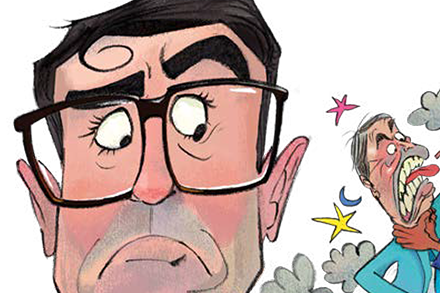
Politicians are increasingly turning on the journalists who scrutinise them. After investigations into Nigel Farage’s finances, Reform figures have accused reporters of waging a political ‘war’ – while Arron Banks has hired private investigators to look into Times journalist Gabriel Pogrund. Is hostility towards the media becoming a feature of modern politics? And is the relationship between politicians and the press becoming more poisonous? Gabriel joins Oscar Edmondson and Tim Shipman, who writes for the magazine this week about the fraying contract between society and its fourth estate. Produced by Oscar Edmondson.

‘This is not a war!’ – why politicians are turning on the media | with Gabriel Pogrund

Politicians’ contempt for the press is contempt for the public

From our UK edition

I was hacked by the Chinese a few years ago. Security at News UK, where I was employed on the Sunday Times, told around 20 journalists that our emails had been compromised. An agency of the Chinese state was searching for information on our coverage of Chinese issues, including Beijing’s crushing of Hong Kong and the decision to sanction members of parliament. To be honest, I’d have been pretty offended if I hadn’t been on the list. Frankly, if the Chinese want to know what I know, they can take out a subscription to The Spectator, just as they could have bought a copy of the Sunday Times. But this is what you expect from the Chinese, isn’t it?

Andy's migration muddle – & can he fix the High Street?

Andy’s migration muddle & can he fix the High Street?

From our UK edition

13 min listen

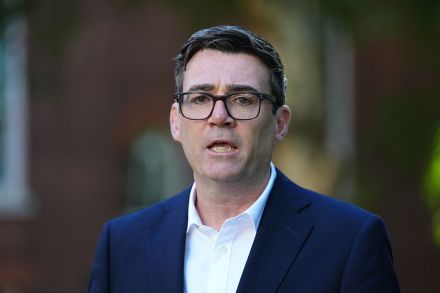
Andy Burnham's summer bonanza continues as he announces plans to empower local councils and hopefully improve Britain's High Streets. The government wants to make it easier for councils to refuse certain types of businesses – but is the plethora of vape shops, betting shops and barbers a cause of Britain's High Street decline, or just a symptom? If there are no businesses to replace those, will the public prefer empty shops to those they see as less desirable? Noa Hoffman and Michael Simmons join Tim Shipman to discuss. Plus: the Prime Minister attempts to grip the migration crisis, as small boats numbers rise across the summer – but can he get his facts straight? Produced by Oscar Edmondson and Patrick Gibbons.

What does Lowe actually want from Farage?

From our UK edition

17 min listen

Nigel Farage is trying to seize the summer agenda with a new crackdown on crime and immigration. Reform wants to send foreign national prisoners to countries such as El Salvador, deploy the Navy in the Channel and leave the ECHR – but how much of the plan could actually work? Meanwhile, hopes of a reconciliation between Reform and Rupert Lowe’s Restore appear to be fading. Farage has ruled out a deal while Lowe remains surrounded by figures he regards as being on the extreme right. Could the continuing split ultimately play into Andy Burnham’s hands? Tim Shipman speaks to Noa Hoffman. Produced by Oscar Edmondson.

What does Lowe actually want from Farage?

Rod Liddle was one of the finest journalists of his generation

From our UK edition

I only met Rod Liddle a few times, though at The Spectator and the Sunday Times I worked alongside him and to a large degree in his shadow. He was irascible and lugubrious and bloody funny, both in person and in print. Like a lot of bogeymen, in person he was a delight and nothing like his image. He was humble and polite and faintly decorous, keen to know what you thought and to know what you knew – even though he was clear about what he knew and generally put it better than anyone else, week in and week out. At first he was a guilty pleasure, someone who would write down what the rest of us were thinking, often without the decorous need in speech to acknowledge the validity of views of those who differ.

‘It’s very easy to win an election – here’s how’: Rory Sutherland on private schools, early election & death doulas

From our UK edition

62 min listen

For this week’s Edition, Lara Prendergast is joined by The Spectator’s columnist Rory Sutherland, political editor Tim Shipman and drinks editor Jonathan Ray. This week: What has been the damage of Labour’s punitive war on private education? Rory questions whether the sector had helped itself in the years prior, but did the policy itself ever represent more than ‘class warfare?’ Tim explores the vigour to which the (now former) Education Secretary Bridget Phillipson embraced that label, whilst Jonathan reflects on ‘canny approaches’ to game the system. Also: Election? What election? The panel discuss rumours that the PM may call an early general election in the wake of the ‘Burnham bounce’ in the polls giving Labour a narrow lead over Reform.

‘It’s very easy to win an election – here’s how': Rory Sutherland on private schools, early election & death doulas

Andy’s care plan

From our UK edition

It's Wednesday, which means there's another announcement from Downing Street. Yes, another one. Today, Andy Burnham is talking social care, and this time, he wants to build a 'cross-party consensus' to fix the broken system. Unfortunately neither Kemi Badenoch nor Sir Ed Davey were able to attend in person, but in a far more successful assemblage, James Heale, Tim Shipman, and Isabel Hardman have come together to talk over the details of what was announced. Tim also assesses what direction the new PM may be heading in over assisted dying legislation. You can read Isabel's piece on Andy's social care plans here Produced by Henry Lloyd and Ed Parker.

Andy's Care Plan

No election? Don’t bet on it

From our UK edition

When Dwight D. Eisenhower had to decide whether to launch the D-Day armada he kept a close eye on the weather. Pick the wrong moment and the entire cause of winning the war would have been set back and the lives of 135,000 soldiers imperilled. The supreme allied commander, head of a fractious coalition riven by egos and infighting (you see where I’m going here), had plenty of expert advice, as is made clear in David Haig’s play Pressure. The British meteorologist, James Stagg, warned that the original date for D-Day, 5 June 1944, would be storm-ridden, but saw a window of opportunity the next day. The American meteorologist Irving P. Krick was more gung-ho and urged Eisenhower not to postpone. Ultimately, the decision was Eisenhower’s alone.

Nick Clegg: my biggest coalition regrets

From our UK edition

30 min listen

Tim Shipman is joined by Sir Nick Clegg, the former Deputy Prime Minister and Leader of the Liberal Democrats, as part of The Spectator's new event series, Tim Shipman Meets the Party Leaders. Tim challenges Sir Nick on the decisions that defined his political career, from his passionate support for Europe to the failed referendum on an alternative voting system, and those famous coalition years. Reflecting on his record, Sir Nick offers a candid assessment of the decline of the two-party system, the upending of global alliances and even the looming threats of AI. Watch the full conversation here. Highlights produced by Henry Lloyd.

Nick Clegg: my biggest coalition regrets

Voters are buying what Burnham is selling

From our UK edition

We are approaching the end of Andy Burnham’s first week in power. There are as many questions as answers about where he will ultimately plant his flag on the big macro-economic stuff and on policies which make for difficult politics. But his Downing Street team will be pretty happy with how things have gone for the first few days. Burnham understands that a large part of the premiership is about communicating and that policy can be a form of communication – something Keir Starmer, Rishi Sunak and Theresa May, of our recent premiers, either denied or deplored I doubt many ordinary folk will quite grasp why he has proclaimed the opening of No.

How Reform and the Tories plan to fight Andy Burnham

How Reform and the Tories plan to fight Andy Burnham

From our UK edition

14 min listen

In the magazine this week, James Heale writes that Kemi Badenoch was in an upbeat mood when she addressed her troops last week. ‘This time last year,’ she told the 1922 Committee, ‘people said Jenrick was taking over the party, Starmer was steady and Farage would be the next prime minister. A year later, Rob is under police investigation, Starmer has resigned and Farage is not even an MP.’ It is a reminder of how quickly the wheel of politics can turn. So what is Badenoch’s grand plan for taking on Burnham? Also today, No. 10 North is officially open for business – but has anyone really thought it through? Noa Hoffman speaks to Tim Shipman and James Heale. Produced by Oscar Edmondson.

Andy’s promises – who’s paying?

From our UK edition

15 min listen

It is day three of Andy Burnham’s premiership, and we have had a tranche of policy announcements and funding commitments. A VAT cut for energy bills, £2 bus fares, and today a business rate cut for pubs and hospitality businesses. But are any of them actually funded? Michael Simmons joins Tim Shipman and Oscar Edmondson to walk through the promises made, and how, if at all, they will be funded by Burnham’s new government. Produced by Oscar Edmondson and Henry Lloyd.

Andy’s promises – who’s paying?

Iain Dale: Standing for Parliament was a ‘humiliating experience’

From our UK edition

25 min listen

In a busy week for British politics, LBC’s Iain Dale joins Tim Shipman and James Heale to discuss his new book, Have I Said Too Much? Iain speaks frankly about standing as a Conservative candidate at two general elections – and his fateful attempt to fight a third. James asks what makes a good political book, while Tim delves into the 2005 Conservative leadership election and Iain’s role in approving the infamous ‘It’s DD for me’ T-shirts. Iain also reflects on his friendship with the late Ann Widdecombe, and on how she came to be defined both by the strength of her convictions and her renowned sense of humour. Produced by Henry Lloyd.

Iain Dale: ‘Standing for Parliament was a humiliating experience’

Andy Burnham’s centrist act isn’t fooling anyone

When Ed Miliband and Shabana Mahmood arrived in Downing Street on Monday afternoon, the image of political rivals arm in arm symbolised a new government of differing views taking shape. It might have been more awkward. As they neared the door of No. 10 and the waiting television cameras, Miliband turned to Mahmood and asked: ‘Should we turn around for a photo together?’ Mahmood gave the idea short shrift: ‘We’re not getting married, Ed!’ But in a sense Labour is seeking a new relationship with the British public and everyone around Andy Burnham is alive to the importance of images, symbols and vibes. As Wes Streeting, the new Defence Secretary, put it in cabinet on Tuesday: ‘We have a second chance to make a first impression with the voters.

Burnham’s northern queens

From our UK edition

14 min listen

Appointment into Andy Burnham's new cabinet went late into the evening: Wes Streeting to defence, plus the comeback queens – Louise Haigh, Lucy Powell and Angela Rayner all into senior posts in government. Noa Hoffman, James Heale and Tim Shipman discuss the new appointments and Andy Burnham's morning policy announcements.

Burnham's northern queens

Labour’s new cabinet – who’s in & who’s out?

From our UK edition

21 min listen

As Andy Burnham unveils his first Cabinet, join Tim Shipman and James Heale for a special live edition of Coffee House. Who’s in, who’s out? What do the appointments reveal about Burnham’s priorities, and might they hint at the likely direction of his premiership? Along with a panel of familiar faces and special guests, get the only analysis you’ll need as the political implications begin to unfold.

Burnham's new cabinet – who's in & who's out?

Andy Burnham has a plan – but he won’t tell us what it is yet

From our UK edition

Burnham's schtick is that he is going to re-discover Labour’s true faith When I was covering Barack Obama’s battle with Hillary Clinton for the 2008 Democratic presidential nomination, there came a moment when only she among sentient adults seemed unwilling to acknowledge that Obama had beaten her. We would traipse to Clinton rallies to be greeted, without fail, by the strains of my favourite Tom Petty song, ‘I Won’t Back Down’.

Happy coronation day!

Happy Coronation Day!

From our UK edition

14 min listen

Andy Burnham will today be crowned Labour leader, before entering Downing Street on Monday. His first speech is expected to argue that Labour has lost touch with the working-class communities it was founded to represent – and to promise a new era of devolution, economic intervention and northern political power. Meanwhile, the shape of Burnham’s government is beginning to emerge. Ed Miliband now appears unlikely to become chancellor, amid concerns that he would be too powerful and too closely associated with Labour’s north London intellectual set. What does his apparent rejection reveal about the party’s new dividing lines? And, as details emerge of a possible 'policy blitz' in the first days of Burnham’s premiership, could a wealth tax be on the cards?

Can Burnham remake Britain – and can Wales decolonise it?

Can Burnham remake Britain – and can Wales decolonise it?

From our UK edition

37 min listen

For this week’s Edition, William Moore is joined by The Spectator’s political editor, Tim Shipman, commissioning editor and writer at large Tali Fraser, and the historian Antony Beevor. This week: what will Andy Burnham actually do in Downing Street? Tim reveals what to expect from the incoming prime minister’s first ten days, from a blitz of policies and a ‘Number 10 North’ to higher borrowing and wealth taxes. Also: has Britain expanded the definition of disability too far? The panel discusses Michael Simmons’s argument that compassion should not mean turning every difficulty into a disorder – and asks how the government can encourage resilience and work while protecting those who genuinely need support.

Farewell, Sir Keir Starmer

From our UK edition

Keir Starmer has delivered his final PMQs. It was a more cordial occasion compared to most weeks, with Kemi Badenoch exchanging jokes with the outgoing Prime Minister over their previous clashes amid a more sombre tone given the murder of Ann Widdecombe. But will this final speech go down in history? And how will Andy Burnham do things differently? Noa Hoffman speaks to James Heale and Tim Shipman.

Farewell, Sir Keir Starmer