Jason M. Brodsky

Jason M. Brodsky is the policy director of United Against Nuclear Iran (UANI) and is a non-resident scholar at the Middle East Institute’s Iran Program. He is on Twitter @JasonMBrodsky.

Who will lead Iran now?

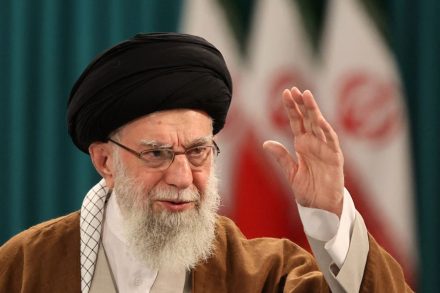
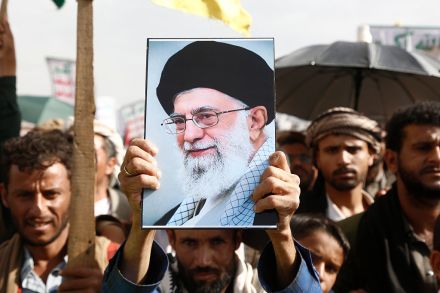
The longest-serving autocrat in the Middle East, Iran’s Supreme Leader Ayatollah Ali Khamenei, is dead. This is a historic moment for the Iranian people, the region, America, and US allies and partners around the world. Given the unprecedented nature of this US and Israeli military operation, it remains hard to predict events in Iran. But several developments give us clues about Iran's direction of travel in the near-term. Khamenei was a brutal ruler who not only abused his people and fomented terror around the world but was also a tyrant to his own family. His estranged sister Badri Khamenei once recounted how Qassem, a good friend of her brother, was murdered by the Iranian regime in the early years of the Islamic Revolution.
Iran is ready for war – is America?

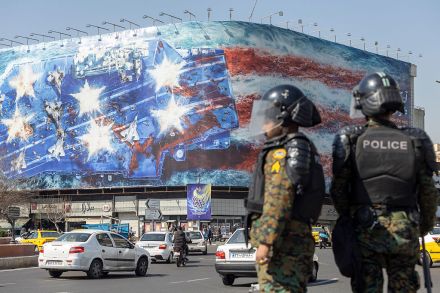
In 2001, Iran’s supreme leader Ayatollah Ali Khamenei met privately with Spain’s then-prime minister Jose Maria Aznar. Aznar recounted how Khamenei dubbed Israel a ‘cancer condemned to disappear’ and said that an open confrontation with Israel and the United States was inevitable. Iran, the supreme leader insisted, would prevail. Fast forward to 2026, and the war that Khamenei prophesised is getting closer by the day. The Islamic Republic is already operating under the assumption of a US military operation For decades, durable diplomacy between America and Iran has failed because of the ideological nature of the Islamic Republic. It makes its decisions based on a mix of ideology and a desire for self-preservation.

How Trump can squeeze the Iranian regime

The Iranian people have shown true courage as they protest against the Islamic Republic. As the pressure mounts, some elements of Iran’s regime have been pushing to negotiate with the Trump administration – trying to create the impression they are ready to drink from the ‘poisoned chalice’ as the Islamic Revolution’s founder Ruhollah Khomeini did to end the Iran-Iraq war in 1988. Saeed Laylaz, a reformist economist, told Euro News last week that, ‘I have information that Iranian political officials are ready for dialogue with the other side’.

Why Venezuela matters to Iran

The aircraft carrier Gerald R. Ford and three warships have been sent to the Caribbean, where they are joining a dozen Navy warships already off the coast of Venezuela, in an unprecedented show of military force. President Trump and his administration are taking aim at the administration of Nicolas Maduro, over his alleged role in the drug trade which presents a national security threat to the United States. It’s clear that if the US succeeds in destabilising and displacing President Maduro’s regime, it would be a blow to the region’s drug traffickers. What is less known is that it would also hit Iran.

Doha attack was a blast from the past

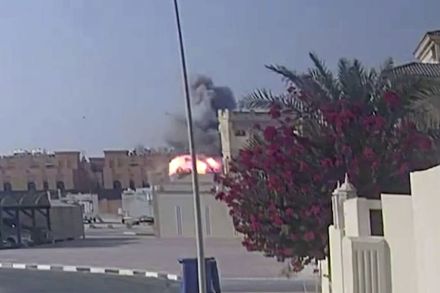
Israel’s audacious strike against the leaders of the Hamas terrorist organization in Qatar exemplifies the Jewish state’s new security doctrine – one of boldness and risk-readiness. The Hamas massacre on October 7, 2023, was a watershed moment that reset security calculations in Israel in a significant way. The results are Iran’s proxy network defanged, and a Tehran shaken after its own 12-Day War with Israel. Many observers believe that Israel’s strikes in Qatar risk unraveling the Abraham Accords and undermining U.S. interests. But as past episodes have demonstrated, there is likely to be immediate outrage followed by a reversion to the status quo.

Doha

Trump shouldn’t blame Israel for the ceasefire skirmish

From our UK edition

After President Trump announced a ceasefire between Israel and Iran on Monday, Iran launched missiles at the Jewish state. To justify this, Iran accused Israel of conducting an assault on Iranian territory until 9 a.m. on Tuesday, after the ceasefire went into effect. Later, Israel undertook a symbolic strike on a radar installation north of Tehran as a reprisal for its defiance of the agreement. President Trump, visibly angry, told reporters before he headed to today’s Nato summit that he was displeased with both countries, especially Israel as it ‘unloaded’ on Tehran right after he declared a ceasefire. https://www.youtube.com/watch?v=fQ8L9LrxJf4 Israel did unleash a thunderous final salvo against Iran in the final moments before the ceasefire went into effect.

Iran isn’t going to back down

From our UK edition

Multiple American presidents have vowed to never allow Iran to acquire a nuclear weapon. This weekend President Trump made good on that promise. He undertook targeted, surgical strikes against the Islamic Republic’s nuclear programme after the regime repeatedly rejected diplomatic offers. This is a watershed moment which will change Iran, the region and the US position in the world. The devastation the regime has faced over the last week will only amplify calls for the pursuit of nuclear weapons In the immediate aftermath of the US military action against nuclear facilities at Natanz, Fordow, and Esfahan, Iranian media and officials sought to downplay the strike.

Why Iran wants a deal with Trump

From our UK edition

For Iran, the re-election of Donald Trump in November 2024 was its worst nightmare. Waking up the morning after the US election, Tehran feared President Trump’s unpredictability – and remembered the hard line he’d taken on Iran in the past and his killing of the Islamic Revolutionary Guard Corps (IRGC) Quds force commander Qassem Soleimani in 2020. With Iran already reeling from losing a chunk of its proxy network in 2024, and with its air defences and missiles degraded by Israel, it was in a uniquely vulnerable position. All of this forced a recalibration. Iran’s tactic changed from rebuffing to killing President Trump with kindness.

Can Trump reach a nuclear deal with Iran?

From our UK edition

On Saturday, Iranian and American diplomats met in Oman to discuss a nuclear deal. The talks were a clash of styles, tone and substance. In the past, talks in locations like Vienna allowed the international press to watch the Iranian and American delegations leaving and arriving at different hotels. This time, the discussions are hidden away from prying eyes and journalists inside Muscat’s palaces.  Iran’s foreign ministry began by seeking to tightly control and dominate the early media narrative. Iranian diplomats told media outlets that the talks took place in a positive atmosphere. These Iranian expressions of optimism were commonplace during the Iran nuclear deal revival negotiations from 2021 to 2022 under president Biden.

This is Iran’s annus horribilis

From our UK edition

Iran’s Axis of Resistance is falling apart. Israel has significantly degraded Hezbollah’s capabilities and decapitated its leadership. Hamas has been left decimated in Gaza. The regime of Syria’s President Bashar al-Assad has collapsed. Intact for now are the Shiite militias in Iraq and the Houthis in Yemen. Such a situation is not only a product of geopolitical trends but also an indictment of the leadership of the Islamic Revolutionary Guard Corps (IRGC) Quds Force. This will necessitate a reorienting of Iranian strategy. 2024 has been Iran’s Ayatollah Ali Khamenei’s annus horribilis.

Israel has exposed America’s cowardice towards Iran

From our UK edition

On Saturday, Israel launched a retaliatory strike against Iran which targeted around 20 military sites across the country, using over 100 combat aircraft. This was an unprecedented operation by Israel against Tehran – in both its breadth and depth. Israel’s aim was to degrade and deter. And in the process, it has reminded the world of the weaknesses of America’s current policy towards Iran. So far, Iranian media has been downplaying the Israeli strikes. Even as the bombing campaign was underway, pro-regime Telegram channels were posting videos showing placid scenes of Iranian cityscapes. In April, when Israel launched an attack on Esfahan, Iranian state television broadcast the morning traffic with soothing music.

How Iran will respond to Sinwar’s death

From our UK edition

The death of Hamas chief Yahya Sinwar on Thursday is an incredible achievement for Israel. It is also a blow to Iran and its axis of terror across the Middle East.  Since July, Israel has decapitated the leadership of Hamas and Hezbollah – with the killings of Hamas political leader Ismail Haniyeh, Hezbollah’s secretary-general Hassan Nasrallah, and now Sinwar himself. There has also been the killing of two commanders of the IRGC Quds Force’s Lebanon Corps – Mohammad Reza Zahedi and Abbas Nilforoushan – in this year alone. While the Islamic Republic has suffered from eliminations of its regional henchmen for years, the breadth and depth of Israel’s recent operations is unprecedented.

Iran must pay for this attack on Israel

From our UK edition

At age 85, Iran’s Supreme Leader Ayatollah Ali Khamenei has been risk-averse for much of his time in office. He has preferred to operate through proxies and partners like Hezbollah, Hamas, and the Houthis rather than directly engaging in combat with Israel and the United States. This is how he has survived. Since becoming supreme leader in 1989, Khamenei has pursued a gradual approach to eradicating the state of Israel by encircling it in a ring of fire to bleed it slowly.  His risk calculus has now changed, as shown by last night’s missile attack on Israel. According to Israeli officials, Iran launched around 200 missiles towards Israel, most of which were intercepted by Israeli aerial defences.

Raisi’s death has ruined the Ayatollah’s succession plans

From our UK edition

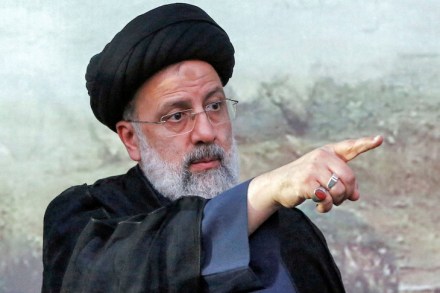
The helicopter crash that killed Iran’s president Ebrahim Raisi and foreign minister Hossein Amir-Abdollahian will not fundamentally change the Islamic Republic. Ayatollah Ali Khamenei, the 85-year-old supreme leader, remains the constitutional commander-in-chief and is still in charge of strategic decision-making in the country. But Raisi being removed from the scene has the potential to scramble the politics of succession in Iran. This is not the first time an Iranian president has died while in office. On August 30, 1981, president Mohammad Ali Rajai was killed alongside prime minister Mohammad-Javad Bahonar and other government officials in a bombing. The current supreme leader Ayatollah Ali Khamenei succeeded Rajai as president.

The Gaza student protestors have emboldened America’s enemies

From our UK edition

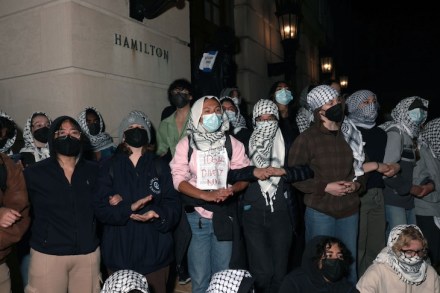
For the past few weeks, protests have rocked college campuses across the United States over Israel’s war against Hamas. Last night, police raided Columbia University to remove students occupying one of its buildings, while violence has broken out between protesting groups at UCLA in California. It is only when Israel is defending itself against rapists and murderers that there is this degree of frenzied hysteria across universities The pro-Palestine demonstrators portray themselves as defenders of human rights and social justice – viewing Israel through the warped lens of anti-colonialism and intersectionality. But in reality they have been amplifying the messaging of US-sanctioned terrorist organisations like Hamas.

Israel’s attack on Iran was perfectly calibrated

From our UK edition

Today, there have been reports of explosions in Isfahan, in central Iran, in what is presumed to be a strike by Israel. The world had been waiting for Israel’s promised retaliation after Iran launched an unprecedented attack at Israel directly from its own territory, using 300 missiles and drones. Despite the hysterical commentary that Israel is trying to drag the United States and its allies into war, its strikes in Iran appear to have been carefully calibrated to avoid escalation. After all, Israel has plenty of experience operating in Iran, and particularly Isfahan. In January 2023, the Mossad, Israel’s intelligence agency, launched a drone attack on an Iranian military facility in the heart of Isfahan.

American weakness made the Iran attack possible

From our UK edition

This weekend, the Islamic Republic of Iran launched an unprecedented attack against Israel. For the first time since 1979, Iran’s leadership launched strikes from Iranian territory at Israel proper using more than 300 drones and missiles, with the vast majority shot down. In the handful of cases where Biden has responded militarily, it has been mostly aimed at Iran’s proxies and dispensable facilities in the region These strikes took place ahead of Islamic Republic’s Supreme Leader Ayatollah Ali Khamenei’s 85th birthday on April 19. His regime is deeply unpopular at home and planning for succession. Yet Khamenei has demonstrated a surprising willingness to take risks in his old age. His strategy towards Israel has certainly come full circle.

Why is President Biden scared of Iran?

From our UK edition

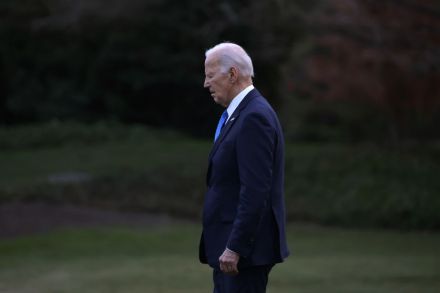
The Biden administration often appears more afraid of Iran than Iran is of the Biden administration. That is a very dangerous dynamic for the United States. While the military action President Joe Biden has ordered this week to counter the Islamic Revolutionary Guard Corps (IRGC) and its axis of resistance is degrading Iran’s capacity, it is not deterring its will. President Biden often appears uncomfortable speaking about Iran. Throughout his presidency, he has never delivered substantive, formal remarks outlining his Iran policy. This is unusual for a regime that poses a significant threat to American interests and values.

Striking the Houthis won’t stop Iran

From our UK edition

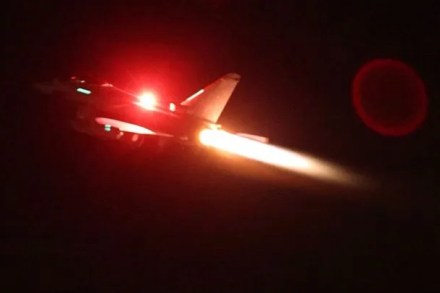
A month before the targeted killing of the Islamic Revolutionary Guard Corps’ (IRGC) commander Qassem Soleimani in January 2020, few would have expected the US government to eliminate him in a drone strike. Fast forward to this month, and the United States and its allies have launched a military operation to degrade and deter the Houthis. Last night, they launched strikes against more than a dozen Yemeni locations, with explosions reported in the capital Sanaa, the Red Sea port of Hudaydah, Dhamar and north-western Houthi stronghold Saada. The Houthis are armed, financed, and resourced by the IRGC and have been targeting commercial vessels in the Bab al-Mandeb Strait, a sensitive global chokepoint.