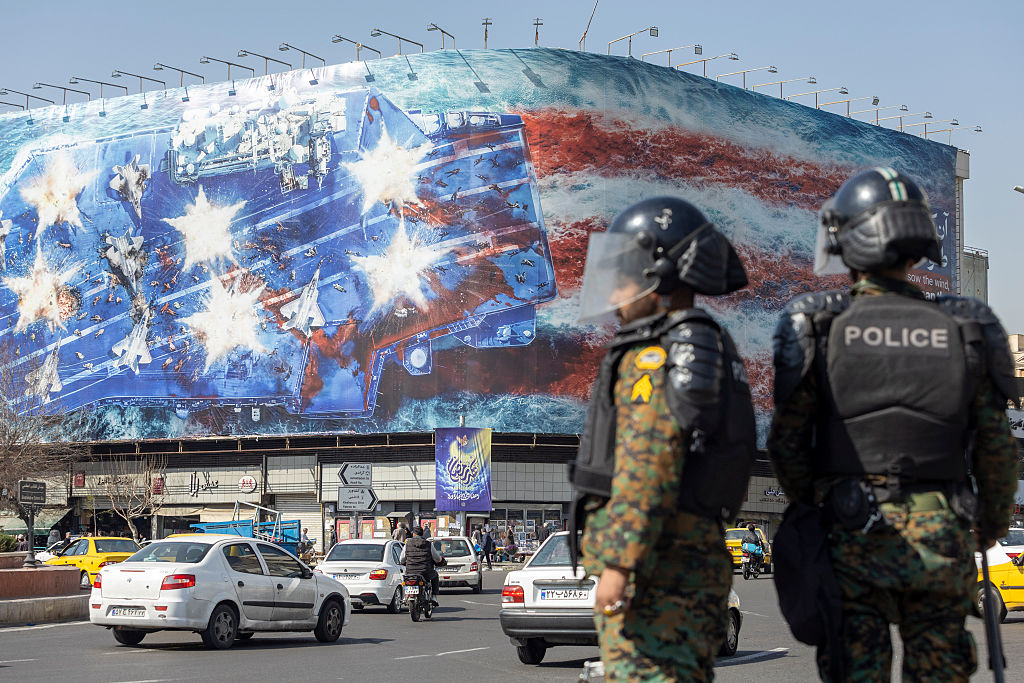
In 2001, Iran’s Supreme Leader Ayatollah Ali Khamenei met privately with Spain’s then-prime minister Jose Maria Aznar. Aznar recounted how Khamenei dubbed Israel a “cancer condemned to disappear” and said that an open confrontation with Israel and the United States was inevitable. Iran, the Supreme Leader insisted, would prevail. Fast forward to 2026, and the war that Khamenei prophesied is getting closer by the day.
The Islamic Republic is already operating under the assumption of a US military operation
For decades, durable diplomacy between America and Iran has failed because of the ideological nature of the Islamic Republic. It makes its decisions based on a mix of ideology and a desire for self-preservation. Tehran will consider tactical concessions to buy time but will never compromise on its grand strategy: anti-Americanism, eradication of the state of Israel and the export of the Islamic Revolution.
US presidents – Democrat and Republican – have long viewed nuclear diplomacy as the floor and not the ceiling of engagement with Iran, whereas Khamenei has always viewed it as the ceiling and not the floor. This mismatch in expectations coupled with a lack of bipartisan consensus in the United States as to what constitutes an acceptable Iran strategy has imperiled negotiations past and present.
The maximum the Iranian system is prepared to concede continues not to meet the minimum the Trump administration will accept. President Trump is seeking a deal based on zero enrichment, export of Iran’s stockpile of highly enriched uranium, limits on its ballistic missile program, and an end to its support for terrorism. But Tehran will only offer reversible nuclear compromises that allow it to preserve a domestic enrichment capacity and will refuse to touch its most important assets, namely its missile program.
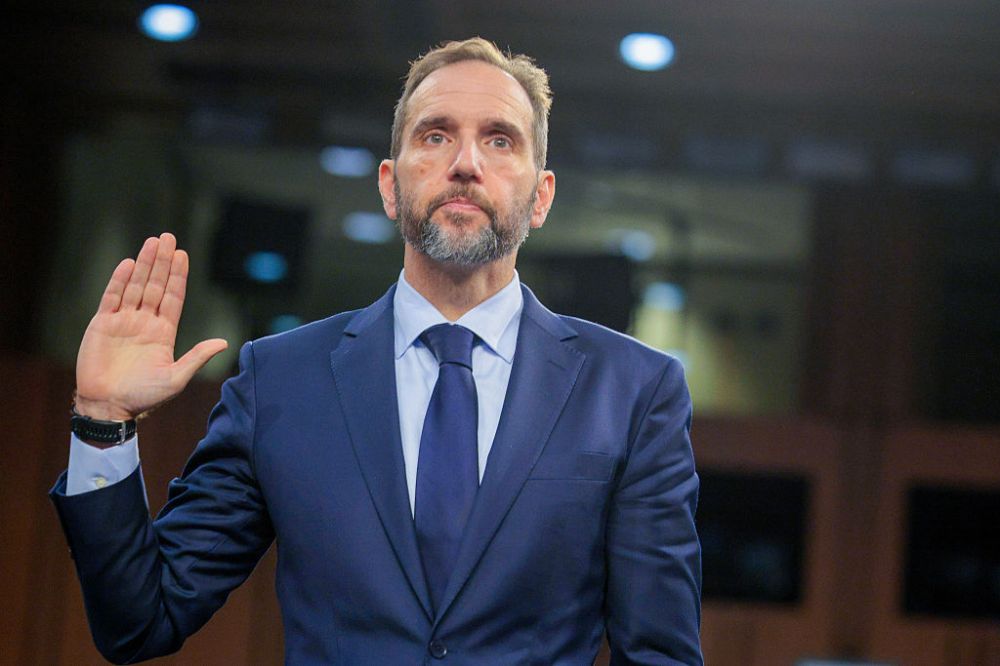
Some in the Trump administration have expressed wonderment why Khamenei has not capitulated. The answer is likely that the Supreme Leader has made the calculation that his regime has a better chance of surviving attempted regime change by military force than agreement.
This is because Khamenei views the terms being offered by President Trump as tantamount to regime change. He has no interest in a better relationship with the United States, much less changing his ideology, which is his legacy. In a telling remark during a recent speech, the Supreme Leader cited Shiite teachings of resistance and how Imam Hussein never pledged allegiance to someone like the Caliph Yazid. Khamenei said, “similarly, the Iranian nation declares that a culture-rich nation like ours will never pledge allegiance to corrupt rulers like those in the US.” This is why durable diplomacy between Washington and Tehran remains fanciful.
The Islamic Republic is already operating under the assumption of a US military operation and has engaged in planning for wartime conditions and a post-Khamenei era. Khamenei’s lieutenants are jockeying for position, with Secretary of the Supreme National Security Council Ali Larijani, Speaker of Parliament Mohammad Bagher Ghalibaf, and Secretary of the Defense Council Ali Shamkhani all auditioning for the strong-man role should Khamenei die and should there be constitutional changes.
Ghalibaf, in particular, is reportedly playing a central role as Khamenei’s deputy in commanding the armed forces, according to the New York Times. This is similar to the role played by one of his predecessors as speaker, Ali Akbar Hashemi Rafsanjani, when he was named acting commander-in-chief of the armed forces at the end of the Iran-Iraq War.
Other political factions have been showcasing their preferred leaders, namely former president Hassan Rouhani. They have even used the western press to brand him as a maverick, willing to challenge Khamenei. This is an unlikely prospect. More broadly, the Iranian people who are protesting view Rouhani and Khamenei as two sides of the same coin. In fact, some consider Rouhani even more dangerous as a Deng Xiaoping-like figure who would preserve the core of the system.
The negotiations between Iran and the US in Geneva are reminiscent of the Geneva peace conference in 1991, when then-US secretary of state James Baker met with Iraq’s foreign minister Tariq Aziz for a last ditch effort to find a peaceful resolution to Saddam Hussein’s invasion of Kuwait. Both talks feature the credible US threat of military force and an attempt to engage in a Hail Mary last-ditch effort at diplomacy to legitimize the use of force.
But there are limits to what coercive diplomacy can achieve with a supreme leader whose primary goal for three decades has been regime survival. Khamenei has long bet on a lack of American willpower to fight the Islamic Republic, dating back to the US withdrawal from Lebanon after Hezbollah’s bombing of the US Marine barracks in Beirut in 1983.
Khamenei and his system believe that irrespective of their losses, if they can inflict enough pain – economic, political, and military in the form of killing Americans – on the United States, they can force Washington to withdraw. In short, it’s a theory of asymmetric endurance, according to a report in the Islamic Revolutionary Guard Corps-affiliated Tasnim News, which the Telegraph recently republished. It’s a risky calculation for the Islamic Republic, but one Khamenei and the top brass feel is based on a pattern of American lack of patience and retreat. As Khamenei told Aznar in 2001, he believes Iran will prevail. Prevailing, for Khamenei in his resistance ethos, means his system merely surviving.




Comments