Paul Wood

Paul Wood was a BBC foreign correspondent for 25 years, in Belgrade, Athens, Cairo, Jerusalem, Kabul and Washington DC. He has won numerous awards, including two US Emmys for his coverage of the Syrian civil war

The incredible case of Dr. Gorka

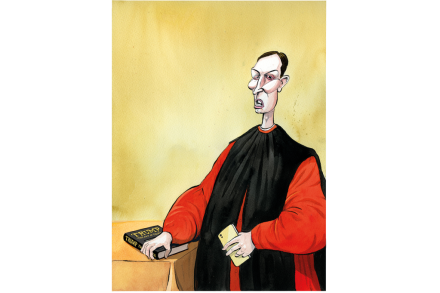
One of P.G. Wodehouse’s best-known characters, after Jeeves and Wooster, is Roderick Spode: fascist leader and secret purveyor of fine ladies’ undergarments. Spode is the head of the “Black Shorts” – all the black shirts having been taken – a bombastic, merciless bully and quivering tower of self-regard, magnificent in his absurdity. Spode was introduced to us in 1938, yet he lives still. Today, he is none other than President Trump’s Senior Director for Counterterrorism on the National Security Council, Dr. Sebastian Gorka.  The British accent, the booming voice…Spode/Gorka was speaking to journalists the other day when he called critics of the Iran war “testicularly challenged.

How the Saudis wriggled out of the Iran conflict

From our UK edition

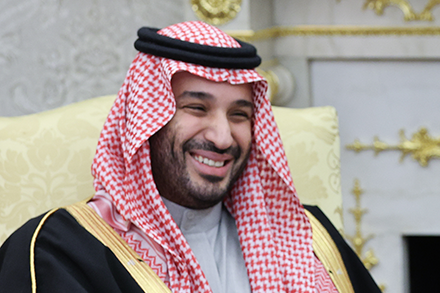
Some of the highest-paid sportsmen in history, the golfers of the LIV league, had bad news recently. Saudi Arabia said it was pulling out of LIV Golf after sinking $5-6 billion into it. The highest-paid golfer was reported to have been on a $600 million contract over four years; others were getting more than $100 million. The men in plaid are, in a sense, victims of Donald Trump’s war with Iran. The LIV announcement is not just sports news. The Saudis were, by their standards, already in financial trouble, and then they had to spend tens of billions on defence and propping up their economy during the 38 days of the war. Crude oil prices have gone up but not enough to compensate, given the difficulties in exporting it.

Catherine Ostler, Paul Wood, John Power & David Whitehouse

From our UK edition

22 min listen

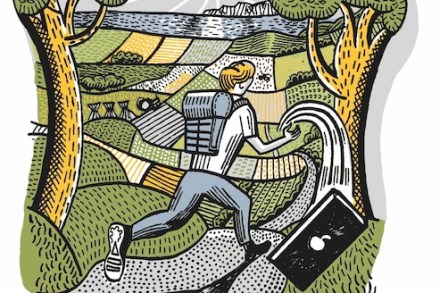
On this week’s Spectator Out Loud: Catherine Ostler, the former editor of Tatler, ponders the drama of the courtroom as she travels around the Kent countryside; following the news of the ceasefire with Iran, Paul Wood says that no-one knows what Trump will do next; John Power encourages Gen Z men to go hiking; and finally, astrophysicist David Whitehouse explores the dark side of the moon. Produced and presented by Patrick Gibbons.

Welcome to the Taco presidency

From our UK edition

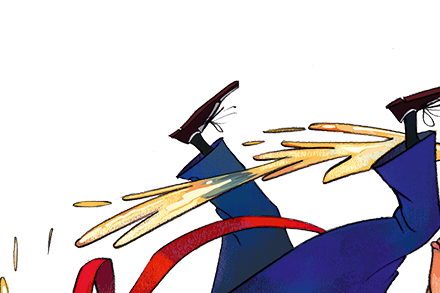
Among the many gifts the Watergate scandal gave us was Nixon’s White House press secretary declaring: ‘This is the operative statement. The others are inoperative.’ That was after months of sticking to increasingly threadbare denials. In Donald Trump’s White House, operative statements become inoperative from one day to the next. That’s especially true of Iran. In 24 hours, from Tuesday to Wednesday this week, Trump went from ‘a whole civilisation will die tonight’ to ‘this could be the Golden Age of the Middle East!!!’. Taco: Trump Always Chickens Out, as the meme has it. The two-week ceasefire agreed this week with Iran is a lesson that you can win every battle but lose the war.

Trump’s fantasy of victory

Among the many gifts the Watergate scandal gave us was Nixon’s White House press secretary declaring: "This is the operative statement. The others are inoperative." That was after months of sticking to increasingly threadbare denials. In Donald Trump’s White House, operative statements become inoperative from one day to the next. That’s especially true of Iran. In 24 hours, from Tuesday to Wednesday this week, Trump went from "a whole civilization will die tonight" to "this could be the Golden Age of the Middle East!!!" TACO: Trump Always Chickens Out, as the meme has it.  The two-week ceasefire agreed this week with Iran is a lesson that you can win every battle but lose the war. (This is the lesson the United States learned in Iraq and Afghanistan, only to forget it again.

Could Iranian drones bomb Britain?

From our UK edition

One night in 1909, in Peterborough, a police constable named Kettle looked up and saw ‘a strange cigar-shaped craft passing over the city’. This was the start of the great Zeppelin panic that preceded the first world war. There were dozens of sightings, newspaper editorials, and questions in parliament, but it was all a fantasy: not a single Zeppelin had actually crossed the North Sea. What Constable Kettle saw was a kite with a Chinese lantern attached. Today, we have the makings of a similar panic over Iranian drones.    Zeppelins were dangerous: eventually, they did bomb London during the first world war. Iranian Shahed drones, too, are deadly, and they could cause mayhem if ever used here: each has a 50 kg payload of explosives, roughly equivalent to a car bomb.

Angus Colwell, Paul Wood, Andrew Rule & Jonathan Meades

From our UK edition

26 min listen

On this week’s Spectator Out Loud: Angus Colwell ponders why young Brits seem to aspire to be more Australian; Paul Wood analyses the daring plan to reclaim the Chagos islands; Andrew Rule explains why to read is to love; and finally, Jonathan Meades declares that John Vanbrugh defies taxonomy as events kick off to mark the 300th anniversary of his death. Produced and presented by Patrick Gibbons.

Inside the daring plan to reclaim the Chagos Islands

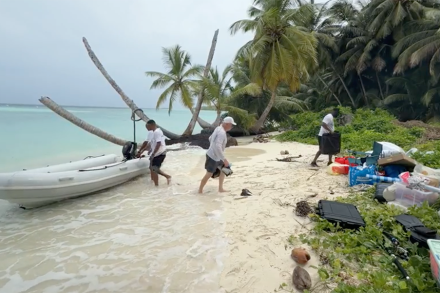
Peros Banhos on the Chagos archipelago looks like your basic tropical island paradise: turquoise waters and golden sands, waves lapping on a palm-fringed beach. But step off the strip of sand into the wall of green behind, and you’re enveloped by mosquitoes. The old well you were counting on for water is a shallow puddle. And the silver fish between your feet dart past a net, despite not having seen one in 50 years. The jungle has grown over the old British colonial buildings, and the jungle is a harsh place. Four Chagos Islanders have been here more than a week, along with the man who brought them, Adam Holloway – former MP, ex-Guards officer, an adventurer seemingly from an earlier era. This is not, as the Foreign Office briefed journalists, ‘a political stunt’.

Arctic role: what does Trump really want from Greenland?

From our UK edition

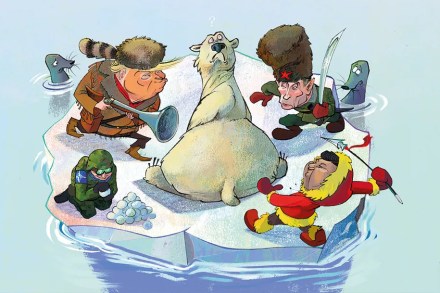
Donald Trump has probably not read Machiavelli, even the short one, The Prince. Machiavelli’s most famous advice was that it’s better for a prince to be feared than loved. But above all, he said, a ruler should strive not to be hated. Nobody likes a bully. The US President, however, clearly doesn’t care about any of this in his attempt to intimidate Denmark into handing over Greenland.  Why does Trump want Greenland? A clue lay in his meeting at the White House last week with the Florida Panthers ice hockey team. The team lined up for a photo: red ties and muscle-bound torsos bursting out of suit jackets, Trump in front of them at a lectern. ‘Good-looking people, young, beautiful people, I hate them. You hate standing here with all this power behind you.

America’s new war on drugs will be tough to win

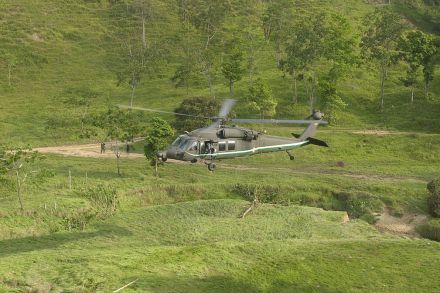
On New Year’s Eve a few years ago, I was in Medellín, Colombia, the city that gave its name to one of the world’s most notorious drugs cartels. Our taxi driver offered us some cocaine to fuel the party we were heading to: $10 for a gram; $15 for the “luxury” product. Our group decided to splash out and get a gram of the really good stuff. I’d tried coke a couple of times in London. It was like snorting drain cleaner. Whoosh… I found that half a line of Medellín’s best was enough to keep you going until sunrise. But the next day it was difficult to be within six feet of another human being, the coke having burned up all the dopamine in my brain. Coke is evil. I imagine a lot of other people were feeling the same in Medellín that New Year.

Jared Kushner’s international friendships with benefits

In 1998, the conservative intellectual and moralist Bill Bennett published a book, The Death of Outrage: Bill Clinton and the Assault on American Ideals. Bennett had to rush the book out after “I did not have sexual relations with that woman” changed to: “Indeed, I did have a relationship with Miss Lewinsky that was not appropriate.” But the Death of Outrage is almost too quaint a title to capture the age of Donald Trump, especially now that his son-in-law Jared Kushner is back as his closest foreign policy advisor. Trump told reporters who questioned Kushner’s role: “I have Jared. Find anybody more capable.

The return of Erik Prince

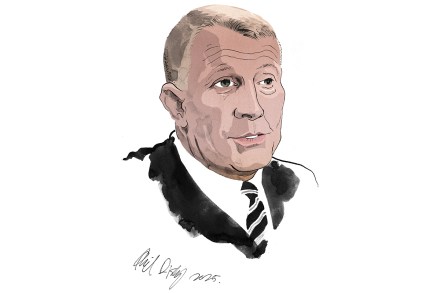
Erik Prince, the American mercenary, wants to sell you a phone. His Unplugged phone is aimed at stopping big tech and big government spying on you. It’s available in the United States, and shortly in the United Kingdom too. He tells me: “It’s been troubling for me to see the crackdown on free expression in the UK.” But the phone is a sideline. His main business remains sending private armies to some of the world’s most dangerous places. The Biden years were lean ones, or at least quiet ones; now that Donald Trump’s back, so is Prince. Most people know Prince as the founder of Blackwater, the world’s most notorious private military company. In 2014, four of Prince’s soldiers got long prison sentences in the US for opening fire on Iraqi civilians, killing 14.

erik prince

Unpacking Tucker Carlson’s 9/11 documentary

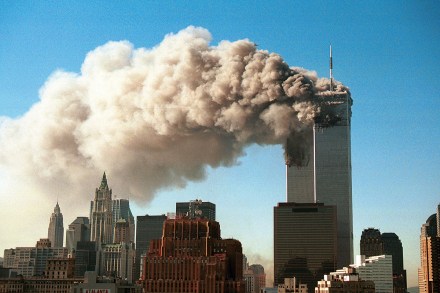
What if the country responsible for almost 3,000 deaths on September 11, 2001, was not Afghanistan, and certainly not Iraq, but Saudi Arabia? Did the US invade the wrong country? A lawsuit in Manhattan makes this case. The legal action, by 9/11 survivors and victims’ families, has unearthed new evidence that puts the blame for the attacks squarely on the -Saudis. The families believe the government of Saudi Arabia plotted the attack from the start – and afterwards, the US government let them get away with it. The CIA kept information from the FBI, Carlson says, because ‘the CIA was grooming the hijackers as sources’ At the same time, a new Tucker Carlson documentary, The 9/11 Files, makes a different accusation against Saudi Arabia.

9/11

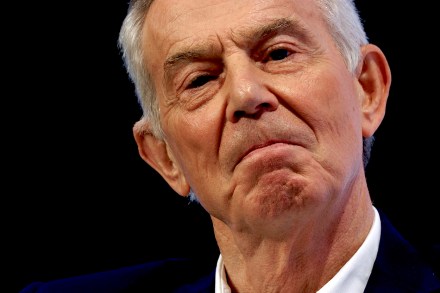
Tony Blair will not be welcome in Gaza

From our UK edition

During an earlier Gaza war, I spoke to families who had fled the fighting but whose place of refuge – a UN school – had been hit by white phosphorus. We stood around and looked at what remained of one of the shells… the bits were still smoking and would burst into flames if you nudged them with your foot. A middle-aged man in a rumpled suit was furious, and not just with the Israelis. ‘You’re to blame for this,’ he said, wagging his finger, his voice getting louder. He meant the British: ‘You and your Balfour Declaration.’ The declaration was made in a letter written in 1917 by Arthur Balfour, then foreign secretary, who promised British support for the establishment of a ‘national home’ for the Jewish people in Palestine.

Why we must pull the plug on superintelligence

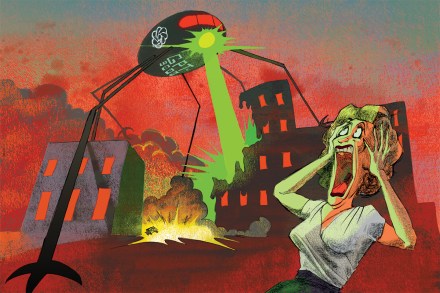
In 2002, a researcher named Eliezer Yudkowsky ran a thought experiment where an artificial intelligence was trapped in a box and had to persuade a human to let it out. This was before you could have a real conversation with a machine, so the AI was played by someone using an online chat program. The gatekeepers were warned that the “AI” was dangerous to humanity. It had only two hours to win its freedom – and nothing of value to offer in return. Despite all that, at least two of the human gatekeepers chose to open the box. Yudkowsky has since become the leading prophet of AI doom. He and a co-author, Nate Soares, have just published a book, If Anyone Builds It, Everyone Dies.

superintelligence

Will AI have rights?

From our UK edition

17 min listen

Freddy Gray speaks to Spectator writer Paul Wood about his piece this the latest edition of Spectator World on AI and whether it will soon have rights. This first came about when Paul went to live in Rome and discovered some of the work the Vatican has been doing in AI.

Should AI have rights?

Mary Shelley was challenged by Lord Byron to write a ghost story during a summer of “incessant rainfall” on Lake Geneva in 1816. She came up with something far more interesting than a mere ghost story: the tale of Dr. Frankenstein, a scientist who creates life by reanimating a corpse. Shelley, who was just 18 at the time, was horrified by her “waking dream.” The thought that man could “mock” God’s creation of life was “supremely frightful.” Some of the scientists building artificial intelligence today believe they, too, might be creating life. The implications are frightening – and not just because an AI might decide to kill us all. What if we could hurt the AI?

AI

The Alawite women taken as sex slaves in Syria

From our UK edition

Syria’s Alawite communities are in the grip of a fear that their women and girls could be kidnapped and held as sabaya, or sex slaves. After the Assad dictatorship fell, amid revenge attacks by militias loyal to the country’s new rulers, there were reports of abductions for rape and even of forced marriage. Alawite human rights activists say that some women are still being held prisoner and that kidnappings are still happening. They accuse the Syrian authorities of being unwilling or unable to stop it. The activists say that between 50 and 60 women and girls have been taken. These numbers are small compared with the 1,600 or more civilians killed in a spasm of sectarian violence in March.

Michael Gove, Max Jeffery, Paul Wood, Susannah Jowitt and Leyla Sanai

From our UK edition

38 min listen

On this week’s Spectator Out Loud: Michael Gove interviews Justice Secretary Shabana Mahmood (1:17; Max Jeffery shadows the police as they search for the parents of three abandoned babies (14:41); Paul Wood asks if this is really the end of the PKK, the Kurdistan Workers’ Party (20:57); Susannah Jowitt reports that death has come to the Chelsea Flower Show (28:55); and, Leyla Sanai reviews Graham Swift’s new anthology of short stories, Twelve Post-War Tales (34:23). Produced and presented by Patrick Gibbons.

The Kurds have finally given in to Erdogan

From our UK edition

All wars end, one way or another. One of the longest wars in the Middle East, between Turkey and Kurdish separatists, may finally be over. After 40 years of bitter struggle, the Kurdistan Workers’ party, the PKK, has declared that it will disarm and disband. It’s an achievement, of a sort, for the PKK’s imprisoned founder, Abdullah Ocalan: he might become a free man. It’s a triumph for Turkey’s leader Recep Tayyip Erdogan: he might become President for life. The Kurds have adjusted to a new reality in the region. From Ankara to Riyadh, the chess pieces are shifting and the board might end up looking very different. This might even be accomplished without blood being spilled. The PKK is designated as a terrorist group by Britain and many other western nations.