Gareth Roberts

Gareth Roberts

Gareth Roberts is a TV scriptwriter and novelist who has worked on Doctor Who and Coronation Street. He is the author of The Age of Stupid substack.

Do I like what I see after cataract surgery?

From our UK edition

A couple of weeks ago I had an operation to remove my cataracts. Cataracts are cloudy smears over the lens of an eye. For the sufferer, it feels like you’re seeing everything from behind a very thick net curtain. By the last few weeks it was more like 450 denier tights; I have new respect for bank robbers. The bright summer this year was a boon - but when the first properly grey days arrived, I was sunk. And when the clocks went back, almost everything became impossible after 3.30 pm.   I had no choice in the matter at all - everybody on my mother’s side of the family develops cataracts at around my current age. So when my eyesight, never that great, was enhanced by fog patches, like a camera lens smeared with Vaseline, I didn’t panic. I just thought ‘here we go then’.
Did ‘lad culture’ really enable Russell Brand?

From our UK edition

Following the conviction of Russell Brand – the jury found him guilty on one count of rape and three counts of sexual assault – the BBC, home to Brand in his imperial pomp, was swiftly out of the traps trying to puzzle out what exactly had enabled him. Their own encouragement of him? No, don’t be silly. Turns out that it was the ‘lad culture’ of the noughties. This piece on the BBC website explained how that awful laddism ‘helped Russell Brand to hide in plain sight’. You will also note that nobody on the progressive left is currently beating themselves up for how their culture might have enabled Brand The poor old BBC, eh?  Always learning lessons from decades ago, and neglecting to mention their own key part in whatever bad thing happened back then.

Will we miss Trump when he’s gone?

From our UK edition

Whatever happens in the American mid-terms today, there are only two-and a-bit years remaining of Donald Trump as a politician. Will we miss him when he’s gone? Millions of words have been written about Trump, but for all that verbiage, are we any closer to getting a grip on him? Whatever your personal feelings, you must in honesty agree that he is an exceptional person, in the sense of being exceptionally peculiar. While we are all individual like snowflakes, Trump is surely the oddest of all the oddballs. One of the mistakes made by his many detractors has been to try to categorise him as a familiar type – a dictator, a crook, a nutcase, a bully. But he is just too strange to fit into any recognisable category.

It’s time to de-decolonise Britain

From our UK edition

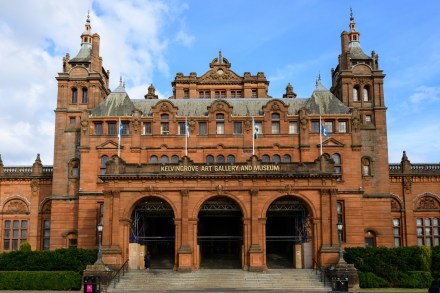
It is still just about possible, even this deep into the seemingly never-ending silly season that’s been running since about 2014, for a news story to take your breath away. Last week it was revealed that the curators of Glasgow’s Kelvingrove Museum have removed from display the mummified remains of the Egyptian priest Nekht, among other bits and bobs, because of an ‘absence of consent’. Presumably they are waiting for time travel to be invented, so that somebody can nip back 4,000 years and get Nekht to fill out the appropriate forms.

Burnham’s Gogglebox appearance shows he is not serious

From our UK edition

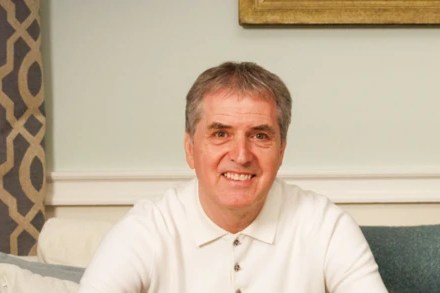
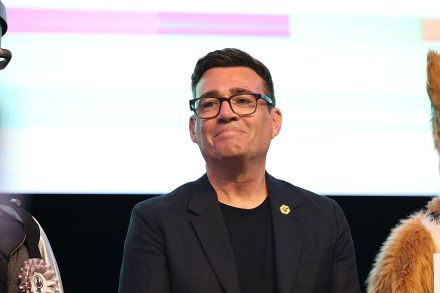
Andy Burnham, together with Liverpool mayor Steve Rotherham, appeared on a charity special of Channel 4’s Gogglebox last night. The show began in 2013, but is still going, as all hit TV shows must in this benighted century. The novelty of the format – watching viewers watch TV – is long gone, as the participants inevitably started acting up for the cameras. It may be a false memory, but I’m sure I remember the show being more caustic,  a bit sharper. It is now crushingly cosy and twee. So, perfect for our Andy then.  This episode, a fundraiser for Stand Up To Cancer, interspersed the usual TV ephemera with harrowing real life cancer stories.

Watching Paris burn hasn’t been enjoyable at all

From our UK edition

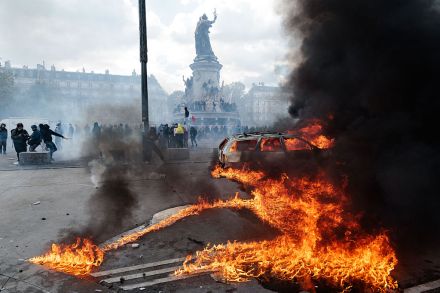
Watching Paris burn at the weekend, it occurred to me that saying ‘I told you so’ was a lot less fun than I thought it would be.  I surprised myself by not emitting a bitter cackle at the viral clip of the young French woman trying unsuccessfully to reason with looters. She is seen repeatedly shouting things like ‘C’est pas la cause!’ (‘This isn’t the cause’) and ‘Pourquoi vous faites ça?’ (‘Why are you doing this?’) and seems incredulous as her world view smashes rudely into reality. It turns out that when all your predictions were gloomy ones there’s not actually much pleasure in them coming true Incidentally, what exactly is ‘La cause’? The media are still, incredibly, referring to the riots as ‘cost-of-living demonstrations’.

Greta Thunberg is a protest addict

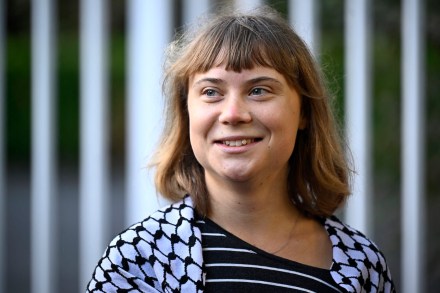
Greta Thunberg is in Paris. Yes, as if the French haven’t got enough on their assiettes with “youths” and “students” reducing the cradle of European civilization to smoking ruins, the overgrown Shirley Temple of Stockholm rocked up this morning outside a school in Saint-Denis. She told the crowd, “Young people are not being included in the conversation. Our future is being robbed away from us!” The clumsy structure of the latter sentence gave me an eerie sensation of an Armageddon-themed ABBA lyric. I can picture a mournful Frida singing it over flickering firelight. Few are the child stars, like Roddy McDowall or Bonnie Langford, who can sustain an adult career Greta certainly gets around, doesn’t she? Her passport must be like a tattered old dollar bill.

Sandi Toksvig’s war on Wikipedia

From our UK edition

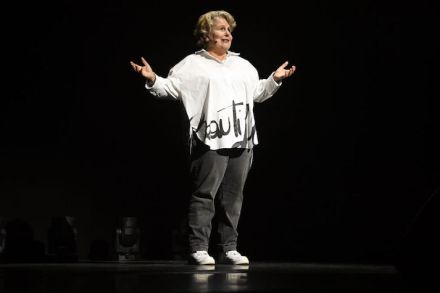
My Weetabix spoon froze in mid-air when I saw that Sandi Toksvig, affable host of televisual fluff, and activist for various progressive causes, has her sights set on a new target: Toksvig is taking aim at, of all things, Wikipedia. Toksvig’s Wiki crusade is fascinatingly barmy. What next, I wonder? Why? Because, apparently, it is not left-wing enough. In fact, in her estimation it is ‘deeply biased’ and a positive hotbed of wrongthink, because it is controlled and edited by ‘middle-aged white men’ (boo hiss).

Up next… Yookay Street, a refreshing new soap opera

From our UK edition

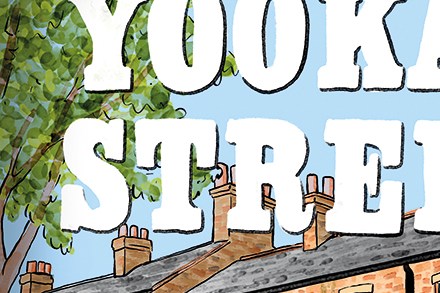
The idea of TV soap operas was originally, at least in part, to reflect the nation as a whole. This was never really true – out of dramatic necessity, the characters in these shows take an unusual interest in one another’s business and tend to have peculiarly eventful lives. But it was more true than today, when soaps – for all their obsession with ‘issues’ – are squeamish and avoidant, preferring to duck difficult topics. Here is my attempt to restore the balance with a more honest soap opera, where all the problems of modern Britain are concentrated in one place. Everything is absolutely fine on… Yookay Street. SCENE 1 – THE STREET. Afternoon We open on a long, terraced urban street with a corner shop at one end and a pub at the other.

Why are progressives so desperately devoted to the BBC?

From our UK edition

The BBC is lopping bits of itself off again. On the amputation list this time around, according to the Gurdian, are the linear versions of channels BBC Three and BBC Scotland. We’ve been here before. BBC Three spent the years between 2016 and 2022 as an internet-only streaming treat. Its return to full TV channel status always seemed a little odd, particularly considering its supposed youth remit. The Guardian reports that its most-watched programme last Tuesday had a grand total of 74,000 viewers. Television is a mass medium; when your show hits figures as low as that, you might as well start hiring a few church halls and scout huts and putting it on there. Similarly, BBC Scotland, which launched in 2019, attracts very few Scots to its live offering.

The lunacy of Labour conference

From our UK edition

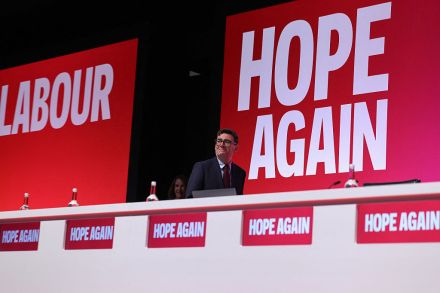
It is a most disconcerting experience when you encounter somebody who seems fairly normal but then casually remarks that they are from Venus, or that Princess Anne has been following them about in an ice cream van. When this happens at scale, and everybody seems to shrug and accept it, you eventually stop noticing. The current Labour conference, for example, is a concentration of lunacy. Progressivism is a kind of collective hallucination Away from the conference hall itself, the pottiness is always a little more pronounced. This time round, we’ve had backbench barminess like Dame Emily Thornberry’s enthusiasm for the seizure of private property, or Stella Creasy MP demanding the right to silence people who disagree with her.

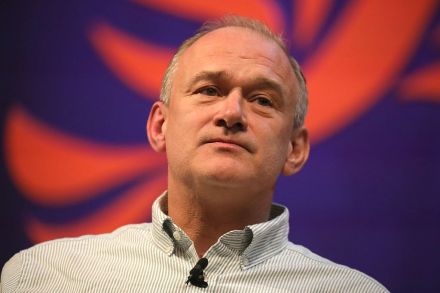
It’s hard to take the Lib Dems seriously

From our UK edition

Younger readers may not believe me, but we used to take the Lib Dems seriously, or at least more seriously. Leaders of the party – Paddy Ashdown, Charles Kennedy, Nick Clegg – were, if not wildly popular or successful, unthinkingly assigned in the public mind to the same bracket of status as the Labour or Tory leaders.   After about 30 years of progressives trashing the nation, and sneering at its heritage and culture, they now expect us to rush lustily to its defence Today’s five-way split in British party politics (six if you count the SNP, seven if you count Restore) is disconcerting in many ways. The flailing of both Labour and the Tories should, in the normal course of things as we understood them, have sent people scurrying to the Lib Dems.

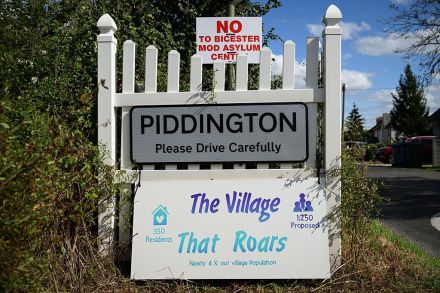
Piddington and the idiocy of middle-class progressivism

The Piddington result is in. Ninety-two per cent of the voters in the tiny Oxfordshire village have voted to secede from the United Kingdom – 285 yes, 26 no. Why? Because the British government plans to dump hundreds and hundreds of small boat ‘asylum seekers’ in a military base slap bang next to the Piddingtonians.  Of course, this is a symbolic gesture. There is no legal mechanism to actually achieve secession, which is perhaps just as well. As we know, it’s hard enough to get British politicians to acknowledge the results of an official national referendum, let alone a wildcat local one.

ITV’s The Box has exposed Gary Lineker for who he really is

From our UK edition

‘What have I signed up for?’ wondered contestant Jenny Ryan early in proceedings on ITV’s The Box. It’s a question that might be more germanely asked by the show’s host Gary Lineker. A long time ago, American comedian Fred Allen said that ‘Television is a device that permits people who haven’t anything to do to watch people who can’t do anything’. I always thought this was a harsh judgement. But The Box proves that Allen was simply ahead of his time. This is what Lineker has chosen to do in the downtime when he’s not sharing his thoughts on Israel, or raking in millions from his podcast empire It is a game show – at least I think that’s what it is – fronted by the FA Cup-eared crisp masticator, now retired from his vital work on Match Of The Day.

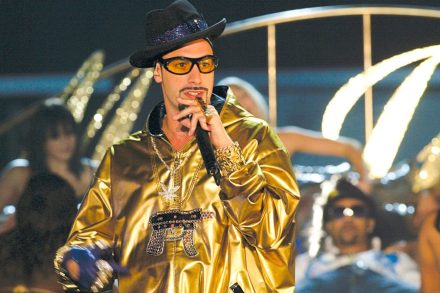
Ali G and the death of comedy

Ali G: Who Iz I? is set to hit cinema screens next month. The return of this bling-bedecked denizen of the West Staines Massive, first seen on TV in 1998, is a disquieting symptom of our century’s static culture. Back in 1998, it would have been inconceivable for the big new comedy film to have been a revival of TV characters from 1971 – On The Buses or The Liver Birds. Today, along with Ali G, we are also blessed by Alan Partridge and Have I Got News For You, even older comedy institutions. And there are endless reiterations of old shows and formats: Star Trek, Spiderman and similar, Blankety Blank, Bergerac. Mass culture has essentially stopped.

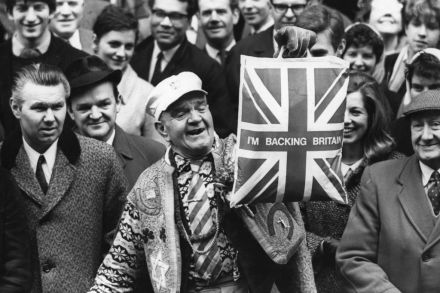
Why ‘I’m backing Britain’ would never happen today

From our UK edition

The economic storm clouds continue to gather over Britain. A reckoning of some sort is on its way, possibly a spectacular one. How will we react? Perhaps there are clues to be found in ‘I’m Backing Britain’, the short-lived campaign to gee up the nation back in early 1968. I was born a few months after its brief but memorable moment in the sun; I picked up on the slogan as a child, as one of those things adults said with a wry grin that I didn’t quite understand. But what Britain had in 1968 was a dynamic mass popular culture offering multiple pleasant distractions and more functional institutions.

The remarkable longevity of Nigel Farage

From our UK edition

Do political faces have a ‘use by’ date? Is there a point beyond which even the mugs of politicians that we like start to grate? The recent mini-media hubbub about Nigel Farage’s continuing prominence in British politics has me pondering. Is the time limit on political careers down a lot more to familiarity than anything else? It used to be a pretty accurate rule that certain occupations were flash-in-the-pan affairs. It was rare, for example, for a pop star to remain a big sensation for very long. Even the biggest stars only had about five years tops before their shine wore off and something younger, brighter and shinier turned up. In the same way, hit TV shows would blaze away for a while, and then other shows would take their places. Disposability was a given.

Andy Burnham’s laughably unserious summer

From our UK edition

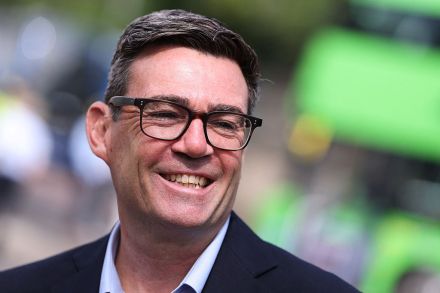
What a strange summer this has turned out to be: no rain and no politics. As we enter what the broadcast media are calling the fifth ‘heatwave’ of the year – a heatwave is what used to be known as a hot day or two – the green, green grass has become yellowy stubble. And the sphere of public life is similarly arid and uncanny. While it’s usual for the party political world to take a breather in the summer months, the unique circumstances of the switch of prime minister just before the rain stopped falling has given summer 2026 a spooky quality. It feels like we’re all in a dream world. And nobody is further in that dream than Andy Burnham, insulated as he is from the usual processes of scrutiny.

Why progressives were desperate to believe Jason Arday

The Jason Arday affair has been a great revealer. On the one hand, it is a glorious romp that has brought much-needed mirth to the nation. On the other, the exposure of Professor Arday isn’t really about the guileless Arday himself, but the establishment that elevated him. It has served up a moment of unavoidable clarity in which the nonsense of progressivism stands exposed like the imperial scrotum. Arday himself can hardly be blamed for this scandal. Like Puff the magic dragon, he is notable only for the effect he had on others It is a perfect storm. We have a fantasist in an environment where, for political and social status reasons, everyone takes his claims at face value, or pretends that they do because to express doubt would be to invite unwanted attention.

The ‘Burnham bounce’ surely won’t last

From our UK edition

A change is as good as a rest, they say. Like many such maxims, this is an insightful observation worn down by overuse. It first appeared in 1857 as both the title and catch of an anonymous poem. But the wisdom of this piece of Victorian doggerel has been demonstrated over the week since Andy Burnham’s coronation. Labour has overtaken Reform in The Spectator’s poll tracker for the first time in almost two years. It’s a very slight lead, well within the margin of error, and varying across the polls, but it’s definitely there. ‘Labour’s comms has been in another league this week compared to what went before.