Matt Ridley

Matt Ridley is the author of How Innovation Works: And Why It Flourishes in Freedom (2020), and co-author of Viral: The Search for the Origin of Covid-19 (2021)

How dangerous is the cruise ship virus outbreak?

Here we go again, or maybe not. The World Health Organisation is reassuring us that the public health risk from hantavirus is low, after the outbreak on a cruise ship. Hantaviruses are a classic zoonosis: caught from animals. You have to inhale dust containing infected rodent droppings or – in the case of this Andean variant, which has shown limited human-to-human transmission before – to have close and prolonged contact with somebody who has already caught the virus. That means being coughed on, not just sharing the same air in a room. Zoonotic agents are often very good at killing people – Ebola, Marburg, Nipah, Hendra, Sars and Hanta have high fatality rates – but are not so good at infecting people Trouble is, of course, WHO said the same about Covid.

Why didn’t the green lobby stand up for the Chagos islands?

From our UK edition

The credit for defeating Sir Keir Starmer’s Chagos surrender bill goes to its political opponents who waged a relentless and diligent campaign. They got almost zero help from a group that should have been even more against the bill than anyone: environmentalists. When Starmer government suggested handing over the islands to Mauritius – a nation that had campaigned against the designation of the archipelago as one of the world’s largest marine protected areas (MPAs), had partly ruined its own coral reefs, and was proposing to allow ‘traditional’ fishing in the archipelago, possibly including European fleets – I expected howls of protest from environmentalists. Instead, silence.

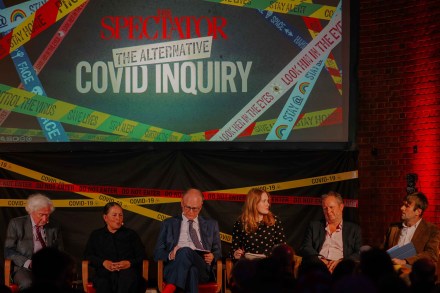
LIVE: The Spectator’s Alternative Covid Inquiry

From our UK edition

53 min listen

As the official Covid Inquiry comes to an end, the Spectator has convened a panel of our own experts to ask the questions that the Inquiry didn’t – or wouldn’t – answer. The Spectator’s commissioning editor Lara Brown is joined by science writer and Conservative peer Matt Ridley, Oxford professor of theoretical epidemiology Sunetra Gupta, former Supreme Court judge Jonathan Sumption, journalist Christopher Snowdon and science writer Tom Whipple. This is a condensed version of the event. Subscribers can access the full event via Spectator TV and you can find more events from the Spectator here.

LIVE: The Spectator’s Alternative Covid Inquiry

The real reason VAR has ruined football

From our UK edition

The two main harms of government regulation, to be balanced against any benefits, are cost and delay. But there is another harm, rarer but lethal when it happens. Sometimes regulation perversely increases risk by lulling the regulated business or people into a false sense of safety. I had this thought last weekend as I watched a football match on television. My beloved Newcastle United beat Aston Villa in the FA Cup fourth round, but the match made headlines because of five bafflingly bad decisions taken by the referee and his linesmen: failing to award two clear penalties, failing to give a red card for a dangerous tackle and failing to spot two offsides that led to goals. Four of the five decisions went against my team but that is not my point.

Why doesn’t the CDC care about Chinese biolabs in America?

If you rent a cheap Airbnb house in Las Vegas, you might not be altogether surprised to find dead crickets in the garage. But a thousand vials of medical samples in several freezers – and a centrifuge? After the cleaner and one guest fell ill at a property in the city’s Sunrise Manor neighborhood last week, federal agents raided it and found a whole laboratory’s worth of scientific kit of the kind more useful to medical scientists than, say, drug dealers. Curious. Curiouser still, the house belongs to a Chinese national named Jia Bei (Jesse) Zhu. He is currently in prison awaiting trial over a secret laboratory that (it is alleged) he was running in Reedley, California.

Biowarfare

Piers Morgan, Melanie McDonagh, Matt Ridley & Rachel Johnson

From our UK edition

24 min listen

On this week’s Spectator Out Loud: Piers Morgan reveals what Donald Trump told him from his hospital bed; Melanie McDonagh ponders the impermanence of email, amidst the Peter Mandelson scandal; Matt Ridley argues that polar bears – which are currently thriving – pose problems for climate enthusiasts; and finally, Rachel Johnson attends the memorial service for Dame Jilly Cooper – and says she made a fool out of herself. Produced and presented by Patrick Gibbons.

Piers Morgan, Melanie McDonagh, Matt Ridley & Rachel Johnson

The inconvenient truth about polar bears

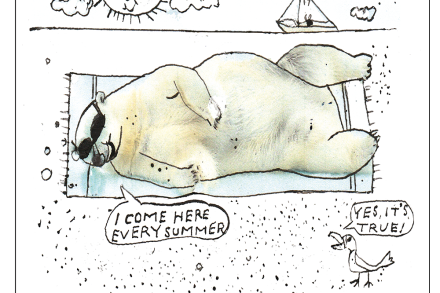
The BBC reported terrible news last week about polar bears: they are thriving. This is very annoying of them as it goes against the interests of environmental activists, polar bears being the very emblem, mascot and clickbait of climate change cataclysm. But the bears’ stubborn refusal to get the memo and starve has become too obvious to ignore. The latest evidence comes from the Barents Sea, and the Norwegian-administered archipelago of Svalbard in particular, where bear numbers have been steadily increasing. Surprisingly, they are also getting fatter, according to measurements taken when bears are caught and weighed. This is despite a decline in sea-ice cover in the area, especially in autumn.

The peril of playing with viruses

If a military team made a mistake during a nuclear war preparedness exercise and accidentally obliterated millions of people, you would not expect to find some of the very same people merrily admitting a couple of years later that they have carried out the very same kind of exercise with different live nukes and slightly fewer safeguards. Would you? That is roughly what I recently found out has apparently been going on in China. The Wuhan laboratory that conducted risky experiments on bat viruses at inadequate biosafety levels and almost certainly caused the pandemic has now revealed that it has done the same kind of risky experiments on another lot of horseshoe-bat viruses at low biosafety levels. Is accidentally killing millions not enough to give them pause?

The great climate climbdown is finally here

From our UK edition

Finally, thankfully, the global warming craze is dying out. To paraphrase Monty Python, the climate parrot may still be nailed to its perch at the recent Cop summit in Belem, Brazil – or at Harvard and on CNN – but elsewhere it’s dead. It’s gone to meet its maker, kicked the bucket, shuffled off this mortal coil, run down the curtain and joined the choir invisible. By failing to secure new pledges for a cut in fossil fuels, Cop achieved less than nothing. The venue caught fire, the air conditioning malfunctioned – and delegates were told on arrival not to flush toilet paper.

The end of the climate cult

Finally, thankfully, the global warming craze is dying out. To paraphrase Monty Python, the climate parrot may still be nailed to its perch at the recent COP summit in Belém, Brazil – or at Harvard and on CNN – but elsewhere it’s dead. It’s gone to meet its maker, kicked the bucket, shuffled off this mortal coil, run down the curtain and joined the choir invisible. By failing to pledge a cut in fossil fuels, COP achieved less than nothing, the venue caught fire, the air-conditioning malfunctioned – and delegates were told on arrival not to flush toilet paper.

Climate

Are we finally about to crack fusion energy?

From our UK edition

Imagine dropping a pea-sized capsule through a spherical chamber and hitting it with a colossal bolt of laser energy as it falls. If the capsule contains a mixture of deuterium and tritium, two heavy versions (isotopes) of hydrogen, then the atoms may fuse, turning into helium and emitting fast neutrons as they do so. Those neutrons and their accompanying radiation can heat molten salts around the walls of the chamber and that heat can be used to power industrial processes – or to boil water and generate electricity through a steam turbine. That’s the dream of a firm called Xcimer, one of the more ingenious fusion energy startups, based in Colorado.

America thinks Britain is finished

‘What’s missing?’ the tech titan Peter Thiel asks me, over lunch on the hummingbird-infested patio of his house in the Hollywood Hills. He gestures at the city of Los Angeles laid out in the haze below us. ‘Cranes!’ he explains. Thiel has argued for years that America has done most of its innovation in digital ‘bits’ instead of physical ‘atoms’, because bureaucracy, regulation and environmentalism have got in the way of the latter. While software has exploded, transport and infrastructure have stagnated. But over the next few days in Austin, Texas, and around San Francisco Bay, I see evidence this is changing.

Labour’s class war on moorland

From our UK edition

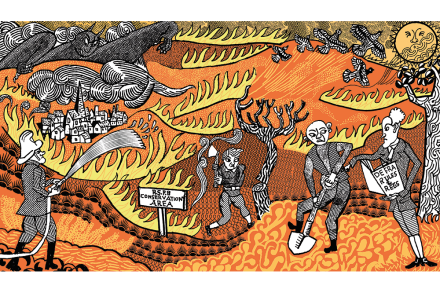
This year has been a bad one for wildfires in Britain. In June, nearly 30,000 acres burned near Carrbridge in the Highlands. In August, a careless camper, I’m told, ignited 5,000 acres in the North York moors, setting off 18 unexploded shells, shrapnel from one of which narrowly missed a gamekeeper. The pollution from wildfires was ten times worse this year than in the wetter weather of last year. Yet Keir Starmer’s government has chosen this autumn to ban the one practice that has been preventing more such dangerous fires: the managed burning of heather on much of England’s moorland. In doing so, it has ridden roughshod over advice from scientists, firefighters, land managers, farmers and environmentalists, ignoring or misrepresenting evidence along the way.

Welcome to the age of de-extinction

From our UK edition

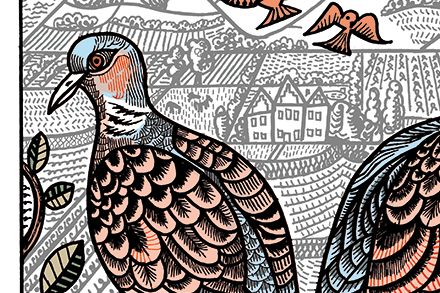
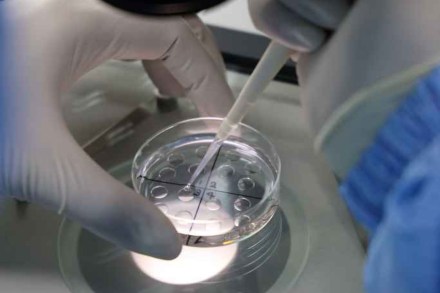
Colossal, a $10 billion biotech firm with a knack of grabbing headlines, has announced it is on the way to de-extinguishing the dodo, the very icon of extinction. Like most of Colossal’s announcements, this one included a hefty helping of hype. All the firm’s scientists have actually done on this occasion is prove they can grow primordial germ cells of pigeons, one of many necessary steps – and not the hardest one – in reviving the fat and flightless bird of the pigeon family of Mauritius that was the dodo. In a couple of years, Ben Lamm, who runs the company, will probably present us with a fat and flightless pigeon with a funny beak and say: ‘Look, a dodo!

Weimar Britain, the war on science & are you a competitive reader?

From our UK edition

36 min listen

First: a warning from history Politics moving increasingly from the corridors of power into the streets, economic insecurity exacerbating tensions and the centre of politics failing to hold; these are just some of the echoes from Weimar Germany that the Spectator’s editor Michael Gove sees when looking at present-day Britain. But, he says, ‘there are grounds for hope’ – what are they? Michael joined the podcast to discuss.   Next: why did science succumb to the ‘culture wars’? Biologist and peer Matt Ridley bemoans the ‘cultification of science’, arguing that ‘left-wing ideological nonsense’ ended up permeating through all scientific disciplines.

The cultification of science

From our UK edition

My, how we all laughed. Thirty years ago the physicist Alan Sokal hoaxed a social science journal into publishing a paper ‘liberally salted with nonsense’ (in his own words) that ‘flattered the editors’ ideological preconceptions’. Its title alone gave away the joke: ‘Transgressing the Boundaries: Towards a Transformative Hermeneutics of Quantum Gravity.’ Little did we in the truth-seeking enterprise which is real science realise that verbose and vapid social deconstruction was coming for us too. In a new book, The War on Science, edited by the astrophysicist Lawrence Krauss, 31 scientists and scholars lament the corruption of their field by left-wing ideological nonsense.

Why won’t western scientists condemn Wuhan?

“I am officially launching my new company: Cathy Medicine. We will eradicate diseases in future generations through germline gene editing.” This is one of several strongly – and strangely – worded tweets sent in recent weeks from the X account of He Jiankui, a Chinese scientist who served a three-year prison sentence for gene-editing two human embryos. Those embryos are now people: seven-year old twin girls living under the pseudonyms Lulu and Nana. “Good morning bitches,” Dr. He wrote on April 16. “How many embryos have you gene edited today?” “Get in luddite, we’re going gene editing,” he added the next day. He also wrote: “I literally went to prison for this shit.” Is it the real Dr. He? The journalist Antonio Regalado, who first broke the story of Dr.

scientists

Labour’s growing pains, survival of the hottest & murder most fascinating

From our UK edition

43 min listen

This week: why is economic growth eluding Labour?‘Growing pains’ declares The Spectator’s cover image this week, as our political editor Katy Balls, our new economics editor Michael Simmons, and George Osborne’s former chief of staff Rupert Harrison analyse the fiscal problems facing the Chancellor. ‘Dominic Cummings may have left Whitehall,’ write Katy and Michael, ‘but his spirit lives on.’ ‘We are all Dom now,’ according to one government figure. Keir Starmer’s chief aide Morgan McSweeney has never met Cummings, but the pair share a diagnosis of Britain’s failing economy. Identifying a problem is not, however, the same as solving it.

Survival of the hottest: evolution’s fun side has been long overlooked

From our UK edition

The theory of evolution is dominated by the utilitarian logic of natural selection: adapt or die, survival of the fittest. But consider that ‘fit’ has two meanings these days: ‘healthy’ but also ‘hot’. There is another evolutionary mechanism that scientists have taken a longer time to appreciate – seduction by the hottest, rather than survival of the fittest. It generates very different and much stranger outcomes. Perhaps even the big brains of human beings evolved as seduction devices more than survival aids. When an animal selects a mate, it can shape the future of its species just like breeders of dogs shape different breeds. Sexual selection through mate choice is the ‘fun’ version of evolution, able to generate random, arbitrary and bizarre innovations.