Books

The hypocrisy of Frank Capra’s populism

Frank Capra’s pictures about the “little man” versus the system went over so big that he was the first Hollywood director to have his name above the title – way back when nobody cared who was the brains behind a film. Guys liked westerns, gals liked musicals and tickets were bought on the strength of a star’s name. Then, in 1934, Capra made It Happened One Night. This screwball romance about a hoity-toity heiress (Claudette Colbert) and a roughneck reporter (Clark Gable) was a smash hit – and by my count the first of just two comedies that have taken the Best Picture Oscar. A couple of years later, when Capra made Mr. Deeds Goes to Town, his name was up there in the opening credits next to those of the stars, Gary Cooper and Jean Arthur.
Children behaving badly – the wonderfully wicked world of Saki

“Light literature” has the potential to tell us more about the society that produced it than any number of more consciously cogitative productions. You can deduce a lot about the furious social mobility of the 1830s by reading the period’s terrible “silver fork” novels describing proceedings in ducal drawing rooms. Fantasies of opulent misbehavior abroad in the 1950s – Richard Mason’s The World of Suzie Wong and the James Bond novels – reveal a great deal about people’s desires in a nation tired of bad food, bad sex and restrictions on spending. The dreams of the Edwardians during the most solid and commanding of eras ventured into contrariness, like those of a CEO addicted in private to sexual humiliation.

The American library is disappearing

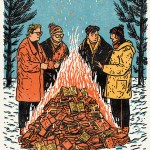
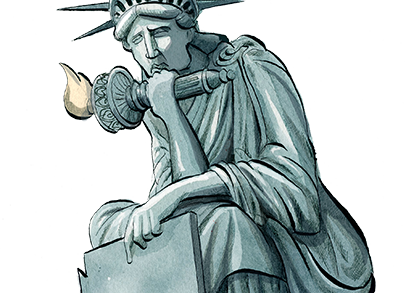
In schools across America, libraries – once the heart of our educational institutions and protected home of deep, prolonged contemplation – have been rebranded as “learning commons.” The change is not only one of name: learning commons differ in kind from the libraries they replaced. Where libraries were quiet, almost sacred spaces, learning commons are loud, collaborative, screen-rich rooms designed for everything, which is to say, for nothing in particular. One boarding school in Massachusetts infamously rid its library of all physical books in 2009, believing that the future was digital; it has since come to its senses and reversed course.

Haunted by the ghost of Sherlock Holmes

When Sherlock Holmes first stalked across the pages of London periodicals in 1887, journalists eagerly asked Arthur Conan Doyle “how on earth he had evolved, apparently out of his own inner consciousness, such an extraordinary person.” But Conan Doyle soon put them right: “If you please, he is not evolved out of any one’s inner consciousness. Sherlock Holmes is the literary embodiment... of my memory of a professor of medicine at Edinburgh University.” As a medical student, Conan Doyle had been taught by the surgeon and professor Joseph Bell, who had pioneered a deductive technique called “the Method,” based on the “vast importance of little distinctions, the endless significance of trifles.

holmes

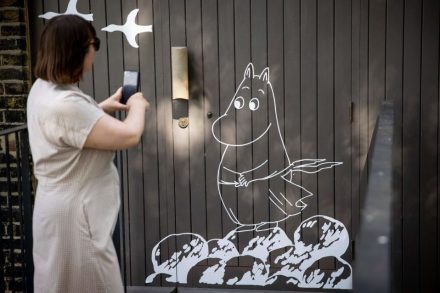
The Moomins are not as cute as you think

Finland's biggest cultural exports are an unlikely mix. The main ones are death metal, video games... and, er, Moomins? Brand recognition of Tove Jansson's eccentric creations in her native country stands at 100 percent. There's scarcely a Finnish home that doesn't have at least one Moomin mug in it. Every street corner seems to have a poster or a statue of a Moomin. And they're huge all over Northern Europe and Japan, have dedicated fans in Russia and are starting to get a toehold in America. But they are not like every cartoon franchise you find on an oven glove, as I discovered on a recent Moomin-focused trip to Helsinki and Tampere.

moomins

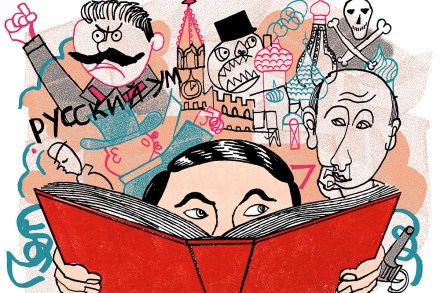
Russians read more. Do they think more, too?

The kids aren’t reading. Across the western world, Gen Zers are reading far fewer books than their parents. Many can barely read at all. In the US, 40 percent of fourth-graders have “below basic” reading abilities, while the same percentage of American adults reported reading no books at all in the previous year. Professors at elite US universities increasingly report that their students are no longer capable of reading an entire novel, or even a 30-page extract. In the UK, the National Literacy Trust found that just 33 percent of schoolchildren enjoyed reading in their free time, a 36 percent decrease since 2005. Does the rise of the postliterate society amount to a death knell for liberal democracy?

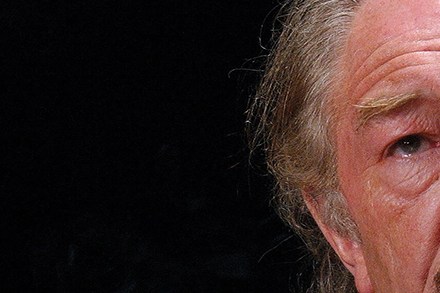
Michael Gambon pictured in 2002

‘We think you’re the best’ – the actors’ tribute to Michael Gambon

When Michael Gambon was made a CBE, Ian McKellen wrote generously on behalf of the acting profession: “We think you’re the best.” Arthur Miller pronounced him greater than Laurence Olivier. From a spear-carrying start in the early days – indeed on the first day – of the National Theatre, Gambon rose steadily to stardom and eventually, via a series of movie flops, to the well-paid prison of the Harry Potter films. On stage, in Shakespeare, Beckett, Pinter and Ayckbourn, or on television in The Singing Detective and Longitude, there was a might and scale to his talent that few could match – a force that did not preclude delicacy and emotional truth, his physical bulk capable of both high comedy and balletic grace. The essence of Gambon’s art was contradiction.

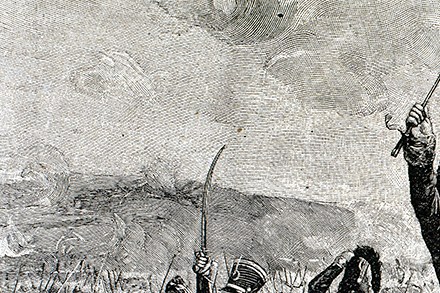
A history of Napoleon’s marshals has all the dash and vigor of a cavalry charge

In his fourth book on Napoleon, after Napoleon and Wellington (2001), Waterloo (2005) and Napoleon the Great (2014), Andrew Roberts focuses on the emperor’s relations with his 26 marshals. Writing with the dash and vigor of a cavalry charge, having walked 53 of Napoleon’s 60 battlefields, Roberts analyzes campaigns and battles from Italy in 1796, through Austerlitz, “the greatest victory in the history of France,” and the retreat from Moscow (ten marshals served in the Russian campaign) to Waterloo in 1815. Accounts of marches and battles are interspersed with frequent quotations from the emperor’s letters, sent day and night to his marshals to micromanage their campaigns, as well as from the marshals’ personal correspondence with each other.

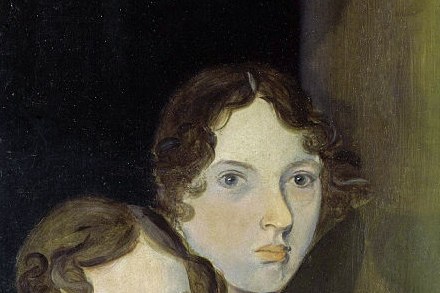
Is Jane Eyre colonialist?

This week marks 179 years since the first publication of Charlotte Brontë’s Jane Eyre in 1847, something which will be celebrated in Great Britain with little more than a small London theater production. The occasion may be being noted more enthusiastically in China, where the book has been newly added to the national curriculum for 14- and 15-year-olds, with the strange aim of indoctrinating schoolgirls into becoming compliant brood-mares for the demographic good of the Chinese Communist party.

jane eyre

The intellectual passions of J.R.R. Tolkien

It was December 1942 and J.R.R. Tolkien was having doubts about his new book, a sequel to The Hobbit published five years earlier. “Is such an ‘epic’ possible to consider in the present circumstances?” he wrote to his publisher Stanley Unwin. The specific circumstances included the second world war; but the literary climate was hardly more propitious. The warden of Merton College, Oxford, where Tolkien was Professor of English Language and Literature, was “visibly shaken” when Tolkien showed him the blurb for that sequel, eventually titled The Lord of the Rings. Reviews were largely poor: the American critic Edmund Wilson was not alone in thinking it “juvenile trash.” In a sense, Tolkien’s question to Unwin holds good.

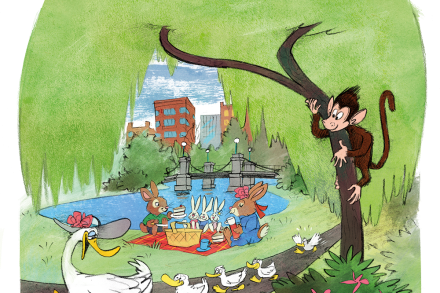
How Boston became the cradle of American children’s literature

It was Labor Day in Boston and the bronze ducklings in the city’s Public Garden were each wearing a fluffy autumnal scarf. Nobody seems quite sure who dresses them, but at various points they have worn party hats, festive knitwear and hot pink. When the Tartan Army arrived for the World Cup earlier this year, Mrs. Mallard and her ducklings – Jack, Kack, Lack, Mack, Nack, Ouack, Pack and Quack – were forced to endure miniature traffic cones and saltires. The sculpture was created by Nancy Schön in 1987 to celebrate Robert McCloskey’s 1941 children’s book, Make Way for Ducklings. In 1990, former Soviet first lady Raisa Gorbachev visited Boston and admired the statue.

boston

Around Britain with a theodolite: a celebration of the Ordnance Survey maps

It took six years, starting in the summer of 1784, for the Board of Ordnance to establish the baseline of its triangulation of Great Britain. First they used wooden poles, then glass tubes. After much clearing of furze bushes and anthills, the baseline ran for more than five miles from Hounslow Heath to Hampton Poor House. The maps of England and Wales were complete by 1870. Scotland had to wait until 1887. The delay was rumored to have been caused by the superintendent’s concern that surveyors would get in the way of the late summer deerstalking. As a wing of the military, the Ordnance Survey had extraordinary powers. The Surveyors’ Act of 1841 allowed it to trudge, clamber, squelch, measure and interrogate wherever necessary.

United by ambition: the ruthless rapacity of England’s two famous Cromwells

In the early years of the English Civil War John Milton turned his mind from the poetic arts and committed himself to writing some of the most searing pamphlet polemics of the 1640s. With the nation convulsed by violence, he set about finding causal explanations for the revolutionary ferment, and saw its roots in the 1530s and the unfinished nature of the Protestant Reformation. Only by completing the work of Reformation, Milton thought, would the English come closer to God and lasting peace. Such arguments had domestic as well as national urgency for Milton, much in need of peace himself, as he tried to extricate himself from his stupendously misguided marriage to Mary Powell, half his age and from a royalist family.

canadian literature

How progressive politics ruined Canadian literature

Canada is back, baby. Since Mark Carney’s election as Prime Minister in April last year, he’s projected an image of brawny, swaggering capability – another silverback statesman in a new, multilateral world. He’s tussled with Trump over tariffs; hobnobbed with autocrats including Xi Jinping and Narendra Modi and strongly criticized the US attack on Iran. In fact, the anger that many Canadians seem to feel at their cousins across the border is startling – on a recent trip to the Yukon, I found almost every public toilet tagged with “Trump Tower” graffiti. This newfound assertiveness is surprising. Canada, as the South Park movie astutely pointed out in 1999, is the eternal scapegoat of international politics.

Madness, mutiny and murder in the Canadian Arctic

The elegant, charismatic and narcissistic explorer Vilhjalmur Stefansson wasn’t the average adventurer that Alaska attracted in 1912. When he arrived in Seattle from the Gold Rush port of Nome, he told journalists that he had discovered “a lost tribe of whites” in the uncharted High Arctic. He also sold politicians the vision of an undiscovered land rich in gold, raw metals and oil that, only nine years after the Wright Brothers’ first flight, would soon be covered with airfields. The Canadian government quickly offered Stefansson unlimited resources to lead an expedition back to the High Arctic. His objective was to claim what may have been the greatest geopolitical prize for Canada and the British Empire: the mysterious continent at the top of the world.

First among equals: what makes a great leader and does it matter?

Almost two decades ago, Jared Diamond cemented his international reputation with Guns, Germs, and Steel, which argued that geography and environment rather than racial differences shaped the rise and conquest of nations. Still going strong at 89, he has now written a book on leadership. This is a crowded literary space, but Diamond offers a distinctive approach. A distinguished biologist and polymath, he has little time for the Great Man theory of history popularized by the 19th-century essayist Thomas Carlyle. Altogether too subjective, he says, never mind the absence of women. Leo Tolstoy’s War and Peace is no better a guide, since it casts individuals as constrained by circumstance, with scant influence over events.

leader
smell

The history and importance of smell for our antiseptic age

For smell historians and experts, of whom there are gratifyingly more than you’d think, a standard assumption to be skewered is that olden ages stank; the modern world doesn’t because hygiene and chemicals have banished stinks in the name of progress. According to this reading of history, banishing odors is a sign of progress. Civilization doesn’t smell. Neither Bjørn Berge nor William Tullett stand for this. For them, older times may have been smellier, but people were comfortable with living alongside middens, rotting corpses and foul tanneries. Smell in the modern age is now under threat and at risk of extinction or of being even more marginalized – Tullett uses the word “ephemeralized” – than it already is in this age of visual primacy and screens.

She lived frantically ever after: the jaw-dropping life of Barbara Cartland

Matthew Sweet’s jaw-dropping life of Barbara Cartland opens with the grande dame reclining on her chaise longue in the library of Camfield Place, her home for 50 years. Here she could be found daily between 1:15 p.m. and 4 p.m., a ghoulish masquerade of femininity in a hot-pink taffeta cocktail gown with a snappy Pekingese nestling by her side. Her face, beneath the halo of Elnett-stiffened yellow hair, bears an inch of white powder. There are two clownish circles of rouge on her cheeks and sticking plasters on her temples to tighten the skin. Gazing into the middle distance through tarantula-sized false eyelashes lathered in black boot polish, she is “talking, talking, talking.” (Boot polish applied with a toothbrush is preferable to mascara because it stays put when you cry.

Will the real B. Traven please stand up?

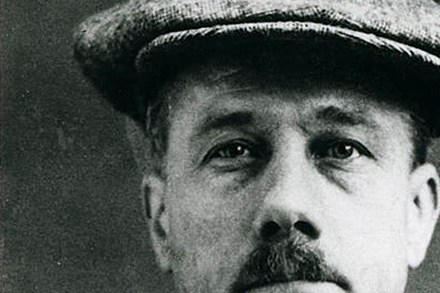
One hesitates to describe The Treasure of the Sierra Madre – perhaps now best known for its 1948 film adaptation starring Humphrey Bogart – as the great American novel, or even a great American novel. Its prose is too unwieldy, its structure too ungainly. While you, the reader, wish it spent more time with its characters – a trio of beat-up prospectors called Dobbs, Curtin and Howard – it is given to flights of economic theory about labor relations in 1920s Mexico, a setting great American novels don’t tend to trouble themselves with. Besides, its author, B. Traven, was almost certainly German and may never have spent time in the United States. Hang on. Almost certainly? May never?

Where is liberalism heading?

“The Republic divides us least.” So said Adolphe Thiers, a shapeshifter of 19th-century French politics in the Marco Rubio mold. By the early 1870s, the various factions in French society had exhausted themselves fighting. Since 1814 there had been two restorations of the Bourbon dynasty, a liberal Orléans dynasty, a socialist commune, waves of clericalism and anti-clericalism, two periods of military dictatorship and a second Bonaparte. Out of this exhaustion came the Third Republic, the creation of Thiers and Léon Gambetta. The Third Republic was a triumph of liberalism: the recognition that France was now a plural society over which no one social force could gain a permanent mastery.