
The kids aren’t reading. Across the western world, Gen Zers are reading far fewer books than their parents. Many can barely read at all. In the US, 40 percent of fourth-graders have “below basic” reading abilities, while the same percentage of American adults reported reading no books at all in the previous year. Professors at elite US universities increasingly report that their students are no longer capable of reading an entire novel, or even a 30-page extract. In the UK, the National Literacy Trust found that just 33 percent of schoolchildren enjoyed reading in their free time, a 36 percent decrease since 2005. Does the rise of the postliterate society amount to a death knell for liberal democracy?
Thomas Jefferson fretted in 1816 that a nation could never be both “ignorant and free.” His remedy was a society “where the press is free and every man able to read.” There, Jefferson assured himself, “all is safe.” But if that’s the case, how to explain how oppressive regimes – Nazism and Vladimir Putin’s Russia, to take two obvious examples – hatched from highly educated and (briefly) liberal societies? Or, for that matter, how can today’s Russia be hugely literate but also repressive and authoritarian?
A 2023 state-sponsored poll claimed that the average Russian had read at least six books over the previous three months (up from four books ten years earlier), while 87 percent reported having a home library (up from 83 percent a decade earlier). A remarkable 7 percent of Russians reported having read 30 books or more in the previous year.
Only for a tiny majority of Russians did literature represent a truth that could set you free
That doesn’t make Russians the best-read people in Europe – Luxembourg, Denmark and Estonia top them, according to a 2022 survey by Eurostat – nor even the world, where they are beaten by India, Thailand, China and even the Philippines. But it does put Russians comfortably ahead of the US and UK. But if literacy is essential to democracy, why do so many of these well-read Russians tolerate and even support Putin’s bellicose, mendacious and oppressive rule?
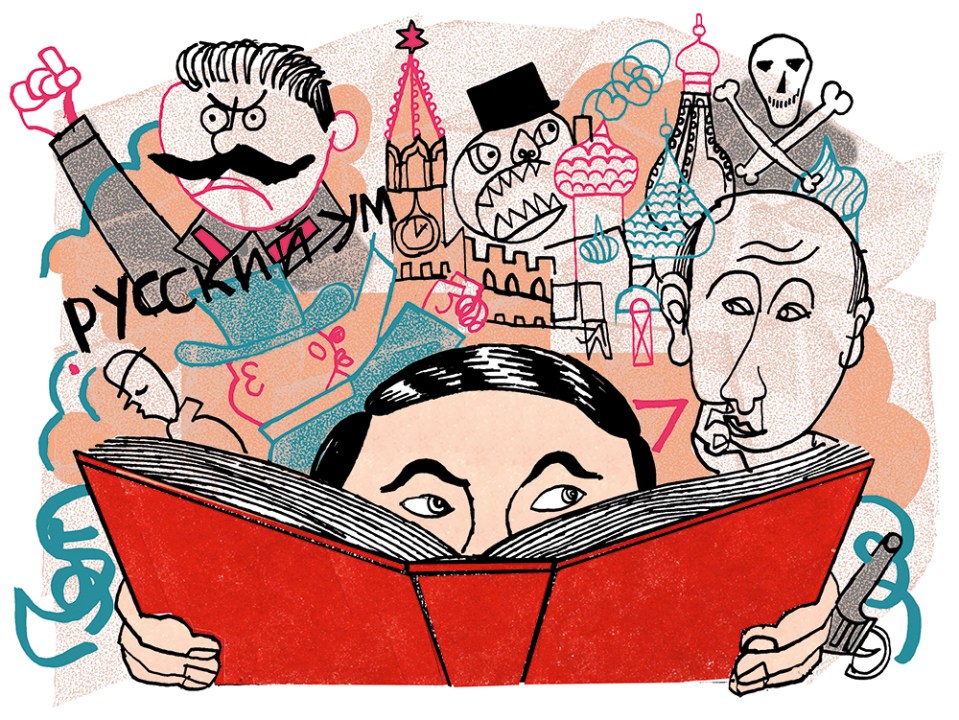
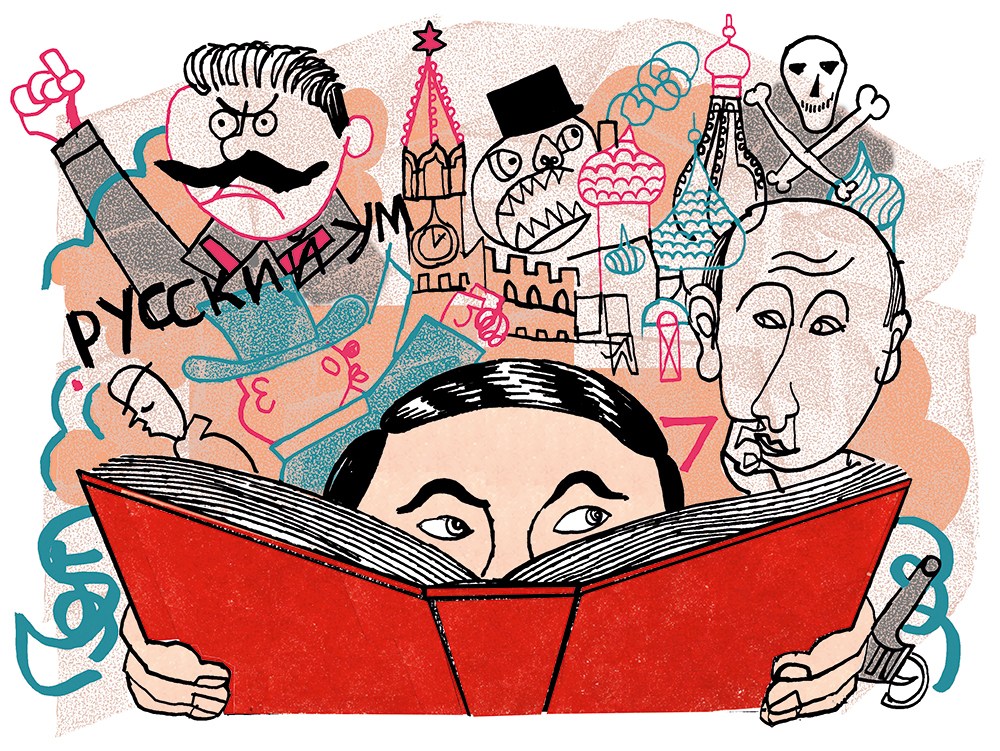
“Aesthetics is the mother of ethics,” Soviet dissident poet Joseph Brodsky said in his Nobel Prize acceptance speech in 1987, arguing that aesthetic experience functions as a defense against enslavement. Yet the Soviet experience showed the opposite to be true. Literacy, and literature, were used as tools of state propaganda and control rather than paths to Jeffersonian personal liberation. Vladimir Lenin, discussing the USSR’s mass literacy program, declared that “without literacy, there can be no politics. There can only be rumors, gossip and prejudice.”
At a gathering in Maxim Gorky’s house on October 26, 1932, Joseph Stalin toasted the assembled novelists and poets with the sinister exhortation that “writers are the engineers of men’s souls,” adding that “the production of souls is more important than the production of tanks.” Yet Gorky himself was possibly poisoned on Stalin’s orders a few years later, and at least six of that evening’s dinner guests ended up shot or in the Gulag.
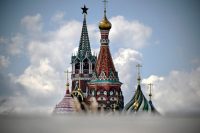
Ironically, every one of the great Russian writers who made up the Soviet literary canon were in their own times highly rebellious, revolutionary thinkers who were strong critics of the status quo – and were punished for it. Dostoyevsky spent time in Siberia as a political prisoner. He may have condemned his nihilist anti-heroes Raskolnikov, Karamazov and Svidrigailov – but one can’t shake the suspicion that like John Milton, the author was of the devil’s party without knowing it.
Tolstoy was excommunicated by the Russian Orthodox Church for his radical humanism, while Pushkin was exiled for his liberal verses. Even urbane Anton Chekhov, the grandson of a serf, worried about the struggle to “exterminate the slave” in his own soul and wrote blistering reports on the condition of czarist prisoners in Sakhalin. But none of that stopped the state from ramming Tolstoy, Dostoyevsky, Pushkin and Chekhov down the throats of schoolchildren across the USSR, or building their works into the great edifice of Soviet culture. Thousands of statues of Pushkin erected across the country on the centenary of the poet’s death in 1937 are today seen by modern Ukrainians as monuments of Russian cultural imperialism. (They’re not fans of Brodsky, either, whose devotion to high aesthetics didn’t prevent him from penning the viciously patronizing and racist poem “On the Independence of Ukraine.”)
As every bore who ever went on a school trip or Interrail voyage to Moscow will tell you, Russian taxi drivers can indeed quote screeds of Pushkin by heart. But that’s because Soviet and Russian education – strongly self-mythologized as great and rigorous – is based on rote learning and regurgitating the correct answer, not on discussion or analysis. A canon administered as catechism produces reverence but little reflection. The Soviet literacy campaign did not create liberated readers in Brodsky’s sense, because there was no aesthetic element to the experience, or in Jefferson’s sense, because it was not free. Rather, it created a captive audience who had state-approved verse – accompanied with a dose of Russian cultural chauvinism – drilled into them.
Only for a tiny minority of Russians – the self-styled liberal intelligentsia – did literature represent a truth that could set you free. The remarkable phenomenon of samizdat – literally “self-publishing” through carbon-copy typescripts – produced millions of bootleg copies of Aleksandr Solzhenitsyn’s The Gulag Archipelago and Mikhail Bulgakov’s The Master and Margarita that were covertly passed from hand to hand. In the Soviet bloc nations of Eastern Europe the plays of Václav Havel and Czeslaw Miłosz’s The Captive Mind played a huge role in the delegitimization of communism – a rare case of literary greatness and political impact going hand-in-hand in the authors’ own lifetimes.
Today Putin’s security state pays a backhanded compliment to the possible subversive power of literature by cracking down on dissident publishing houses and wrong-thinking authors. Four of Russia’s greatest contemporary writers and critics – Dmitry Glukhovsky, Lyudmila Ulitskaya, Dmitry Bykov and Boris Akunin – have been labeled “foreign agents.” Glukhovsky has been sentenced in absentia to eight years in jail and Akunin to 14 for supposedly justifying “terrorists and extremists.” Last year, employees of Popcorn Books and Individuum were arrested on “extremism” charges for publishing gay-themed books.
At least 600 titles have been removed from Russian shops since 2022
At the same time, independent bookshops Podpisnye Izdaniya and Falanster have been fined for incorrectly labeling the work of “foreign agents” (which must be sold in paper bags). At least 600 titles have been removed from Russian shops since 2022 – mostly to avoid fines and harassment rather than due to official bans, which are reserved for Islamic religious literature, Jehovah’s Witness publications and neo-Nazi and ultranationalist tracts. Alexei Navalny’s memoir Patriot is one of the few political titles on the official proscription list.
One of the main characters of Glukhovsky’s brilliant new book on today’s wartime Russia, Registration, is a Moscow bookseller who imagines he can ignore the rising tide of political pressure and continue stocking dangerous titles, only to fold and conform in order to save his spoiled hipster son from the threat of mobilization. Putin’s Russia doesn’t burn books on pyres, Nazi-style, but rather accomplishes its censorship by turning much more insidious screws of social and administrative pressure. Moscow publishers still try to buy rights for new western titles – hedging their (modest) offers with assurances that they, personally, in no way support the war against Ukraine. But they also, equally apologetically, request the right to edit out content the Kremlin terms politically incorrect. When the AST publishing house last year suggested censoring my new historical novel by removing a lesbian affair, my personal answer was, obviously, a firm no. Publication of The Darling Papers will have to wait till after Russia’s next revolution.
In an odd sense, the Russian experience is comforting. Catastrophists warn that the West is recoiling into pre-Enlightenment conditions where a population that can no longer think for itself will end up voluntarily ceding power to strongmen or demagogues. But Russia shows that can happen with a highly literate population too. The Franco-American literary critic and essayist George Steiner spent his career warning that a man can read Goethe or Rilke in the evening and “go to his day’s work at Auschwitz in the morning.” Steiner directly challenged the humanist axiom that culture is a humanizing force and that the energies of spirit can transfer into moral conduct.
Indeed Steiner’s charge goes further. The established institutions of civilization – universities, the arts, the book world – did not merely fail to resist political bestiality in, for instance, Weimar Germany, but often welcomed it and supplied it with its intellectual apologia. Steiner’s thesis that the educated can be as dangerous as the ignorant goes some way to explaining the paradox that the western, and particularly American, academy has become a breeding ground for antiSemitism and institutional racism under the banner of decolonization and identity politics. A Harvard University report from April 2025 said that anti-Jewish bias had been “fomented, practiced and tolerated” and found that, on campus, 26 percent of Jewish students felt physically unsafe (in common with nearly half the Muslim students) and 39 percent did not feel at home.
So fight, by all means, against the rising tide of ignorance, against shrinking attention spans and soundbite culture. But remember that the kids who do read can still end up with beliefs every bit as crazy and dangerous as those who don’t.



Comments