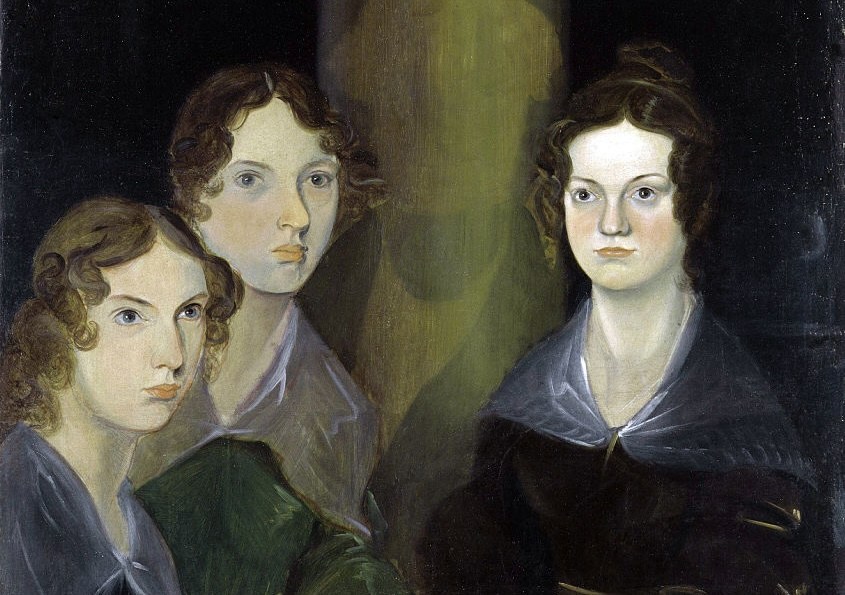
This week marks 179 years since the first publication of Charlotte Brontë’s Jane Eyre in 1847, something which will be celebrated in Great Britain with little more than a small London theatre production. The occasion may be being noted more enthusiastically in China, where the book has been newly added to the national curriculum for 14- and 15-year-olds, with the strange aim of indoctrinating schoolgirls into becoming compliant brood-mares for the demographic good of the Chinese Communist party.
The Brontë Parsonage museum has organised a special exhibition, ‘The Colonial Brontës’, trying desperately to link the sisters to the subjugation of Africa
As the Beijing Daily explained, ‘the innocent, budding stage of first love is a crucial period for shaping a well-rounded personality’. The model henceforth to be adopted for the nation’s schoolgirls is Jane herself. At the novel’s end, readers will recall, her ultimate husband Mr Rochester gets his eyes burned out in a fire, before Jane agrees to honour and obey him: hence, she is a model of literal blind obedience, just what the communists want. Leader, I married him.
Western commentators have derided the CCP’s actions, mocking their totalitarian and prescriptive attempt, ‘to help [children] establish a value system’ by reading a 200-year-old text and interpolating utterly irrelevant political messages into it. But are 21st-century establishment authorities here in Charlotte Brontë’s original homeland of England really any different?
Brontë Parsonage Museum, the registered charity which manages the family’s old rural rectory home, is currently pretending Jane Eyre – and all the sisters’ literary output – is not about love in the time of communism, but love in the time of colonialism. Running until January, the museum has organised a special exhibition, ‘The Colonial Brontës’, trying desperately to link the sisters to the subjugation of Africa. How were they linked to it, though? Did they own shares in sugar-plantations, or have a secret Jamaican slave hidden in the attic? No, explains the museum’s website, they wrote some stories on little bits of paper when they were children:

‘The Brontë children were avid readers of books, periodicals and newspapers depicting British colonial activity and missionary work. Fascinated by accounts of exploration, conquest and intercultural encounter, they invented their own colonies collectively called the Glass Town Federation. Using miniature handwriting – supposedly produced by their 12 toy soldiers – the siblings wrote poems, sagas and magazines which drew extensively from their colonial reading material, fictionalising real-life territorial battles, British military figures and Asante warriors.’
As the website admits, ‘West Africa might seem a world away from the West Yorkshire moors.’ But the young Brontës owned a geography textbook, which, amazingly, featured some maps of Africa, which therefore makes them complicit.
When writing their own schoolgirl stories set in the imaginary colonies of the Glass Town Federation, the girls made use of racial stereotypes about its likely inhabitants – such as Charlotte’s disgraceful aspersion that they would probably have black skin: ‘The Chief was quite black and very tall; he had a fierce countenance and the finest eyes I ever saw.’ If you can’t cope with extreme language like this, the Museum website contains the following ‘CONTENT WARNING: This page includes excerpts from written works containing outdated terminology.’ Presumably, that means ‘black’ being written without a capital B.
If you are still dubious that a 13-year-old writing a story set in Africa featuring a black man is highly relevant to the sins of British colonialism, the museum’s curators explain how, ‘The 18th and 19th centuries in England were more racially diverse than many audiences realise.’ Heathcliff from Emily Brontë’s Wuthering Heights, for example, is described in the book as ‘a dark-skinned gypsy in aspect’, but the orphan’s mysterious origins in Liverpool, then a major slaving-port, have long led some literary scholars to speculate that he may really have been black or mixed-race. The museum, however, has a different, more demented, theory: maybe he was actually based on Frederick Douglass?
‘One of the possible inspirations for Heathcliff’s character is Frederick Douglass (1818-95). He was an enslaved Black man who, once free, became the most photographed American of the 19th century. Douglass was an influential abolitionist, who delivered lectures and was quoted in newspapers in Britain between 1845 and 1847, the time when Emily was writing Wuthering Heights.’
Where’s the museum’s evidence? There doesn’t seem to be any.
But, if visitors want to know more about the Brontës’ ‘connections’ to slavery, the museum suggests buying the following books from its gift shop: Our Island Stories: Ten Walks Through Rural Britain and Its Hidden History of Empire; The Whole Picture: The Colonial Story of the Art in Our Museums and Why We Need to Talk About It; and Black and British: A Forgotten History by David Olusoga, none of which are about the Brontës at all. When you go to the International Slavery Museum in Liverpool, do you reckon the staff there try to flog you a copy of The Tenant of Wildfell Hall for no reason, or does this kind of thing only go in one direction?
Attempts to link the family to slavery know no bounds, as demonstrated by the academic behind the current ‘Colonial Brontës’ exhibition, Professor Corinne Fowler, back in 2017:
‘The Brontë sisters’ school was just a few miles from the Dentdale home of a notorious slave-owning family called the Sills. The Brontë sisters knew about the Sills family, who worked more than 30 enslaved Africans on the grounds of their [foreign] estate.’
One of Fowler’s previous books is called Green Unpleasant Land: Creative Responses to Rural Britain’s Colonial Connections, and she has previously sat on the ‘Rural Racism’ taskforce, whose remit evidently extended back into the distant past when almost everyone in the English countryside was white. Except Frederick Douglass, obviously.
If the Chinese really want to know how to go about twisting the meaning of classic books for naked political ends, they should commission Professor Fowler to set their curriculum.




Comments