Alex Diggins

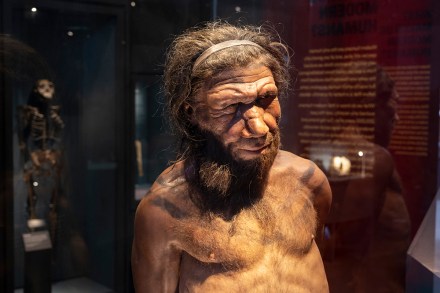
Who wants to bring back the Neanderthals?

From our UK edition

In the not-too-distant future, if your T-shirt starts giving fashion advice or we’re all enslaved by a race of disease-resistant metahumans, then blame Martin Amis. More precisely, blame his obsession with Space Invaders. With a foreword by Steven Spielberg, Amis’s 1982 Invasion of the Space Invaders: An Addict’s Guide to Battle Tactics, Big Scores and the Best Machines gave intellectual heft to a pursuit – videogaming – that had hitherto been the preserve of glassy-eyed youths. His advocacy proved prescient. Over the next couple of decades, the best minds of a generation dedicated their lives to making pixellated worlds as compelling and realistic as possible.

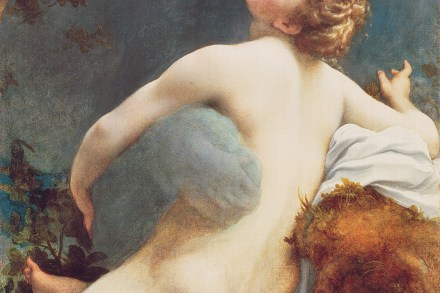
Ovid puts today’s radicals to shame

It’s a crisp afternoon, and in a darkened room in central Amsterdam a woman is being smothered in snakes. Projected on to three walls is a massive video close-up of her face. She is young and beautiful  and remarkably composed: just a nose twitch here, an eyelid flutter there, as a python wriggles across her mouth or languidly caresses her cheekbone with its tail. In the room behind me, another woman stares fiercely back. Her shoulders are bunched with muscle, arms stiff at her sides, like a nightclub brawler about to nut someone. But it’s the bull’s horns sprouting from her forehead, and the mane of matted fur marching down her back, that make it hard to meet her gaze.

Geoffrey Cain, Justin Marozzi, Alex Diggins & Sam France

From our UK edition

30 min listen

On this week’s Spectator Out Loud: Geoffrey Cain explains why Trump’s real target with Iran is China; Justin Marozzi argues ancient history might be on the side of Ayatollah Khamenei’s supporters; Alex Diggins warns about the catastrophic consequences that may befall the Palace of Westminster; and finally, Sam France celebrates the 50p coin. Produced and presented by Patrick Gibbons.

Geoffrey Cain, Justin Marozzi, Alex Diggins & Sam France

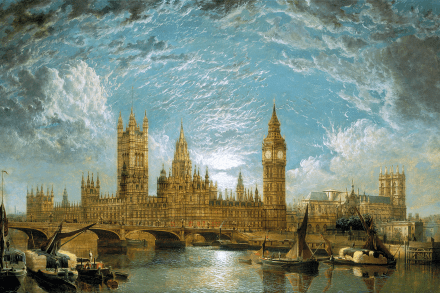
Will the Houses of Parliament burn down?

From our UK edition

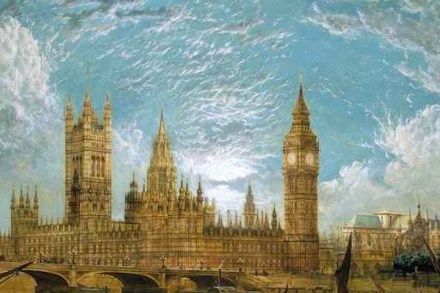
What does £450 million get you these days? With that cash, you could buy a Premier League football club. Or fund 10,000 nurses for a year. If you’re feeling civic-minded, why not give everyone in the UK a fiver and have a chunk of change left over? In the case of the Parliamentary Restoration and Renewal (R&R) programme – the plans to rebuild and repair the Palace of Westminster – the best part of £500 million has been spent on, well, it’s quite hard to tell. MPs and peers have batted ideas back and forth about how to fix their grade I-listed, Unesco World Heritage workplace for more than two decades. ‘We’re sleepwalking into a Notre-Dame-style inferno’ Meanwhile, parliament crumbles.

A flying visit: Palaver, by Bryan Washington, reviewed

From our UK edition

I’ve never been to Tokyo, but sometimes I wonder: why bother with the plane ticket? The imagined Tokyo is more real than the actual city. For westerners, it is a place whose USP is its unreality: its irreducible strangeness, its intense Japaneseness. It’s a city where lonely souls go to bump against other lonely souls and everything is lost in translation. To spoil this fantasy with too much daylight would be to miss the point. On the surface, Bryan Washington’s Palaver isn’t in a hurry to push against these clichés. It follows an estranged mother and son who meet again in Japan many years after he has left the humidity and homophobia of Texas.

Cosmo Landesman, Alex Diggins, Lucy Dunn & Richard Bratby

From our UK edition

24 min listen

On this week’s Spectator Out Loud: Cosmo Landesman says life is too short to watch boring shows; Alex Diggins reports back from the Bukhara art biennial; Lucy Dunn provides her notes on BuzzBallz – which featured at the Spectator’s Christmas party; and, Richard Bratby reviews L’amour des trois oranges at the Royal Northern College of Music and Ariodante at the Royal Opera House.  Produced and presented by Patrick Gibbons.

Am I a useful idiot visiting Uzbekistan’s first art biennial?

From our UK edition

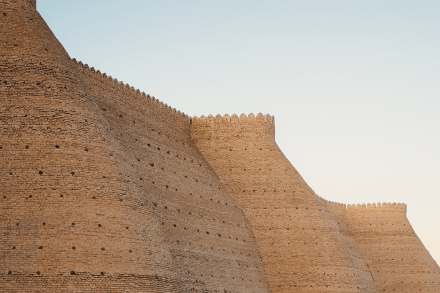
In the ruins of a 16th-century mosque, in the heart of the ancient silk-road city of Bukhara, dozens of abstract figures stand mute and motionless. As the desert sun dips below the horizon, and the shadows thicken, the effect is eerie. Wandering among the statues alone, you feel as though you’ve stumbled upon the aftermath of a forgotten, inscrutable rite. But these aren’t Ozymandian relics. They’re an artwork, ‘Close’, installed last summer by the British sculptor Antony Gormley. His work was one of more than 70 scattered across the Unesco World Heritage city as part of the inaugural Bukhara Biennial, which ran from 5 September to 23 November last year.

The Anthony Bourdain Reader leaves a reader hungry

Charismatic, handsome and with a great white shark’s feral cool, Anthony Bourdain was someone that everyone wanted to be. The chef, writer and TV presenter described the premise of his award-winning shows, No Reservations and Parts Unknown, as “I travel around the world, eat a lot of shit and basically do whatever the fuck I want.” They cemented his image as a gadabouting, kamikaze gourmand. Bourdain scarfed down andouillette and warthog anus, drank sun-bear bile and polished off the still-beating heart of a cobra, plonked into a shooter of Vietnamese firewater. He showed Barack Obama the correct way to slurp bún chả noodles on a steamy Hanoi side street, and he and his team watched from their hotel pool as Israeli jets strafed downtown Beirut during the 2006 invasion.

anthony bourdain

A lost brother: My Mind to Me a Kingdom Is, by Paul Stanbridge, reviewed

From our UK edition

Grief leads us down some strange roads. Few, though, can be as peculiar as those charted by Paul Stanbridge in his auto-fictional My Mind to Me a Kingdom Is. This singular and striking book follows a narrator (the extent to which this figure overlaps with Stanbridge is kept teasingly obscure) mourning the suicide of his brother, an isolated, eccentric mathematician. Yet, while it contains passages of raw tribute, it is a self-consciously tricksy narrative. Stanbridge circles around his brother’s death via some of history’s more overgrown byways, such as ‘Clever Hans’, the mathematical horse, locked-in syndrome and Jean-Jacques Rousseau’s enthusiastic onanism. There’s a suggestion of Olga Tokarczuk’s novel Flights to this omnivorous freewheeling.

War between Heaven and Hell: The Absolute Book, by Elizabeth Knox, reviewed

From our UK edition

Ursula Le Guin once described speculative fiction as ‘a great heavy sack of stuff, a carrier bag full of wimps and klutzes’. By this definition, Elizabeth Knox’s genre-hopping fantasy The Absolute Book must count as oversized baggage; but it trundles along winningly, even if it’s a trifle stout at 640 pages. Taryn Cornick is our girl. She is a scholar whose debut book, a study of libraries, is the toast of the literary circuit. But she is also the recipient of an unlucky inheritance: an elusive manuscript, nicknamed the Firestarter, last spotted in the library of her grandfather’s ancestral pile. From these Borgesian beginnings, the story orbits into wider and wilder expanses.

A draining experience: Insignificance, by James Clammer, reviewed

From our UK edition

Spare a thought for the white van man. It’s not yet nine on a summer’s morning and already Joseph, a plumber and the hero of James Clammer’s arresting novel, is having a pig of a day. He’s slept poorly. It’s the umpteenth day of a heat wave, and the biscuits left by his client Amanda Margaret Hollander are ‘a dispiriting selection, childish and sugary... unmanly biscuits’. Plus, despite her tight, ‘iridescent’ trousers, Amanda Margaret seems uninterested in a ‘little dallying, a little flirting’ and dashes off, leaving him to the job. Which, it transpires, is far more difficult than promised: ‘Truly, if it isn’t one thing it’s the other.

Magic and miasma: Mordew, by Alex Pheby, reviewed

From our UK edition

Mordew ain’t the kind of place to raise your kids, as Elton John nearly sang. If they escape the ravages of lung worm, then they could stray into the Living Mud — a foul, oozing substance that spawns barely animate beings called ‘dead-life’. That’s if they avoid being packed off to serve the Master, the city’s Grand Inquisitor, who broods in his Manse, demanding regular tributes of children, his magic twitching throughout Mordew. The world of Alex Pheby’s fourth novel is dizzying. But stick with it, and his splicing of Dickensian social satire and rackety, steampunk fantasy is beguiling. The titular city is exuberantly realised, the sort of setting H.P. Lovecraft and Hogarth might cook up on a mescaline binge.

A ponderous parable for our times: The Wondrous and Tragic Life of Ivan and Ivana

From our UK edition

Twins are literary dynamite. For writers, they’re perfect for thrashing out notions of free will, the pinballing of cause and effect and fate’s arbitrariness. One twin reflects the other, darkly: living proof of the road not taken, the life not lived. In Maryse Condé’s The Wondrous and Tragic Life of Ivan and Ivana this point is rather laboured — literally, as we first meet the titular pair when they are dragged from the ‘warm and tranquil abode’ of their mother’s womb. They emerge bawling into contemporary Guadeloupe, where their mother Simone ‘works herself to the bone in the sugarcane fields’. Things don’t improve much when they seek their fortunes abroad, first in Mali, then in France.

Bernadine Evaristo shoulders weighty themes lightly: Girl, Woman, Other reviewed

From our UK edition

It’s a slippery word, ‘other’. Taken in one light, it throws up barriers and insists on divisions. It is fearful and finger-pointing: them, not us. But looked at in another way, it is rangy, open and expansive. It suggests horizons, not walls. That first meaning has done much heavy lifting in discussions of Bernardine Evaristo’s Booker-winning Girl, Woman, Other. As the first black British woman to be awarded the prize, this was perhaps inevitable. Evaristo cuts an unmistakable dash through the ranks of past winners: they have been, on the whole, more pale and — damningly — a lot more male.