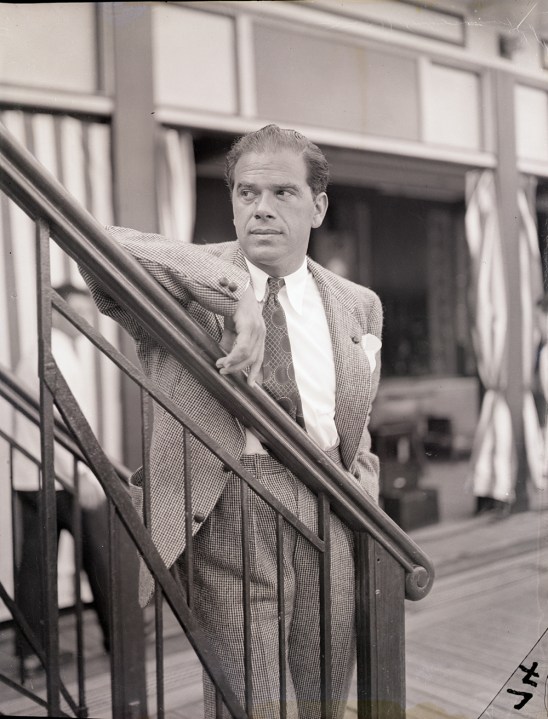
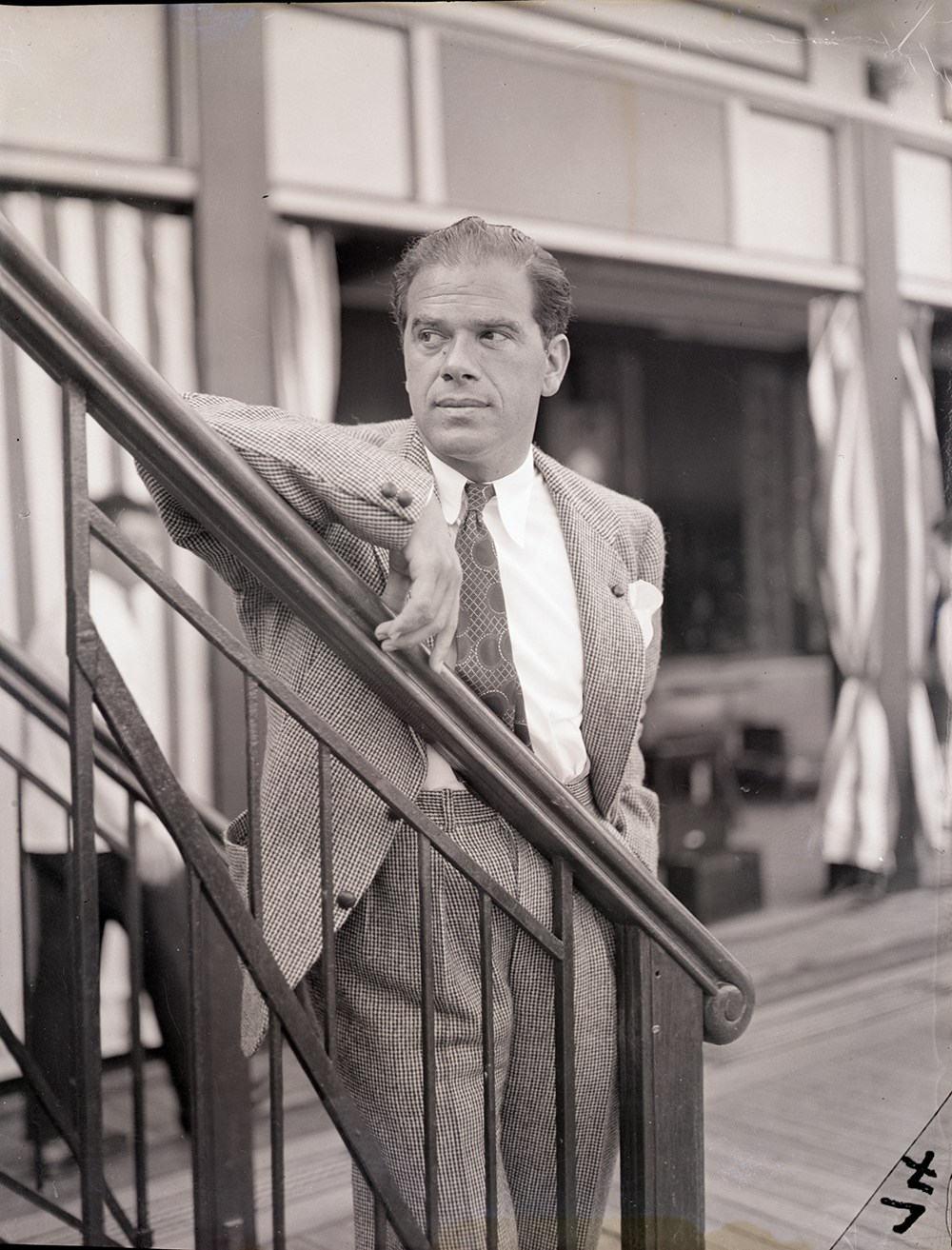
Frank Capra’s pictures about the ‘little man’ vs the system went over so big that he was the first Hollywood director to have his name above the title – way back when nobody cared who was the brains behind a film. Guys liked westerns, gals liked musicals, and tickets were bought on the strength of a star’s name.
Then, in 1934, Capra made It Happened One Night. This screwball romance about a hoity-toity heiress (Claudette Colbert) and a roughneck reporter (Clark Gable) was a smash hit – and by my count the first of just two comedies that have taken the Best Picture Oscar. A couple of years later, when Capra made Mr Deeds Goes to Town, his name was up there in the opening credits next to those of the stars, Gary Cooper and Jean Arthur. By 1938, audiences were being invited to enjoy ‘Frank Capra’s You Can’t Take It With You’, with the original play’s onlie begetters, George S. Kaufman and Moss Hart, relegated way down the line.
Relegation was a Capra speciality. Read his autobiography and you wouldn’t know that Robert Riskin wrote the stories and dialogue of all Capra’s best loved movies; that the silent comedian Harry Langdon had hit upon his dumbo schtick long before Capra directed him in a couple of shorts; or that Joseph Walker, that most inventive of cinematographers, made possible the look and sheen of Capra’s best work.
Little wonder, perhaps, that Capra’s ur story burgeoned from Hollywood’s hoariest myth: how one man can stand up against the powers that be and change the world. In You Can’t Take It With You, James Stewart finds true love and a way to wreck his father’s megalomaniac housing schemes. In Mr Smith Goes to Washington a gee, shucks I dunno political naïf (Stewart again) kicks at the crooked timber holding the system up. Capra’s light touch helps motor these movies along, but even his keenest fans would have to acknowledge that there’s something programmatic about his preachifying. As Alistair Cooke quipped of Mr Deeds Goes to Town: ‘Capra has started to make films about themes instead of about people.’
Still, as Sam Wasson in this new biography reminds us, Capra can be forgiven for believing that he drew his favourite plot structure from life. Francesco Rosario Capra was just six when, like The Godfather’s Don Corleone, he fetched up at Ellis Island, pale-faced and sickly after weeks travelling in steerage. The Capras – Mama, Papa and seven children – jumped a train to California, where the climate and countryside and citrusy air reminded them of Sicily. A bright spark, Francesco disdained his family’s Catholicism, which he regarded as a superstitious religion. With school aced, he moved on to what would become CalTech to train as a boffin. But the Great War put paid to any plans he had, and for a while the only educated Capra was the only unemployed Capra. Yet somehow he managed to find his way into the fledgling movie business. Soon enough he was a star gag writer at Mack Sennett’s Keystone outfit. Then Harry Cohn came knocking. Together they made Columbia, hitherto the poor relation of movie studios, the kickass new kid on the block.
Capra was a populist who detested the populace. I can’t imagine who he’d have wanted for president today
We are talking of the Depression era, when Capra’s vision of the little man’s nobility had a currency that our own less sentimental times find inflated. I can remember being young enough to think You Can’t Take It With You the last word on the heartlessness of capitalism. Now it seems to me mawkish tosh about the intrinsic goodness of the poor. As for Capra’s season of goodwill favourite, It’s a Wonderful Life, you could eat a whole box of Christmas chocs and be left feeling less nauseous.
Making you feel ickier still is the knowledge that Capra’s messianic leftism turns out to have been huckster’s hooey. His movies might have painted bankers and businessmen as the root of American evil, but he adored Mussolini, loathed Roosevelt, voted Nixon, and sold out friends and colleagues to the House Un-American Activities Committee. He was a populist who detested the populace. I can’t imagine who he’d have wanted for president today.
Though the shadowy, half-lit, altogether noirish portrait on the front cover of Frank Capra hints at its subject’s dark side, Wasson is having none of this. While his biography isn’t authorised, it is plainly intended as a riposte to Joseph McBride’s deeply researched and alarmingly convincing Frank Capra: The Catastrophe of Success (1992), which hauled the director over the coals for being an opportunist, a turncoat, a hypocrite and general all-purpose wrong ’un. Alas, Wasson’s folksy prose is so slowpoke and saccharine (imagine a Jimmy Stewart audiobook of Islands in the Stream and you’ve got it precisely) that his book ends up three times as long as it should be – which means way too big to swing any little man jury.






Comments