Sam Leith

Sam Leith

Sam Leith is literary editor of The Spectator.

John Sellars: Stoicism Is Not What You Think

From our UK edition

28 min listen

In this week’s Book Club podcast, Sam Leith is joined by philosopher John Sellars to discuss his new book, Stoicism Is Not What You Think. Sellars explores the ancient philosophy of Stoicism and challenges some of its most common misconceptions – from the idea that Stoics repress their emotions to the belief that they are cold, indifferent and detached from the world. From its origins in ancient Athens to its modern revival online, Sellars explains what the Stoics actually believed and counter Stoicism’s reputation beyond its ‘stiff upper lip’ image. Sam and John also discuss Marcus Aurelius, the role of women in the history of Stoicism, and the growing body of psychological research asking whether putting Stoic ideas into practice can actually improve our lives.


John Sellars: Stoicism Is Not What You Think

The King and Charles Spencer are both victims

From our UK edition

Is it possible to avoid taking sides in the latest skirmish of the forever wars about the late Diana, Princess of Wales? I'd like to hope it is, though I appreciate it might be seen as a bit counter-journalistic to do so. Suppose the King is a flawed man, but not a monster? Suppose Earl Spencer is also a flawed man, but not a monster? Suppose the King is a flawed man, but not a monster? Suppose Earl Spencer is also a flawed man, but not a monster? And suppose what we are seeing is two hurt and damaged people revisiting a vicious row between them for the delectation of a public with no interest in the matter but prurience?

Anand Gopal: Days of Love and Rage

From our UK edition

In this week's Book Club podcast, Sam Leith is joined by The New Yorker writer Anand Gopal, whose new book, long-listed for the Baillie Gifford Prize, is Days of Love and Rage: A Story of Revolution. What does freedom mean once the dictator has gone? Anand explains why he spent eight years reporting on Manbij, a city of 150,000 that pushed out the Assad regime and set about building a democracy from scratch – and how the argument over what came next split the revolution in two. They discuss the bubblegum seller who became a protest leader, the police chief who quietly stopped shooting at the crowds, how six outsiders talked their way into control of the city, and why the manuscript was handed in three days before Assad fell.

Anand Gopal: Days of Love and Rage

The real reason AI is so frightening

In Joseph Heller's Catch-22, the anxious Colonel Cathcart is in the habit of compiling little lists of recent events. He draws these lists up under two headings: "Black Eyes" and "Feathers In My Cap." Into the former, he puts everything that seems to damage his chances of preferment – bombing his own runway again, and so forth – and in the latter, everything that will redound to his credit. I like to imagine Sam Altman, the boss of OpenAI, and his fellow AI overlords doing something similar. In the "Black Eyes" column, we might find near the top of the list the original sin of generative AI.

The Book Club: Hannah Richell

From our UK edition

33 min listen

In this week’s Book Club podcast, Sam Leith is joined by bestselling novelist Hannah Richell to discuss her new memoir, An Ocean and a Day. When Hannah’s husband died in a surfing accident, her life in Australia was shattered. Suddenly, she was a single mother to two young children, navigating a grief she could never have imagined. Her memoir traces that journey from the moment of the accident, but, more uniquely, looks beyond those first years of loss – to what grief looks like with the benefit of time, distance and reflection. Sam and Hannah discuss the shame and embarrassment that can accompany grief, the physical effects of loss, how her experience has shaped her fiction, and what makes memoirs so powerful - to both writer and reader.

The biggest of all the delusions about Reform

From our UK edition

If public life contains a very high-profile, very vulnerable fantasist with an inexhaustible appetite for money and publicity, what is the duty of care that we all owe them? It’s a question that seems to arise repeatedly in the so-called post-truth era. Of course, anybody’s lies and delusions are, to a substantial extent, their own responsibility. But these situations always exist in a context.

James Marriott: The Dawn of a Post-Literate Society

From our UK edition

40 min listen

In this week’s Book Club podcast, Sam Leith is joined by The Times columnist James Marriott, whose new book is The New Dark Ages: The End of Reading and the Dawn of a Post-literate Society. Are we witnessing the end of the reading age? James explains why literacy has shaped not just our culture but the way we think – and why its decline could have profound consequences for politics, democracy and public life. They discuss how television, TikTok and short-form video have transformed our attention spans, whether AI will further erode the status of writing, and why the readers of the future may become a new cognitive elite.

James Marriott: The Dawn of a Post-Literate Society

I’m not convinced keeping PC Harper’s killers in jail is justified

From our UK edition

Just in time to meet his self-imposed deadline of early September, the Prime Minister has found a way of preventing two cop-killers from returning to the streets. The method of keeping the killers of PC Andrew Harper, convicted of manslaughter in the 2019 killing, behind bars is to block all those convicted of any form of manslaughter – along with grooming, death by dangerous driving and causing or allowing the death of a child – from eligibility for the early release scheme. I don’t think it lessens or trivialises the moral enormity of PC Harper’s death to feel uneasy about this This seems to me to be a telling decision, and not necessarily in the way the PM will hope.

Does it matter that Jason Arday’s memoir is made up?

Bloomsbury’s former editor-in-chief Alexandra Pringle popped up on the Today programme this week to argue that Jason Arday’s publisher could not have been expected to fact-check his book Great and Unfortunate Things. The argument she made raised a lot of eyebrows and has precipitated a lot of self-righteous ridicule online.

An agreeable new 2D fighter

Grade: B The final boss of Marvel Tokon: Fighting Souls, who’s called the Champion (they could have tried harder), is up front about his philosophy. ‘Actions are worth more than any word,’ he says. ‘And the greatest action is... to fight!’ Well, that’s Proust told, the big biscuit-dunking jessie. Here’s a very competently made, agreeably hectic new entry in the lineage of that most apparently basic of computer games, the 2D fighter. Ever since the heady days of Yie Ar Kung-Fu, gamers have known there’s fun to be had in having a couple of cartoon characters square off and slap each other upside the face.

Simon Sebag Montefiore: The Cauldron

Simon Sebag Montefiore: The Cauldron

From our UK edition

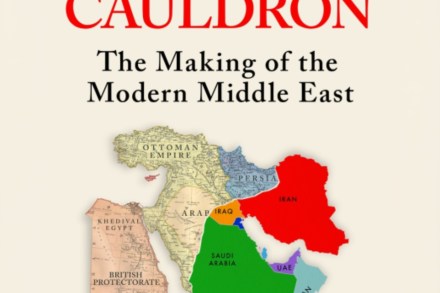
My guest on this week’s Book Club podcast is Simon Sebag Montefiore, the author of a number of fantastic books, including The Cauldron, which released this week. Simon and I talk about the making of the modern middle east, and how we forget some of the most fundamental groups who shaped this part of the world into the region that we know of today.

The truth about Andy Burnham’s tea-drinking habit

From our UK edition

The Times, the newspaper of record, has been invited to witness proceedings in No. 10 North – which is Andy Burnham’s Mancunian analogue, I suppose, of Donald Trump’s 'Winter White House'. They witnessed, as you’d expect, some blethering on about planning permission and mayoral powers, a joke by Angela Rayner and a humorous cardboard cut-out of Larry the cat. And at the centre of it all: the man of the hour: Sitting in his trendy new office in Manchester, open-collared shirt, cup of tea on a table in front – milk in first – Burnham is keen to talk about this new policy that he hopes will help him deliver the biggest council house building programme since the war.  Three words. 'Milk in first.' This is, isn’t it, an odd thing to notice.

Celebrating 160 years of Beatrix Potter

From our UK edition

45 min listen

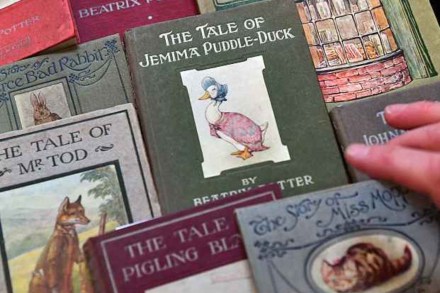
This week marks the 160th anniversary of Beatrix Potter’s birth. In this week’s Book Club podcast, I’m joined by Penny Bradshaw, author of An A–Z of Beatrix Potter, and the historian and biographer Kathryn Hughes, whose books include Catland: Feline Enchantment and the Making of the Modern World, George Eliot and The Short Life and Long Times of Mrs Beeton. We plunge into the Potterverse. Does Potter get her due as a literary writer? How animal are her animals? And what went wrong for Ginger and Pickles?

Celebrating 160 years of Beatrix Potter

Who cares if Christopher Nolan’s Odyssey is nothing like the book?

From our UK edition

You could think of it as a Venn diagram. One circle would contain all the people who have read Homer’s Odyssey (it would contain a much, much smaller circle of people who have read it in the original Greek). The other circle would contain all the people who have seen Christopher Nolan’s film. The second of those two circles would contain all the people whose opinion on the movie was remotely worth listening to. The overlap between those two circles would contain all the people who, potentially, would have anything interesting to say about the relationship between Christopher Nolan’s work and the Homeric poem. Grumbling that movies aren’t the same as the books goes back forever And yet.

Tim Whitmarsh: Augustus, Empire and the Making of Christianity

From our UK edition

42 min listen

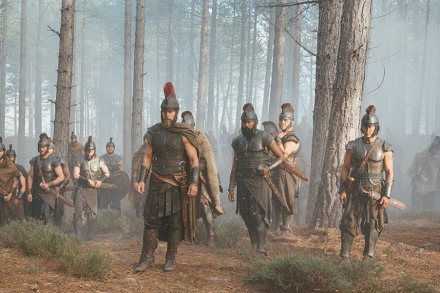
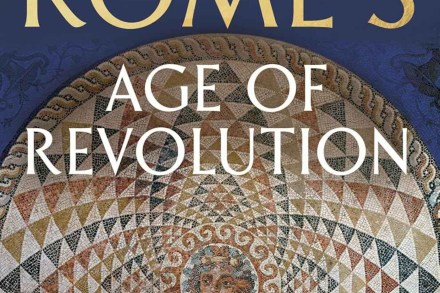
My guest on this week’s Book Club podcast is Tim Whitmarsh, Regius Professor of Greek at Cambridge and author of Rome’s Age of Revolution: Augustus, Empire and the Making of Christianity. He tells me why, contrary to what we may have learnt at Sunday school, early Christianity flourished not despite the Roman empire, but because of it.

Tim Whitmarsh: Augustus, Empire and the Making of Christianity

George Cottrell and the troubling incuriosity of Nigel Farage

From our UK edition

I wrote in this space not long ago, in the context of Nicola Sturgeon, about how incuriosity can, when taken to extremes, be a sort of superpower. So it appears to be, too, with Nigel Farage. First there was this crypto zillionaire stuffing the pockets of his red corduroy trousers with cash. Did Nigel at no point wonder whether there was any agenda beyond rewarding him personally for being a smashing chap and a real laugh to have a pint with? If he had wondered that, and the thought had crossed his mind that the whole thing might look a bit iffy to the voting public, he would surely have thought it best to make a note of it in the register of Members’ Interests – y'know, just to be on the safe side.

Dave Eggers: Contrapposto

From our UK edition

40 min listen

My guest in this week’s Book Club podcast is the novelist Dave Eggers, talking about his new book Contrapposto. Dave tells me why, after years of writing tech-saturated satire, he returned to the world of art; how a novel 20 years in the making became a love story about talent, ambition and the mystery of making beauty; and why he thinks art ends when theory begins.

Dave Eggers: Contrapposto

The EES border check debacle is the EU at its worst

From our UK edition

Among my many unpopular and unpatriotic opinions is that, in most of the ways that matter, the terrorists responsible for the September 11th attacks won. With less than half an hour’s work, and at a cost (to them) of less than twenty lives, Osama bin Laden’s mob of maniacs changed the course of history and cost the economies of the West an unimaginable amount.

If you’re 12, you’ll love this game

From our UK edition

Grade: B+ Why do elephants paint their balls red? So they can hide in cherry trees, of course. The principle behind this playground joke is the animating principle of the brand-new online indie game currently going viral among the under-15s. Finger on the pulse, me. Actually, I only know about this game because my 12-year-old son Jonah started begging to be allowed to download it, which made a pleasant change from begging to be allowed to download Fortnite. Basically, it’s multiplayer hide-and-seek but with paint. You know it’s one of those games kids like because the lobbies have that jittery Roblox/Gorilla Tag vibe – all migraineous colour-clashes and old-school neon gamertags.

Ben Rhodes: A History of the United States in 15 Speeches

From our UK edition

45 min listen

My guest in this week's Book Club podcast is the former Obama speechwriter Ben Rhodes, talking about his new book All We Say: A History of the United States in 15 Speeches. Ben tells me why a debate between two visions of what makes the US special has been playing out since the nation's conception, what Frederick Douglass has to say to the America of the 21st century, and why Ben Franklin didn't think the constitution was sacred.