Canada is back, baby. Since Mark Carney’s election as Prime Minister in April last year, he’s projected an image of brawny, swaggering capability – another silverback statesman in a new, multilateral world. He’s tussled with Trump over tariffs; hobnobbed with autocrats including Xi Jinping and Narendra Modi and strongly criticized the US attack on Iran. In fact, the anger that many Canadians seem to feel at their cousins across the border is startling – on a recent trip to the Yukon, I found almost every public toilet tagged with “Trump Tower” graffiti.
This newfound assertiveness is surprising. Canada, as the South Park movie astutely pointed out in 1999, is the eternal scapegoat of international politics. “It seems that everything has gone wrong since Canada came along,” runs the song “Blame Canada” in the film, as placards reading “Mothers Against Canada” are held aloft. Meek, polite and earnestly handwringing, for most of the 20th century it seemed to be Canada’s fate to be pushed around by its bigger, less right-on neighbor.
Well, no longer, apparently – but how much can we buy this pose? I’ll leave economists to argue over whether Carney can genuinely decouple from a country to which it sells 75 percent of its goods and shares a nearly 6,000-mile border. But a country’s reputation isn’t built on numbers alone. And that’s perhaps where Carney’s posturing rings most hollow.
Unlike the US, Canada has singularly failed to produce a national literature. Of course, America’s global cultural hegemony is unassailable. Yet even relative to its size, Canada punches far below its weight. Both France (population: 69 million) and Britain (70 million) have a vastly larger impact on global culture than Canada, with its 40 million people. The “Great American novel” is a cliché of first-year college courses, while the “Great British novel” or a “Great Nigerian novel” could be the subject of a lively discussion. The “Great Canadian novel” is a hollow joke.
Literary quality, or even basic popularity, become subservient to demands for equality
This isn’t for lack of trying. For much of the past 70 years, the Canadian government has, in the words of the critic Nicholas Bradley, tried “to incentivize a national literature into being.” It is notably open-handed when it comes to supporting writers. As in the US, many working writers support themselves by teaching at colleges; but, unlike in the US, Canadian writers can also keep afloat via a raft of grants, book prizes and publishing subsidies. Canada Reads is an annual “Battle of the Books” broadcast on the country’s public broadcaster, CBC, in which five celebrities champion five different books, voting out one title per episode, until only one remains – the book that all of Canada should read, according to the marketing.
The Giller Prize, meanwhile, awards a $25,000 prize to the best work of fiction published that year. And writers can also benefit from the Governor General’s Awards, which recognize categories in fiction, nonfiction, drama, poetry, translation and writing for young people – again with a $25,000 jackpot. Undoubtedly, this largesse makes a difference: Yann Martel credits his ability to follow up his promising debut novel, Self, with the bestselling Life of Pi with the support of grants from the Canada Council for the Arts. Patronage can pay.
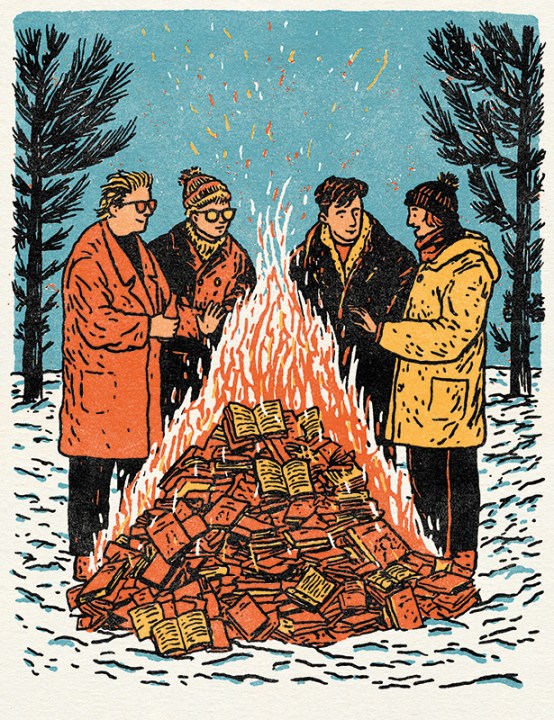
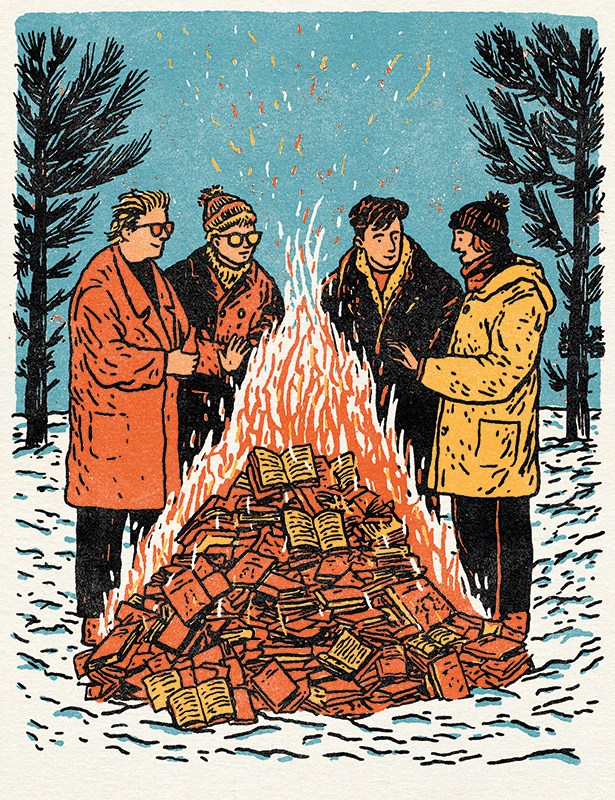
But it also corrupts. And this is what many literary insiders see as the biggest problem in the Canadian books world. “It’s social engineering,” said an insider at the Canada Council for the Arts. The dominance of grants, prizes and arts councils queers the field of Canadian literature: the priorities – and politics – of awards juries and civil servants become the hoops through which publishers must jump. Literary quality, or even basic popularity, become subservient to demands for equality, representation and a fuzzily-defined conception of “fairness.”
“The problem with DEI is that it leads to basically saying that we will celebrate narrow segments of the population, and we will insist that those narrow segments of the population stay in their own lane,” notes the writer Richard Stursberg, author of Lament for a Literature, a study of the failure of Canadian literature. “The whole effort of DEI cuts against the strengthening of national identity – an identity in which we say we’re bound by the things we have in common… Instead, we turn ourselves into Indigenous-Canadians, or gay Canadians, or whatever we happen to be.”

This differentiation is fatal. Massive, sparsely populated and already split by a schism between its English and French-speaking zones, Canada can ill afford to further underline its divides. Even at the best of times, after all, it is a country which struggles to articulate a sense of self. (Recall former prime minister Stephen Harper’s much-mocked drive to define “Canadian identity”: any country which must tussle with such issues by committee is, you suspect, not on to a winner.)
The distortion field of DEI is evident in the gradual evolution of the Canada Reads competition. The inaugural event in 2002 pitted Margaret Atwood’s The Handmaid’s Tale against Rohinton Mistry’s A Fine Balance – and both were pipped by Michael Ondaatje’s In the Skin of a Lion. Last year, however, the winner was Ma-Nee Chacaby’s parodic-sounding memoir A Two-Spirit Journey: The Autobiography of a Lesbian Ojibwa-Cree Elder. It was chosen by Shayla Stonechild, an Indigenous “mental health and wellness advocate,” best known for competing in the ninth season of the reality TV show The Amazing Race Canada. It takes nothing away from Chacaby as a writer to suggest – heaven forbid – Atwood or Mistry’s books might have more universal appeal.
In retrospect, that first Canada Reads competition might well be the high-water mark of Canadian literature. In Ondaatje, Atwood and Mistry, it had three Canadian writers at the height of their powers – all of whom, alongside perhaps Alice Munro, are still likely to be the average reader’s answer when challenged to name a Canadian author. Atwood’s second novel, Surfacing, released in 1972, marked the beginning of a resurgence in Canadian writing. Like Ondaatje, a fellow winner of the Booker Prize, Atwood showcased a newly confident, outward-looking literature: a Canada connected to the wider world. (Though Atwood’s best-known novel takes place in an ultra-nationalist Christian dystopia while Ondaatje’s The English Patient was a romance set in an Italian villa during World War Two.)
Prior to the 1970s, Canadian literature was dominated by “prairie realism”: dour tales of rural woe, such as Robert J.C. Stead’s 1926 novel Grain, which conveyed the drudgery of life on Canada’s endless wheat fields, in painstaking detail. The apogee of this dreary approach was Martha Ostenso’s Wild Geese (1925), a dreaded fixture of high-school English programs, which follows a family of settlers on a remote farm in rural Alberta. Its tedium was superbly sent up in a cartoon by Kate Beaton: “We live on the prairie and the prairie is so vast and empty,” intones one character in a comic strip called “Canadian Lit.” “It’s winter outside… This winter has been so long,” replies his wife. “I’m a drunk,” chips in the husband. “This is all a metaphor for their marriage,” runs the cheery conclusion.
Yet while we can be grateful Atwood, Mistry and Ondaatje jolted Canadian literature out of such misery, all three are now in their seventies and eighties. Atwood is still writing, though her powers are clearly fading. But Ondaatje hasn’t published a book since 2018, and Mistry is long into the “retirement” he announced with his last short story, “The Scream,” in 2006. More than two decades on, Canadian literature’s Big Bang in the early 2000s looks more like fading light from a dying star.
Canadian literature is a test-case demonstration of the dangers of top-down meddling in culture
So what now? Canadians, bluntly, do not read. Or at least, they don’t read fellow Canadians. The average number of copies a Canadian writer sells in Canada in the book’s first year of publication is 343; Canadian writers represent, at a push, 12 percent of the domestic market. A non-trivial cut of that must be Atwood’s work. Canadian publishers are outgunned internationally – typically, North American rights are negotiated separately, while Canadian rights are bundled in with other international markets. (The exception, curiously, is Harry Potter: you hope the savvy agent responsible for that coup got a raise.) Canada’s literary culture is, in Gore Vidal’s favored formulation, as deep as spit on a rock. The newspaper book pages, small presses and independent bookshops which supported the burgeoning careers of Atwood, Ondaatje and Martel have all but vanished.
There are bright spots. The Canada-born Patrick deWitt and David Szalay are two of the most exciting novelists working today. That both are exiles – deWitt moved to Paris when he was young and now lives in Portland, Oregon, while Szalay is based in Hungary – is significant, but it would be churlish to refuse to let Canada claim them as her own. Michelle Good, an indigenous writer, is also worth seeking out: her novel Five Little Indians is a superb, chilling dissection of the residential school system. And the glorious, whimsical stories and illustrations of Charles van Sandwyk would capture all but the coldest heart.
Canada also makes an impressive showing in the fields of fantasy and science-fiction. Cory Doctorow is most famous for his trenchant nonfiction, but his detective stories and dystopian novels are highly entertaining too. Meanwhile, Emily St. John Mandel’s science-fiction novels have been translated into 37 languages and inspired an HBO series. She lives between LA and New York.
Earlier this year, Carney was asked to name his favorite writers. He chose Tom Stoppard, Ian McEwan and James Joyce. His literary tastes may be impeccable, but it seemed an odd admission of defeat that he would choose only one living writer – and no Canadians. Canada does have an impact on global culture, insofar as it produces writers who are read around the world. But if Carney wants a genuine national literature to bolster his “divorce bod” version of Canada – freshly buff and definitely not still hung up on its ex south of the border – then he’s clearly got his work cut out. Canadian literature is a test-case demonstration of the dangers of top-down meddling in culture. Crippled by its adherence to progressive politics, and kept on life-support through subsidy, it is in a dire state. And who is responsible for this mess? Well, blame Canada.





Comments