Culture

Culture

The good, the bad and the ugly in books, exhibitions, cinema, TV, dance, music, podcasts and theatre.

Cartier used to be a Timpson’s for the rich

Exhibitions

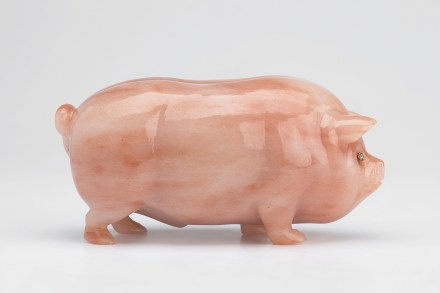
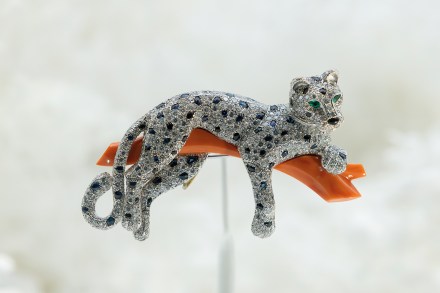
In the fall of, I suppose, 1962, my friend Jimmy Davison and I, window shopping on Fifth Avenue, bumped into the glamorous Venezuelan playboy-grandee Reinaldo Herrera. Jimmy asked where he was going. ‘I’m just nipping into Cartier. They’re fixing my skis,’ Reinaldo replied. Autres temps, autre moeurs. I doubt anyone today uses the world’s most famous jewellers as their local Timpson’s, though I suspect Cartier’s unrivalled in-house craftsmen could still run up a supple sapphire USB cable if requested. I doubt anyone today uses the world’s most famous jewellers as their local Timpson’s Because that was partly the firm’s point. Apart from the staggering banque-busting biggies, they, almost uniquely, made the most exquisite smaller things.

Absorbingly repellent: Ed Atkins, at Tate Britain, reviewed

Exhibitions

In the old days, you’d have to go to a lot of trouble to inhabit another person’s skin. Today you can simply buy a customisable 3D avatar from Turbosquid.com, animate it with your own movements by wearing a sensor-filled motion-capture bodysuit, and presto! Lifelike but eerily soulless, Ed Atkins’s video portraits occupy a strange visual hinterland between computer-game graphics and deepfake realism. The close-ups elicit a tingling revulsion: this seems to be a human being, but something is off A man tosses and turns in bed before his home is violently swallowed up by a sinkhole; a besuited talkshow host puffs away on Silk Cuts while conversing with the disembodied voice of a woman (Atkins’s mother) about her struggles with depression. In both videos, the artist is incognito.

Wonderfully intimate: The Drawings of Victor Hugo, at the RA, reviewed

Exhibitions

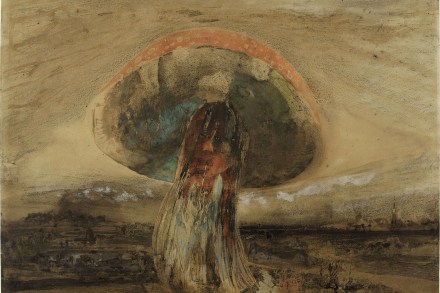
You feel so close to Victor Hugo in this exhibition. It’s as if you are at his elbow while he sighs at his standing desk at the top of his house on Guernsey, where he held France constantly in view as he worked. Here, frustrated by Les Misères (working title), he has thrown down his pen and moved to his art table, sloshing great washes of sepia ink across paper to form lowering clouds. And there, daydreaming, he has cut out a stencil of a castle, and placed it on a cloud of ink. (Hmm, ‘castle on a cloud’ – could make a nice lyric for a song one day…) Here is a person thinking with their pen – or rather, letting their pen think with them There is a wonderful intimacy to his travel sketchbooks, full of minutely well-observed brickwork and staircases.

If ‘wokeness’ is over, can someone tell the Fitzwilliam Museum?

Exhibitions

Optimists believe that the tide of ‘wokeness’ is now ebbing. If so, the message has not yet reached Cambridge, whose wonderful university museum has its classical façade covered in sententious phrases in neon, and which has recently opened a new exhibition in agit-prop style: Rise Up: Resistance, Revolution, Abolition. Such activism is fully in step with the Museums Association, the curators’ club that instructs its members to turn their institutions into activist cells. If all this makes its founding benefactor Viscount Fitzwilliam turn in his grave, all the better: he is stigmatised as a profiteer from the slave trade, even before one reaches the cloakroom.

The art of sexual innuendo

Exhibitions

Paula Rego’s 2021 retrospective at Tate Britain demonstrated that, among art critics, ambiguity is still highly prized as a measure of merit. Martin Gayford: ‘No one, including its creator, can be aware of everything that’s going on.’ Laura Cumming at least gave examples. Of ‘The Cadet and his Sister’ (1988), she commented: ‘Bondage – physical, emotional, familial – is always in the air.’ The adjectives in that nervous parenthesis are insurance, the critic spreading her bets. The picture shows an older, bigger sister, formally dressed, with her cadet brother in uniform, wearing white ceremonial gloves. Behind them, a careful vista of trees. The painting depicts a milieu of public formality. Except that she has removed her gloves to tie his shoe laces.

The greatest paintings are always full of important unimportant things

Exhibitions

Goya to Impressionism: Masterpieces from the Oskar Reinhart Collection, at the Courtauld, consists of a selection of 25 absorbing paintings chosen from 207. I was disappointed but not surprised that one of the greatest paintings in the world, Pieter Bruegel the Elder’s ‘Die Anbetung der Könige im Schnee’ (The Adoration of the Kings in the Snow, 1563), didn’t make the journey from Winterthur in Switzerland. Too precious to put at risk. There is no requirement for a collector to accumulate thematically consistent paintings. Whim, availability, opportunism, taste, connoisseurship, pleasure, accident, catholicity all play their part. The Oskar Reinhart collection is gloriously heterogeneous, a series of bonnes bouches.

A blast: Leigh Bowery!, at Tate Modern, reviewed

Exhibitions

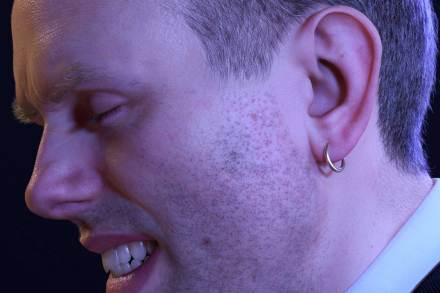
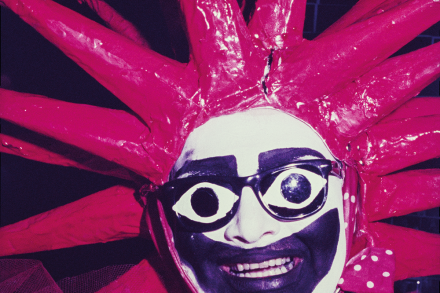
Tate Modern’s latest exhibition is a bizarre proposition on so many levels. Its subject, the Australian designer, performer, provocateur and club scenester Leigh Bowery, was by all accounts inescapable in London for much of the 1980s and early 1990s. Standing at well over 6ft and weighing 17st, he would have been a conspicuous presence on the capital’s streets even had he not adopted the berserk sci-fi drag attire that became his signature aesthetic. He appeared on TV, at Sadler’s Wells and in a ponderous suite of portraits by Lucian Freud. His life could be read as a kind of Gesamtkunstwerk, but he was not an artist in any conventional sense and there’s no explicit evidence here to suggest he ever identified as such.

An exhilarating, uneven survey of an outstandingly eccentric British surrealist

Exhibitions

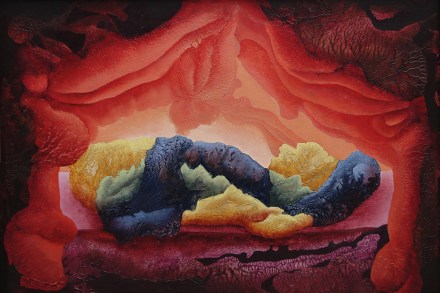
Ithell Colquhoun was always a bit of a mystery surrealist. Her greatest hit is the unsettling, dream-like ‘Scylla’ (1938), a painting of two towering cliffs, which could equally be thighs in the bath. The prow of Odysseus’s Argo peeps through them. The pubic hair is seaweed, and there are shells, but, as far as discernible, no crabs. The point of view of the painting is that of the titular monster Scylla, lying in wait. It’s witty and disturbing; mythic and domestic. A British surrealist high point, frequently anthologised. This aside, her name was relegated to lists.

The art of war

Exhibitions

On his deathbed, the Austrian writer Karl Kraus remarked of the Japanese attack on Manchuria: ‘None of this would have happened if people had only been more strict about the use of the comma.’ The implication being that by channelling rage into the ordering of small things, we might stay away from violence on a colossal scale. Unable to restrict ourselves to matters of punctuation, alas, humanity is often at war: with itself, and others, however hallucinatory. Two current exhibitions come at rage from very different starting points. War and the Mind demonstrates the devastating psychological impact of war on those who fight it and those who have no choice but to suffer it.

The rediscovery of the art of Simone de Beauvoir’s sister

Exhibitions

An exhibition of the art of Hélène de Beauvoir (1910-2001), sister of the great Simone, opened in a private gallery near Goodge Street last week. It was the first time Hélène’s work had been shown or received any attention in London, and young people in alternative clothing gathered to sip orange wine and listen, rapt, to the 75-year-old biographer and friend of the de Beauvoir sisters, Claudine Monteil, as her recollections helped elucidate Hélène’s abstract paintings. The reclamation of a new ‘lost’ artist was under way. De Beauvoir’s cubist self-portrait is quite good – but ‘Simone in red jacket’ must never be seen It is possible, these days, for gallerists to do good work – self-defining as allies and activists – while making a good fortune.

The brilliance of Cicely Mary Barker

Exhibitions

When Cicely Mary Barker’s Flower Fairies of the Spring was published in 1923, a post-first world war mass wishful belief in fairies was at its height in Britain. Just over two years previously, Sir Arthur Conan Doyle, writing in the 1920 Christmas issue of the Strand Magazine, had stated that the ‘Cottingley Fairies’ (tiny winged figures visible in photographs taken near Bradford by Elsie Wright and Frances Griffiths) were almost certainly genuine and were clear evidence of the existence of psychic phenomena. Barker remained unmarried, and lived a quiet life of flowers and innocence The public – 21 years on from the birth of Peter Pan – were hungrier than ever for fairies: their innocence, their delicate beauty, and their hint of benign mischief.

A dreamy, if overly ambitious show: Silk Roads, at the British Museum, reviewed

Exhibitions

Towards the end of the British Museum’s Silk Roads show, there is a selection of treasures found in England. Among them is a copper flagon made in Syria and buried in Essex in the late 500s. It is believed that the flagon belonged to an English mercenary who went to fight for the Byzantines against the Sassanians in the 570s. The flagon’s looping handle would have held it tight to a saddle, so perhaps it came to England attached to the warrior’s horse as he rode home from his adventures in the East. There are many spectacular objects in this exhibition. Very many If objects are to inspire more than awe in us, we also need a handle.

Tirzah Garwood just isn’t as good as her husband

Exhibitions

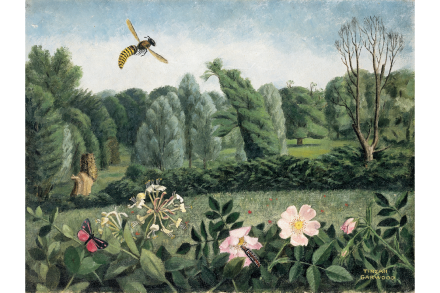
Tirzah Garwood, wife of the more famous Eric Ravilious, is having a well-deserved moment in the sun, benefiting from this era of equality in which artists’ and composers’ wives and sisters (such as Clara Schumann, Fanny Mendelssohn and Elizabeth Siddal) are having the spotlight shone on their under-appreciated works.

Warhol, Rauschenberg, Johns and Tinguely all started out as window dressers

Exhibitions

Christmas, and in every city already crowds congregate around the festive department store displays in defiance of the apparent disappearance of the ‘high street’. For despite digital merchandising and online delivery, adults as much as children delight in this annual extravaganza, and such windows prove more popular than ever precisely because they cannot be enjoyed other than physically, in person. For many, these windows remain an indelible early metropolitan memory and perhaps the first experience of a work of visual art, something specifically conjured to arrest the attention, intrigue and entertain.

Stimulating little exhibition: Scent and the Art of the pre-Raphaelites reviewed

Exhibitions

Scent and the Art of the pre-Raphaelites… there’s an obvious problem here: how do you represent one sense by another? Synesthesia is a neurological condition whereby some people do just that: they experience colour when they hear music, or taste words – think of the Revd Sydney Smith describing heaven as eating foie gras to the sound of trumpets. There may come a time when we get all-enveloping sensory effects when we look at paintings – an exhibition on medieval women at the British Library uses the stink of sulphur to suggest Julian of Norwich’s vision of hell and strawberry and honey for Margery Kempe’s scent of angels – but still the most obvious way of representing scent visually is by painting things that smell.

We’ve got Francis Bacon all wrong

Exhibitions

You have to hand it to the curators of this excellent survey of Francis Bacon’s portraits. Not only have they alighted at an obvious but under-explored vantage point from which to reconsider this most mythologised of postwar painters, securing some serious loans to make their point, they have also dared to open their show with what might be the single worst picture it contains. ‘Self Portrait’ (1987) speaks of everything that Bacon got wrong in his final decades: it’s recognisably the 78-year-old artist, dressing up as a younger version of himself.

Sad but beautiful exhibition of Afghanistan’s war rugs

Exhibitions

Decades after its inclusion in the Hippie Trail, Afghanistan is again open to tourism, according to the Taliban’s spokesman Zabihullah Mujahid. It is perhaps a source of regret for the group that the 6th-century Buddhas of Bamiyan are missing in action. They were blown up in 2001 either, depending on who you ask, because of Islam’s strict beliefs on anti-idolatry or to punish the West for offering money to preserve them rather than give aid to starving children. The war rugs, depicting camels and flowers alongside rocket launchers, are striking and jarring While the country continues to export fruit, nuts and insect resins – opium production was massively scaled back by the Taliban – Afghanistan is justly famous for its woven rugs.

At Japan House humanity has arrived at the perfect future: food for ogling, not eating

Exhibitions

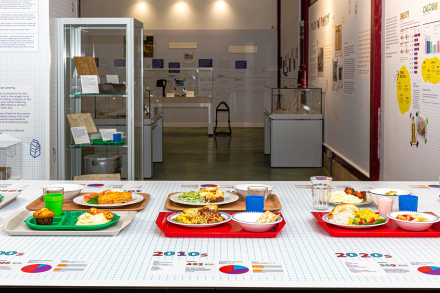
There is a popular Japanese television show that features a segment called ‘Candy Or Not Candy?’. Contestants are presented with objects and must guess if they’re edible or not. Is that a dish sponge – or a steamed sponge cake? I might not consider afternoon tea to be art, but the confectionery artifice required to dupe contestants into mistaking the replica for reality is impressive – or at least entertaining. The lacquered steaks, fruits, vegetables and sliced bread feel wrong. They surely ought to be matte The inverse – using inedible materials to create replicas of food – is also a Japanese art form, and the subject of Looks Delicious! at Kensington’s Japan House.

Fog, tea and full English breakfasts: Monet and London, at the Courtauld, reviewed

Exhibitions

For the maids on the top floors of the Savoy, everything was in turmoil. The 6th had been commandeered by wounded Boer War officers, and since February 1900 a suite of rooms on the 5th had been taken over by a French painter, who was using one as a studio. The officers were nice enough, but the Frenchman spoke almost no English and you could smell the turps down the corridor. Whatever was the management thinking? ‘Without the fog, London wouldn’t be a beautiful city.

What has become of the Wellcome Collection?

Exhibitions

In 2022 the Wellcome Collection caused a stir by closing its Medicine Man exhibition on the grounds that it was ‘based on racist, sexist and ableist theories and language’. Director Melanie Keen had previously talked of reinterpreting the collection but had now evidently decided it was beyond redemption. ‘We can’t change our past,’ she said in a statement at the time. ‘But we can work towards a future where we give voice to the narratives and lived experiences of those who have been silenced, erased and ignored.

The art inspired by the 1924 Paris Olympics was a very mixed bag

Exhibitions

George Orwell took a dim view of competitive sport; he found the idea that ‘running, jumping and kicking a ball are tests of national virtue’ absurd. ‘Serious sport has nothing to do with fair play,’ he wrote in Tribune after scuffles broke out during the Russian Dynamo football team’s 1945 tour. ‘It is bound up with hatred, jealousy, boastfulness, disregard of all rules and sadistic pleasure in witnessing violence: in other words it is war without the shooting.’ Suzanne Lenglen’s loose-fitting knee-length tennis dresses inspired the new ‘style sportif’ of Coco Chanel Baron Pierre de Coubertin, visionary founder of the modern Olympics, took the opposite view: to him the three words ‘Faster, Higher, Stronger’ represented ‘a programme of moral beauty’.

Inside the mind of Vincent Van Gogh

Exhibitions

Van Gogh only got one major review in his career, and he was mystified by it. When the critic Albert Aurier described his six paintings in the 1890 Brussels exhibition of Les XX as the product of a ‘terrible and distraught genius’, the artist responded that, far from being a genius, he was ‘very secondary’ and that his sunflowers – now in the National Gallery – were no different ‘from so many pictures of flowers more skilfully painted’. If he were alive today he would probably have protested at the National Gallery making an exhibition of his work the high point of its bicentenary programme, but he would have liked its focus on his inspirations rather than his distress.

Why has Leonora Carrington still not had a big exhibition?

Exhibitions

‘It had nothing to endow it with the title of studio at all,’ was Edward James’s first impression of Leonora Carrington’s Mexico City workspace in 1946. ‘The place was combined kitchen, nursery, bedroom, kennel and junk store. The disorder was apocalyptic: the appurtenances of the poorest. My hopes and expectations began to swell.’ Carrington blended Egpytian, Mayan, Mesopotamian and Celtic legends learned at her nanny’s knee Over six decades in the creative chaos of this house on Calle Chihuahua, Carrington would paint some of her best-known works and write her quirky serio-comic novella The Hearing Trumpet, which is narrated by a 92-year-old woman.

The importance of copying

Exhibitions

The lunatics were once in charge of the asylum. The first six directors of the National Gallery were all artists: before art history became an academic discipline, artists were the leading authorities on art. Founded more as a teaching resource than a visitor attraction, until the mid-1940s the gallery was reserved for artists two days a week, when other visitors had to pay for entry. This stopped them getting in the way of artists copying from the masters, an essential part of an art education in the days before cheap colour reproduction. There’s something of the altarpiece in this image of an artist’s progenitors flanking a touchstone for his art It’s rare to see artists copying in the galleries now that they are so jam-packed with tourists.

Porcelain-painting during the French revolution

Exhibitions

People don’t accumulate stuff any more. When the late Victorian houses on our street change hands their interiors are stripped of all decorative features and the walls painted white, unrelieved by pictures: if their Victorian owners returned as ghosts, they would go snow-blind. The Victorians’ passion for accumulating stuff was close to an addiction, and no one accumulated it like the Rothschilds. But the Rothschilds didn’t stop at objects; they also collected exotic animals, especially birds. All the Rothschild chateaux and mansions boasted aviaries – and Baron Ferdinand de Rothschild’s Waddesdon Manor was no exception.

This British surrealist is a revelation

Exhibitions

When the 15-year-old Maggi Hambling arrived at Benton End in Hadleigh, Suffolk – home of the East Anglian School of Painting and Drawing – with two paintings to show the school’s founders, Cedric Morris and Arthur Lett-Haines, she was ushered into the dining room where Morris was having dinner. He made some criticisms but was very encouraging, then Lett-Haines came in and made the opposite criticisms but was encouraging too. As teachers, both believed in bringing out a student’s native talent – but as artists and characters, says Hambling: ‘They were polar opposites.

How a market town in Hampshire shaped Peggy Guggenheim

Exhibitions

On 24 April 1937 Marguerite Guggenheim – known as Peggy – of Yew Tree Cottage, Hurst was booked by a certain PC Dore for driving an unlicensed vehicle through nearby Petersfield. What was the founder of the famous Venice museum doing in a market town in Hampshire? It’s a long story, vividly told in an exhibition marking the 25th anniversary of the opening of Petersfield Museum on the site of the former police station and courthouse where she paid her £1 fine. ‘Peggy,’ said a friend, ‘is absolutely revolting about sex. Delicacy is unknown to her’ In the 1930s the Jewish-American heiress, who had lost her father Benjamin on the Titanic, was rattling around Europe with a fast crowd of writers and artists.

The beauty of pollution

Exhibitions

On the back of the British £20 note, J.M.W. Turner appears against the backdrop of his most iconic image. Voted the country’s favourite painting in 2005, ‘The Fighting Temeraire’ (1838) was Turner’s favourite too. It remained in his possession until his death; the 70-year-old artist swore in a letter of 1845 that ‘no consideration of money or favour can induce me to lend my Darling again’. But I suspect he would have approved of his darling’s current loan, along with that letter, to the Laing Art Gallery in Newcastle as part of the National Gallery’s bicentenary programme of loans of national treasures to regional museums.

The mesmerising Olympic posters designed by the likes of Warhol and Whiteread

Exhibitions

You could be forgiven for assuming that the citizens of Paris weren’t exactly bursting with joy at the prospect of this summer’s Olympic Games. They’re annoyed at everything: road closures, public transport price hikes and – would you believe it? – the prospect of their country being taken over by extremist cranks before the month is out.  Bref, or indifference towards the Games is the prevailing attitude – and should you need (flimsy, anecdotal) evidence, I offer you the fact that when I visited an exhibition devoted to the Olympics the day before the first round of voting in the election last week, I had the space entirely to myself. Beyond a single wall down by the Seine, you won’t see the artist posters displayed much around Paris It was a shame.